@AndrewYNg@coursera I took the first Machine Learning course on Coursera and loved it. I'm looking forward to hearing your news. I wish you success. ☺️
A teenager in the United States started publishing software at 14 in 1998, built the entire online infrastructure for the Occupy Wall Street movement in 2011, joined Google as a software engineer, quit in 2018, and then spent five years writing a C library that does something the entire industry said was impossible.
Then she combined it with llama.cpp and shipped the easiest way on the planet to run a large language model on any computer.
Her name is Justine Tunney.
Here is the story, because almost nobody outside the low level systems world knows what one engineer has built.
Justine was born in 1984. She started writing and publishing software at 14, back when distribution meant uploading binaries to BBS systems and chat networks. She picked up the handle jart, which she still uses on GitHub today. She did the work most teenagers her age were not doing. She read the systems programming literature. She studied compilers. She fell in love with C.
In July 2011 she registered the @occupywallst Twitter handle and the occupywallst dot org domain. Within weeks the protest movement that began in Zuccotti Park in New York had become a global phenomenon, and her infrastructure was the digital backbone of the entire thing. She handled the social media, the website, the donations, the coordination. She built the platform that pushed the movement to reach millions.
After Occupy she joined Google as a software engineer. She worked on TensorBoard, the visualization tool for TensorFlow, and on site reliability for Google infrastructure. She stayed for years. Then in 2018 she left Google Brain to work on a personal project.
The project was called Cosmopolitan Libc.
Cosmopolitan does something most C programmers would tell you is mathematically impossible. It lets you compile a C program once and have the resulting binary run natively on Linux, Windows, macOS, FreeBSD, OpenBSD, and NetBSD with no modification. One file. Six operating systems. No virtual machines. No interpreters. No recompilation. The technique she invented is called Actually Portable Executable.
The implications are wild. Cosmopolitan binaries violate every assumption about how operating systems load programs. They are at once a Windows PE file, a Linux ELF binary, a macOS Mach-O binary, and a shell script. The same bytes run on every platform.
For five years she worked on it mostly alone. She funded the development partly through Mozilla's MIECO program, which sponsored her work on Cosmopolitan 3.0, released on October 31, 2023.
A month later she shipped llamafile.
llamafile is what happens when you combine Cosmopolitan with llama.cpp. You take any LLM weights file in the standard GGUF format, you wrap it in Justine's binary, and you get a single file that runs on six operating systems without installation. No Python. No CUDA setup. No dependency hell. Just one file that you double click and it works.
Mozilla launched it as an official project of their innovation group on November 29, 2023. It went viral immediately. The repository, hosted at github .com/mozilla-ai/llamafile, now has 24,600 stars. The license is Apache 2.0.
Justine kept shipping. She added GPU support to Cosmopolitan, a task systems engineers thought would require rewriting the whole thing. She added dlopen support, another thing nobody else had figured out. She wrote whisperfile, a single file version of OpenAI's Whisper speech-to-text model based on the same architecture.
Her GitHub profile lists projects most engineers would consider impossible. sectorlisp, a Lisp interpreter that fits in a boot sector. blink, the tiniest x86-64-linux emulator on Earth. bestline, a teletypewriter command session library. redbean, a complete web server inside a single zip file.
A teenager who shipped software in 1998 grew up to write the C library that the entire local AI movement now runs on top of.
She did most of it alone, and most people scrolling AI Twitter cannot name her.
@piraqueoficial o que ocorreu com a Goiabinha? Não comprava há um tempo e resolvi comprar. Porém, o produto está com a massa sem crocância e com quase nenhuma goiabada de recheio. Podiam mudar o nome para biscoito murcho com pitada de goiaba. 😂 Que tristeza... 😓
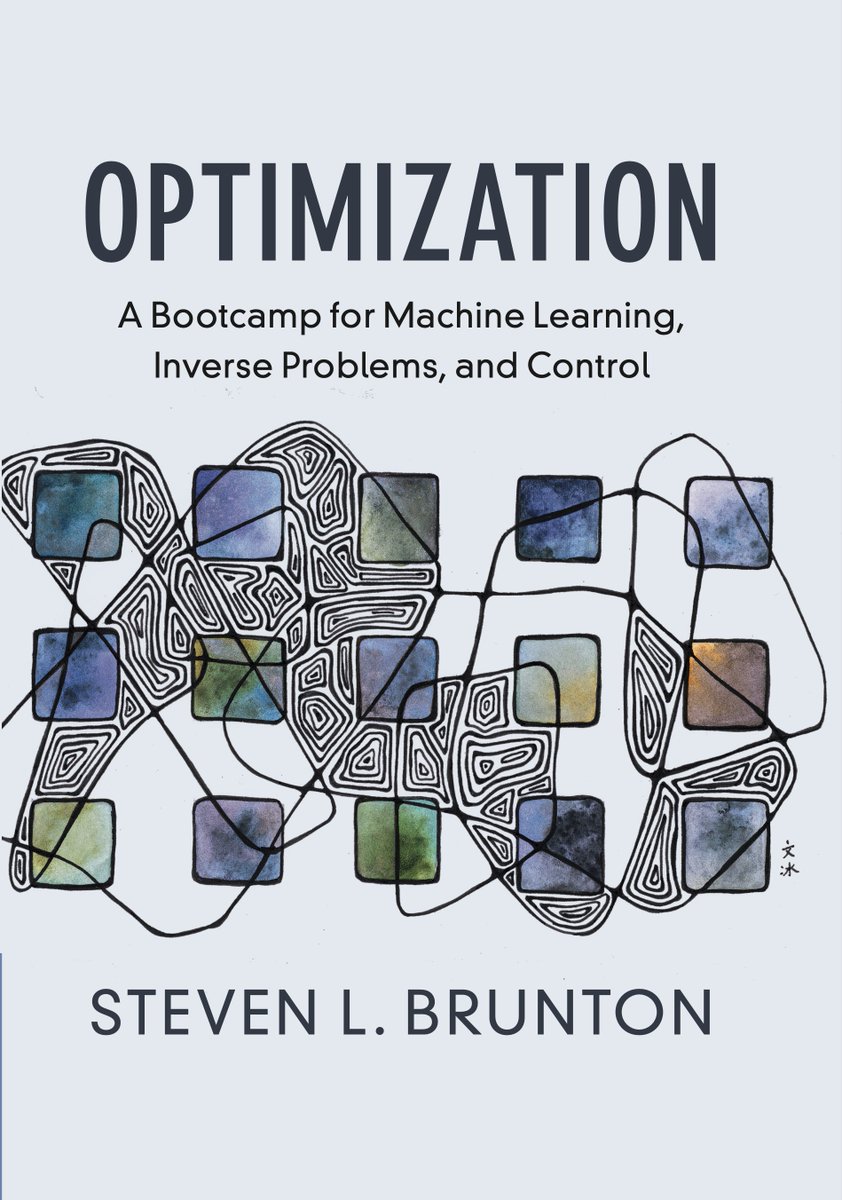
I Wrote a New Book!!!
Optimization: A Bootcamp for Machine Learning, Inverse Problems, and Control
Pre-Order Now (July 31)
https://t.co/EoDMFapUUf
Coming Soon:
* Free PDF on website
* YouTube Videos for entire book
* Python code on GitHub
Galerinha tech, como é difícil achar conteúdos de imersão á área de cybersec (no geral), resolvi fazer essa therad com alguns cursos gratuitos, alguns emitem certificado. segue o tweet 👉🏻
@BolhaTech@sseraphini @sseramemes
Thanks AK for reposting our work! Here are all the links for anyone who wants to check out more!
Paper: https://t.co/6PajZXj6V0
Project Website: https://t.co/5VTiCqTDhN
EvalKit: https://t.co/lxhyzMaI8j
Cloud Infra: https://t.co/QNJRfOKQN3
Training Set: https://t.co/DlzLojQjsR
Eval Set: https://t.co/Tzs2jAN99C
Leaderboard: https://t.co/peZ1XkelYY
Model: https://t.co/gFFJofrlNR
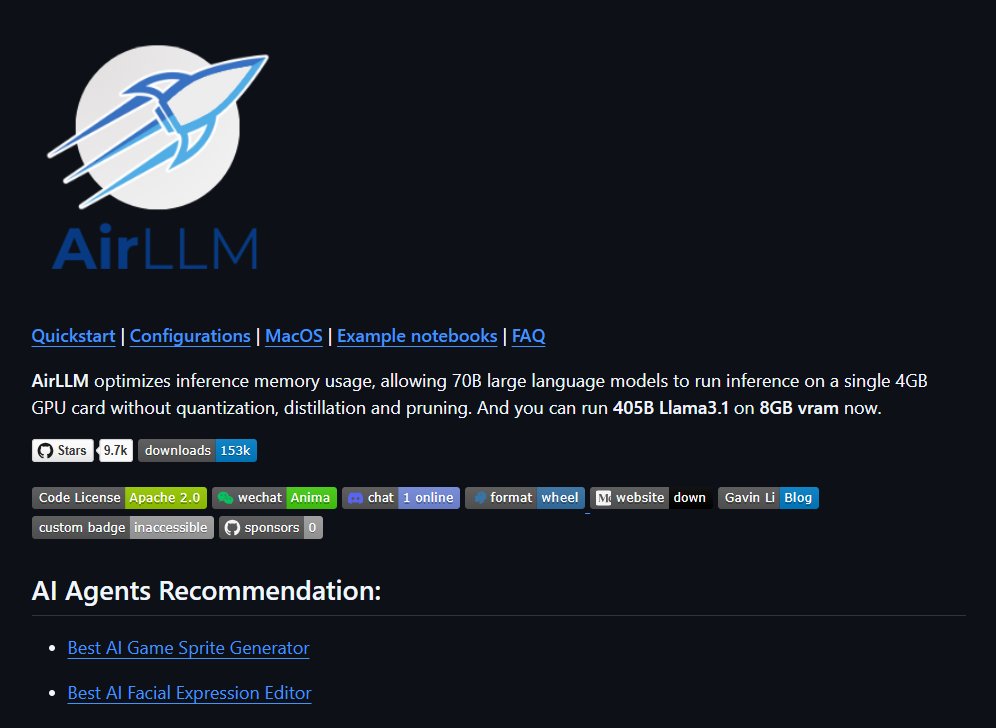
"I don't have a GPU" is officially dead 🤯
You can now run 70B model on a single 4GB GPU and it even scales up to the colossal Llama 3.1 405B on just 8GB of VRAM.
AirLLM uses "Layer-wise Inference." Instead of loading the whole model, it loads, computes, and flushes one layer at a time
→ No quantization needed by default
→ Supports Llama, Qwen, and Mistral
→ Works on Linux, Windows, and macOS
100% Open Source.
A few random notes from claude coding quite a bit last few weeks.
Coding workflow. Given the latest lift in LLM coding capability, like many others I rapidly went from about 80% manual+autocomplete coding and 20% agents in November to 80% agent coding and 20% edits+touchups in December. i.e. I really am mostly programming in English now, a bit sheepishly telling the LLM what code to write... in words. It hurts the ego a bit but the power to operate over software in large "code actions" is just too net useful, especially once you adapt to it, configure it, learn to use it, and wrap your head around what it can and cannot do. This is easily the biggest change to my basic coding workflow in ~2 decades of programming and it happened over the course of a few weeks. I'd expect something similar to be happening to well into double digit percent of engineers out there, while the awareness of it in the general population feels well into low single digit percent.
IDEs/agent swarms/fallability. Both the "no need for IDE anymore" hype and the "agent swarm" hype is imo too much for right now. The models definitely still make mistakes and if you have any code you actually care about I would watch them like a hawk, in a nice large IDE on the side. The mistakes have changed a lot - they are not simple syntax errors anymore, they are subtle conceptual errors that a slightly sloppy, hasty junior dev might do. The most common category is that the models make wrong assumptions on your behalf and just run along with them without checking. They also don't manage their confusion, they don't seek clarifications, they don't surface inconsistencies, they don't present tradeoffs, they don't push back when they should, and they are still a little too sycophantic. Things get better in plan mode, but there is some need for a lightweight inline plan mode. They also really like to overcomplicate code and APIs, they bloat abstractions, they don't clean up dead code after themselves, etc. They will implement an inefficient, bloated, brittle construction over 1000 lines of code and it's up to you to be like "umm couldn't you just do this instead?" and they will be like "of course!" and immediately cut it down to 100 lines. They still sometimes change/remove comments and code they don't like or don't sufficiently understand as side effects, even if it is orthogonal to the task at hand. All of this happens despite a few simple attempts to fix it via instructions in CLAUDE . md. Despite all these issues, it is still a net huge improvement and it's very difficult to imagine going back to manual coding. TLDR everyone has their developing flow, my current is a small few CC sessions on the left in ghostty windows/tabs and an IDE on the right for viewing the code + manual edits.
Tenacity. It's so interesting to watch an agent relentlessly work at something. They never get tired, they never get demoralized, they just keep going and trying things where a person would have given up long ago to fight another day. It's a "feel the AGI" moment to watch it struggle with something for a long time just to come out victorious 30 minutes later. You realize that stamina is a core bottleneck to work and that with LLMs in hand it has been dramatically increased.
Speedups. It's not clear how to measure the "speedup" of LLM assistance. Certainly I feel net way faster at what I was going to do, but the main effect is that I do a lot more than I was going to do because 1) I can code up all kinds of things that just wouldn't have been worth coding before and 2) I can approach code that I couldn't work on before because of knowledge/skill issue. So certainly it's speedup, but it's possibly a lot more an expansion.
Leverage. LLMs are exceptionally good at looping until they meet specific goals and this is where most of the "feel the AGI" magic is to be found. Don't tell it what to do, give it success criteria and watch it go. Get it to write tests first and then pass them. Put it in the loop with a browser MCP. Write the naive algorithm that is very likely correct first, then ask it to optimize it while preserving correctness. Change your approach from imperative to declarative to get the agents looping longer and gain leverage.
Fun. I didn't anticipate that with agents programming feels *more* fun because a lot of the fill in the blanks drudgery is removed and what remains is the creative part. I also feel less blocked/stuck (which is not fun) and I experience a lot more courage because there's almost always a way to work hand in hand with it to make some positive progress. I have seen the opposite sentiment from other people too; LLM coding will split up engineers based on those who primarily liked coding and those who primarily liked building.
Atrophy. I've already noticed that I am slowly starting to atrophy my ability to write code manually. Generation (writing code) and discrimination (reading code) are different capabilities in the brain. Largely due to all the little mostly syntactic details involved in programming, you can review code just fine even if you struggle to write it.
Slopacolypse. I am bracing for 2026 as the year of the slopacolypse across all of github, substack, arxiv, X/instagram, and generally all digital media. We're also going to see a lot more AI hype productivity theater (is that even possible?), on the side of actual, real improvements.
Questions. A few of the questions on my mind:
- What happens to the "10X engineer" - the ratio of productivity between the mean and the max engineer? It's quite possible that this grows *a lot*.
- Armed with LLMs, do generalists increasingly outperform specialists? LLMs are a lot better at fill in the blanks (the micro) than grand strategy (the macro).
- What does LLM coding feel like in the future? Is it like playing StarCraft? Playing Factorio? Playing music?
- How much of society is bottlenecked by digital knowledge work?
TLDR Where does this leave us? LLM agent capabilities (Claude & Codex especially) have crossed some kind of threshold of coherence around December 2025 and caused a phase shift in software engineering and closely related. The intelligence part suddenly feels quite a bit ahead of all the rest of it - integrations (tools, knowledge), the necessity for new organizational workflows, processes, diffusion more generally. 2026 is going to be a high energy year as the industry metabolizes the new capability.
Now you can also create animations like @3blue1brown
👉🏻 excited to introduce manim_skills
$ npx skills add adithya-s-k/manim_skill
This animation was created just by prompting 👇
Ladies: Try opening your arms for a BIG cuddle the second your guy
walks through the door tonight. See what happens… 😉🔥
I challenge especially any who have been married for a long time to see what happens 🤣🌶️🔥
🚀 2026 is here - time to do research WITH AI, not just ABOUT AI!
As AI agents evolved dramatically in 2025, we may be getting closer to true AI co-scientists! We want more than just AI for information retrieval - we want AI that does research with us, drives scientific discovery with us, and even pushes scientific innovation with us as true partners.
What would the ideal AI co-scientist look like? Our team has been exploring this question and continuously evolving Novix: AI Co-Scientist to become an amazing research partner. It dramatically boosts research efficiency, lets human scientists focus more on innovation, and honestly... makes doing research way more enjoyable ☕
🌐 Try our Novix demo: https://t.co/hB7kSBNf3V
💻 Open-sourced: https://t.co/O3arx6M0bs
📄 Technical report: https://t.co/rqKkTWG74a
What Novix can do for you:
- 📚 Deep survey & synthesis of existing research
- 💡 Sparks innovative research ideas
- 🔬 Designs & implements algorithms
- 🧪 Runs automated experiments & validation
- 📊 Analyzes results with deep insights
- ✍️ Assists with manuscript structure & drafting
Think of it as your 24/7 research partner that never needs coffee ☕
Camera angle editing has never been this intuitive & fast 🔥
Just added @multimodalart 's 3D interactive component to the Qwen Camera Angle Control demo, using @dx8152's Qwen-Edit-2509-Multiple-Angles LoRA
Simply drag the camera around 👇
Best GitHub Repos to Learn AI From Scratch in 2026:
1. Andrej Karpathy – Neural Networks: Zero to Hero
https://t.co/JncqiOajt0
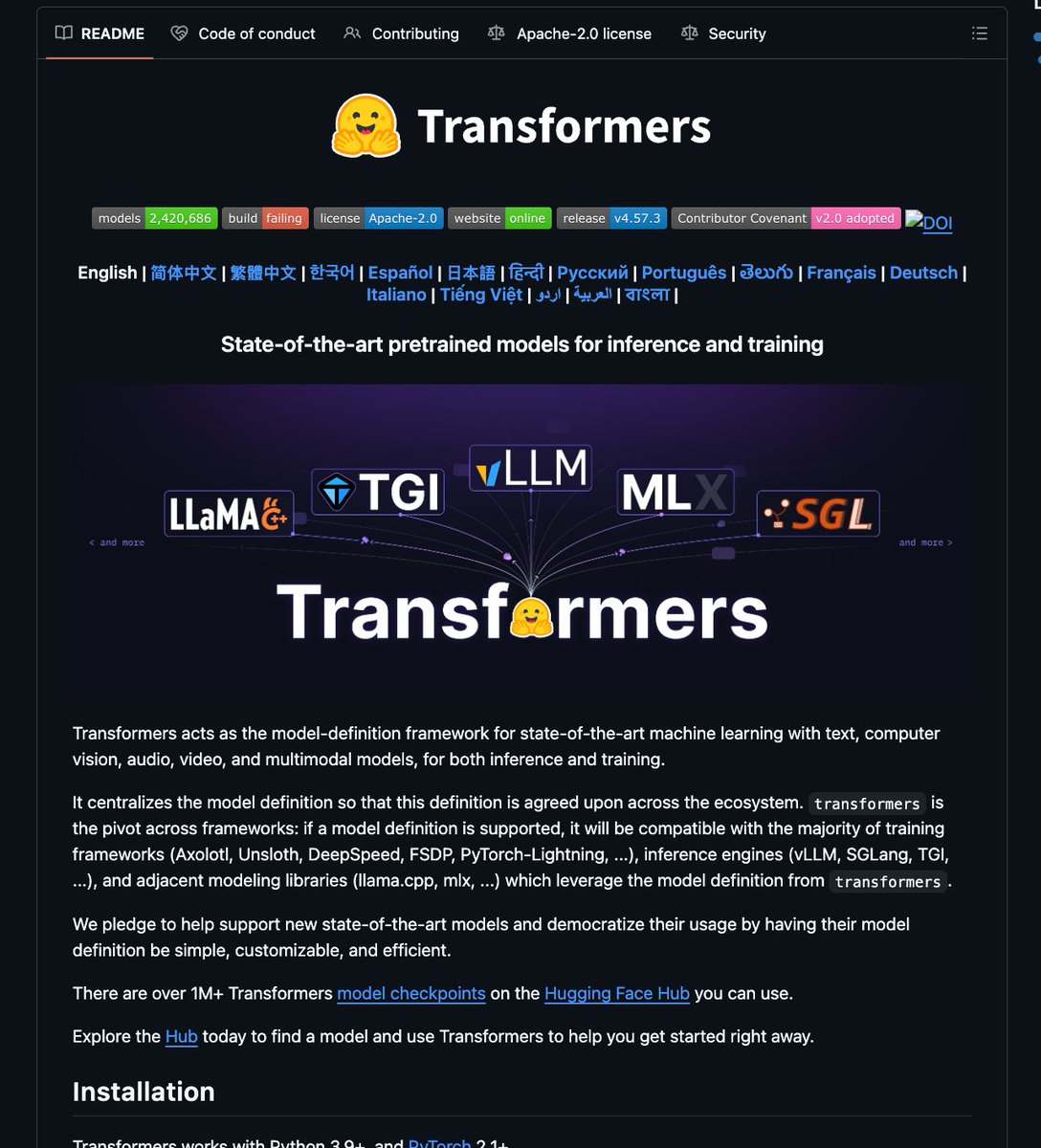
2. Hugging Face Transformers
https://t.co/BxWihIjLVS
3. FastAI/fastb
https://t.co/jIXKI5RJEx
4. Made-With-ML
https://t.co/X1onmkUV3A
5. ML System Design
https://t.co/w0sfzvTNCN
6. Awesome Generative AI guide(
https://t.co/nnDwR5VSja
7. Dive into Deep Learning
https://t.co/O9dlGrK3G9
I collected every NotebookLM prompt that went viral on Reddit, X, and research communities.
These turned a "cool AI toy" into a research weapon that does 10 hours of work in 20 seconds.
16 copy-paste prompts. Zero fluff.
Steal them all 👇
I've built a custom camera control @gradio component for camera control LoRAs for image models 🎥🧊
Here's a demo of @fal's Qwen-Image-Edit-2511-Multiple-Angles-LoRA using the interactive camera component
🚨 BREAKING: Google Research just dropped the textbook killer.
Its called "Learn Your Way" and it uses LearnLM to transform any PDF into 5 personalized learning formats. Students using it scored 78% vs 67% on retention tests.
The education revolution is here.