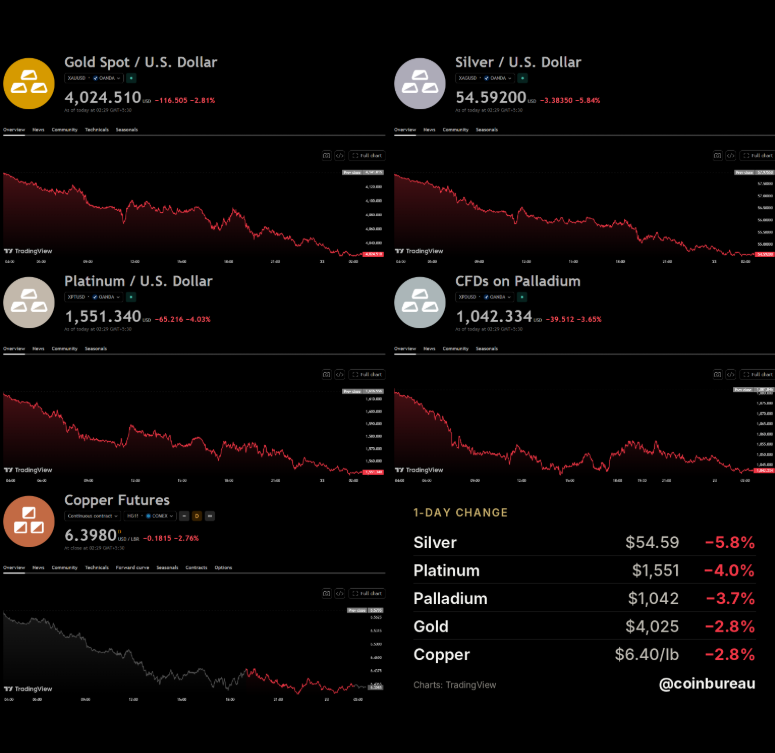
🩸BREAKING: Metals are MELTING, wiping an estimated $1,000,000,000,000 off gold and silver alone on Thursday.
Silver sank 5.8% and gold 2.8% with surging oil fueling inflation fears ahead of next week's Fed meeting.
Platinum fell 4% and palladium 3.7%, while copper slid 2.8% to a 5-week low as AI stocks sold off.
Gold lost about $810 BILLION in estimated market value and silver over $190 BILLION, per CompaniesMarketCap’s supply estimates.
🚨 Bond crisis in France.
France's 5-year yield is now at its highest since July 2008
10-year, 20-year and 30-year yields are at their highest since 2002.
With riots, strikes and a government that can't pass a budget, France's bond market is in absolute crisis.
🚨 A MAJOR ECONOMIC SHOCK COULD BE COMING FOR THE UK.
Government debt has crossed £3 TRILLION($4 trillion) for the first time, while inflation jumped to 3.5%, its highest level in almost a year.
Motor fuel prices surged 29.8% year-over-year in September, and markets are now pricing in TWO Bank of England rate hikes before year-end.
Meanwhile, the government borrowed £24.5 billion in September alone, while debt interest payments jumped nearly 17% from a year earlier to almost £11 billion that month.
If the Bank of England raises rates, mortgages and business loans could get more expensive, putting further pressure on an already weak economy.
If it cuts rates, inflation could become even harder to control, especially with energy prices already surging.
Either way, Britain faces the risk of higher prices, weaker growth and more pressure on its massive debt burden.
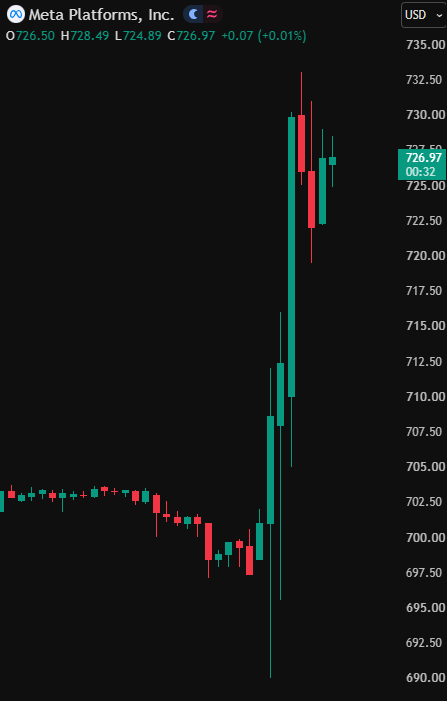
BREAKING: Meta jumps 4% after hours even as its free cash flow turns NEGATIVE.
Shares climbed from $697.52 at the close to around $727 after Meta beat revenue and earnings estimates.
Here are the 4 numbers we told you to watch:
1. Revenue: $64.6 BILLION vs $63.3 BILLION expected, up 26% from a year ago
2. EPS: $3.83 vs $3.57 expected, or $7.40 without a $9.89 BILLION legal charge
3. 2027 AI spending: no number yet, Meta only says it will keep "investing aggressively"
4. Free cash flow: negative $2.12 BILLION
Meta also approved a new class of stock with NO voting rights, starting January 2027.
This comes hours after a New Mexico judge ordered Meta to pay $25 BILLION.
BREAKING: 🇺🇸 Over 30% of subprime car loans made this year won't be paid off until the car is more than 12 years old, up from 7% in 2019, Per Reuters.
Car prices are so high that buyers are choosing older cars and loans of up to 8 years to cut the monthly payment.
The average new car payment is now $765 a month, up from $550 in 2019.
But the car keeps aging and losing value while the debt stays the same.
Many of these loans are packaged into securities held by pension funds and insurers, in a $1.7 trillion market.
If borrowers stop paying, the risk reaches the money of retirees and policyholders.
🇺🇸 LATEST: White House economic adviser Kevin Hassett says wage growth is ACCELERATING while price increases slow, crediting a surge in capital spending.
“The price increases are decelerating and the wage increases are accelerating because of all the capital spending.”
Citing estimates from Steve Moore’s group, Hassett says average annual real wages are around $88,000, nearly $2,000 above when Trump took office, after adjusting for inflation.
“The future is very bright especially if you consider that we’re not only talking about prices but talking about wages.”
“I think we’re very bullish still on the outlook for the economy.”
🚨 SOFTBANK'S DEBT CRISIS IS GROWING.
It is now down -25% in just the last 7 trading sessions.
The biggest concern is its exposure to AI.
As of June 2026, it held $164 Billion in debt, much of it used to finance its AI investments. The interest costs for this is already at $2 Billion, up 95% from Q1.
In September, it raised another $11 Billion at interest rates as high as 9.75%, adding $1 Billion in annual interest.
Investors are now panicking over whether these massive costs will ever translate into actual profits.
SoftBank’s 5-year default insurance (CDS) shot up by 24 basis points to 424 bps.
This makes it a similar story to what happened to Oracle’s 5Y CDS (288 bps) and CoreWeave’s CDS (1,100bps).
Higher US inflation and Fed rate hike fears are adding even more pressure.
Any corrections in AI valuations could hurt its investments and make it difficult to repay such large debt.
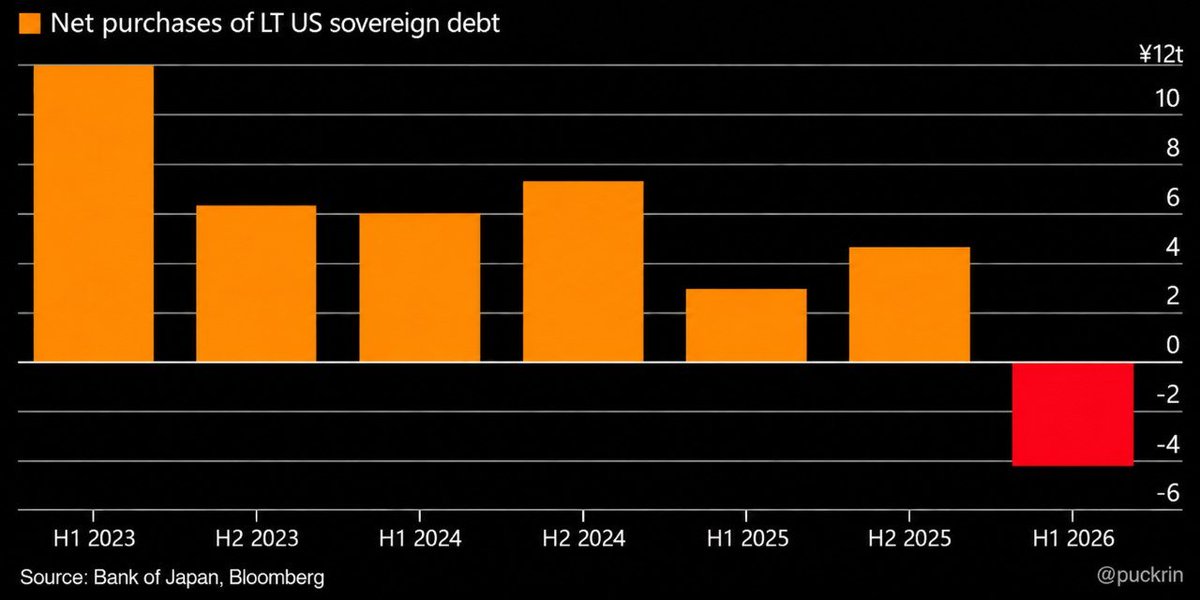
Japanese investors have been dumping US treasuries.
In the first half of this year, they sold $28B of them - the first net selling since 2022.
After 30 years of exporting capital, Japan is keeping it home given higher domestic yields.
The bid under US debt is thinning.
⚡️NEW: Anthropic commits roughly 20% of its shares to PUBLIC BENEFIT, launching the "Anthropic Public Benefit Fund" with an initial 5% stake.
The fund could receive up to another 2% for every 50% increase in Anthropic's valuation, subject to board approval.
Its co-founders have also pledged to donate 80% of their own equity.
🚨 Indian foreign reserves are about to go empty.
India has already burned half of its fx capital to defend the rupee.
And despite spending billions, the rupee is still trading near ₹97 against the U.S. dollar.
According to estimates from bankers, the RBI has used around $75–80 BILLION since June through dollar sales and currency swaps.
India's forex reserves have fallen $51 BILLION from their September peak, while the RBI's future dollar obligations have reached nearly $200 BILLION.
Indian mutual funds also stoped bulk subscriptions to gold ETFs ahead of festive season to save foreign reserves.
High oil prices, rising U.S. bond yields and foreign investors pulling money out of Indian stocks are putting even more pressure on the currency.
If these problems continue, defending the rupee could become even more expensive, leaving India with fewer reserves to deal with another financial shock.
🇺🇸 The US budget deficit has reached nearly $2 trillion, its highest level in 5 years and the third-largest in history.
That's a 12% jump in just one year.
Social Security and Medicare accounted for the biggest government expenses, costing $1.7 trillion and $1.1 trillion, respectively.
Meanwhile, US national debt had crossed $40 trillion, raising concerns about how sustainable this level of borrowing is.
This is already reflecting in bond markets, with 10-year and 30-year Treasury yields trading at their highest levels in over 20 years.
Treasury Secretary Scott Bessent says the US can “grow our way out of” its rising debt.
The markets are clearly not buying his story.
🚨 AI COULD TRIGGER A $500 BILLION U.S. BANKING DISASTER.
Americans younger than 50 are estimated to owe around $10 TRILLION in mortgages, credit cards, car loans, and other debt.
Now imagine AI starts replacing millions of workers, leaving people struggling to pay their loans.
If banks lose just 5% of that debt, it could result in $500 Billion in losses.
That's equal to nearly 20% of the entire U.S. banking system's $2.6 Trillion in capital.
And banks are already facing serious pressure.
• U.S. banks are sitting on $326.7 Billion in unrealized losses.
• Those losses have increased for two straight quarters.
• American wages have fallen behind inflation for 6 straight months, ending three years of real wage growth.
Millions of Americans are already struggling with rising prices, shrinking purchasing power, and huge debt payments.
If AI starts cutting jobs and incomes on a large scale, more people could fall behind on their loans.
And if those missed payments turn into major losses for banks, an AI jobs crisis could turn into a full-blown banking crisis.
You can’t make this up.
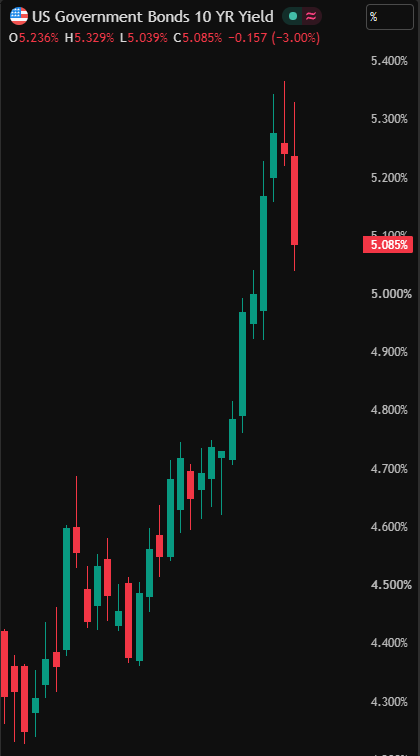
Treasury yields FELL despite US wholesale prices jumping 1.3% in a single month, the biggest rise since March 2022.
The 10-year dropped to around 5.06% during Thursday’s trading, per CNBC.
Investors sold tech stocks and fled into the safety of bonds.
Chip stocks had already lost over $1.6 TRILLION in six sessions, per Reuters.
In August, the US Treasury said it would at least double the maximum size of some long bond buyback operations from September 9, describing them as “liquidity support.”
On Thursday afternoon, Treasury accepted $6 BILLION of bonds in its 20 to 30 year buyback, after yields had already fallen that morning.
The 10-year and 30-year hit their highest levels since 2002 earlier this month.
Meanwhile, US net interest costs reached an estimated $1.143 TRILLION in fiscal 2026, more than either Medicare or the military, per CBO.
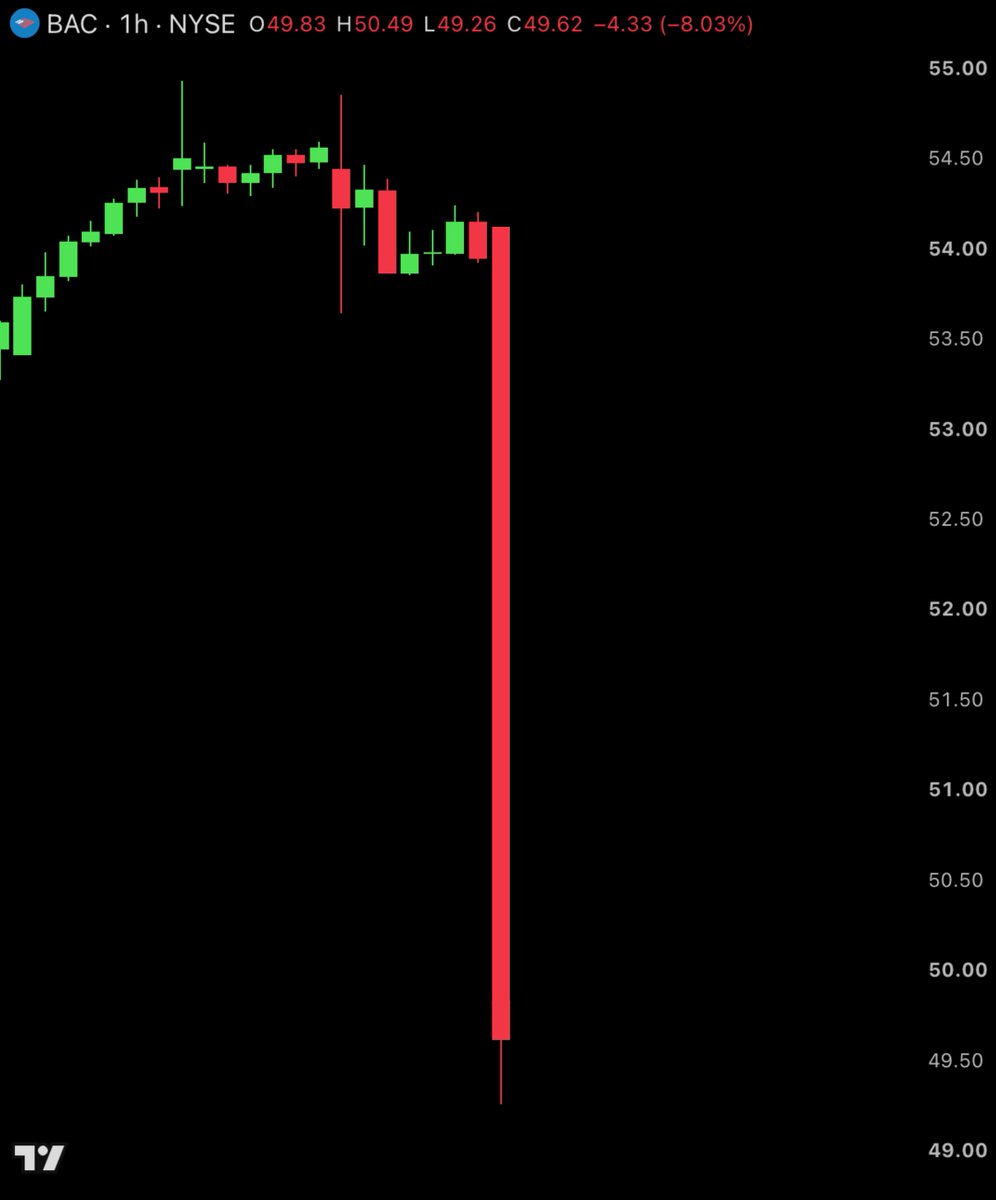
BREAKING: 🇺🇸 Bank of America crashes over -8% as it was fined $1.2 billion for money laundering by the US Treasury.
It failed to report more than $5 billion in suspicious activity to the government, including $1 billion linked to national security risks.
Q3 earnings also missed investor expectations, with yearly net income down 16%.
$BAC is now down more than 22% over the last 1 month.
🚨 IRAN IS TAKING ADVANTAGE OF US MID-TERM ELECTIONS.
Trump has repeatedly said that the US won't attack Iran before the midterm elections.
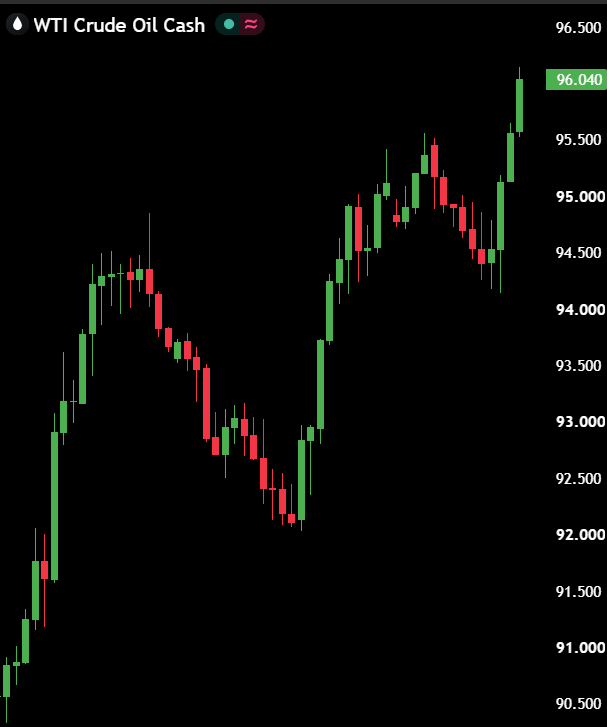
He knows that any attack on Iran could make the Hormuz situation even worse and cause a large spike in oil prices.
This is why the US is in 'wait and watch' mode and is seeking deals to bring more oil into the market.
But Iran is taking an entirely different approach.
They are planning to increase the attacks on the ships passing through Hormuz and push Trump to come on the negotiating table on Iran's terms.
Iran knows that once elections are over, they won't have an upper hand, so they are maximizing the damage, and so far their plan is working, as oil prices are still elevated.
🚨 THE U.S. HOUSING MARKET CRISIS IS ALMOST HERE.
Home sales are near 2009 crash-era levels, but prices are still close to record highs.
And the numbers are getting worse.
U.S. home sellers now outnumber buyers by a record 58%, with buyer numbers hitting their lowest level since 2013.
Mortgage rates are above 7.3%, pending home sales have fallen 4%, and a record 14.5% of purchase contracts are being canceled.
Nearly 1 in 5 sellers are already cutting prices.
Meanwhile, a Fed survey shows that 19.6% of U.S. families fell behind on loan payments in 2025, up from 12.2% in 2022. That's the highest level since 2010 and close to the 21% recorded before the 2008 financial crisis.
The warning is huge; buyers are disappearing, sellers are struggling, and more families are falling behind on debt.
If more homeowners are forced to sell and buyers remain unable to afford homes, prices could start falling much faster.
The biggest risk is a wave of forced selling that pushes home prices down and puts even more homeowners under financial pressure.
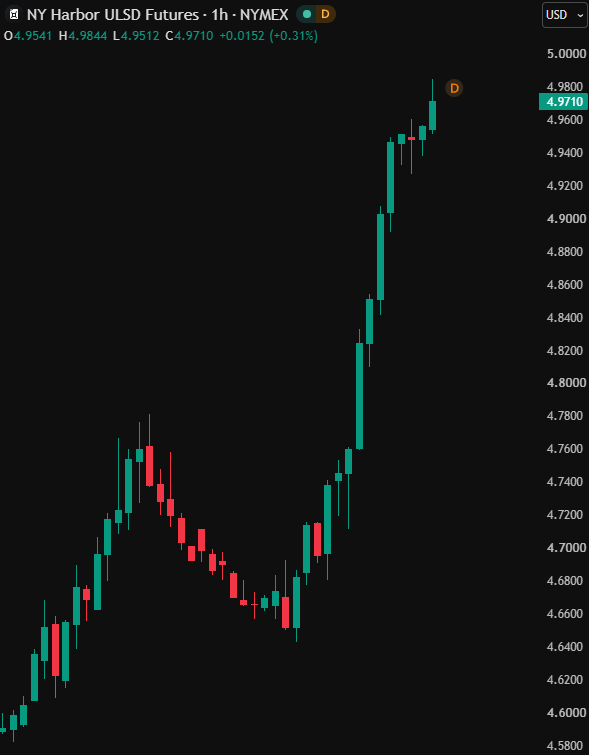
🇺🇸 JUST IN: US diesel prices are up 72% from a year ago, now 25 cents from the all-time record.
The national average is now $6.28 a gallon, up from $3.65 a year ago, per AAA.
September's record was $6.53 a gallon.
Diesel futures jumped 4.5% on Tuesday to a three-week high, despite Trump's Russian fuel deal.
🚨ALERT: The $300 BILLION stablecoin market may not be ready for a global financial crisis, according to the Financial Stability Board (FSB).
The FSB warns that fragmented cross-border regulations could complicate redemptions, reserve access and issuer failures during a market panic.
With 99% of stablecoins tied to the U.S. dollar, regulators are calling for stronger international coordination to prevent risks from spilling into traditional financial markets.
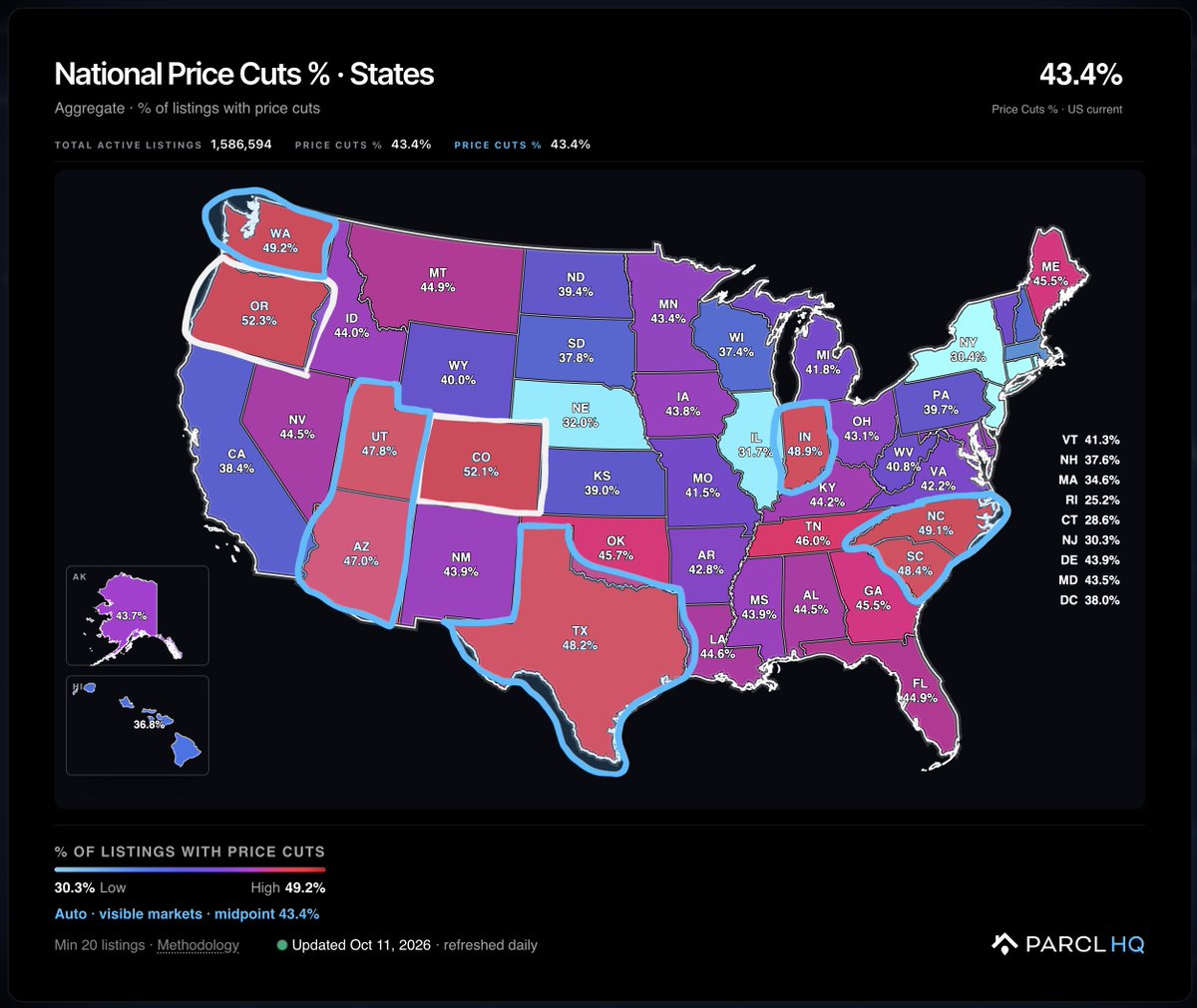
UPDATE: As of this morning, 43.4% of all US homes for sale are now undergoing price cuts.
This is the highest read all year, up an additional 70 basis points from this time last week.
Two tiers continue to emerge at the top of price cutting behavior.
Tier 1 (highlighted in white) - Danger zone:
Oregon: 52.3% (+96 basis points week on week)
Colorado: 52.1% (+1.2% week on week)
Tier 2 (highlighted in blue) - Elevated on watch zone:
North Carolina: 49.1% (+82 basis points week on week)
Indiana: 48.9% (+62 basis points week on week)
South Carolina: 48.4% (+20 basis points week on week)
Texas: 48.2% (+62 basis points week on week)
Utah: 47.8% (+20 basis points week on week)
Arizona: 47% (flat week on week)
Notably, the rate of acceleration in the tier 1 danger zone states of Oregon and Colorado is outpacing tier 2.