Believers today do not struggle with finding the Word of God. We have an embarrassment of access: Bible apps, devotionals, and countless preachers across our feeds. We know where God’s promises are.
When trouble looms, the real crisis is much quieter and harder to admit. It is the crisis of sufficiency.
We look at what God has said and the quiet question creeps in: Is this Word actually enough?
Can a promise spoken thousands of years ago really hold the crushing weight of my current reality?
It often feels like an impossible mismatch. On one side stands a massive, terrifying storm; on the other, just a simple, quiet sentence. We expect an army, and God hands us a word.
From the start, Christianity has offended human pride because it is built entirely on trust.
Look at the thief on the cross. He had no spiritual resume, no track record of discipleship, and only a few agonizing breaths left. He did not have time to clean up his life; he just turned his head and asked to be remembered. Jesus gave him a single sentence: "Today you will be with Me in paradise."
When you stop to think about it, it is almost absurd. In that dying man's shoes, the immediate human reaction would be: Really? That is it? Just a word?
I once heard a preacher playfully imagine the scene at heaven's gates when that man arrived. In this humorous picture, the man shows up with zero theological credentials, no baptism, and no good works to present. When the angels ask him what right he has to enter, his entire defense is simple: "The Man on the middle cross said I could come." That is the raw scandal of faith. We are asked to stake our entire existence on a spoken decree.
Why can we trust that decree? What makes it so utterly reliable?
The Word of God is unique because it was forged outside of time.
Before the universe had a clock, God existed in unhurried, perfect communion within Himself. There was no panic, no deadline, and no rush.
C.S. Lewis once noted that a human author has unlimited time to sit with a character's arc before the chapter opens.
But God was not writing fiction. In that boundless eternity, He looked at your life, saw the exact texture of your deepest heartbreak, and calibrated the exact measure of grace required to carry you through. It arrived in your hands having already passed through the reality of your worst day.
If that Word is not enough for your situation, it would mean God miscalculated. It would mean the Almighty suffered a manufacturing failure.
Think about how absurd that is when you look at the intentionality inside your own body.
Your DNA carries three billion base pairs of encoded information, a language science can read but could never author.
Your retina processes millions of calculations every second.
Did God really show obsessive precision with your biology, weaving microscopic brilliance into every cell, only to become careless with His grace? Did He master the vessel only to neglect the rescue?
Scripture says the Lamb was slain before the foundation of the world. The remedy was settled in eternity long before the wound ever occurred in time. This means the promise you are leaning on is not an emergency patch; it is an eternal verdict.
You already carry the evidence of His meticulous nature in your own chest. A God that precise with the vessel will not fail the rescue.
His Word might feel simple. It might look completely disproportionate to the weight of your battle. But it was designed to carry you, and it is enough.
Historical evidence for Jesus’ resurrection, along with experiences such as near-death experiences, answered prayers, apparitions, and other paranormal phenomena, point toward the existence of a spiritual or supernatural dimension of reality. Taken together, these are presented as strong support for the Christian worldview. New reel! Watch the full video: https://t.co/LQcOA2PwhD
#ForYou #HistoricalEvidence #ResurrectionofJesus #ChristianWorldview #Supernatural
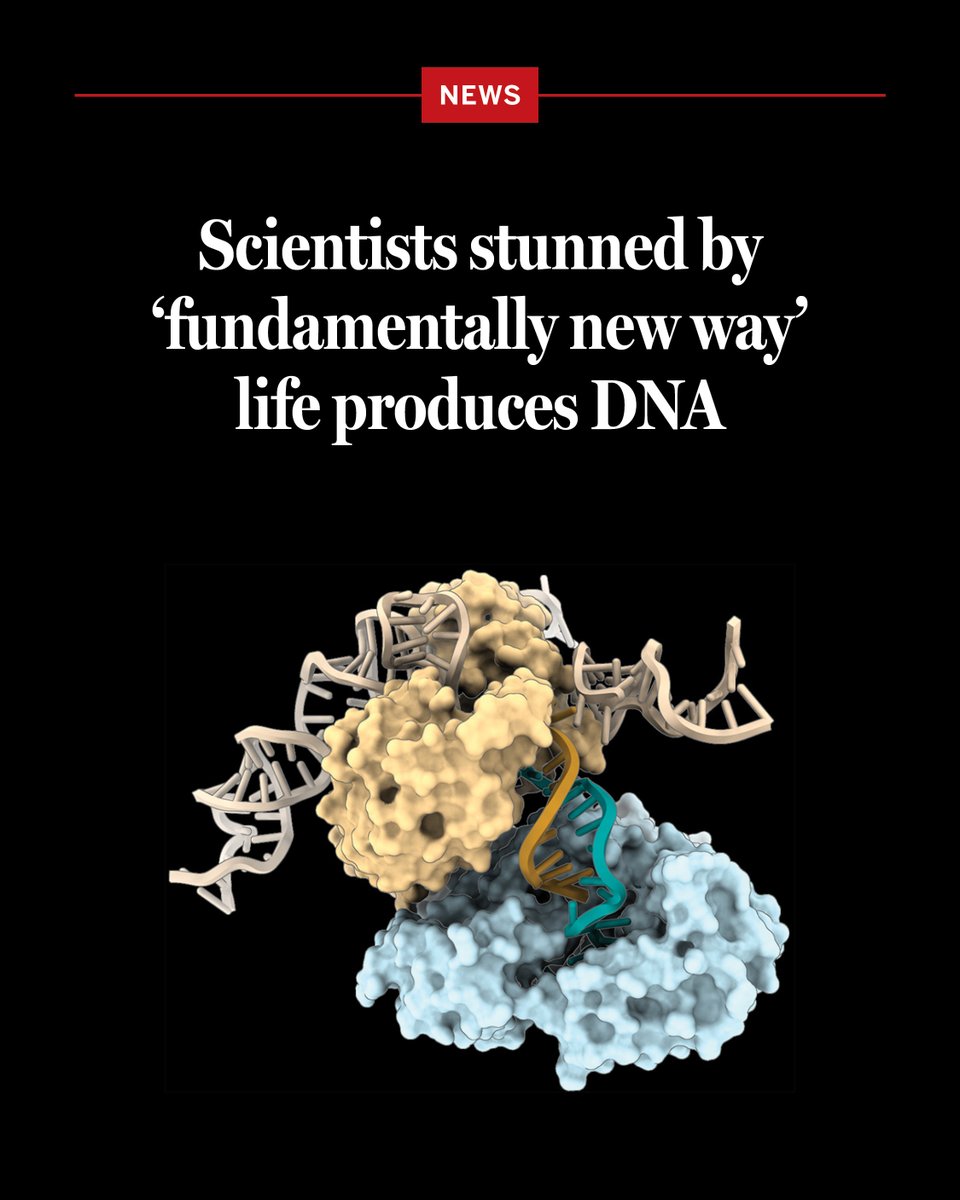
For decades, biology textbooks have enshrined a simple rule: DNA is made by copying a template. After one enzyme unzips a DNA double helix into separate strands, another called a polymerase builds a complementary sequence, base by base, for each strand. Presto: two copies of the original DNA.
But new research into how bacteria defend themselves from viruses now shows this synthesis rule isn’t absolute.
Now, a team describes a bacterial enzyme that synthesizes DNA without a nucleic acid template, using its own structure as a guide.
Learn more: https://t.co/bpVgr0KMdR
A reminder that the abundance of 'housekeeping' proteins varies significantly across cells and tissues.
GAPDH is often slandered as a 'housekeeping' protein, and its abundance varies significantly across human tissues.
How do you define a 'housekeeping' protein ?
Mitochondria are alive. A swelling tide of evidence suggests they are not just organelles, but rather their own life forms.
The precise definition of “life” has been debated since the inception of biology, but molecular biologists tend to focus on characteristics like metabolism, growth and development, response to stimuli, reproduction, and the ability to process information or evolve.
Biophysicists often take a more rigorous approach, defining life by means of energetic terms. Physicists Erwin Schrödinger and Ilya Prigogine said that living organisms maintain order despite the universe's tendency towards increasing entropy, a measure of how dispersed or disordered the energy within a system is. Cells take in low-entropy inputs, such as food or sunlight, and expel high-entropy outputs, including waste.
Mitochondria satisfy any of these definitions.
Mitochondria carry their own genomes and express their own genes using biomolecules distinct from the cell’s nucleus. Mitochondria also replicate and divide through binary fission, much like bacteria.
From a thermodynamic perspective, mitochondria take in low-entropy inputs from their host cell, such as glucose or fatty acids, and expel high-entropy outputs, including carbon dioxide and water.
Mitochondria also pump out protons through their inner membrane to maintain an out-of-equilibrium thermodynamic balance, using the resulting gradient to produce the ATP molecules that fuel cellular functions, from DNA replication to protein synthesis.
Mitochondria also process information and interact with their environment, much like a human cell. They monitor steroid hormones, oxidative stress, heat, ATP levels, secondary metabolites, and many more molecules floating through their environment, the cell’s cytoplasm. Mitochondria then use this information to precisely control cellular functions. For example, when a virus invades a cell, the mitochondria are critical in sensing the intrusion and signaling a host cell to undergo programmed cell death to halt its spread.
And finally, mitochondria grow and reproduce in a manner distinct from the host’s replication process. Mitochondria independently copy their circular genomes, known as mitochondrial DNA, and divide through binary fission.
Notably, mitochondrial replication has several distinct properties from those observed during human cellular replication. Mitochondrial DNA mutates 100-1,000 times faster than the human genome and these mutations can significantly alter a mitochondrion’s fitness, thereby changing the fitness of its host cell. Mitochondria are thus agents of — and subject to — the forces of evolution.
Mitochondria are alive.
Chloroplasts are organelles in plants and algae. They encode the proteins involved in photosynthesis, and so are very important.
Historically, it has been very difficult to engineer a chloroplast. But a new paper out in Nature Plants seems to be a big step forward.
For context: A chloroplast is, like mitochondria, a remnant of an ancient endosymbiosis. Chloroplasts carry their own genomes, called "plastomes," which usually encode a couple hundred genes. Many of these genes are involved in photosynthesis.
In an ideal world, it would be easy to engineer the plastome, because then we could tinker with the genes to speed up photosynthesis and thus boost crop yields, say, or fix more carbon in the atmosphere.
But it's not easy. It's really hard to get DNA into the plastome, let alone to stably express it. Only a handful of promoters and other genetic “parts” work reliably in the chloroplast, and most of the DNA delivered into the cells is destroyed. Transformation efficiencies in a chloroplast are woefully low; much lower than putting genes into a nucleus.
This new paper solves *some* of these problems. Here are some of the highlights:
> They built a robot that can transform and study ~3,100 different strains in parallel. This robot is almost an order-of-magnitude faster than manual techniques.
> They built a huge genetic toolkit of “parts” that work reliably in chloroplasts, including 59 new promoters. They also made a bunch of chloroplast selection markers, so now we can engineer them and select for those carrying desired genes much more easily.
> They actually tested these genetic parts! The promoters had huge dynamic ranges, meaning we can now build genetic circuits over a large design space. This is good for synthetic biology.
The major experiment in this paper, though, is that they engineered chloroplasts to actually boost photosynthesis rates. Here's how:
During normal photorespiration, an enzyme in the chloroplast, called Rubisco, occasionally grabs onto oxygen instead of CO2 and makes a toxic molecule called 2-phosphoglycolate. The cell salvages these molecules using a long, energy-intensive pathway; basically, they export the toxic byproduct into the cell's peroxisome, where it can be broken down into CO2 and NH3.
To fix this problem (and thus conserve energy), the authors added two genes to the chloroplast: glycolate dehydrogenase, which converts glycolate into glyoxylate and also produces a NADH molecule; and malate synthase, which combines glyoxylate with acetyl-CoA to make malate, while releasing CO2.
These two enzymes, together, recycle the “waste” product made by Rubisco back into CO2, thus boosting its local concentration in the chloroplast and speeding up photosynthesis. When engineered chloroplasts were grown under ambient CO2 levels, they reached a growth density 2x higher than wild type strains.
Again, an important paper for plant synthetic biology and photosynthesis engineering more broadly.
The immune system is powerful.
Sometimes, too powerful.
If it goes unchecked, it can turn on us -
attacking our own organs, tissues, even our blood.
That’s why the 2025 Nobel Prize in Medicine matters so much.
It honors three scientists who figured out how the body stops itself from self-destructing.
🧬 Mary Brunkow
🧪 Fred Ramsdell
🧫 Shimon Sakaguchi
Here’s the story :👇
Every day, your body fights off thousands of invaders - viruses, bacteria, fungi.
But the real magic? It knows not to attack you.
That precision is everything.
And for decades, scientists thought they knew how it worked:
Bad immune cells were weeded out early in the thymus (central tolerance). End of story.
Except… that wasn’t the whole story.
Sakaguchi’s bold idea (1995)
He challenged the dogma.
He found a new class of immune cells doing something unexpected:
➡️ They weren’t attacking.
➡️ They were protecting.
He called them regulatory T cells - the immune system’s peacekeepers.
They roam the body and tell other immune cells:
“Stand down. This is us. Don’t attack.”
It was a radical idea at the time. But he was right.
Brunkow & Ramsdell’s breakthrough (2001)
They were studying a mysterious mouse.
It had a single mutation - and developed devastating autoimmune disease.
They found the cause: a gene called Foxp3.
🧬 Foxp3 isn’t just any gene.
It’s the master switch that tells cells to become regulatory T cells - the same ones Sakaguchi discovered.
Mutate it in mice or humans… and the immune system spins out of control.
In kids, that mutation causes a rare and deadly disease: IPEX syndrome.
The missing link (2003)
Sakaguchi came back to close the loop.
He proved that Foxp3 is what powers the regulatory T cells - the body’s tolerance enforcers.
This confirmed the whole mechanism.
➡️ We don’t just delete dangerous immune cells early on.
➡️ We also deploy specialized cells to watch over the rest.
➡️ That’s how we avoid autoimmune chaos.
The impact? Massive.
Their discoveries opened an entire new field: peripheral immune tolerance.
We now have:
🔹 New approaches to treat autoimmune diseases
🔹 Promising advances in organ transplant tolerance
🔹 Immunotherapies that fine-tune the immune system to fight cancer - without turning on the body
Some of these are already in clinical trials.
This isn’t just a scientific triumph.
It’s a reminder that:
✅ Curiosity still drives paradigm shifts.
✅ Going against the mainstream can change everything.
✅ Basic science leads to better medicine.
And sometimes, three scientists working decades apart can quietly solve one of biology’s deepest mysteries.
👉 That’s worth a Nobel.
Scientists have created the first ever viruses designed by AI, and they’re capable of hunting down and killing strains of E. coli
https://t.co/cEvn3yzGbC
Is the cell a computer? Here's what Michael Elowitz ( @ElowitzLab ) had to say in a prior interview:
"The computer analogy is a double-edged sword.
The analogy is useful in the sense that a cell is a programmable device that can do many different things. And the closest thing we have like that, in our daily life, is the computer. You can program your computer to do all kinds of things. And I think that's also true with the cell; you can program the cell to grow, divide, change morphology, interact with other cells, and do all kinds of things that are difficult for us to imagine. Cells are open-ended, programmable systems.
We can even program cells to carry out functions that cells did not naturally evolve to do. So from that point of view, the computer analogy seems quite useful and accurate, actually.
But there's also a lot of ways in which a cell is not a computer. And I think those are equally important. Cells are noisy, and they use that noise to control behaviors at the population level. They also make copies of themselves and grow exponentially—computers do not do that. Instead of transistors connected by wires, cells use molecules connected by specific molecular interactions.
Another one is negative numbers, right? You can't have a negative concentration of a molecule in biology, which means that biology has to solve problems in unique ways. There’s also combinatoriality, in which biological systems encode signals in combinations of molecules that compete to form different complexes. These systems compute in ways that resemble digital computation in some ways and differ in others.
So the thing that makes me nervous about the metaphor is when we start to impose our electrical engineering expectations on the mysterious world inside of a cell. There are some principles of electrical engineering that apply to living cells, but the most interesting things about biology are all the ways in which they’re different."
(From the Archives) "Synthetic Origins." https://t.co/2wsLYxpiL8
We often assume that an organism carries the same genome within all of its cells. But in many cases — from nematodes to hagfish, lampreys to songbirds — the truth is far messier.
At least 100 species are known to do something called “programmed DNA elimination,” in which large swaths of the genome is removed from somatic cells during development.
Marie Delattre, a cell biologist at the École Normale Supérieure, studies this phenomenon in a worm called M. belari, which belongs to the same family as C. elegans. Her research group “compared the genomes of M. belari’s germline cells — the specialized reproductive cells like sperm and eggs — with the genomes of the worm’s somatic (nonreproductive) cells,” according to reporting in Quanta Magazine.
“The somatic genomes were missing long strings of sequences present in germline genomes. Sometime between the embryo’s growth from seven cells to 32, huge chunks of DNA had vanished.”
“The scientists then watched nematode embryos develop under a microscope. As the cells grew and replicated their genomes, they broke 20 chromosomes down into fragments and then reassembled them into 40 miniature chromosomes. Most of the fragments rejoined in this new, smaller genome — but a substantial fraction were left out.”
Specifically, the worm eliminated about one-third of its own genome from somatic cells. This DNA removal process begins during early embryogenesis, typically during the first few rounds of cell division. Germline cells (those destined to become gametes; eggs or sperm) retain the entire intact genome. The exact amount of eliminated DNA varies widely between species; a parasitic nematode found in cow stomachs, called Parascaris univalens, eliminates 90% of its genome!!
The question, of course, is why organisms bother to do this at all.
It seems that the eliminated genes are useful in the germline but unnecessary, or even harmful, in somatic cells. The eliminated sequences include transposons, which are "self-replicating DNA sequences that steal the cell’s machinery to copy themselves by the thousands or millions," according to the Quanta article.
"This amounts to molecular grand larceny, as well as a waste of the time and energy that the cell must spend to suppress these sequences. Cells routinely curb transposons with epigenetic marks that silence them, or by intercepting and destroying their RNA. But some species, such as M. belari, may remove them entirely through [programmed DNA elimination]."
This process, then, is basically a way to partition the genome, keeping the full sequence safely in the germline while paring down somatic DNA for energetic efficiency or stability. If somatic cells contain a bunch of excess genes that are no longer needed, and it takes lots of energy to continuously 'silence' those genes, then it's just more efficient to cut them out entirely.
The excision is not random, either. In the best-studied nematode that does this, called Ascaris, the same exact genes and DNA segments are eliminated in every embryo, every time. Eliminated DNA sequences tend to be AT-rich and repetitive. They are usually tagged with methyl groups, which alerts the cell that this DNA should be tightly packed and kept ‘silenced’.
Programmed DNA elimination sounds esoteric, but any strange phenomenon is usually a rich source of material for biotechnology discovery. Clearly these organisms have evolved an effective means to silence genes, streamline genomes, and keep transposons from causing trouble. Instead of relying on reversible switches, though, they just cut out the unneeded pieces. If we understood and harnessed this, perhaps we could build smaller synthetic genomes or reprogram chromosomes in useful ways.
Thanks for reading.
A newly discovered type of immune cell found in fat tissue seems to contribute to the chronic inflammation associated with ageing
https://t.co/8IP3U9popC
In their landmark article from 2004, @mike_rossner and Ken Yamada discuss the perils of image manipulation. https://t.co/9hJhVDcUkU
📕 In #Reproducibility and Best Practices in Cell Biology: https://t.co/QolmAHOXhO
Removing Drp1 in mouse zygotes disrupts mitochondrial distribution, spindle formation & embryo development, revealing how vital this protein is for early life.
https://t.co/1bG8X9UCay
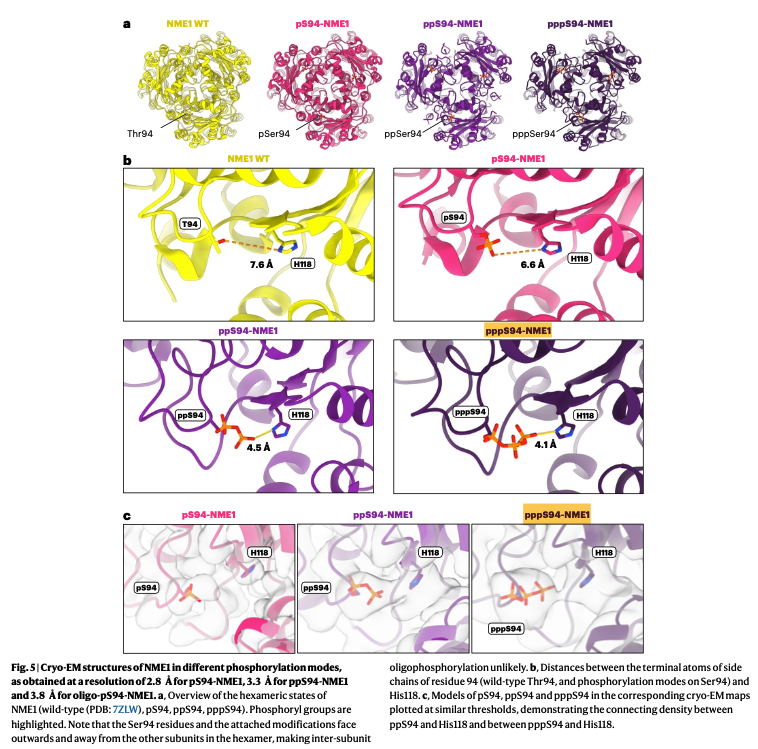
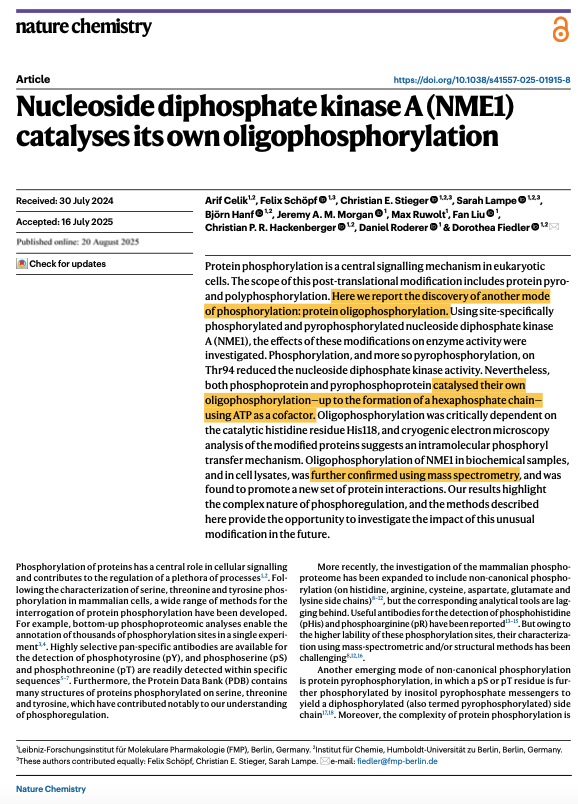
A new paper, in Nature Chemistry, proves that there are still tons of "basic" things to discover in biology. There is so much room at the bottom.
TL;DR: Researchers discovered a new type of post-translational modification, called “oligophosphorylation.” Rather than being tagged with a single phosphate, some proteins are instead decorated with a chain of phosphates...all on a single amino acid!
In human cells, phosphates are often added to serine, threonine, or tyrosine amino acids in proteins. These additions happen after a protein is already made by a ribosome, hence why they are called “post-translational modifications.” Adding a phosphate can flip enzymes on or off. Tagging proteins with a molecule called ubiquitin targets them for destruction. Lipids are fused to proteins to anchor them to membranes, and so on.
These post-translational modifications are a way for cells to “tune” the behaviors of proteins after they are made, rather than investing lots of energy to make new proteins from scratch.
For this paper, researchers were studying a single protein, called NME1, when they found the oligophosphorylation. NME1’s job is to move a phosphate from ATP (an energy currency of cells) to other nucleotides, like GDP→GTP. The key amino acid that does this reaction is a HISTIDINE at position 118. This histidine strips a phosphate from ATP and then passes it to the next molecule.
Now, if you look at NME1 in 3D, you will see that the HISTIDINE at 118 is located right next to a THREONINE at position 94. And the chain of phosphates--the new type of post-translational modification--was discovered on that threonine!
How was this discovered? A simple experiment: The researchers put NME1 proteins in a liquid and chemically fused a phosphate at residue 94. Next, they added some ATP to this liquid and used mass spectrometry to measure how the protein’s mass changed over time. They saw clear, stepwise “jumps” in mass of about 80 Daltons (the mass of a phosphate) after adding ATP.
Turns out that, if the threonine at 94 has a phosphate before the histidine encounters ATP, the histidine will begin stripping phosphates from ATP and adding it to the threonine. If you mutate the histidine to another amino acid, this stops happening. (This same phenomenon was also found in living cells.)
What's the point of proteins making these phosphate chains, though?
The answer comes down to charge; a single phosphate carries a negative charge, but a CHAIN of phosphates carries a much bigger charge! And this big charge blocks molecules from moving into the enzyme’s active site. It’s basically a really powerful off switch. (Also, the negative charge ATTRACTS other molecules and proteins; it seems to facilitate new types of binding.)
Now that we know these chains exist, we can look for them elsewhere, too. This discovery actually reminds me of glycoRNAs, which are RNA molecules fused to sugar. For decades, nobody thought glycoRNAs could exist, but then researchers found them (in 2021). The reason we missed them for all those years was because our methods were biased. Standard RNA purifications filtered out these molecules.
Our tools are often designed to produce more of what we expect, in other words. If we don’t know to look for something, we cannot easily find it.
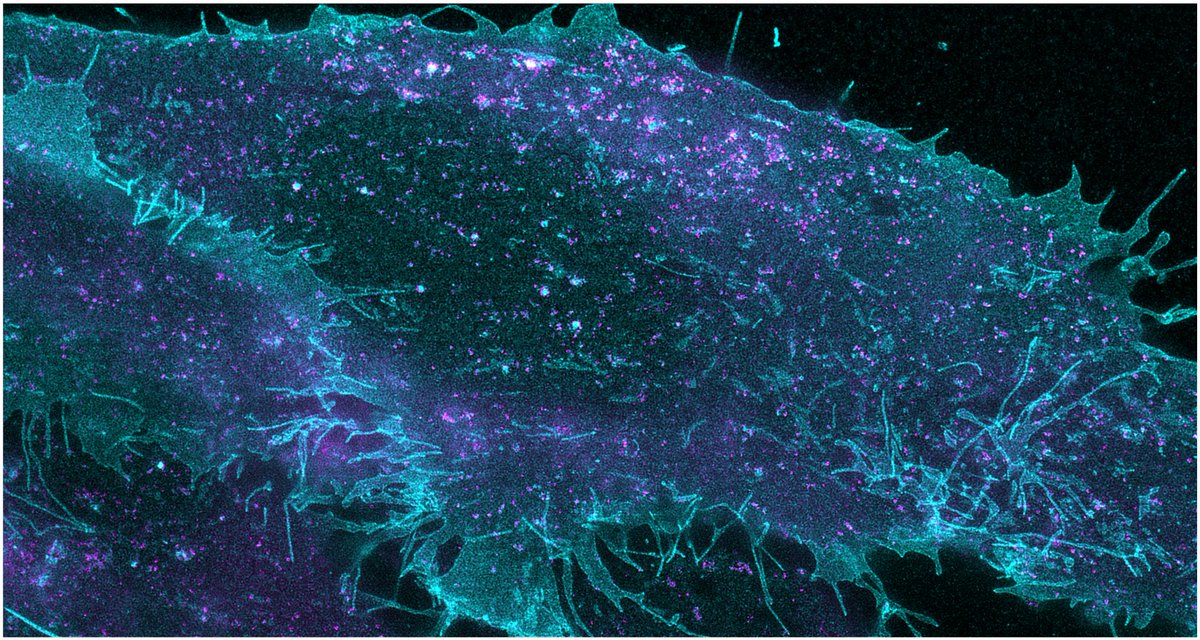
Here’s the big one: In collaboration with @Honigmann_Lab, @LabShevchenko, Björn Drobot and Martin Hof we present a general workflow for imaging the localization and transport of individual lipids in cells and mapping their metabolism.
https://t.co/uotVrHnbsK
Mitochondria are known as the "powerhouses" of a cell. But that is a ridiculously incomplete description.
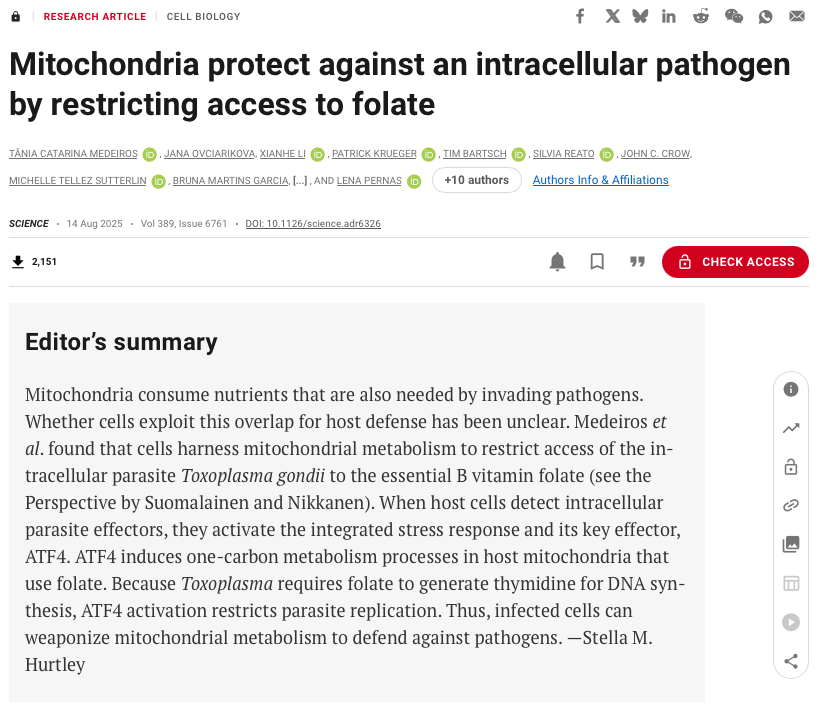
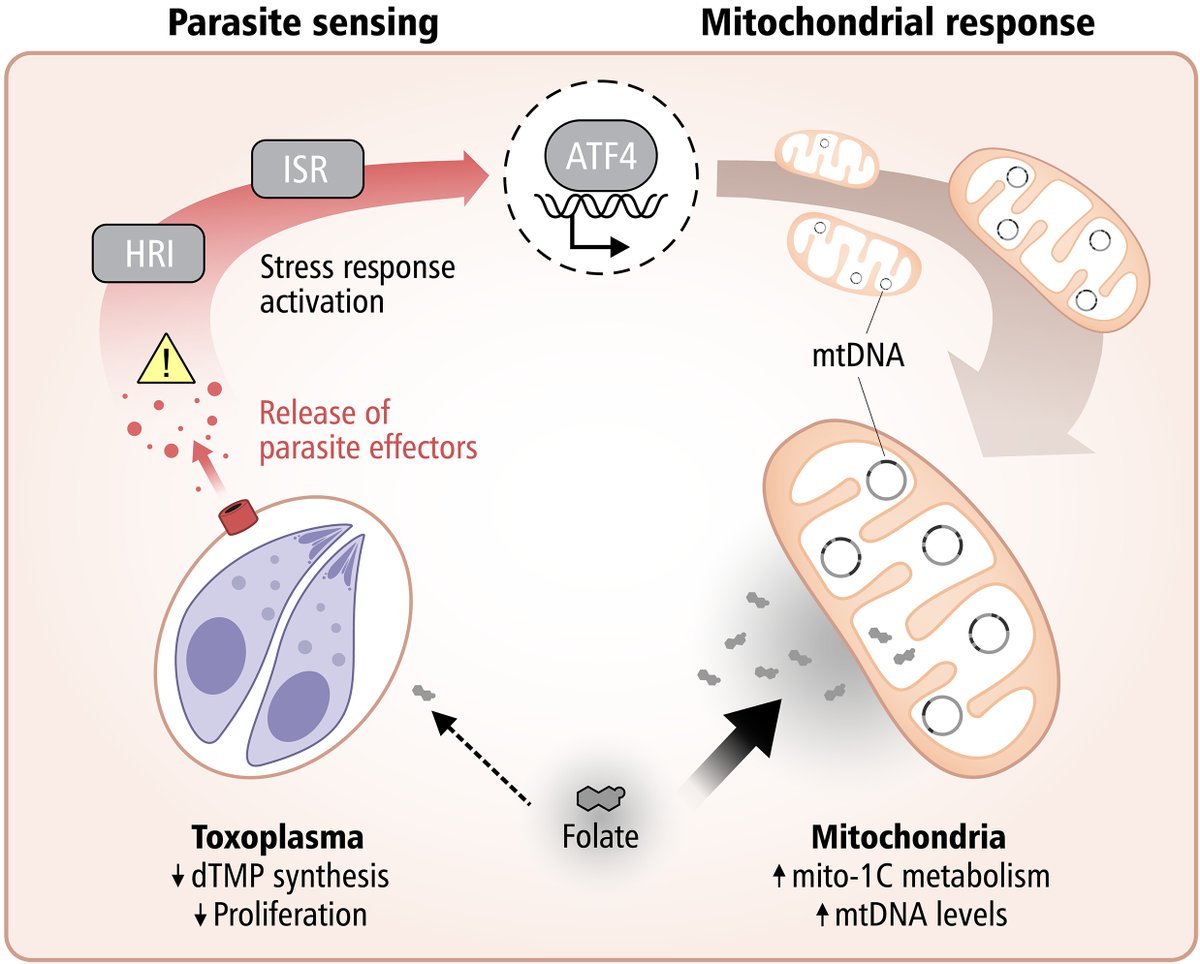
A new study shows that human cells "weaponize" mitochondria during infection. Mitochondria ramp up their metabolism to deprive pathogens of folate, a molecule required for DNA replication.
In other words, this study gives a mechanism by which mitochondria defend host cells from infections. It comes at time when mitochondria are (increasingly) being seen as not only "energy creators," but also living organisms in their own right. (Our most popular essay at @AsimovPress is called "Mitochondria are Alive" and it argues this viewpoint.)
Before I explain this new paper, some context:
1. Each human cell has ~100-1,000 mitochondria.
2. Each mitochondrion carries 2-10 copies of its own genome, distinct from the cell.
3. The cell makes folate, which moves into the mitochondria (through a transporter protein).
4. Folate is needed to make the nucleotides that are used to build DNA! It is super important.
For this paper, researchers infected 3 types of human cells (a cancer cell line, HeLA cells, and fibroblasts) with Toxoplasma gondii, a single-celled parasite. In each case, this caused the amount of mitochondrial DNA to shoot way up. Cells did NOT have more mitochondria, but those mitochondria had much MORE DNA.
This happened, they found, because after infection the cells activate a transcription factor, called ATF4, that then coaxes mitochondria to ramp up their one-carbon metabolism (like building thymidine for DNA). ATF4 levels go up by ~16x after infection and, if you knock this protein out, the mitochondrial DNA increase goes away, and parasites replicate in the cell faster.
(ATF4 activation is not a "general" response to infection. ATF4 only goes up if the human cell senses very specific "effector proteins" secreted by the pathogen!)
But why does the host cell want to ramp up mitochondrial DNA? To hoard folate and keep it away from the pathogen!
The researchers traced the flow of atoms from labeled serine, which feeds into folate metabolism. In normal cells, infection shifted folate use toward the mitochondria. In cells missing ATF4, it shifted folate toward the parasite. Parasites growing in cells without ATF4 had more DNA building blocks (dTMP and dTTP), and they multiplied faster. In short, human cells fight off infections by ordering mitochondria to compete for folate.
Aside from this paper, there is tons of evidence showing that mitochondria are more important than most textbooks give them credit for. Mitochondria also:
1. Grow and reproduce in a distinct way from the host cell.
2. Monitor hormones and metabolites in the cell to watch out for infections. (They sense viral intrusions, for example, and signal host cells to kill themselves to halt the virus' spread.)
3. Have their own genomes, of course, and use biomolecules distinct from the cell's nucleus.
TL;DR Mitochondria are alive, man.
New findings in Science deepen our understanding of the role of membrane contact sites in cell biology and reactive oxygen species regulation.
📄: https://t.co/D45bHcCmeV
#SciencePerspective: https://t.co/E6t6wfw9dM


![NikoMcCarty's tweet photo. We often assume that an organism carries the same genome within all of its cells. But in many cases — from nematodes to hagfish, lampreys to songbirds — the truth is far messier.
At least 100 species are known to do something called “programmed DNA elimination,” in which large swaths of the genome is removed from somatic cells during development.
Marie Delattre, a cell biologist at the École Normale Supérieure, studies this phenomenon in a worm called M. belari, which belongs to the same family as C. elegans. Her research group “compared the genomes of M. belari’s germline cells — the specialized reproductive cells like sperm and eggs — with the genomes of the worm’s somatic (nonreproductive) cells,” according to reporting in Quanta Magazine.
“The somatic genomes were missing long strings of sequences present in germline genomes. Sometime between the embryo’s growth from seven cells to 32, huge chunks of DNA had vanished.”
“The scientists then watched nematode embryos develop under a microscope. As the cells grew and replicated their genomes, they broke 20 chromosomes down into fragments and then reassembled them into 40 miniature chromosomes. Most of the fragments rejoined in this new, smaller genome — but a substantial fraction were left out.”
Specifically, the worm eliminated about one-third of its own genome from somatic cells. This DNA removal process begins during early embryogenesis, typically during the first few rounds of cell division. Germline cells (those destined to become gametes; eggs or sperm) retain the entire intact genome. The exact amount of eliminated DNA varies widely between species; a parasitic nematode found in cow stomachs, called Parascaris univalens, eliminates 90% of its genome!!
The question, of course, is why organisms bother to do this at all.
It seems that the eliminated genes are useful in the germline but unnecessary, or even harmful, in somatic cells. The eliminated sequences include transposons, which are "self-replicating DNA sequences that steal the cell’s machinery to copy themselves by the thousands or millions," according to the Quanta article.
"This amounts to molecular grand larceny, as well as a waste of the time and energy that the cell must spend to suppress these sequences. Cells routinely curb transposons with epigenetic marks that silence them, or by intercepting and destroying their RNA. But some species, such as M. belari, may remove them entirely through [programmed DNA elimination]."
This process, then, is basically a way to partition the genome, keeping the full sequence safely in the germline while paring down somatic DNA for energetic efficiency or stability. If somatic cells contain a bunch of excess genes that are no longer needed, and it takes lots of energy to continuously 'silence' those genes, then it's just more efficient to cut them out entirely.
The excision is not random, either. In the best-studied nematode that does this, called Ascaris, the same exact genes and DNA segments are eliminated in every embryo, every time. Eliminated DNA sequences tend to be AT-rich and repetitive. They are usually tagged with methyl groups, which alerts the cell that this DNA should be tightly packed and kept ‘silenced’.
Programmed DNA elimination sounds esoteric, but any strange phenomenon is usually a rich source of material for biotechnology discovery. Clearly these organisms have evolved an effective means to silence genes, streamline genomes, and keep transposons from causing trouble. Instead of relying on reversible switches, though, they just cut out the unneeded pieces. If we understood and harnessed this, perhaps we could build smaller synthetic genomes or reprogram chromosomes in useful ways.
Thanks for reading.](https://pbs.twimg.com/media/G0aQhiObQAAPK19.png)
![NikoMcCarty's tweet photo. We often assume that an organism carries the same genome within all of its cells. But in many cases — from nematodes to hagfish, lampreys to songbirds — the truth is far messier.
At least 100 species are known to do something called “programmed DNA elimination,” in which large swaths of the genome is removed from somatic cells during development.
Marie Delattre, a cell biologist at the École Normale Supérieure, studies this phenomenon in a worm called M. belari, which belongs to the same family as C. elegans. Her research group “compared the genomes of M. belari’s germline cells — the specialized reproductive cells like sperm and eggs — with the genomes of the worm’s somatic (nonreproductive) cells,” according to reporting in Quanta Magazine.
“The somatic genomes were missing long strings of sequences present in germline genomes. Sometime between the embryo’s growth from seven cells to 32, huge chunks of DNA had vanished.”
“The scientists then watched nematode embryos develop under a microscope. As the cells grew and replicated their genomes, they broke 20 chromosomes down into fragments and then reassembled them into 40 miniature chromosomes. Most of the fragments rejoined in this new, smaller genome — but a substantial fraction were left out.”
Specifically, the worm eliminated about one-third of its own genome from somatic cells. This DNA removal process begins during early embryogenesis, typically during the first few rounds of cell division. Germline cells (those destined to become gametes; eggs or sperm) retain the entire intact genome. The exact amount of eliminated DNA varies widely between species; a parasitic nematode found in cow stomachs, called Parascaris univalens, eliminates 90% of its genome!!
The question, of course, is why organisms bother to do this at all.
It seems that the eliminated genes are useful in the germline but unnecessary, or even harmful, in somatic cells. The eliminated sequences include transposons, which are "self-replicating DNA sequences that steal the cell’s machinery to copy themselves by the thousands or millions," according to the Quanta article.
"This amounts to molecular grand larceny, as well as a waste of the time and energy that the cell must spend to suppress these sequences. Cells routinely curb transposons with epigenetic marks that silence them, or by intercepting and destroying their RNA. But some species, such as M. belari, may remove them entirely through [programmed DNA elimination]."
This process, then, is basically a way to partition the genome, keeping the full sequence safely in the germline while paring down somatic DNA for energetic efficiency or stability. If somatic cells contain a bunch of excess genes that are no longer needed, and it takes lots of energy to continuously 'silence' those genes, then it's just more efficient to cut them out entirely.
The excision is not random, either. In the best-studied nematode that does this, called Ascaris, the same exact genes and DNA segments are eliminated in every embryo, every time. Eliminated DNA sequences tend to be AT-rich and repetitive. They are usually tagged with methyl groups, which alerts the cell that this DNA should be tightly packed and kept ‘silenced’.
Programmed DNA elimination sounds esoteric, but any strange phenomenon is usually a rich source of material for biotechnology discovery. Clearly these organisms have evolved an effective means to silence genes, streamline genomes, and keep transposons from causing trouble. Instead of relying on reversible switches, though, they just cut out the unneeded pieces. If we understood and harnessed this, perhaps we could build smaller synthetic genomes or reprogram chromosomes in useful ways.
Thanks for reading.](https://pbs.twimg.com/media/G0aQhUyacAE1dfu.jpg)











![NikoMcCarty's tweet photo. We often assume that an organism carries the same genome within all of its cells. But in many cases — from nematodes to hagfish, lampreys to songbirds — the truth is far messier.
At least 100 species are known to do something called “programmed DNA elimination,” in which large swaths of the genome is removed from somatic cells during development.
Marie Delattre, a cell biologist at the École Normale Supérieure, studies this phenomenon in a worm called M. belari, which belongs to the same family as C. elegans. Her research group “compared the genomes of M. belari’s germline cells — the specialized reproductive cells like sperm and eggs — with the genomes of the worm’s somatic (nonreproductive) cells,” according to reporting in Quanta Magazine.
“The somatic genomes were missing long strings of sequences present in germline genomes. Sometime between the embryo’s growth from seven cells to 32, huge chunks of DNA had vanished.”
“The scientists then watched nematode embryos develop under a microscope. As the cells grew and replicated their genomes, they broke 20 chromosomes down into fragments and then reassembled them into 40 miniature chromosomes. Most of the fragments rejoined in this new, smaller genome — but a substantial fraction were left out.”
Specifically, the worm eliminated about one-third of its own genome from somatic cells. This DNA removal process begins during early embryogenesis, typically during the first few rounds of cell division. Germline cells (those destined to become gametes; eggs or sperm) retain the entire intact genome. The exact amount of eliminated DNA varies widely between species; a parasitic nematode found in cow stomachs, called Parascaris univalens, eliminates 90% of its genome!!
The question, of course, is why organisms bother to do this at all.
It seems that the eliminated genes are useful in the germline but unnecessary, or even harmful, in somatic cells. The eliminated sequences include transposons, which are "self-replicating DNA sequences that steal the cell’s machinery to copy themselves by the thousands or millions," according to the Quanta article.
"This amounts to molecular grand larceny, as well as a waste of the time and energy that the cell must spend to suppress these sequences. Cells routinely curb transposons with epigenetic marks that silence them, or by intercepting and destroying their RNA. But some species, such as M. belari, may remove them entirely through [programmed DNA elimination]."
This process, then, is basically a way to partition the genome, keeping the full sequence safely in the germline while paring down somatic DNA for energetic efficiency or stability. If somatic cells contain a bunch of excess genes that are no longer needed, and it takes lots of energy to continuously 'silence' those genes, then it's just more efficient to cut them out entirely.
The excision is not random, either. In the best-studied nematode that does this, called Ascaris, the same exact genes and DNA segments are eliminated in every embryo, every time. Eliminated DNA sequences tend to be AT-rich and repetitive. They are usually tagged with methyl groups, which alerts the cell that this DNA should be tightly packed and kept ‘silenced’.
Programmed DNA elimination sounds esoteric, but any strange phenomenon is usually a rich source of material for biotechnology discovery. Clearly these organisms have evolved an effective means to silence genes, streamline genomes, and keep transposons from causing trouble. Instead of relying on reversible switches, though, they just cut out the unneeded pieces. If we understood and harnessed this, perhaps we could build smaller synthetic genomes or reprogram chromosomes in useful ways.
Thanks for reading.](https://pbs.twimg.com/media/G0aQhyDbgAAzfU1.jpg)