Ever wonder why are snails and slugs so slow? If so, my students and I penned an answer for curious 11 yr old. I'll bet you know all this stuff:
https://t.co/LRrHY4W0TX via @ConversationUS
A new Tooker Lab paper https://t.co/CKeM8Rjblw led by @MarionLeGall29 & @mtboucher provides more evidence that planting green with neonic-free corn or soybean seed can help control damage from slugs via a one-two punch of providing an alternative food source and more predators.
ICYMI: our new research paper, led by @elizabethrowen & Kirsten Pearsons @bikebugz, suggests that cover crops can help control insect pests:
Cover crops more effective than insecticides for managing pests, study suggests | Penn State University https://t.co/sy7nH7PmHI
FYI, we have a new paper available on 'Toxicity of clothianidin to common Eastern North American fireflies' article published in #OpenAccess journal @PeerJLife https://t.co/uicYH9d9ch
The paper was led by Dr. Kirsten Pearsons @bikebugz
Seed treatments are popular and ubiquitous in agriculture.
But a decade of reporting at DTN -- summarized here -- has raised serious concerns about the overuse, efficacy and environmental fate of the pesticides in them.
https://t.co/sLN9vJJPqu
Here is a really insightful article from @Emily_Unglesbee on challenges posed by insecticides and fungicides coated on seeds:
Seed Treatment Overload: The Unintended Consequences of a Popular Practice https://t.co/amy4MVjfNi
A new publication with recent PhD grad Kirsten Pearsons @bikebugz explores simplifying effects of neonicotinoid insecticides on food webs. We hope you can find it useful:
https://t.co/Yw6KYRnW1o
A new paper from our lab (MS graduate Sarah Frame) and collaborators shows that neonics leach from crops fields in water mostly in subsurface flow, but their transport and persistence depends on the solubility of the active ingredients. Check it out!
Assessing surface and subsurface transport of neonicotinoid insecticides from no‐till crop fields - study by Frame et al. https://t.co/9MYAAbSkoA @jftooker @HeatherGall12 @agsciences@USDA_ARS@PSUPlantScience
#mccc21 John Tooker @jftooker from Penn State showed that insecticides are killing beneficials in the soil, and that reduced tillage plus #covercrops can provide much of the protection that the insecticides are used for. Biology can be even more on our side.
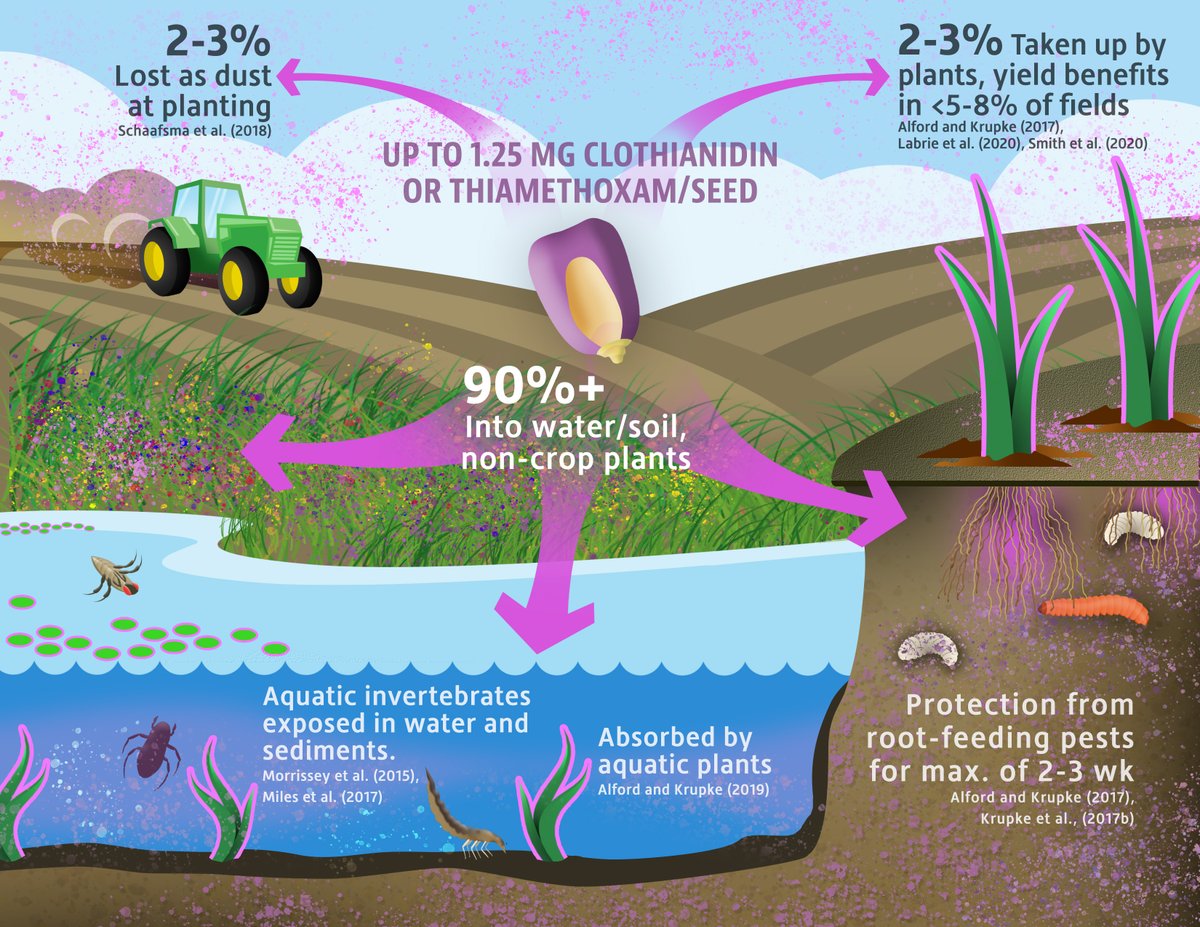
A recent collaboration with @jftooker: neonicotinoid environmental fate, effects on crop yields and effects on insects that aren't pests or pollinators.
https://t.co/mnEPr8C2Dp
The Evolution of Endophagy in Herbivorous Insects https://t.co/gfxe52u0Wl
One of the results of my collaboration with David Giron (IRBI, Univ. of Tours, France) has finally seen the light of day. We tackled a big topic, so it took a while. We hope it is useful to folks.
@woodhaus2 Hi Franz. A blast from your past. Hope all is well with you and yours, including your brother Kurt. It’s been a long time. FYI brother Mo and I are both tesla owners and love them. You’ve help create something amazing. Thanks! John Tooker
A great contribution from recent graduate, Dr. Kirsten Pearsons! Neonics and pyrethroids limit decomposer communities, slowing decomposition in ag fields:
Preventive insecticide use affects arthropod decomposers and decomposi... https://t.co/89FMx0DroU
@mgrieshop You’re right but neonics seed treatments are slightly different because a good percentage (ca. 30-40%) of farmers do not know they are using them.