@DamienFarine @ChristensenChaz@Ferreira_AndreC@UZH_Science@EcoEvo_ANU@MPI_animalbehav The performance metrics are fine. You're using the wrong model. Include annotator ID as an input feature (one-hot encode/word embedding) for train and eval. Set to zero for prediction. Similar to "random effects" in GLMMs. See https://t.co/CDp4jxvDtm task 2 as a recent example
I'm really proud of this work published today in Proc B with @SmithBeeLab & @ben_koger on the importance of the 3D nest structure and building strategies in developing honeybee colonies https://t.co/fAVEUUw83B
We observe, manipulate, and model 3D nest construction - see below.
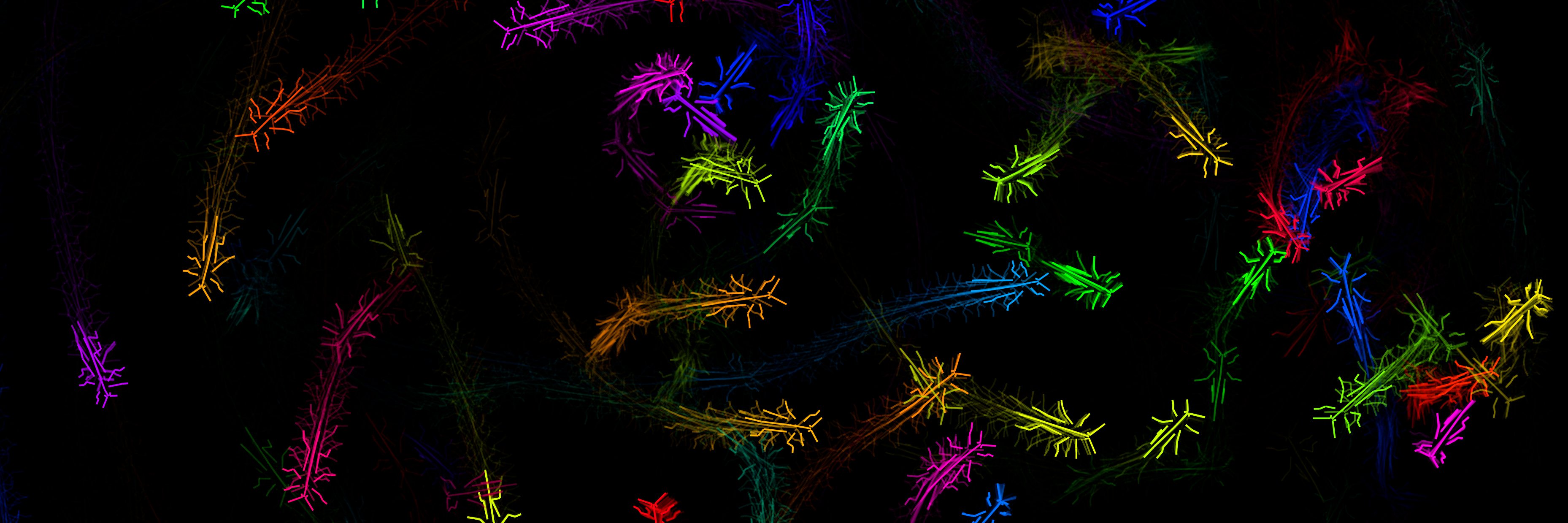
The #ImagingHangar@UniKonstanz is abuzz with the sound of 60k #locust feet. More than 4k locusts have been tagged with reflective markers for tracking with the Motion Capture System. Researchers from @CBehav and @MPI_animalbehav aim to understand the behaviour of locust swarms.
Out now in @AnimalEcology! A general approach for using drones to study animal behavior in the wild. Record the location and posture of many animals simultaneously at sub-second sub-meter resolution, plus reconstruct their 3D landscape: https://t.co/2u4jtEzha2
New blog post: Collective Intelligence for Deep Learning
Recently, @yujin_tang and I published a paper about how ideas like swarm behavior, self-organization, emergence are gaining traction in deep learning.
I wrote a blog post summarizing the key ideas:
https://t.co/S644KjM20e
The #CASCB is super excited: Currently we are running an experiment on locust swarms in the #ImagingHangar@UniKonstanz. Normally #locusts are studied in the lab in small groups of 200 animals in small arenas despite swarming in groups of millions of individuals in the wild.
Come join our team as one of 12 PhD students in the new #WildDrone network! Visit https://t.co/UZVQLrJeNr for project descriptions and application information
Happy to announce the final release of seaborn 0.12.0, a major update with new features that I'm really excited about.
Check out the highlights: https://t.co/RMoE2k7rkH
Read the full release notes: https://t.co/KUe1j1okNw
pip install seaborn==0.12.0
I hope you find it useful!
If you have behavioral videos and want to try out keypoint discovery, we've open-sourced B-KinD: https://t.co/iL7CjcSACr
You can train and run B-KinD on videos without human annotations!
Thanks to Serim Ryou for working with me on the code😊 Let us know if you have questions!
Happy to announce that our Python package for active inference, pymdp, is now published in JOSS @JOSS_TheOJ:
"pymdp: A Python library for active inference in discrete state spaces"
Paper: https://t.co/iZg8fbevln
Code: https://t.co/Hhzsh1wOv5
Docs: https://t.co/7imyaBGTW1
Explainable models of behavior are a worthwhile goal for sure, but be careful when using these tools to make causal scientific claims! Most of these approaches can quickly break down into nonsense when viewed through the lens of causal inference. A thread...👇
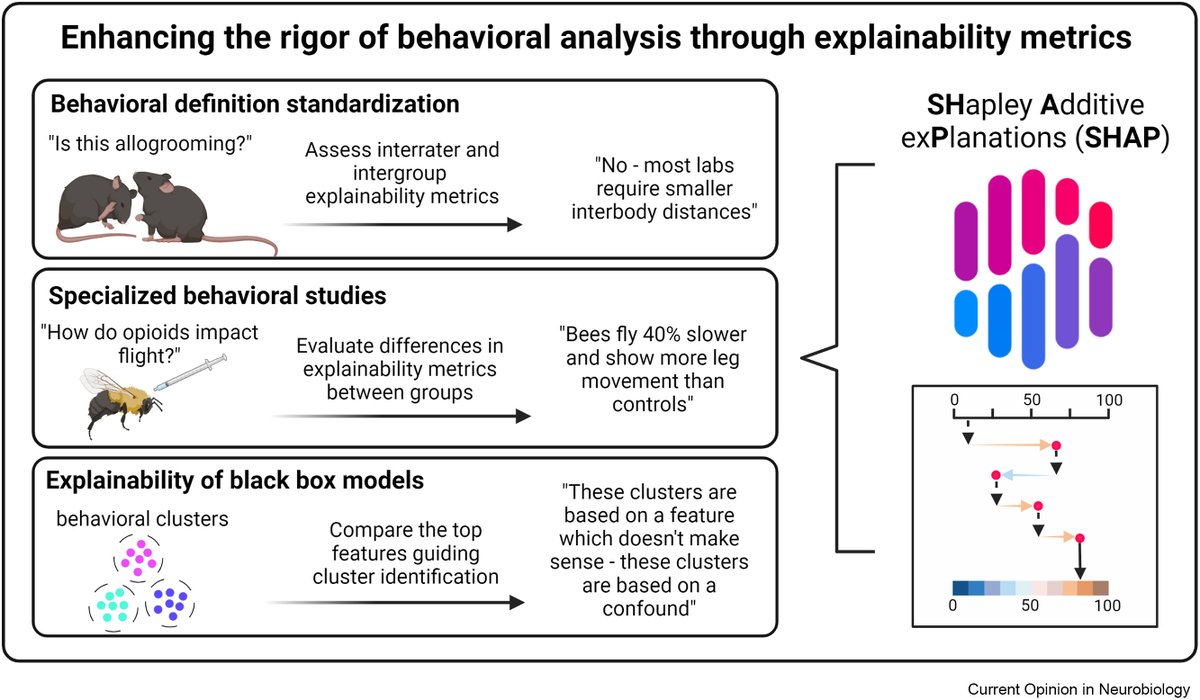
Another @GoldenNeuron collaboration between myself and @nilssonsro hot off the press - in this current opinion we present that explainability and transparency metrics are the next critical direction for use of ML in behavioral classification. https://t.co/cADUus3e5o 1/6
To summarize, off-the-shelf tools typically make bad assumptions about behavioral data, but methods exist to avoid falling into *some* but not *all* of these logical traps. Science is incredibly hard, but we think carefully about the models we're using to make inferences