Using agentic AI for scientific research has been an utterly fascinating experience. I can't remember the last time in my scientific career when I tackled such a stunning variety of problems with so much complexity and - most importantly - derived meaningful, reasonable answers and novel hypotheses in a matter of hours.
From agriculture to drug discovery, materials to synthetic biology, medicine to engineering, you feel like the world is your oyster. You can pose a problem to the system at breakfast and genuinely expect to arrive at an actionable and potentially novel solution by dinner, if not lunch.
This is the very definition of living in an accelerated age, a kind of New Enlightenment made possible by technology. For all their purported evils, science and technology are the most enabling creations of mankind, and very few times in our history has this been as true as it is now. We are blessed.
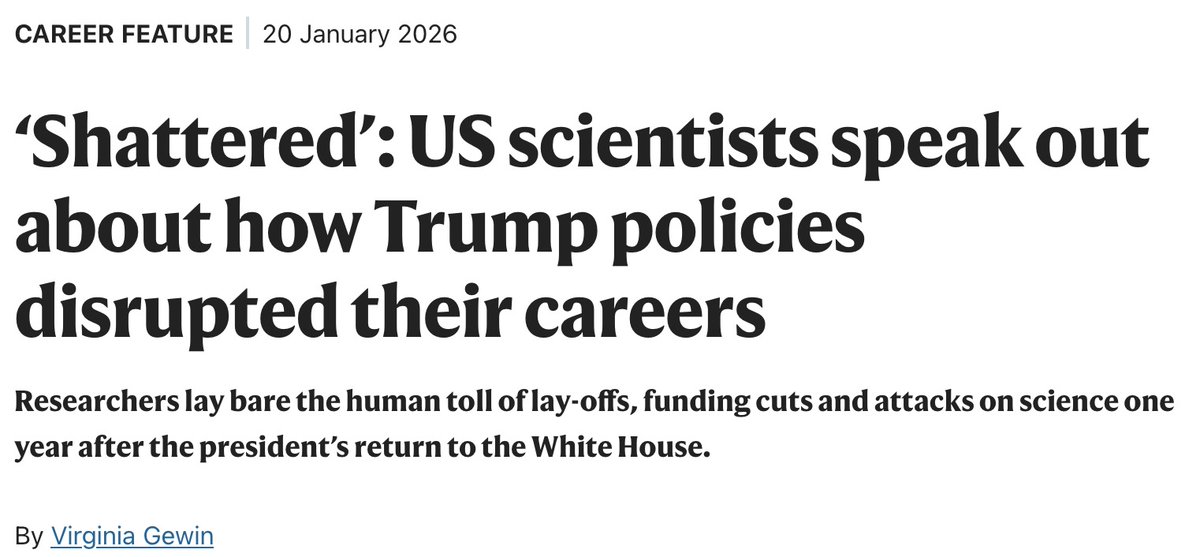
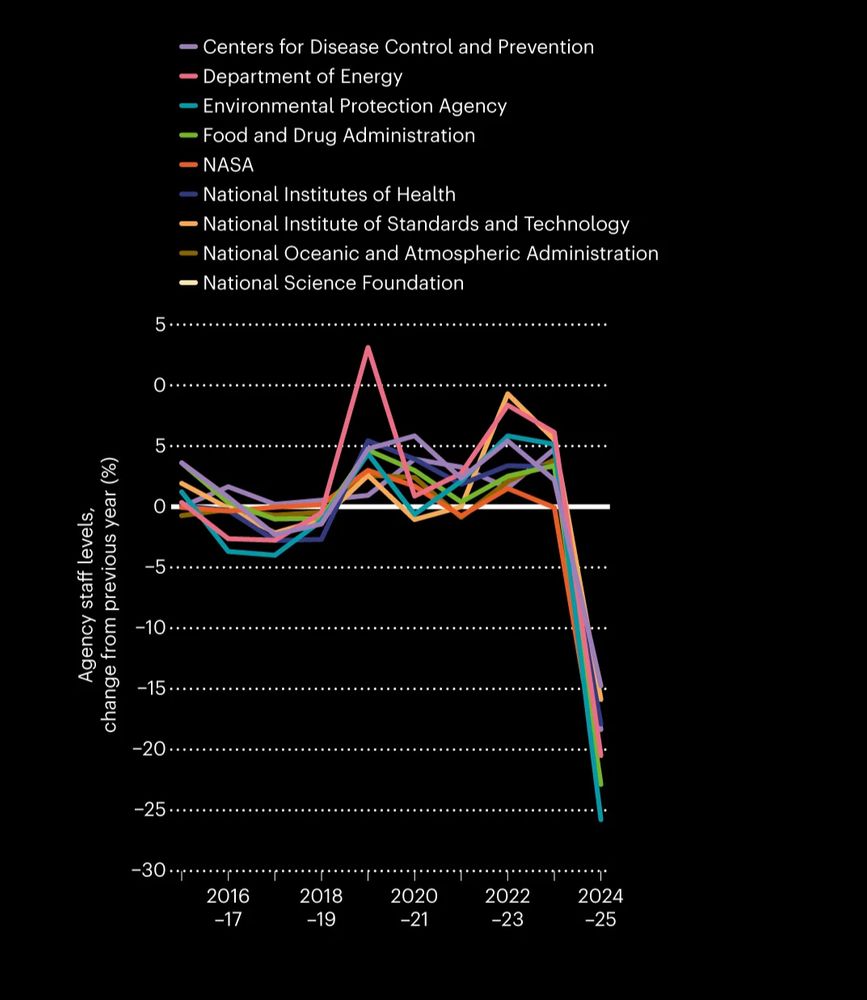
A powerful and comprehensive picture of just how thoroughly US science is being hollowed out. As I say here, “the operation of science has been fundamentally altered. We’re going to see the repercussions of this for years.”
https://t.co/RYItuV3Byn
"This is the most astonishing graph of what the Trump regime has done to US science. They have destroyed the federal science workforce across the board." —@_david_ho_
https://t.co/YVuyoyunwQ
This is a useful essay from the @NornGroup outlining a resource for those designing clinical trials for aging
The essay highlights the rationale for a phase 3 trial for aging that focuses on time to first disease. From a medical and payer perspective this strategy makes sense. The great thing is that the essay outlines the calculations to get there. Basically 8-10k participants with a fairly standard effect size prediction.
There really is no reason a trial like this cannot go ahead today-except for costs. That said, most pharma companies could afford it and the endpoints make it a plug and play for FDA. Nice work @MartinBJensen and team.
This trial is great for what’s possible now, but what advances can be made in the future? That’s what we’re hoping to do in this space with the @ARPA_H PROSPR program🖖.
We’re asking “how can we create the new healthcare normal”
A preventative therapy should be effective before the emergence of a chronic age related disease. And our hypothesis is that Intrinsic Capacity will be the composite endpoint that allows testing of preventative therapies for aging.
This is not easy, it is going to require lots of data to define what threshold is relevant for health (feel and function for FDA), has a consequence for healthcare costs (payer) and what interventions move the needle (efficacy for pharma).
We imagine a world where there is an approved indication based on a threshold level of age-associated decline in intrinsic capacity, with therapies that impact that threshold.
The norn essay mentions frailty or Intrinsic Capacity as a possible endpoint and correctly state that the individual endpoints or composite are not validated. That is exactly correct. But I predict that is the future of aging trials for prevention.
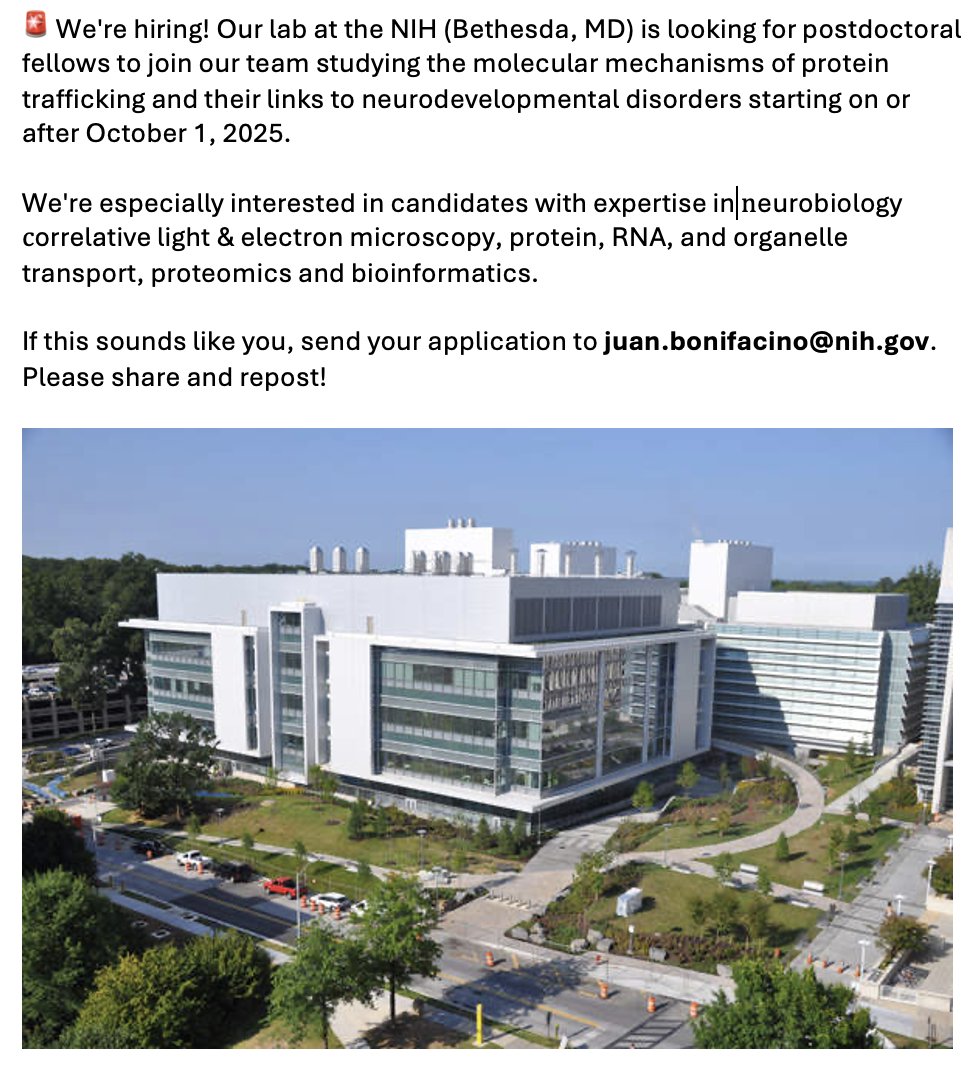
Our lab at the NIH (Bethesda, MD) is looking for postdocs to join our team studying the molecular mechanisms of protein trafficking and their links to neurodevelopmental disorders starting on or after 10-1-2025. Send your application to [email protected]. Please repost!
Current situation for scientists. Trump’s blanket order to stop communication between institutions like NIH and the public has resulted in a complete halt of grant reviews, grant funding decisions. Fun.
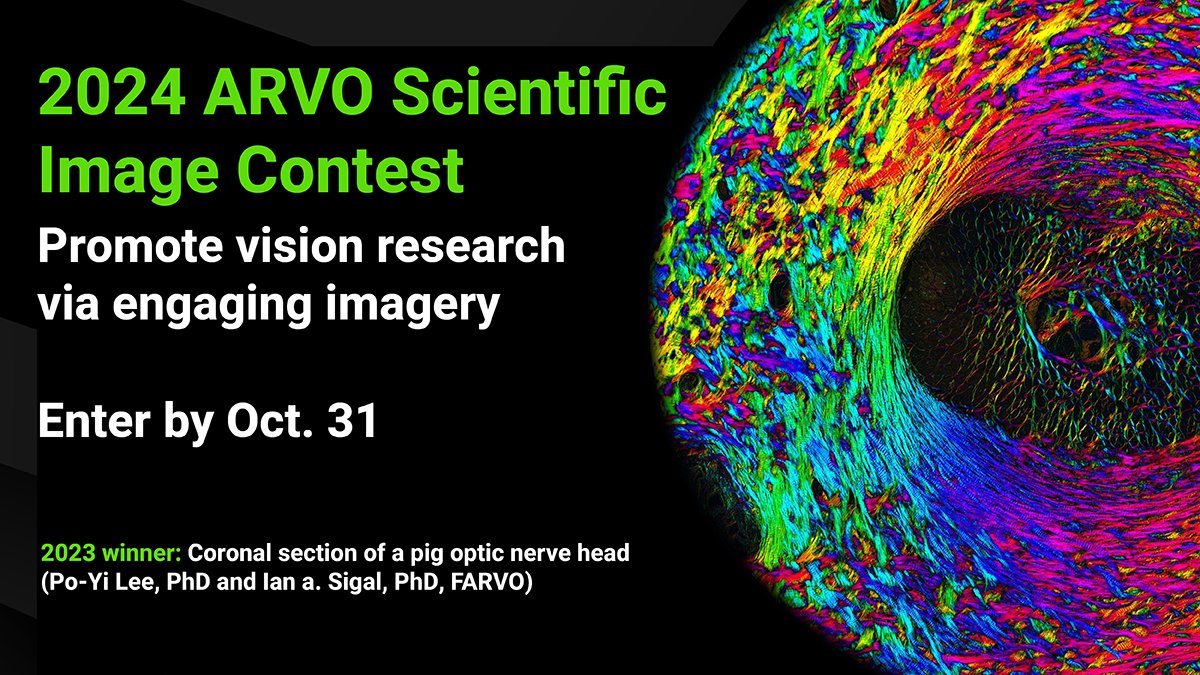
Attention @ARVOinfo members―the 2024 ARVO Scientific Image Contest is open! Enter your best lab-produced image to illuminate and promote the unseen wonders of eye/#VisionResearch. Your art could be displayed at #ARVO2025 and win you a $300 gift card! https://t.co/a6SCGGJRmG
If you want to become a (better) scientist, learn to program. Even if they tell you, "You don't have to because AI will do it for you," learn to program anyway. Hours spent processing data and text often become minutes, thanks to a bit of code, even if you're a newbie in coding
We're back with another episode of Eye on the Cure!
Tune in to hear from Dr. Kapil Bharti, a senior investigator and director of the Intramural Research Program at the National Eye Institute (NEI).
Learn more about streaming at: https://t.co/JtOlHLgZbB
A few years back I started a journey to learn more about biopharma and drug discovery. Here is a list of the books I have found helpful (loosely grouped by topic) with the outstanding books highlighted by (+++). Feel free to add your own recommendations, I'll keep adding mine.
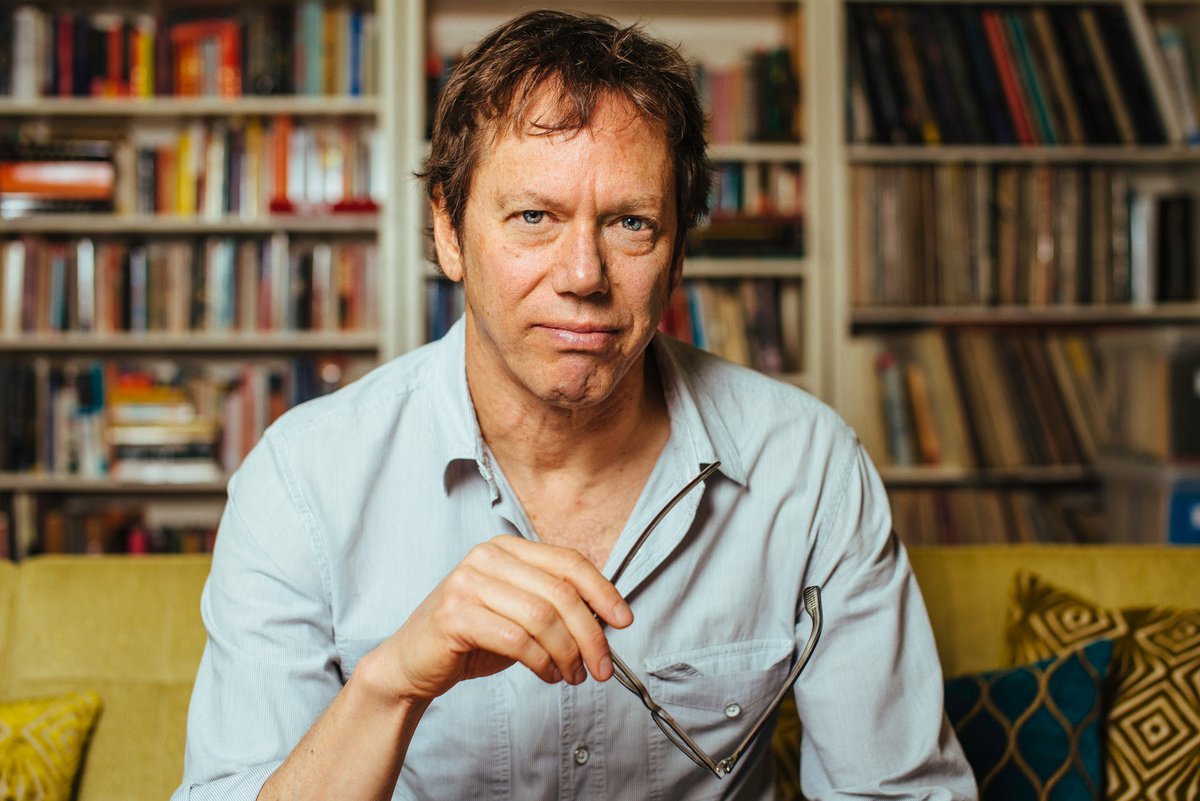
On December 11, 2021, I picked Robert Greene up from the airport, and we drove forty-five minutes to Bastrop, TX.
At one point, Robert told me he’s had more than 20 research assistants since Ryan Holiday and none have been any good.
Why weren’t they any good? I asked.
He said,
“Some didn’t grasp the spirit of the material I look for. Some couldn’t discern what's interesting from what isn't. Some melted like an ice cube in the sun at the first piece of constructive criticism. Some...”
He paused here and thought.
As he was thinking, I understood the implication was that those first three reasons didn't really cut to the core of his troubles with research assistants.
“Without exception,” Robert realized, “they weren’t interested in boredom. It’s a dividing line between people who are successful and people who are not.”
Takeaway 1:
Mastery, Robert said, requires boredom and tedium.
It requires doing the same things over and over and over.
It requires sitting with the frustration of putting in work that doesn't immediately pay off.
It requires sitting with the uncertainty of, am I going to spend sixteen hours reading this biography only to discover there’s nothing in it I can use?
You have to be able to sit with boredom, Robert said.
Takeaway 2:
In another conversation, Robert told me he believes one of the reasons people struggle to sit with boredom is that they have a false idea about the word “creativity.”
“People have all sorts of illusions about the word that aren’t the reality,” he said.
“The reality is that creativity is a function of the previous work you put in. If you put a lot of hours into thinking and researching and reading, hour after hour—a very tedious process—creativity will come to you…It comes to you, but only after hours and hours of tedious work.”
I like this definition because it means creativity is not some mysterious form of magic. It’s something that is rewarded to those who put in hours and hours of boring, tedious work.
- - -
“One sign that you're suited for some kind of work is when you like even the parts that other people find tedious.” — Paul Graham
Follow @bpoppenheimer for more content like this!
Inspired by this @eLife article: “Why every lab needs a handbook”, I thought I’d share ours. We're just getting started and this is a work in progress, so feedback is much appreciated!
There are a few easter eggs if you can find them.🔍
https://t.co/Yeb3xG39ZU
#Gliophiles (lovers of #microglia and #astrocytes), our lab is looking for a highly motivated technician interested in developing glial cell culture approaches (primary and iPSC-derived). Please, apply here: https://t.co/jBobPienhn. Feel free to spread the word 😊.
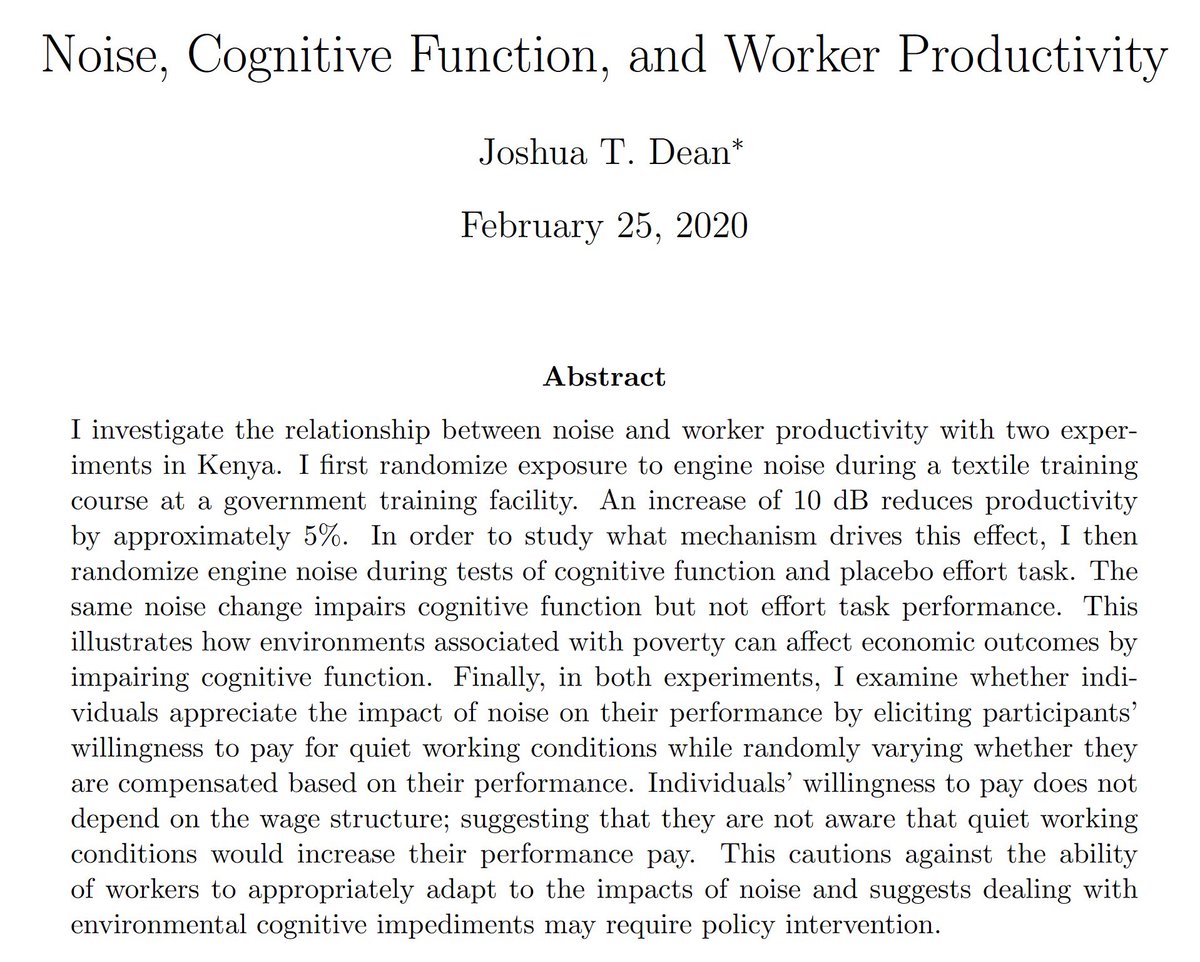
Noise is a secret destroyer of productivity.
It is secret because it impacts cognition, not effort, so we don’t notice, but a 10db noise increase (from a dishwasher to a vacuum) lowers productivity by 5%. Noise is also greater in poorer neighborhoods... https://t.co/RaIAsSudyY
For those interested in obtaining DoD funding for vision research, check out the 8th Military Vision Symposium: Innovation and Unmet Needs for Ocular Injury March 2-3, 2023 organized by @dfchen99 and Dr. Ciolino Please register here: https://t.co/Tipn1lgt6Q Trainees welcome too!
How to write the cover letter for your paper:
A bad cover letter can get your paper desk-rejected, while a good cover letter makes it soooo much easier to get your paper accepted! And yet, no one seems to talk about how to do a good one.
The best way...👇
#PhDVoice