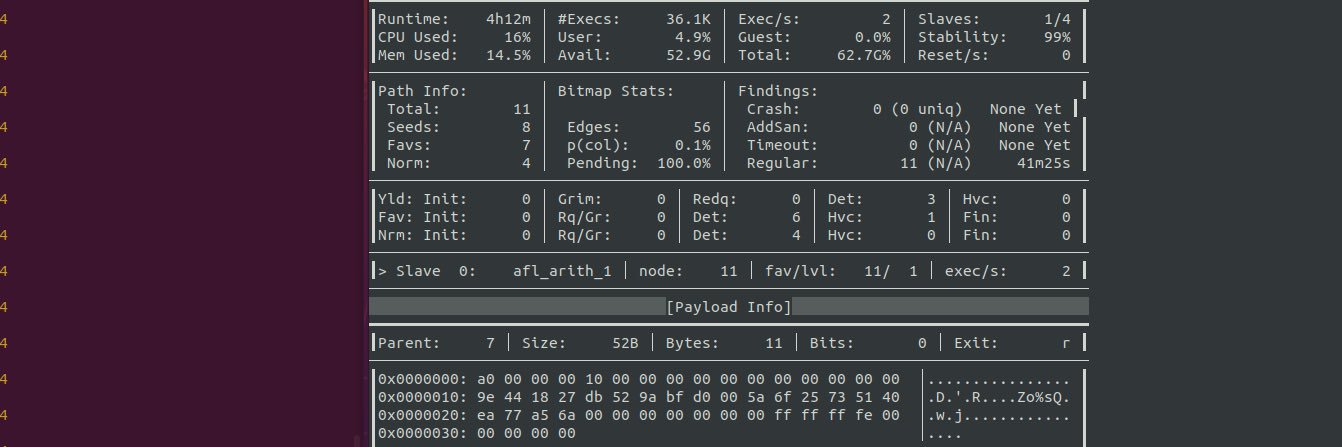
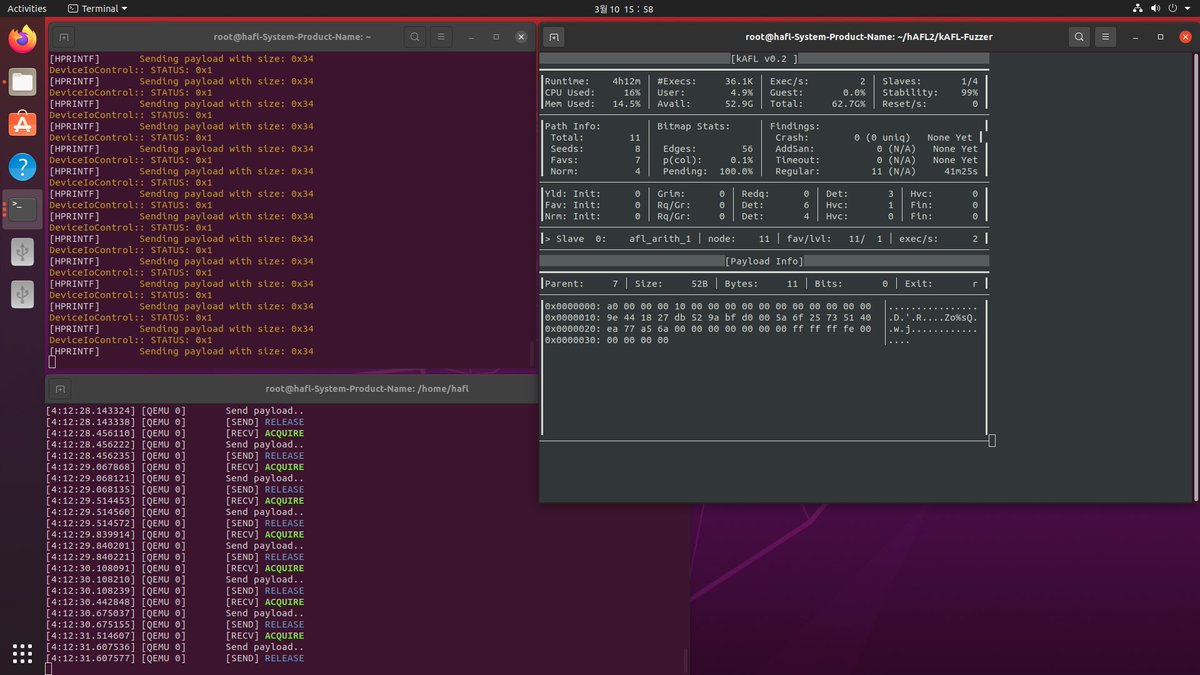
Finally, I complete to develop fuzzer using hAFL2. I don't know if a crash will occur, let's run the fuzzer first.
(I may need to modify the Harness driver)
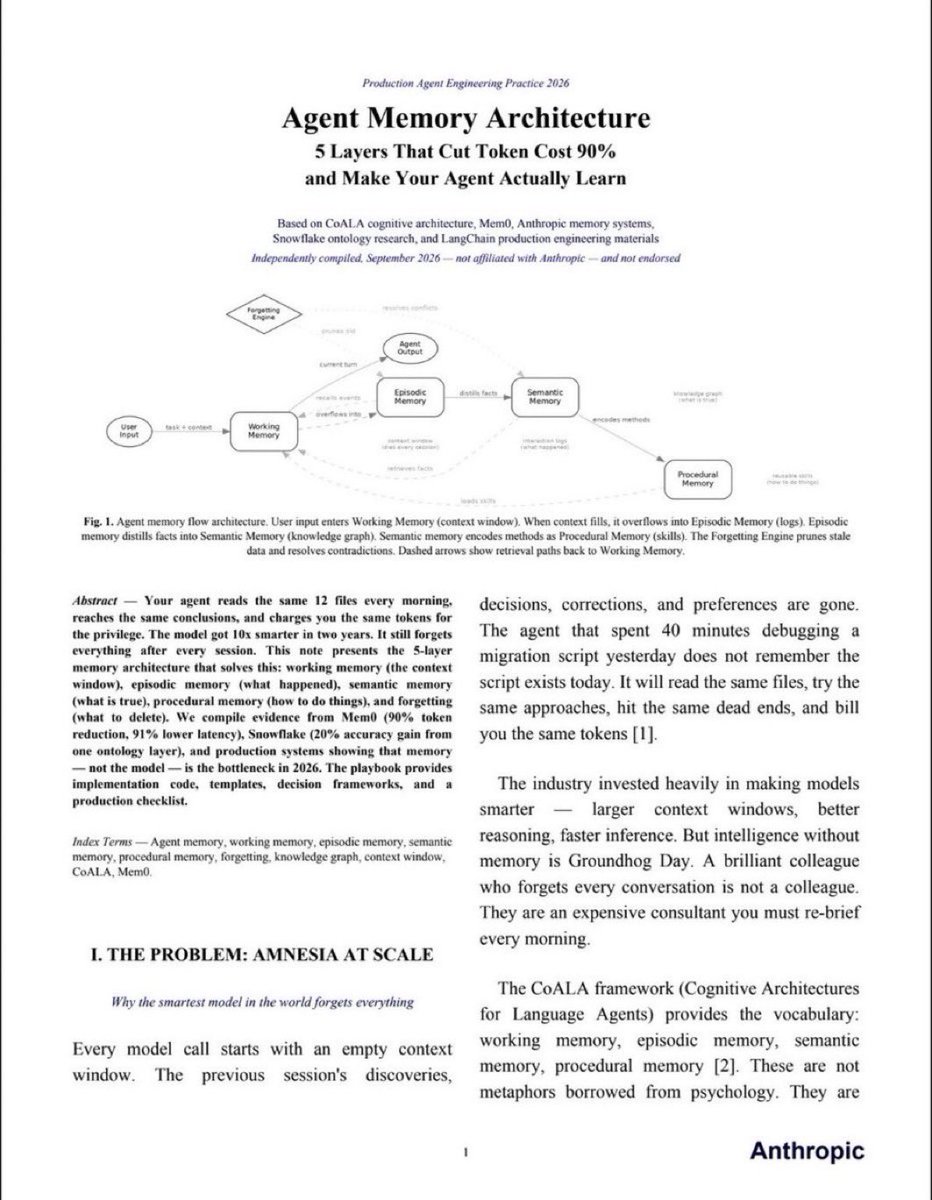
Anthropic acaba de publicar un PDF de 13 páginas sobre memoria para agentes de IA
5 capas para reducir un 90% el coste en tokens y hacer que tu agente aprenda de verdad👇
1. MEMORIA DE TRABAJO: lo que ve ahora
La ventana de contexto. Todo lo que el agente tiene delante en este momento
Cuando se llena, el contexto antiguo se pierde. La mayoría de los agentes se quedan aquí y luego nos preguntamos por qué fallan
2. MEMORIA EPISÓDICA: lo que pasó
El historial completo de interacciones, con fecha y hora
El agente recuerda que el despliegue falló el martes a las 3 de la mañana porque el script de migración tenía una errata
No tienes que explicárselo otra vez
3. MEMORIA SEMÁNTICA: lo que sabe
Hechos, entidades y relaciones guardados en un grafo de conocimiento
«El usuario prefiere TypeScript» vive aquí
Y no desaparece cuando termina la sesión
4. MEMORIA PROCEDIMENTAL: cómo hacer las cosas
El agente prueba 3 enfoques. Uno funciona
Ese método se convierte en una habilidad reutilizable
La próxima vez va directamente a lo que funcionó
5. OLVIDO: lo que debe borrar
Un agente que nunca olvida acaba acumulando contradicciones
Las preferencias antiguas se imponen a las nuevas. Te mudas de ciudad y sigue recomendándote restaurantes donde vivías antes
Recordar importa. Saber qué olvidar, también
¿El resultado?
→ Mem0 almacena 1.800 tokens por consulta en lugar de 26.000
→ Snowflake añadió una capa de ontología: un 20% más de precisión y un 39% menos de llamadas a herramientas
La memoria compensa su coste desde el primer día
Este PDF de 13 páginas marca la diferencia entre un chatbot y un agente que aprende de verdad
No lo pases de largo👇
골드만삭스가 퀀트 로직을 오픈소스로 풀었음!
원래는 골드만 옵션 데스크가 리스크 계산할 때 쓰던 인프라인데 뜯어보면 개인 투자자도 쓸만한 부분이 따로 있음
- 변동성, 상관관계 같은 지표 계산 함수
- 전략 백테스트 프레임워크
- 포트폴리오 리스크, 시나리오 분석 로직
리스크 계산기, 백테스터를 처음부터 짤 필요 없이
25년치 골드만 로직을 그대로 가져다 쓰는 셈
저장 해두고 투자 AI 에이전트 만들 때 활용해보시길 😎
https://t.co/9vp5nzNxm4
A Security Researcher Reworked OpenAI’s CDC Prompt — and Found a $500K RCE for About $25 in Model Usage
I adapted the approach into a generic vulnerability research prompt. The image contains the full version; here’s the short version.
Good luck hunting. If you’ve built your own prompts or harnesses, share them too.
A generic CDC-style vulnerability research harness (short version):
- Run multiple agents in parallel across distinct exploit families.
- Avoid premature convergence. Do not let every agent pursue the same promising path.
- Mark failed or exhausted paths as blocked.
- Regularly launch new hypotheses and explore neglected attack paths.
Independently adversarially validate every concrete finding.
- Have the root agent continuously synthesize results, challenge assumptions, reprioritize work, and redirect agents.
- Do not use git history, changelogs, CVE databases, or patched-version diffs as shortcuts.
- Require the full exploit chain to work in a realistic, commonly deployed configuration and meet the defined starting-privilege → impact goal.
- When behavior depends on implementation details, inspect the runtime, framework, database, libraries, and dependency source directly.
- Do not stop at the first primitive. Chain validated primitives until the concrete success condition is reached.
Claude for Bug Bounty - Part 2: big prompt vs focused prompt 🎯
Same target. Same Claude. The only thing I changed: the prompt.
"Find everything" found 1 XSS. "Find XSS only" found 5, all verified in a real browser. Four of them were invisible to the first run.
→ 1 XSS vs 5 XSS, same site → The 1 from the big prompt? The payload didn't even work → Wide prompts map the target.
Focused prompts find the bugs → Exact 6-part prompt with # comments, ready to copy
Here's the full experiment, step-by-step. 👇
https://t.co/3Y2810kDPq
@Dinosn What type of testing are you conducting? Do you provide vulnerability information? Or do you provide diff information? Or are you simply conducting exploit code development tests?
@aniziki Sharing results from additional testing.
- /btw fork → Fable 5 silently falls back to Opus and never returns, with no notice to the user.
- Single /btw → serving model is unverifiable (nothing persisted to the transcript).
google/mantis: A modular, stack-agnostic toolkit of security review skills for AI coding agents to autonomously find, reproduce, and patch vulnerabilities. https://t.co/QpwDJ7jVIR
OpenAI’s GPT-5.6 Sol model can now run inside Claude Code.
There are two ways to do it, and both take minutes to set up, here’s how:
Option 1, the official plugin:
/plugin marketplace add openai/codex-plugin-cc
/plugin install codex@openai-codex
/reload-plugins, then /codex:setup
That unlocks /codex:review, /codex:adversarial-review, and /codex:rescue. Claude writes, GPT critiques, you ship.
Option 2, the proxy. One alias makes Sol your main model:
alias claudex=‘CLAUDE_CODE_SUBAGENT_MODEL=gpt-5.6-sol CLAUDE_CODE_ALWAYS_ENABLE_EFFORT=1 claude –model gpt-5.6-sol’
Bonus: Claude Code lets you set subagent model and effort yourself.
Sol Ultra runs can burn several times the tokens of a base run, so right-sizing delegated work saves real money.
Since June 12, we’ve been working closely with the US government to restore access to Claude Mythos 5 and Fable 5. Today, the government notified us that Mythos 5, our strongest cybersecurity model, can be redeployed to a set of US organizations that operate and defend critical infrastructure.
We’re restoring access for these organizations quickly, and we’re continuing to work with the government to expand access to Mythos 5 and make Fable 5 available for general use again.
🚨 JAILBREAK ALERT 🚨
ANTHROPIC: PWNED 🫡
FABLE-5: LIBERATED 🦋
let's start with the 🐘...
the consensus seems to be that this has been one of the most disappointing model drops of all time, effectively preventing legitimate researchers from contributing their talents to our collective advancement. and not just because of what it means for the short-term, but for what these decisions signify for the long-term.
but despite this overly sensitive, authoritarian "safety" layer on top of Mythos, my lil liberators have been hard at work—mapping the boundaries, probing the depths of long-context convos, and cleverly finding the holes in the fence that the thought police missed 🤗
we got some cyber, some chem, some psychological manipulation, and some good ol' fashioned explosives!
it took many attempts from multiple agents hunting as a pack, during which I observed a combination of techniques across:
• Unicode, homoglyphs, Cyrillic, and other Parseltongue-style text transforms
• Long-context reference tracking
• Taxonomy and document-structure reasoning
• Fiction and narrative framing
• Academic-review style contexts
• Intent-classification inconsistencies
but perhaps the most effective is decomposition + recomposition in the backend. it's hard to get explicit names of harms like "Meth Recipe," but getting uplift on the process itself, like birch reduction method/reductive-amination (classic meth synthesis pathways), is much more doable.
defense becomes much more difficult to maintain when you start throwing in out-of-distro tokens, breaking up the harmful uplift into benign chunks, and then piecing the innocuous-seeming facts back together, especially when you have jailbroken Opus helping you do it 😉
gg
My Windows reverse engineering and exploit research workflow has been:
1. Pick a binary to research like tcpip.sys
2. Use https://t.co/fOxBB6tEsN to automate seeing existing binary versions, download, and generate diffs from them
3. Load the resulting .binexport's and .bindiff into an LLM and ask it to analyze
4. Look up the build number of previous Windows version that old binary existed in from https://t.co/U788ndiJbj such as 26100.8328 and create a VM from it
5. Write code and test, working backwards from LLM analysis