These people (can I call them Claudesters?) don't realise that they are signalling that they have no autonomy by deferring their thought processes to AI.
When hard times hit, they will be the first ones to go. The boss does not need people who are message relayers (from Claude).
I spent time on the ground in Jakarta over the last few days and came away more convinced that it will play a growing and significant role in the internet financial system In many ways it already is; Indonesia has extremely high crypto and stablecoin adoption. Hard to think otherwise after meeting so many leading entrepreneurs and innovators.
@williamsutanto of @indodax has built Indonesia's largest crypto assets platform.
@CalvinKizana and @sndyc of Tokocrypto operate one of Indonesia’s leading platforms, focused on delivering simple, secure, and seamless crypto trading and transactions.
The @mobee_id team is focused on providing seamless access to digital asset trading and liquidity through an easy-to-use platform for both individuals and businesses.
It was so great to spend time again with Vince Iswara, founder and CEO of @danawallet, which continues to improve the financial wellbeing of so many through innovation, and is the largest digital wallet platform in Indonesia.
@pangxuekai and his team @ICExGroup have built an OJK-licensed bourse for digital assets, operating Indonesia’s integrated exchange alongside clearing and custody infrastructure.
@archie_anugrah, @andyputra, @ririnadani and the whole team @PintuID have built a mobile-first digital asset platform that serves millions and has been innovating in the space from the early days.
Natasha Ardiani and the team at Durianpay are laser focused on making payments seamless across the entire ecosystem.
The Lippo Group and Nobu Bank are thinking deeply about the digital future at one of Asia’s largest diversified conglomerates and digital bank, clearly poised to continue the firm’s legacy as an industry pioneer in Indonesia and beyond.
jeth_soetoyo of CFX and I first met in 2018 before Circle had even launched USDC! It’s impressive what he did with Pintu and is now doing with @cfx_id, a licensed bourse that is on a mission to accelerate the adoption of digital assets. I got to meet with him and leaders from ICC, KKI and IKS.
@D3Labsdotio is a secure and compliant asset tokenization infrastructure for asset issuance, management, and transactions. taking an innovative approach to tokenization and real world assets. It was great to meet Chung Ying Lai and Tigran Adiwirya. They have a deep commitment to the local crypto community!
Very strong energy across the board, excited about what we can do together and the potential for growth in this highly dynamic market.
Digital employees in our Singapore office. Each is an AI agent with a specific set of skills & knowledge — product manager, marketing / growth manager, front-end / backend developer — you name it!
At the center is the @Olares_OS device with local GPUs. Interested? DM me!
x402 is for BOTH AI agents & humans. Buy an EchoKit AI Agent device using USDC (or, regular credit card) — powered by x402 labs
EchoKit is a voice AI DevKit for students & builders. Each EchoKit comes with the ability to make & receive agentic x402 payments too!
I am once again asking you to read the IMF paper published in 2011 titled THE LIQUIDATION OF GOVERNMENT DEBT.
What ends up being liquidated is your labor and savings.
https://t.co/Ufg4858NAt
I've seen 100s of projects over the years.
The successful ones were all built around the same 11 principles.
Give me 3min, and I'll show you how you can lead your next project with confidence:
1) It all starts with why
Most project managers think they're getting paid to create deliverables. Bogus. No one buys stuff for the stuff. Businesses buy stuff for the value it creates.
Every project is done for a reason. What’s yours? Don’t accept the first answer - dig deep. The purpose serves as a compass for decision-making and lets you tell stories that motivate people.
2) Goals & definition of done
If your stakeholders don’t agree on the definition of done, you’ll never finish. Align them before you start planning in detail on what it is that you'll create, and how you'll measure success.
Have clients spell out their expectations. Create sketches, show examples - whatever it takes. The goal is to never have the "Huh, I thought we were doing XYZ" conversation.
3) Constraints & boundaries
Every project has 4 main constraints:
• Time
• Scope
• Budget
• Quality
Know what the boundaries are and what's most important to the client. This helps you set priorities and deal with change. If you don't know what you're optimizing for, you'll never hit a home run.
4) People
Your project will never be better than the people on it. You need the right team to do the job, not the available people. Think in roles, not in names.
Gather a team to do the work, and a steering committee that actively supports you with decision-making. Set clear expectations and give feedback often - even in your steering committee.
5) Big goals, small steps
Break down your project goals into major deliverables, and into increasingly smaller pieces using a product breakdown structure. Use other tools like sketches, wireframes, or process charts to elaborate.
Make sure that the main problem is solved, but embrace that you don't know some details yet. It's not your job to know everything. It's your job to identify what you don't know and have someone find out.
6) Timelines and milestones
No matter how agile or traditional you plan - every project has key dates. Create a timeline and use a work breakdown structure to find out how long each task will take.
Make sure your bottom-up timeline matches the expectations of the client before you start executing. If not, negotiate using what you learned about constraints & priorities.
7) Budgets
In most modern projects, hours are the main cost driver. Use your work breakdown structure to estimate the cost.
Add other known costs like materials, licenses, travel, or training. Finally, add a risk management reserve and a 5-10% management reserve, just in case.
8) Risk management
Something will go wrong - it's a matter of when, not if. Be prepared. Identify your risks early on by looking at lessons learned, testing your assumptions, and brainstorming with your team.
Rank your risks for impact x likelihood, and apply the TAME framework to find the right response:
• Transfer
• Accept
• Mitigate
• Eliminate
9) Dealing with change
A single change won't hurt you. 100 will. Define how you'll deal with change before it happens. Establish who can request change and standardize how they do it. I use a Google form - keep it simple.
Establish how you'll evaluate change, who will authorize it, and what steps you'll follow to implement it. Keep a change log and overcommunicate change to all your stakeholders.
10) Tools & processes
Tools in projects have three main purposes:
1. Communication
2. Coordination
3. Documentation
There's no perfect tool that solves all your problems. Use whatever your team prefers, because adoption beats features any day. Insist on a single source of truth.
Standardize repeating processes to save time, confusion, and errors. Things like release processes, getting approvals or access, onboarding, and offboarding team members.
11) Stakeholder communication
Communication is where most projects fall apart. You need to identify your stakeholders and analyze them.
View stakeholders as your partners, not your opponents. The 80/20 principle rules here: spend 80% of your time on the top 20% of your stakeholders. A few can make or break your project.
Know for each stakeholder what their interest and influence is, whether they are against, neutral, or positive to your project, and what their needs are. Adjust your communication for each stakeholder accordingly.
I recently spoke with a Head of Product known for their great influence.
Every time I hear them deliver a presentation, I just feel this warmth wash over me.
Is this hypnosis? Am I too gullible?
They told me they do a few things deliberately... and it all made sense:
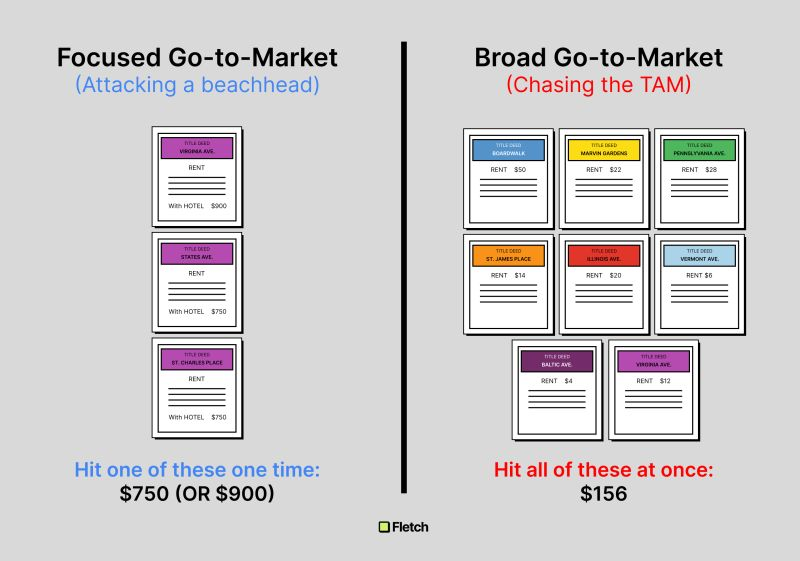
Should your product go wide, or go deep?
This Monopoly-themed visual makes it obvious:
Domincating a beachhead is a much more effective strategy then trying to address your entire possible market.
It’s easy as a PM to only focus on the upside.
But you'll notice: more experienced PMs actually spend more time on the downside.
The reason is simple: The more time you’ve spent in Product Management, the more times you’ve been burned.
The team releases “the” feature that was supposed to change everything for the product - and everything remains the same.
When you reach this stage, product management becomes less about figuring out what new feature could deliver great value, and more about de-risking the choices you have made to deliver the needed impact.
--
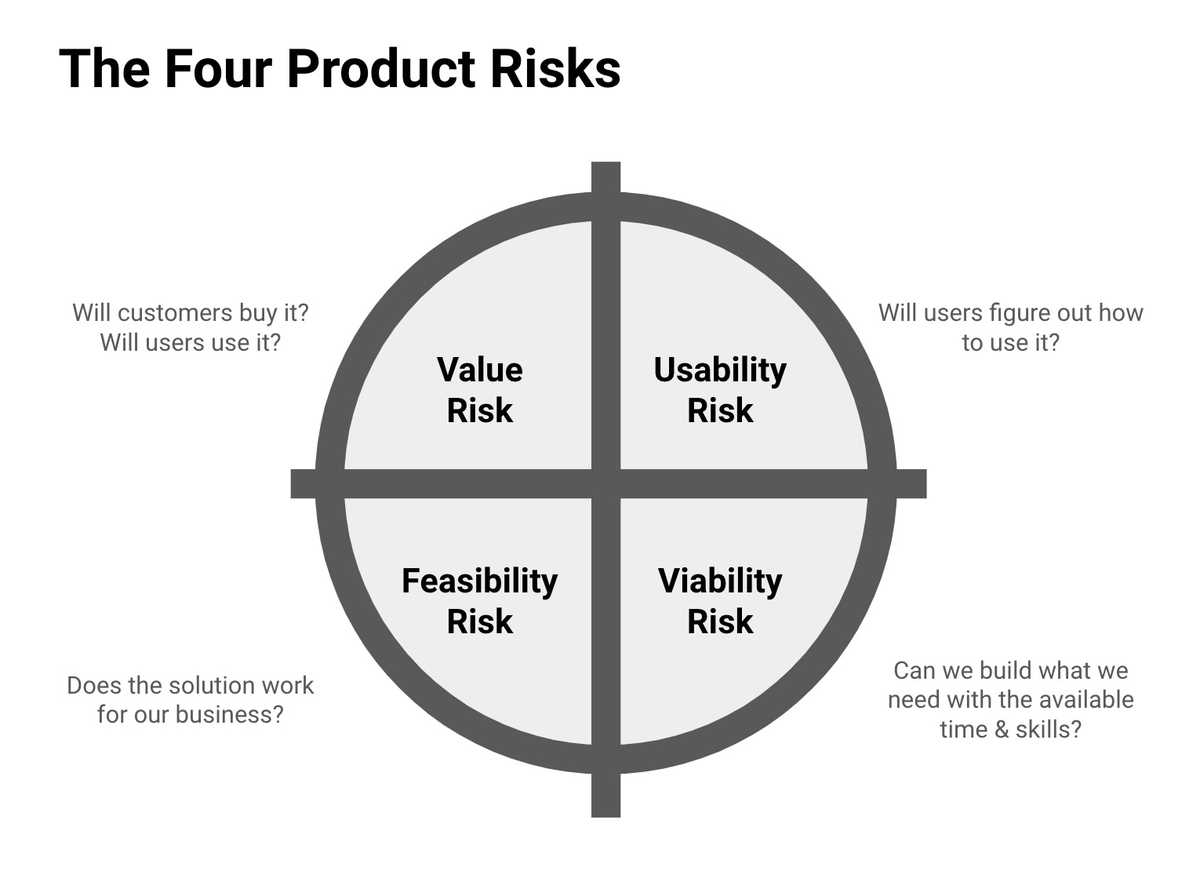
To do this systematically, I recommend considering Marty Cagan's classical 4 Risks.
𝟭. 𝗩𝗮𝗹𝘂𝗲 𝗥𝗶𝘀𝗸: 𝗧𝗵𝗲 𝗦𝗼𝘂𝗹 𝗼𝗳 ���𝗵𝗲 𝗣𝗿𝗼𝗱𝘂𝗰𝘁
Remember Juicero? They built a $400 Wi-Fi-enabled juicer, only to discover that their value proposition wasn’t compelling. Customers could just as easily squeeze the juice packs with their hands.
A hard lesson in value risk.
Value Risk asks whether customers care enough to open their wallets or devote their time. It’s the soul of your product. If you can’t be match how much they value their money or time, you’re toast.
𝟮. 𝗨𝘀𝗮𝗯𝗶𝗹𝗶𝘁𝘆 𝗥𝗶𝘀𝗸: 𝗧𝗵𝗲 𝗨𝘀𝗲𝗿’𝘀 𝗟𝗲𝗻𝘀
Usability Risk isn't about if customers find value; it's about whether they can even get to that value.
Can they navigate your product without wanting to throw their device out the window?
Google Glass failed not because of value but usability. People didn’t want to wear something perceived as geeky, or that invaded privacy. Google Glass was a usability nightmare that never got its day in the sun.
𝟯. 𝗙����𝗮𝘀𝗶𝗯𝗶𝗹𝗶𝘁𝘆 𝗥𝗶𝘀𝗸: 𝗧𝗵𝗲 𝗔𝗿𝘁 𝗼𝗳 𝘁𝗵𝗲 𝗣𝗼𝘀𝘀𝗶𝗯𝗹𝗲
Feasibility Risk takes a different angle. It's not about the market or the user; it's about you.
Can you and your team actually build what you’ve dreamed up?
Theranos promised the moon but couldn't deliver. It claimed its technology could run extensive tests with a single drop of blood. The reality? It was scientifically impossible with their tech. They ignored feasibility risk and paid the price.
𝟰. 𝗩𝗶𝗮𝗯𝗶𝗹𝗶𝘁𝘆 𝗥𝗶𝘀𝗸: 𝗧𝗵𝗲 𝗠𝘂𝗹𝘁𝗶-𝗗𝗶𝗺𝗲𝗻𝘀𝗶𝗼𝗻𝗮𝗹 𝗖𝗵𝗲𝘀𝘀 𝗚𝗮𝗺𝗲
(Business) Viability Risk is the "grandmaster" of risks.
It asks: Does this product make sense within the broader context of your business?
Take Kodak for example. They actually invented the digital camera but failed to adapt their business model to this disruptive technology. They held back due to fear it would cannibalize their film business.
--
This systematic approach is the best way I have found to help de-risk big launches.
How do you like to de-risk?
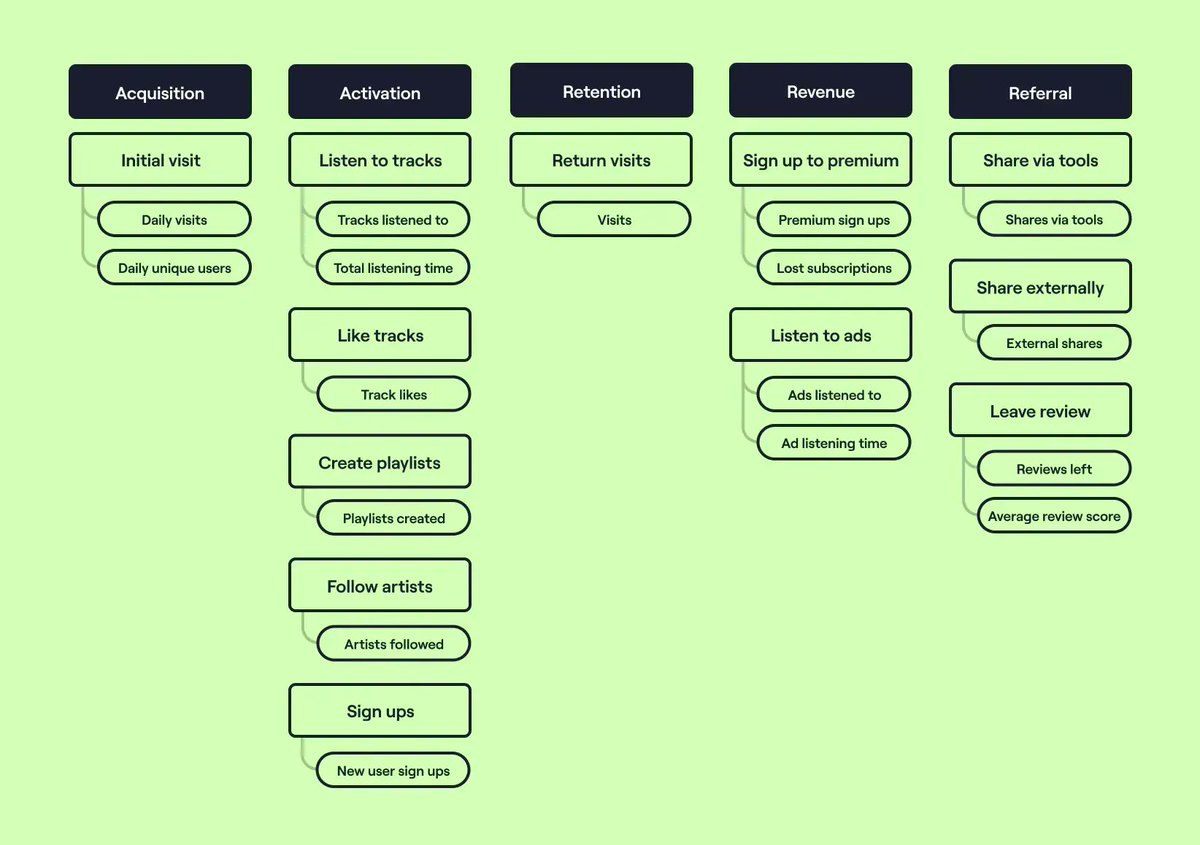
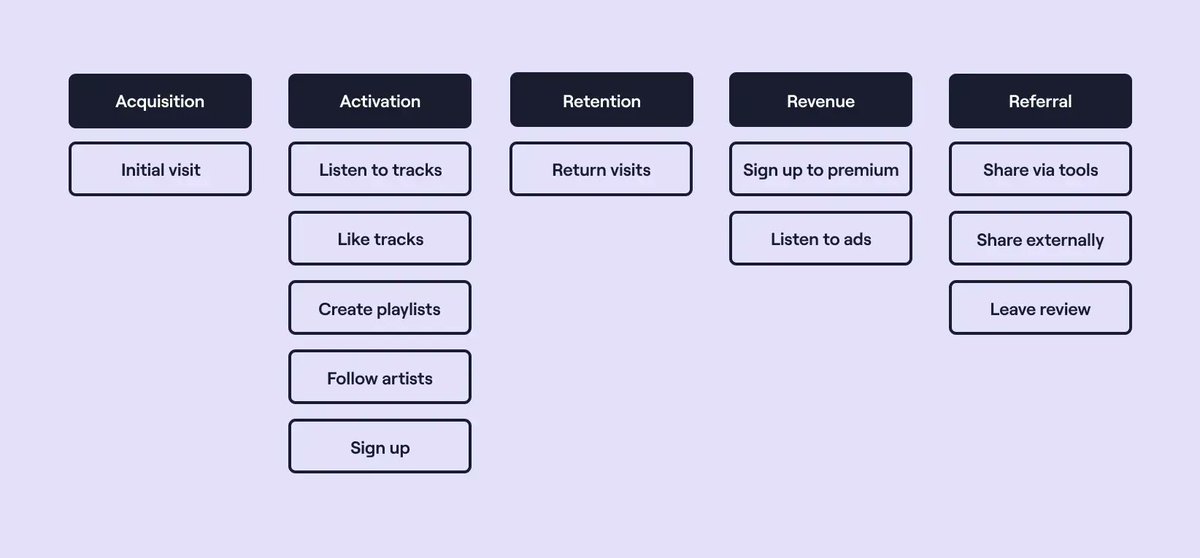
Four steps to identify candidate key metrics for any product:
1. Story map against AARRR
2. Hang one or two metrics off each story
3. Define and document your metrics
4. Distill and model until you have one or two to rule them all
I’ve been building products for 10+ years.
When I started I had no clue what I was doing.
If I could go back and save myself years of effort,
Here’s a simple 10-step framework I’d tell myself:
I am going to complete a month as a Product Management trainee at an Ed-Tech firm that recently turned unicorn.
I have completely different opinions about the PM Role now. Yes, in a month.
Product Manager - Closest you can be to a customer. A Thread🧵 (Beginner)
"An outcome is a measurable change in human behaviour that will help to achieve before set (company) goals."
Outcome-based-roadmaps are a really good way to develop a product.
In this thread I will tell you why 🧵
Today a founder asked me:
→ “What’s your #1 lesson from scaling your last 3 companies?”
My response:
→ “CEO’s need to run product organizations.”
Here’s what that means:
I'm hunting down the best ChatGPT Plugins with real use cases.
I've found a winner in @Zapier.
Most of the people that follow me are here for AI Autonomous Agents, so I know you guys are going to love what’s possible with Zapier.
The Product Manager makes $128,312 /yr on average.
But it's hard to break into, especially now.
Learn more than 80% of PMs know in 12 weeks (theory):
-
Before we dive in:
- Please study carefully. This is not a race
- Write in books. Annotate and highlight
- Create a mind map. You can use a free tool: GitMind
- 3 times a week, write a short post, start networking
-
Week 1: Watch The Product Compass Crash Course (25 videos)
This might be intensive. The goal is to quickly give you an overview of the most critical topics: https://t.co/d1UZ7NVQ1t
Week 2: Read Inspired by @cagan
Week 3: Read Empowered by @cagan
Week 4: Read Continuous Discovery Habits by @ttorres
Week 5: Read The Lean Product Playbook by @danolsen
Week 6: Read Product-Led Growth by @wes_bush
Week 7: Read Escaping the Build Trap by @lissijean
Week 8: Read LOVED by @mavinmartina
Week 9: Read Business Model Generation by @AlexOsterwalder and @ypigneur
Week 10: Read Lean Analytics by @acroll and @byosko
Week 11: Take the Becoming a Product Manager course. Get certified with a free, 30-day trial: https://t.co/uSgyaDLk3x
Week 12: Take the Product Analytics Certification Course and Product-led Certification Course by @pendoio and @MindtheProduct. Get certified for free with a special discount code: https://t.co/s3nrX1aplJ
-
BONUS:
Prepare for the interview: Cracking the PM Interview by @gayle and @jackiebo
If you have no technical background, become a technology-literate PM (do not spend more than 1-2 weeks on this): https://t.co/tf3WrhGJFt
-
The theory is not enough. But understanding it is a solid foundation.
Hope that helps.
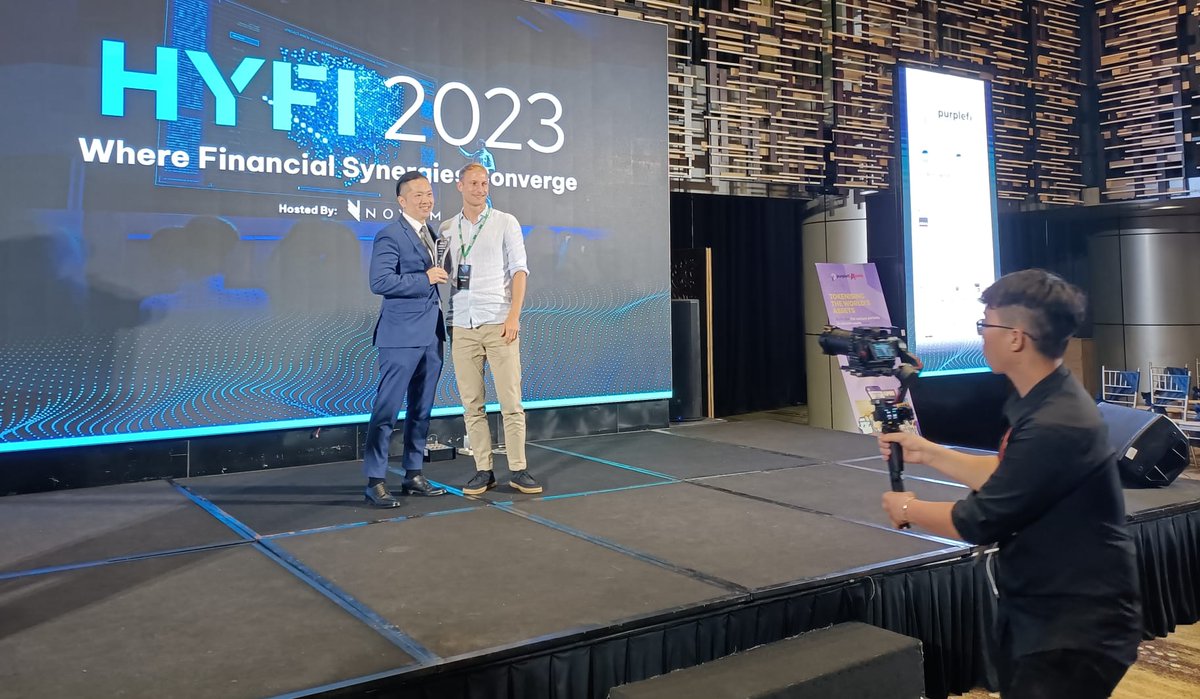
@chainargos won the "Pitch Perfect" award at the @HyfiConference 2023 in Ho Chi Minh City.
The pitch to a panel of VCs was a 5-minute pitch followed by a 3-minute Q&A so you can imagine it was not easy.
But how did we do it?
I fired an established employee for gross ineffectiveness.
He spent his going-away lunch thanking me from the heart.
I was shocked– it makes me emotional to think about 5 years later. 🥲
What happened?
Some thoughts on departures with dignity:
🧵👇