Regard sur…
𝐋𝐞 𝐌𝐮𝐬𝐞́𝐞 𝐟𝐫𝐚𝐧𝐜̧𝐚𝐢𝐬 𝐝𝐞 𝐥𝐚 𝐫𝐚𝐝𝐢𝐨𝐥𝐨𝐠𝐢𝐞 𝐞𝐭 𝐝𝐞 𝐥’𝐢𝐦𝐚𝐠𝐞𝐫𝐢𝐞 𝐦𝐞́𝐝𝐢𝐜𝐚𝐥𝐞 (Paris, France)
Par Jean-Philippe Bricka
Situé dans une petite rue du XIIIᵉ arrondissement de Paris, (./.)
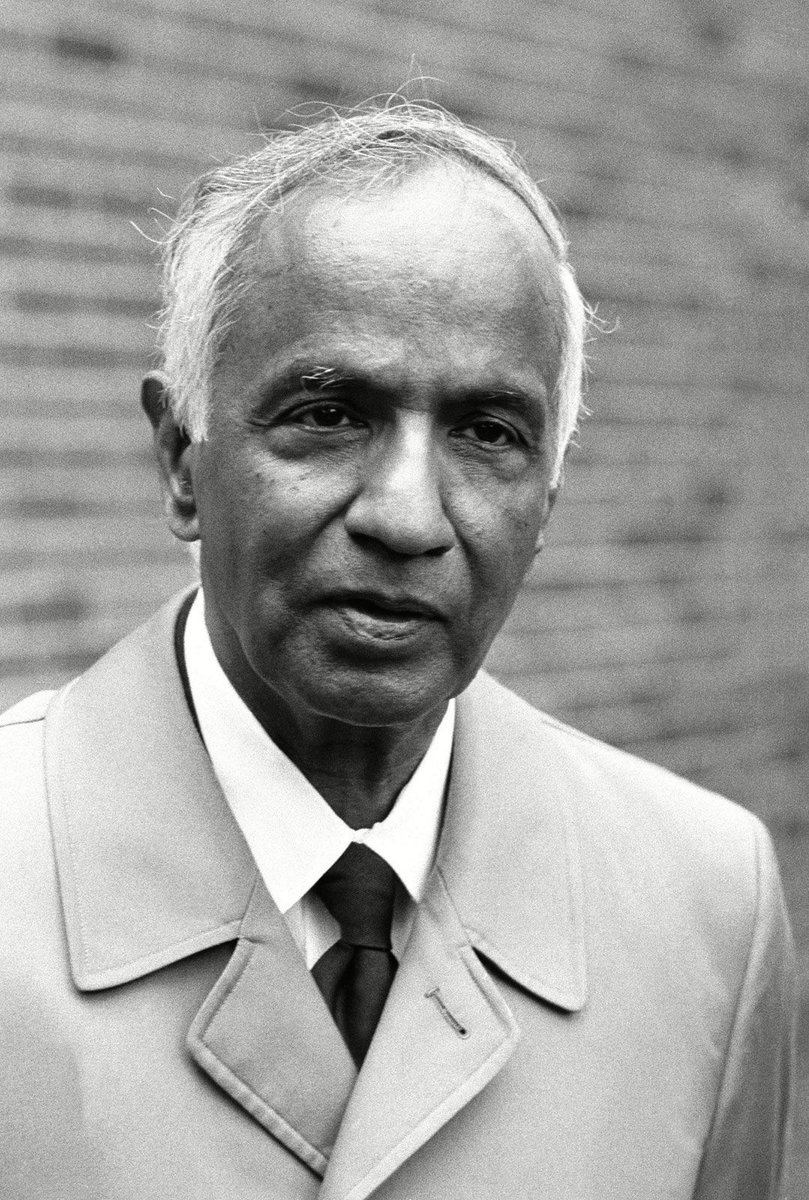
In 1930, a 19-year-old student sat on a steamship traveling from India to England, scribbling math equations in a notebook to pass the time.
By the time the ship reached port, the teenager had mathematically proven that the most massive stars in the universe do not die peacefully. Instead, they are destined to collapse into infinitely dense, terrifying monsters.
He had just discovered the mathematical trigger for black holes.
But when he arrived at Cambridge and presented his work, the leading astronomer of the Western world publicly mocked him, calling his mathematics a stellar joke.
His name was Subrahmanyan Chandrasekhar.
It would take nearly 50 years for the scientific establishment to admit they were wrong and award him the Nobel Prize for the math he did on that ship when he was nineteen.
His struggle against scientific elitism is the ultimate lesson in what happens when rigid dogmas clash with undeniable mathematical reality.
In the early 20th century, astronomers believed they understood the life cycle of stars. They knew that when a star runs out of fuel, gravity tries to crush it. But quantum mechanics offered a beautiful safety net: a force called "electron degeneracy pressure" would push back against gravity.
The star would shrink into a stable, peaceful, glowing ember called a White Dwarf.
The entire scientific establishment agreed: every star, no matter how big, would eventually settle into this quiet retirement. It was a neat, comforting formula.
But on that ship, Chandra realized the establishment had left a massive variable out of their equations: Albert Einstein’s Special Relativity.
Chandra recalculated the math, factoring in what happens when the collapsing particles inside a dying star approach the speed of light.
What he found shattered the comforting consensus.
He proved that if a dying star is more than 1.44 times the mass of our Sun (a boundary now immortalized as the Chandrasekhar Limit), the quantum safety net snaps. The gravity becomes so intense that the electrons cannot push back.
The star cannot form a peaceful White Dwarf. There is no formula to stop it. It must keep collapsing, falling inward forever, crushing itself into a single point of infinite density.
When Chandra presented this at the Royal Astronomical Society, Sir Arthur Eddington,the most powerful physicist in Britain, literally stood up, tore Chandra’s paper to pieces, and ridiculed the idea of stars collapsing into nothingness. Eddington’s ego couldn't accept a universe with such violent, unpredictable geometry.
Chandra was completely isolated. The establishment closed ranks around Eddington.
Instead of fighting a toxic, biased system, Chandra quietly shifted his focus to other areas of physics, leaving his flawless math in the journals for a future generation to find. Decades later, when advanced telescopes finally spotted real neutron stars and black holes in deep space, the world realized the 19-year-old kid on the boat had been right all along.
The philosophical blueprint Chandrasekhar left behind is a vital truth for navigating gatekeepers and institutional pushback:
Comforting illusions will always be more popular than harsh, disruptive truths. Trust the math anyway.
Most of us approach our careers and projects seeking the validation of the current experts or the established guard. When we propose a radical new idea or try to change a broken system, and the authorities tell us we are wrong, our instinct is to assume our logic is flawed. We abandon our data to fit the consensus.
But Chandrasekhar’s legacy proves that institutional authority is not the same thing as truth.
Gatekeepers are human; they protect their own theories, their own legacies, and their own comfort.
What is an idea, a project, or a direction you’ve abandoned just because an expert or a boss told you it wouldn't work? What happens if you stop looking for their permission and trust the structural integrity of your own work?
#univers 🌌 | Sommes-nous seuls dans l’Univers ?
Exoplanètes, James Webb, océans cachés sous les lunes glacées… Le docu 📺"Secrets de la Science " nous plonge dans les dernières avancées scientifiques avec @astro_allan aux côtés de chercheurs du CEA.
👀👉https://t.co/1jOWgpD3Su
The multiwavelength observatory INTEGRAL operated for 22 yrs and facilitated progress across a breadth of astrophysical topics. The Project Scientist and team outline some of INTEGRAL's key achievements and its legacy in a Review article: https://t.co/aeWmYRc8B4 #astrosci
🚨Avis aux étudiants de l'@IPSA🚨
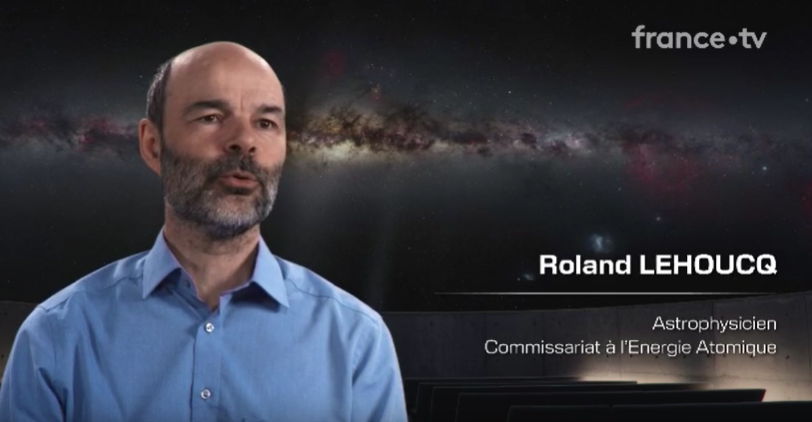
Ne manquez pas la conférence exceptionnelle de #RolandLehoucq, astrophysicien au @CEA_Officiel qui aura lieu le mardi 5 mai de 18h00 au 19h30 à l'amphithéâtre de l'#IPSA de Paris-Ivry.
Le thème de sa conférence sera "Voyage interstellaire : entre science & imagination".
Inscriptions obligatoires pour assister à la conférence à cette adresse mail : [email protected]
La conférence sera retransmise sur Youtube à cette adresse : https://t.co/syi8maUqOY
Image : IPSA
Conférence passionnante, mercredi soir, de @jmbobi au @LeCnam à #Paris, dans le cadre des conférences mensuelles de la #SociétéAstronomiquedeFrance.
Intitulée « Les rêves de l’origine », cette conférence a captivé son public.
Image : Joris Bossard
A propos du livre "Les Rêves de l'Origine"
https://t.co/3xoWKScccK
Conférence de la Société Astronomique de France donnée au CNAM- Paris le 8 avril 2026 accessible sous :
https://t.co/0AmVxF19KJ
L’œuf d'or n'est pas un œuf de Pâques.
C'est la vision cosmologique traditionnelle en Inde.
Illustrations de Guillaume Duprat dans le livre "Les rêves de l'Origine"
https://t.co/sYvWU6xkgW
présenté au Conservatoire Arts et Métiers (CNAM le 8 avril 2026)
Le Big Bang face aux cosmologies anciennes.
D'après le livre «Les Rêves de l'origine : Récits extraordinaires de la création du Monde"
par Jean-Marc Bonnet-Bidaud, Illustrations Guillaume Duprat (Edition Tana 2025)
https://t.co/3xoWKScccK
CNAM Arts et Métiers
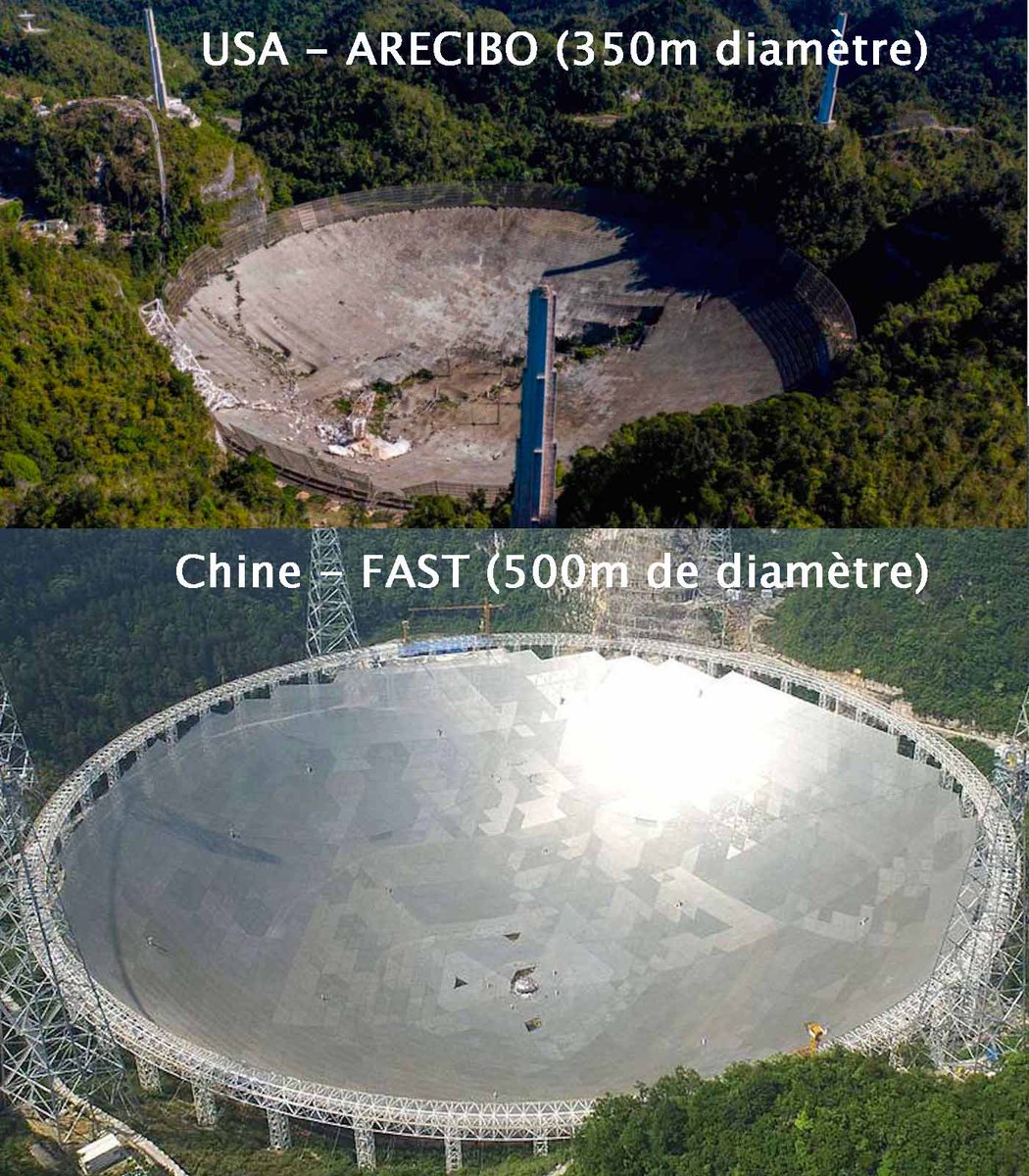
@konstructivizm Forgot to mention that Cloud-9 was first discovered in 2023 by the Chinese radiotelescope FAST (Five-hundred-meter Aperture Spherical Telescope), the world largest radiotelescope.
Part of #CosmicVision, @ESA_Smile is a joint European–Chinese mission that will give us a global picture of the interaction between the Sun and Earth.
By improving our understanding of geomagnetic storms, solar wind and space weather, Smile will help keep our technology & astronauts safe.
1/ #CM25
Update: "Shenzhou-20 crew's return mission is progressing smoothly," CMSEO says, without explicitly stating the plan. But "landing site is currently conducting comprehensive rehearsals for the Shenzhou-20 crew's return," suggesting SZ-20 is clear to land. https://t.co/QL06RICumN
A cosmology paper has gone viral (see @guardian link) - because of its big claims and press release. Here's a thread for what its big problems are. https://t.co/zSWs2wVUwj
Le 5ème congrès Solvay, et l'une des photos les plus célèbres de la physique, ont 96 ans aujourd'hui !
Parmi les 29 physiciens invités, 17 étaient ou devinrent prix Nobel
Une "internationale des génies", en pleine révolution de la physique quantique 👉 https://t.co/dQOVZzjb9W
Mercredi 22 octobre à 16h, j'aurai le grand plaisir de présenter le livre "Les Rêves de l'origine : Récits extraordinaires de la création du Monde" Tana Editions https://t.co/3xoWKScK2i dans l'émission @ScienceCQFD de @NatachaTriou