Anthropic just dropped 5 workshops on building self-improving agentic systems from scratch:
00:00 - Ship your first Claude agent
36:44 - Build memory for Claude agents
1:05:06 - Make your agent autonomous
1:26:46 - Set up a proactive agent
2:03:35 - self-improving agents (tools,skills)
These 3-hours of free Claude workshops will replace 10 paid agentic courses.
Watch today, then read article below on how to build a self-improving agentic system with Fable 5.
A Google Cloud engineer just showed how to build a full app with Claude from scratch
he spent 26 minutes live on stage doing what most teams take weeks to do
worth more than any $500 vibe-coding course
here's what he covers:
> zero to deployed app in a single session
> handling five engineering roles alone with Claude
> the exact workflow Google uses internally
> no team, no setup, just Claude and a goal
the people who figure out what Claude can actually do are building things everyone else thinks requires a team
that's exactly why I wrote a step by step guide on how to build your first AI agent
the guide is in the article below
MIT DEDICATED A FULL LECTURE TO GIT'S INTERNALS -- BECAUSE THEY FOUND MOST DEVS MEMORIZE THE COMMANDS AND HAVE NO IDEA WHAT THE TOOL ACTUALLY DOES
A whole 85 minutes MIT session that refuses to teach git as a list of commands to copy, and instead shows you the data model underneath -- the thing that makes every command finally make sense.
-> The moment it clicks, git stops being scary magic. You stop memorizing "The incantation that fixed it last time" and start actually knowing what's happening.
Most people learn just enough git to not get fired. Four commands, blind faith, and a prayer before every merge.
In 2026 that's not enough anymore -> git is the literacy test for being in the room, and "I'll just reclone it" is the fastest way to look junior.
An AI agent will branch, commit and rebase faster than you can read. When it tangles the history, untangling it runs on understanding the model MIT teaches in this one hour.
Anyone can run git push. The person who understands the graph underneath is the one who saves the repo when it breaks.
Bookmark & Watch it ↓
Here's the Link to The Interactive Handbook on Data Structures and Algorithms, by Elias Yilma.
The book is a self-contained Unity app that you can run from an executable, and it's available for Mac, Windows, and Linux.
Currently, there's a discount leaving it at USD 35. It includes a Python mini IDE and interpreter for exercises, and you can download the Chapter 6 (Strings) as a free sample.
https://t.co/pNEuTf7edb
Anthropic's applied AI team just dropped a 24-minute workshop on how to actually prompt Claude properly.
Free. From the people who built it.
You've been prompting Claude for months without the 6 elements they teach in this.
I built a skill that applies them automatically. Full guide below.
Bookmark it.
Follow @codewithimanshu for more high-signal content that actually moves your skills forward.
Holy shit… someone just made machine learning click.
Not static diagrams.
Not math-heavy PDFs.
Not black-box training.
Real algorithms — training step-by-step — visually.
It’s called Machine Learning Visualized
and it lets you watch models learn in real time.
Here’s why this is different:
Instead of dumping theory first,
it shows optimization happening live:
• gradients moving
• weights updating
• decision boundaries shifting
• loss decreasing
• models converging
You literally see learning happen.
Everything is built from first principles:
• Gradient Descent
• Logistic Regression
• Perceptron
• PCA
• K-Means
• Neural Networks
• Backpropagation
No magic. Just math → code → visualization.
Each chapter is a Jupyter notebook
that derives the math
then implements it
then animates training.
So you can watch:
• neural nets shape decision surfaces
• PCA rotate feature space
• K-means clusters form live
• gradient descent find minima
• sigmoid reshape boundaries
• backprop update weights step-by-step
This solves a huge problem:
Most ML resources teach: math → code → ??? → trained model
This shows: math → code → learning process → result
Which means you finally understand:
• why gradients matter
• how weights evolve
• what loss landscapes look like
• how convergence actually happens
• why deep nets learn non-linear functions
Even better:
You can open any notebook
modify parameters
and watch behavior change instantly.
Learning ML becomes interactive.
Not passive.
Not abstract.
Not confusing.
Just… visible.
Perfect for:
• beginners learning ML
• devs moving into AI
• interview prep
• teaching concepts
• understanding backprop
• visual learners
• building intuition
This is the kind of resource
that makes neural networks finally “click”.
Link: https://t.co/i0k7LzGbJt
We’re moving from:
reading about ML
→ watching ML learn
That’s a big shift.
Because once you can see training,
you stop memorizing… and start understanding.
AI education just got visual.
🚨 In 2013, a Yale University lecture quietly changed how smart people make decisions.
Most people have never seen it.
It came from Ben Polak and instead of teaching theory, he showed how decisions actually play out in real life.
Watching it feels like gaining an unfair advantage.
At its core is Game Theory not as math, but as a way of thinking. A lens to understand how people act when outcomes depend on others.
He breaks down ideas like dominance choosing moves that are best no matter what others do. Backward induction thinking ahead by reasoning from the end. And the proactive bias not just reacting, but shaping the game before it shapes you.
The biggest shift? Realizing that better decisions aren’t about being smarter they’re about thinking strategically.
That’s why this lecture still hits hard.
Because while most people react to situations…
A few understand the game and play it better.
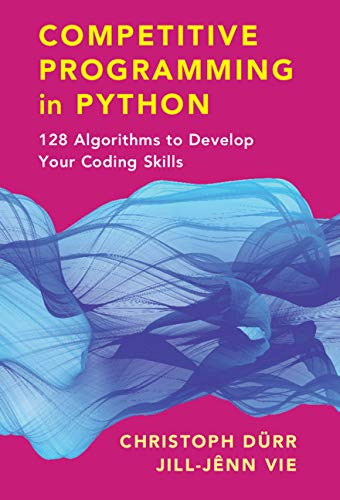
Competitive Programming in Python book for FREE!
Improve your programming skills with these 128 algorithms.
To get your copy, do the following.
- Like and Repost
- Comment "Python Space"
- Follow me so that I can DM you.
If you've been disconnected from mathematics for a while, I recommend these 5 books to help ease you back in. Whether you're looking to brush up on basics or discover the fun side of formulas, these reads make math approachable and exciting. Ready to fall in love with numbers again?
1. "The Joy of x: A Guided Tour of Math, from One to Infinity" by Steven Strogatz - This book offers a fresh and inviting overview of mathematics, bringing to life the joy and practicality of numbers. Strogatz uses everyday examples and engaging stories to make complex concepts understandable and exciting.
This is Elon Musk.
He runs 5 billion-dollar companies, has 11 kids, and still has time to sh*tpost on Twitter.
I had to know how he manages his time.
Here’s what I found:
I took this Deep Learning course.
It's from UC Berkeley. Amazing how you can get free education from top universities in the world!
The course is great. I love it's organized in small chunks. I watch it all during my morning walks.
Here is the link: https://t.co/1lwxPFgQMd
Python Book;
❗️Weekend giveaway❗️
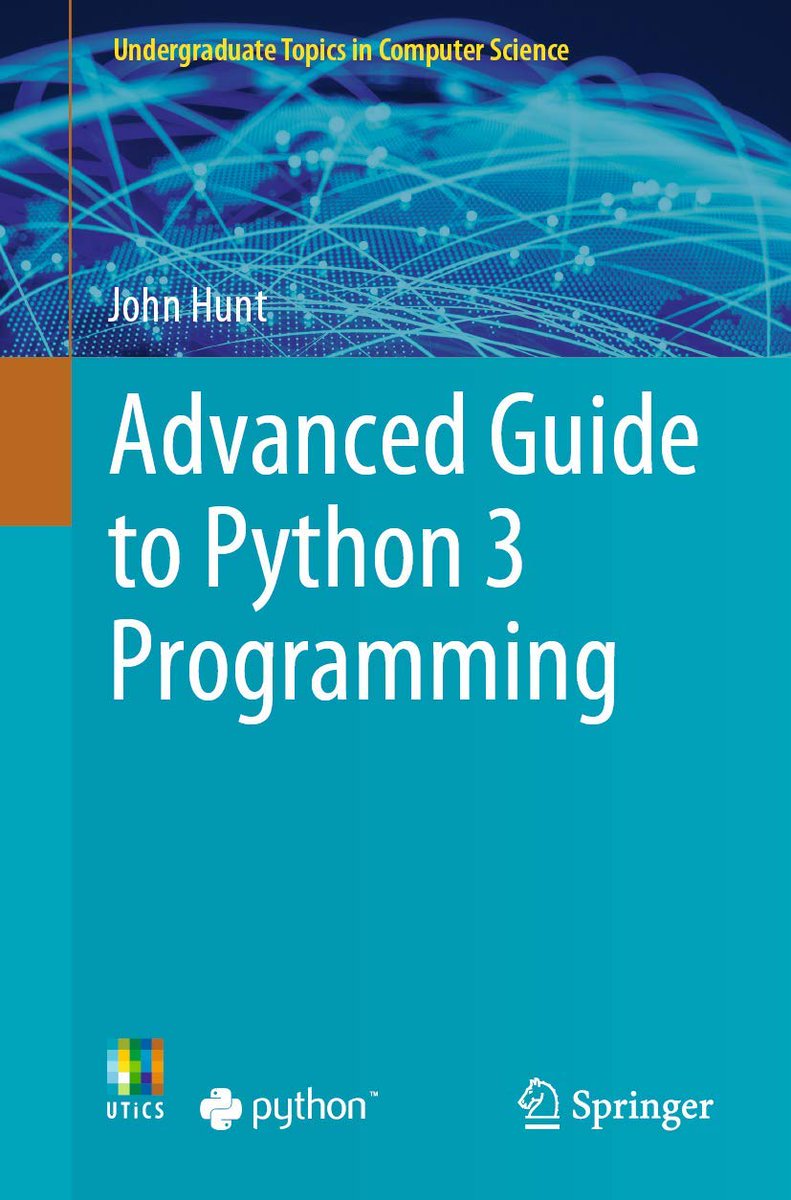
I'm giving away some FREE copies of "Advanced Guide to Python 3 Programming, 2nd Edition", to my followers.
If you want a copy, please do the following:
🔸Like
🔸Retweet
🔸Comment
🔸And then even better, send me a DM
#python#python3#ebook
🚨 I'm excited to release the 𝚝𝚒𝚗𝚢𝚝𝚊𝚋𝚕𝚎 📦 for #RStats ! Convert R dataframes to beautiful tables in HTML, LaTeX, PDF, Quarto, Markdown, etc. Easy to learn; minimalist interface; concise syntax; ultra-customizable tables; and zero dependency. 🧵 https://t.co/CDcF9BCqzX