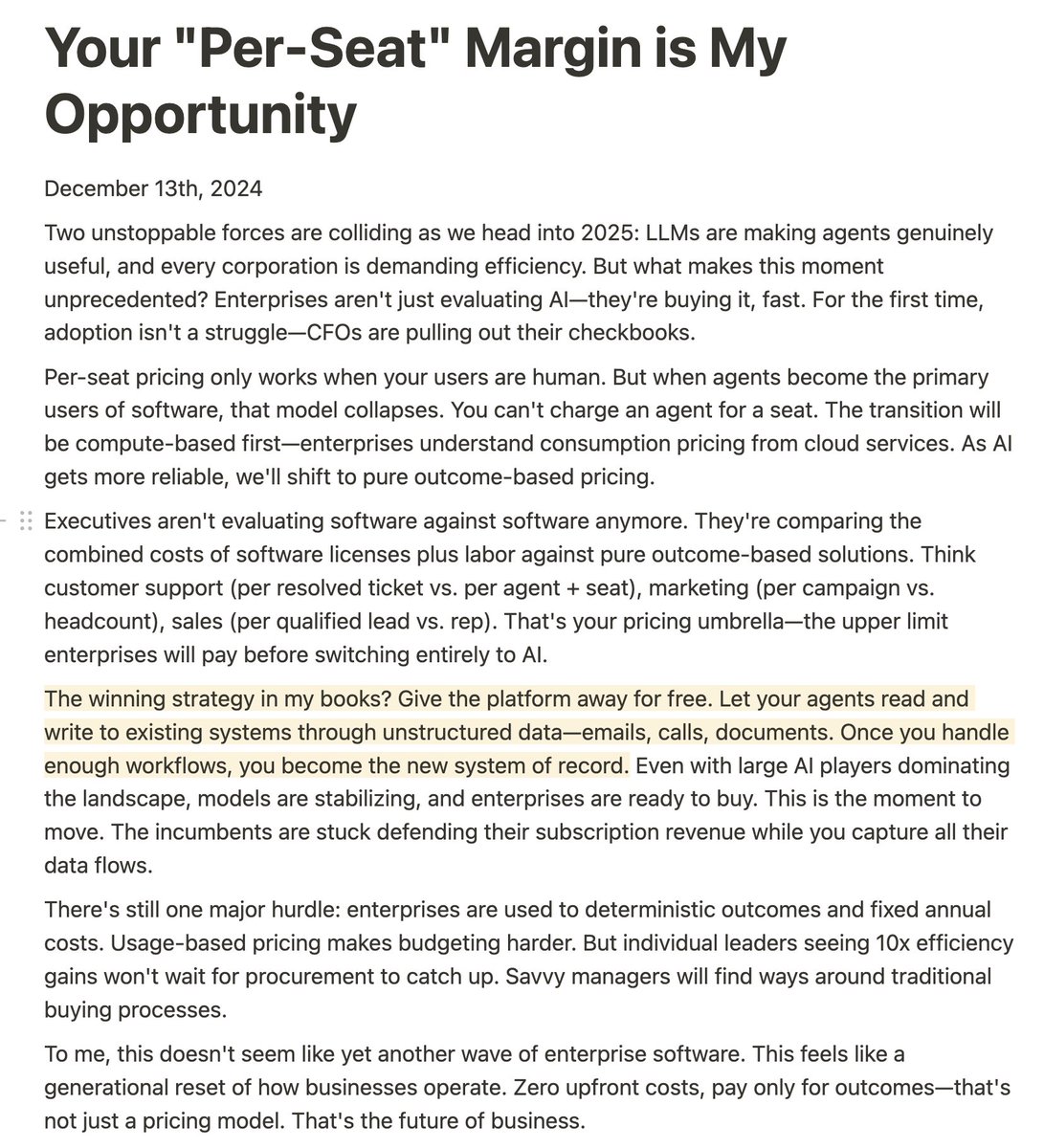
@awilkinson Not sure whether just being a cheaper option for doc signing would cut in the AI world. Can AI generate most of the document, manage versions and handle signatures?. We are building in this space. Stay tuned!!!
@awilkinson Not sure whether just being a cheaper option for doc signing would cut in the AI world. Can AI generate most of the document, manage versions and handle signatures?. We are building in this space. Stay tuned!!!
@RobertMSterling Easily fixed by raising the minimum salary significantly and adding a yearly cost for maintaining the H1B, making it materially more expensive to hire from overseas than domestically.
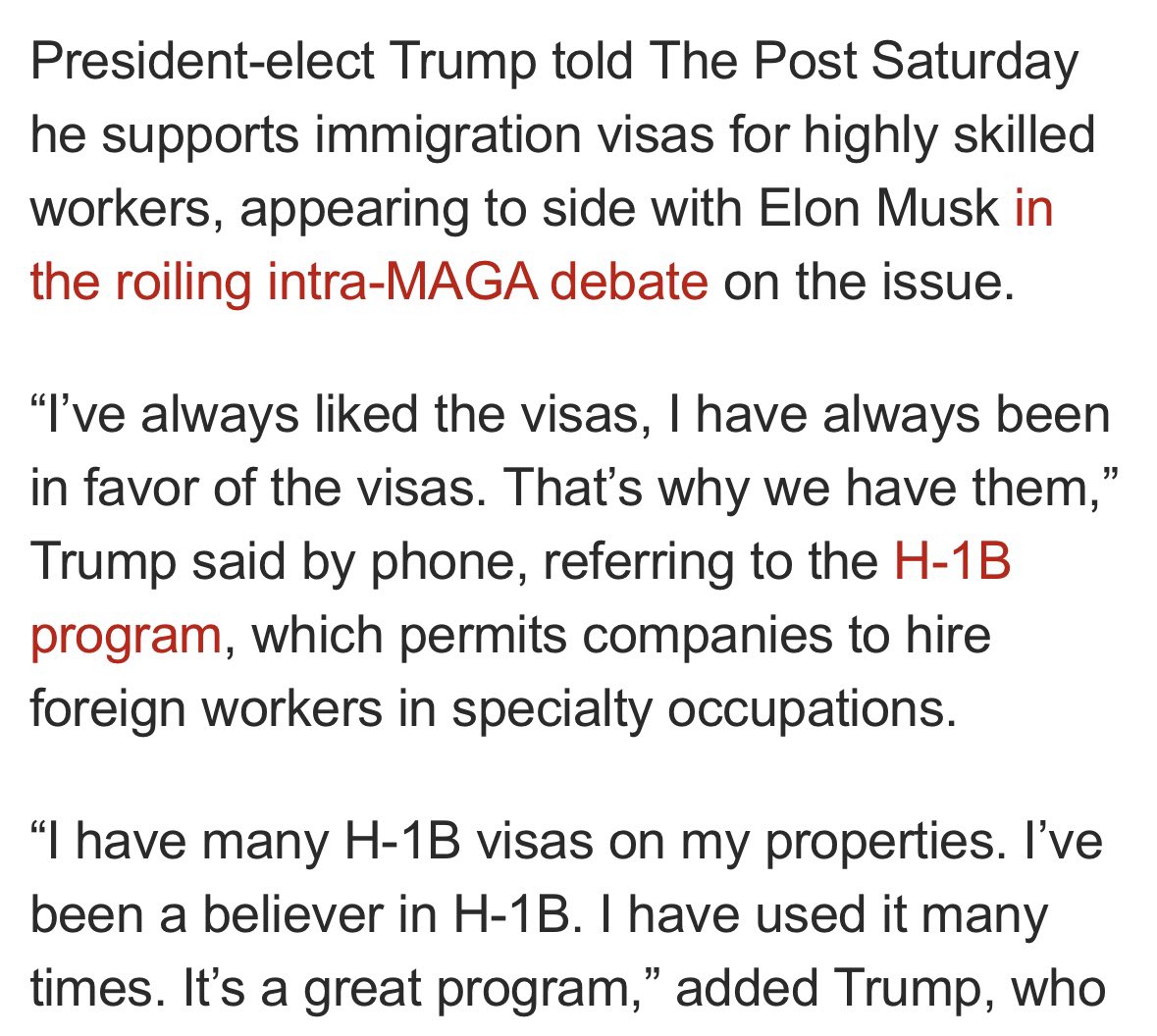
I’ve been very clear that the program is broken and needs major reform.
Thanks @RobertMSterling . This data shows the problem in full display. The main reason why people like @AravSrinivas has to wait in a long line to get his GC. It is not America first, but it's Corporate America first. #capitalism.
As it turns out, these are ALL Indian companies that import H-1B tech workers en masse:
Cognizant (93k)
Infosys (61k)
Tata Consultancy Services (60k)
Wipro
Capgemini
HCL
Compunnel
Tech Mahindra
Mphasis
These aren’t American companies that needed international talent to fill critical roles. They’re foreign companies that appear to have been founded to place overseas tech workers into US companies as contractors.
Australia has effectively signed open borders with India:
The Australia-India Migration and Mobility Partnership Agreement (MMPA) includes the following provisions:
1. Five year student visas, with no caps on the numbers of Indians that can study in Australia.
2. From 1 July this year, Indian graduates of Australian tertiary institutions on a student visa can apply to work without visa sponsorship for up to eight years.
3. The Mobility Arrangement for Talented Early Professionals Scheme allows 3000 of India’s top graduates and early career professionals to work and stay in Australia for up to two years. They can apply for a permanent skilled visa, and spouses will have unlimited work rights.
4. Three-month visitor visas available to Indians for family or business purposes (no caps on numbers).
Not only that:
5. Australia must also recognise Indian vocational and university degrees as being comparable to Australian qualifications for study and employment purposes
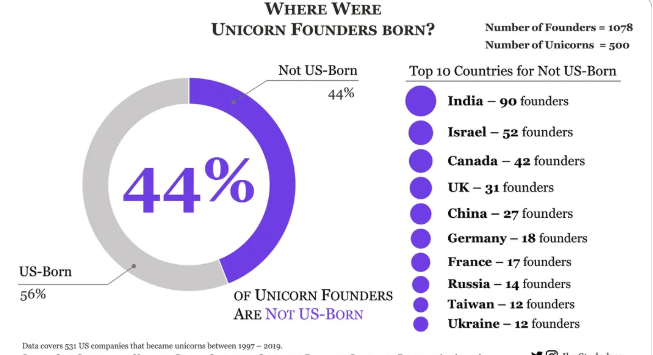
Immigrants are 16% of the population.
In America, they are responsible for
23% of patents
46% of Fortune 500 founders
40% of Noble Prizes
44% of Unicorn founders, with India the largest country
Are you one of those people who turned against the left because you believe in progress and merit and saw DEI as an attack on those principles?
Wake up. There is a new enemy to fight.
@sm At last, someone made a sane point on what corporate America would do if they can't hire enough talent in the US. They outsource and build their teams elsewhere. And what happens when there is enough talent density in other places. Innovation moves there.
I am a former H1B visa holder and US citizen.
When I arrived in the US in 2004 with a trekker's backpack, an F1 visa, and $2,000, I had no idea how this country would change my life. Within six years, I was hired by MIT as an Assistant Professor and within ten I had started my own company. The US provided me with a level of opportunity that I doubt I would have seen anywhere else in the world.
So let me tell you why I think the US is a perfect complement to foreign talent and why it is in our interest to keep it this way.
I moved to the US in 2004 to pursue a PhD in Physics. When I landed, I expected my American classmates to be more advanced than I was in theoretical physics concepts. But I was wrong. I quickly realized that I had taken more graduate level courses than them. Their bachelor education had meandered through multiple topics, while I had been on a 100% physics and math track that helped me test out of graduate courses and move right into research.
And that is where the American magic began. Back home, my brief encounters with research focused on making small improvements on well-established problems using sophisticated tools. Many people were competing to show how smart they were by dominating byzantine methods. In the US, I saw many researchers succeed by picking “simple” but relevant problems. That was a perfect complement for my technical background. I felt like Daniel San the moment he figured out the value of waxing all of those cars. I finally was at a place where my skills were useful.
America is a land opportunity in big part because it has a fantastic work culture that values things such as relevance, communication, and simplicity. In X, international comparisons of work culture often veer into formal things like maternity leave. But as someone that has worked in a few countries, I am convinced that many subtle things, such as knowing how to take turns during a meeting, or responding to an email quickly, can go a long way. In many countries, work is an overregulated bureaucratic nightmare. American culture can be extremely refreshing for foreigners who know what it means to battle unnecessary processes and rules.
But there is more. The US work culture is also open and optimistic. Most countries suffer from “well intentioned” cronyism, where people hire, associate, and promote others based on personal relationships. This certainly happens to some degree in the United States, but less than in other places. That openness, however, is key for providing opportunities for outsiders with more skills than networks. Also, many countries pessimistic work cultures, where people shoot others down as a way to flex their wit. But as Nat Friedman said, “Pessimists sound smart. Optimists make money.” American can-do attitude is a valuable intangible that is prevalent in the US.
Now, to the point of this post, these aspects of American work culture are great complements for skilled foreign workers. Complements that favor America. America’s open work culture, with its emphasis on communication skills and optimism, is amazing for organizing teams. Skilled foreigners perform better in teams with an American work culture than in teams of bureaucratized pessimists that don’t know how to take turns during a meeting. When those surviving in those more hostile work environments move to America, they can unleash their technical skills in relevant problems within optimistic organizational cultures that are rare back home.
Whether it is Von Braun and his team moving to Texas, or a brilliant young man or women from Sicily or Jakarta coming to the US for their PhD, America benefits from this complement. The fact that every year we get the first pick on the draft is a key competitive advantage. Sure, we do not always know if the first pick of the draft will turn out great, but getting the first pick of the draft is not something we want to lose.
We should double down on what makes America exceptional.
Here is the main problem. No one is talking about fixing it. It's not a race or immigration issue. It's a matter of fixing what's broken with H1B.
H1B is abused because the framework is not robust enough to hire Americans first and not replace American workers.
Vikash Khanna who earned Michelin Star for his new restaurant in New York City, cooked Whites. One of the most BASED Indians in the current generation.
“I think Donald Trump having a relationship with one of the greatest innovators of our time is a good thing…and I'm sorry if people have their feelings hurt. This country needs people like Elon Musk…” -Scott Jennings🔥🔥🔥
Big mistake if you expect Silicon Valley to surrender on the high-skilled immigration debate.
Most of the successful entrepreneurs & engineers are either themselves immigrants, the children of immigrants, or at least have benefited from working very closely with immigrants.
Never, ever assume any discussion with an Indian is in good faith.
They're spiritually J'ish/female in that words are only to secure positive outcomes, not actualized truths.
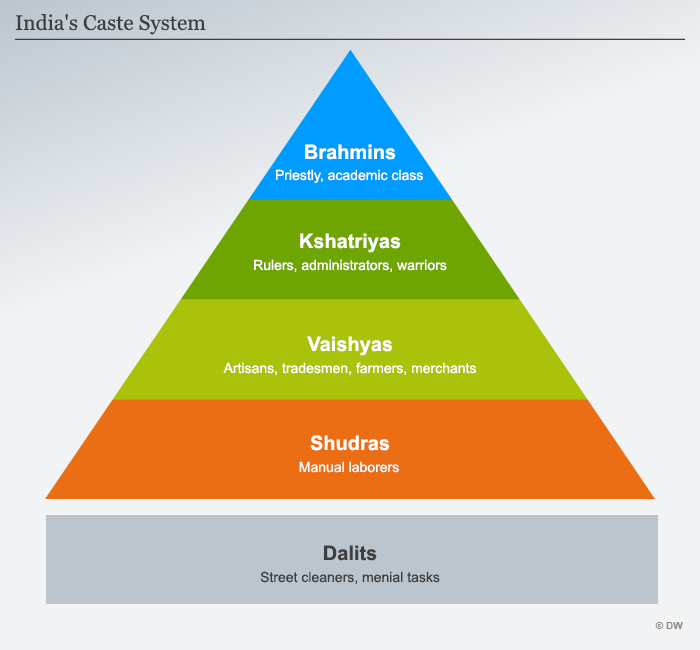
Indians don't hate discrimination. They are the absolute masters of it with their caste system.