UPDATE: The Revenue Authority says it will kick off stakeholder engagement on embedding a Stock Taking & Management module onto eTIMS.
The Authority says the stakeholder fora will take place within September 2026.
Musings:
1. This further tightens eTIMS & its use in incomes & expenses validation by the Revenue Authority
2. Once embedded onto eTIMS, the Stock Taking & Management module should grant the Revenue Authority of the movement of stock in a business
3. The import here is that if you are one of those who have been doing some sales without an electronic invoice so as to avoid visibility for tax purposes, your goose is cooked
4. At any given point, the movement in your stock will be required to align with the invoices captures in your iTax ledger & any misalignment will invite scrutiny
When eTIMS Regulations came out in Jan 2024, I captured this bit & how much clarity would be required (see quoted tweet)
KCB Group has asked the DCI to investigate an alleged Sh147 billion remittance linked to Foxcapital.
We take a deeper look at what is going on in the case below.
Read the Thread below:
Claude's watermark probably doesn't work how you think. As the CTO of GPTZero, I'll explain how Anthropic, Google and OpenAI are building text watermarking in this brief explainer and whether it can be defeated.
Almost all forms of watermarking that are fast and cheap enough for a frontier lab have the same formula, following the KGW method:
In generation:
1. Let's say you've generated n tokens so far. Take those n tokens + a secret key to generate a random hash
2. Use that hash to randomly reweight the probabilities for the n+1 token, and then sample from that new distribution. In the simple case, you could split 50% of all English words into a green or red set based on your hash, and boost the probability of words in the green set.
For watermark detection:
1. For each token, see if it was in the green or red set.
2. To do this, recreate the hash based on the secret key and the text preceding the current token. Then, recreate the green and red set of words.
3. Once you've checked all the words in the text, if the next token is selected disproportionally from the green set more than 50% of the time, you claim the text has the watermark.
I can tell you want to ask the following:
1) Isn't it easy to mess up the hash if you paraphrase the text? The answer is mostly yes, however, you can use a statistical model to get your hash instead of a deterministic function (SIR, Adaptive Watermark). Since the entire watermark is probabilistic, this is fine.
2) Doesn't this make the text much worse? The answer is yes, it does - Yes, it does – but for most people, it's imperceptible (Google claims in human feedback study with 20,000 texts), since there are exponentially many ways to write the same paragraph. DiPmark does something more sophisticated to avoid shifting the text distribution on average. Of course, watermarks fail on short text or highly predictable texts like "2+2=4".
3) Shouldn't it be easy to figure out the green and red sets? The answer is no. You would need an exponentially large number of samples from the watermarker to reconstruct those sets exactly, but it's a risk if the detector is open to the wild (Watermark Stealing)
Still, there are couple challenges that a frontier lab needs to overcome:
1. Their watermark needs to work token-by-token because they are streaming their text to users. Many watermark methods plan sentences or paragraphs at a time, or change the text after its entirely written, in order to make their watermark robust to paraphrasers, and a frontier lab cannot afford to do this yet (SemStamp, PostMark)
2. If the secret key leaks, the watermark is busted. To avoid a large blast damage from this, you need to have a couple secret keys in rotation.
3. There are some texts, like code, that cannot be arbitrarily changed, otherwise the code will break. In those cases, the watermark needs to selectively change words in parts of the text that can tolerate synonyms (i.e. like variable naming) - see SWEET, EWD, Invisible Entropy.
4. They will need to educate their users on how to deal with false positives and false negatives of a detector, which is a big challenge (one we put a lot of effort into)
So, how do I see this playing out in the next 6 months?
1. If Anthropic releases the watermark detector publically, I think they defeat their own watermark. People find reliable watermark removal strategies by testing against Anthropic (AI detectors like GPTZero have an advantage here because they can train against these adversaries once they become popular).
2. If they keep the detector private to the government, like Google has done, it's "safer". However, there are some papers showing trained approaches that work robustly to zero-shot break watermarks without any data, simply because they try to write the text just like a human (Zhang et al. 2024, Watermarks in the Sand). Also, making your detector makes it battle-tested and stronger long-term (my experience).
3. In my testing, the watermarks don't survive intense paraphrasing (especially if you combine word choice and syntax attacks), or human text substitution (rewrite your AI text by plagiarizing human authors). The free paraphrasers I've tried have quickly bypassed Google Deepmind's SynthId for what it's worth.
4. All-in-all, frontier labs are likely okay with this because they expect most users to not attack the watermark, and also because they + European regulators likely don't care past a certain point - its good enough.
5. Overall, I think users of frontier LLMs will not really care about this, because 1) they don't realize watermarks are there, 2) EU will force everyone to conform, 3) this seems more like regulatory hoop-jumping than an earnest effort from frontier labs to expose LLM use
Lastly, people's first concern shouldn't be watermarking, it should be AI detectors!
If you're posting, "its not X, its Y!!", I don't think the watermark is going to make a difference :)
What's wrong with these Ethiopians, don't Addis Ababa city chiefs have "better" things like their private housing estates to divert these materials to like their peers in cities that will remain unnamed?
The founder of Citadel went to China after DeepSeek dropped. What he saw should worry America
- "Not one author on DeepSeek was educated in America. It was a point of national pride."
Ken Griffin on losing the talent war, China quietly wiring Africa's power, airports and networks, and why US tariffs only speed the retreat
bookmark & watch - the clearest warning that America is losing ground to China
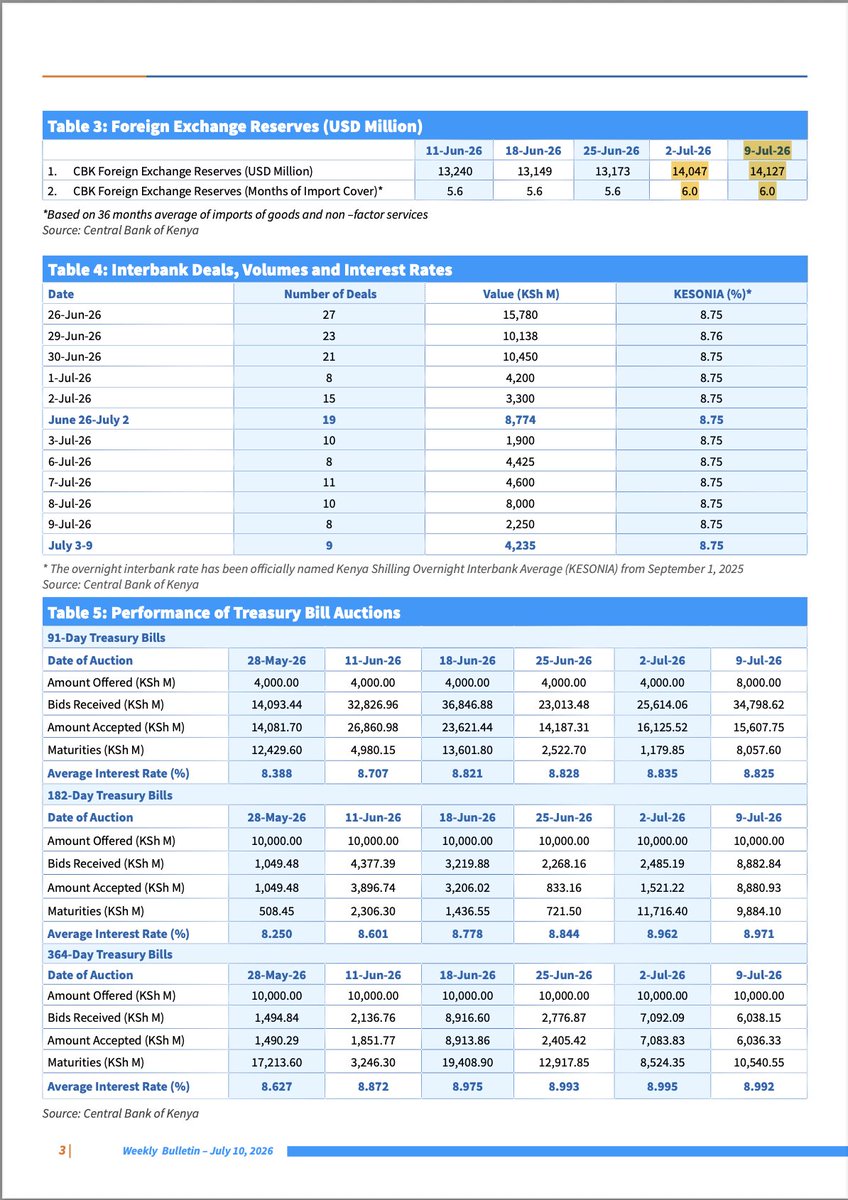
Kenya's foreign exchange reserves increased by a further US$80.0 million to close this week at US$14.13 billion.
Over the last fortnight, reserves are up by a tidy US$954.0 million.
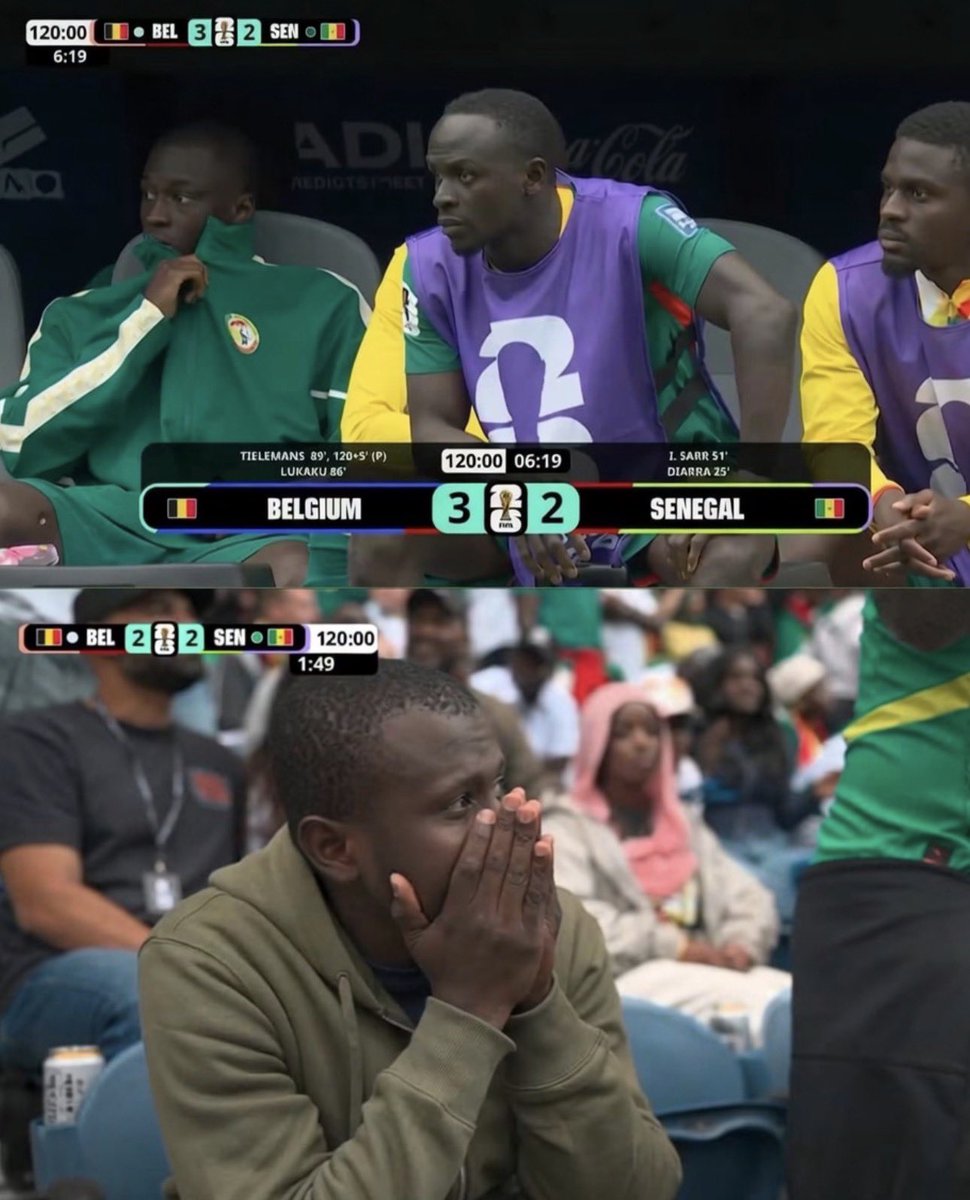
The scenario we witnessed today in the Belgium vs. Senegal game is literally a one-in-a-million occurrence!
Senegal completely outplayed Belgium in every aspect—possession, transitions, chance creation, expected goals—you name it. They went 2–0 up and stayed in control until the 86th minute. The game looked over. They were about to win and book their place in the Round of 16.
Then chaos unfolded.
Romelu Lukaku scored in the 86th minute, and Youri Tielemans equalized in the 89th after Senegal’s goalkeeper completely misjudged the ball, making it 2–2 in the space of just three minutes out of absolutely nowhere!
And somehow, the madness didn’t stop there. Belgium were awarded a penalty in the 120th minute, converted it to make it 3–2, and completed a comeback that even they probably can’t explain, sealing their place in the Round of 16 in what felt like a science-fiction script.
The Senegal players probably won’t be able to sleep tonight after the nightmares they’ll have from this collapse. Without a doubt, it’s the biggest shock of the World Cup so far.
The market is pretty liquid & scouring for good paper.
Yesterday, Kenya Mortgage Refinance Co. (@kmrc_co) reported a 312.8% performance on its Kes 3.0 billion Tranche II note (i.e attracting bids worth Kes 9.38 billion).
Today, the first tranche of I&M Bank's (@imbankke) Kes 20.0 billion MTN reports attracting bids worth Kes 23.23 billion against the Kes 10.0 billion ask posting a 232.26% performance.
Total amount accepted stands at Kes 13.0 billion (i.e. Kes 10.0 billion + 30.0% green shoe option being exercised).
See quoted 🧵 for my discussion with I&M Bank CEO, Kihara Maina, on this issuance.
You fall apart, you cry, and regardless, the ceiling still needs painting. You still need to pay bills. You have to find your missing socks. Existence doesn’t pause for grief. That alone makes being human both cruel and miraculous; the world keeps turning, and somehow, so do we.
Charlie Munger: “As Warren puts it, ‘The trouble with banking is there are more banks than there are good bankers.’”
“All intelligent investors worry about banks…because banks present temptations to their managers to do dumb things.”
I am a very successful fund manager with a 30-year track record, who just returned from speaking to Harvard Business School, and I will only say this once. 1/2
"If you look at the market today, it's awash with liquidity. A lot of that liquidity is resting with banks, which is why government paper is flying off the shelves."
That was John Gachora, Group MD at @NCBABankKenya when we spoke on March 26. We were exploring why private sector credit demand in Kenya is still so anemic.
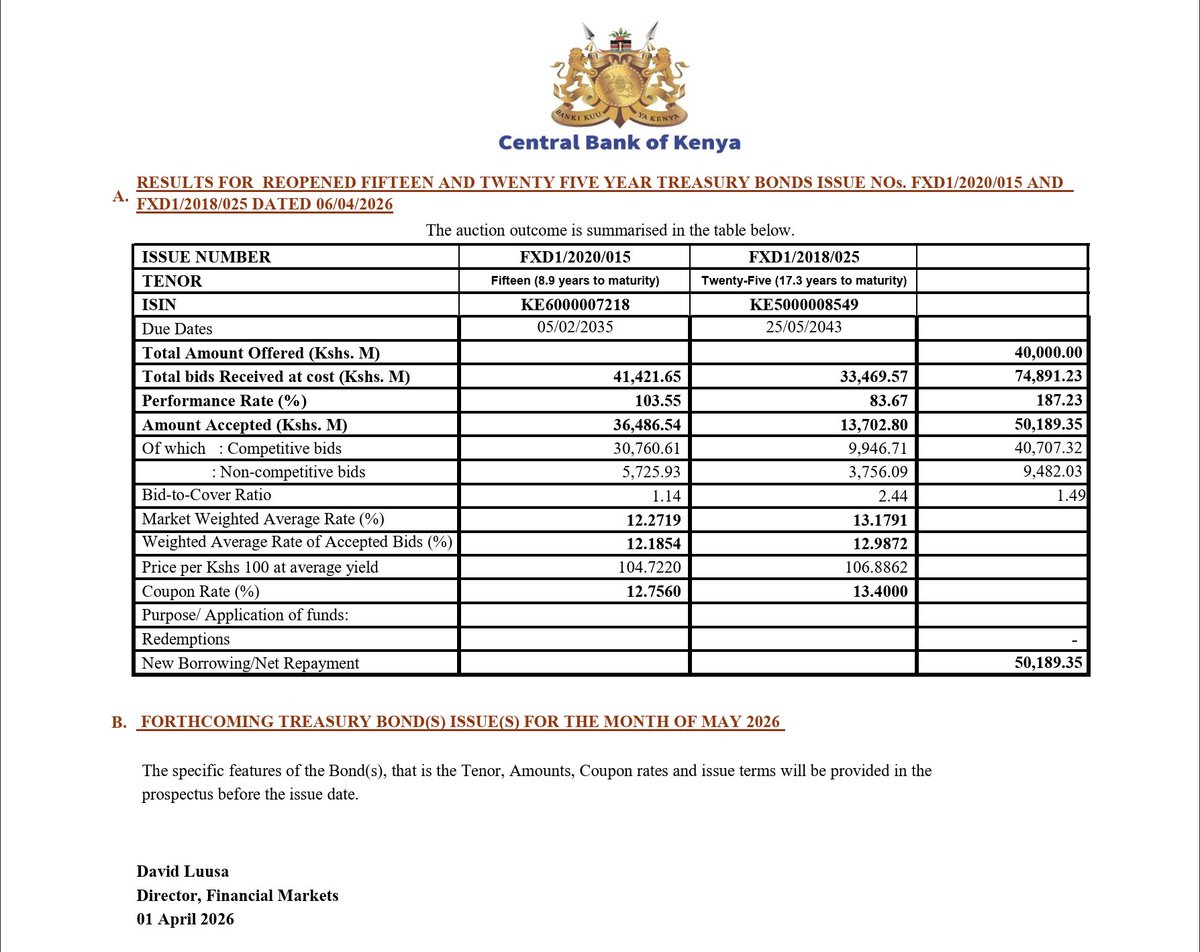
The bond market's giving us more data to validate his argument, going by the results of this auction. GoK seeks to raise KES 40 billion, gets 1.87x that figure.
Watch that 5-minute conversation with J. Gachora, here: https://t.co/Tku7GSqsMy
African markets aren't monolithic — and here's why that matters.
I've spent over a decade operating and advising companies doing business in Africa, and one of the most common mistakes I see is treating the continent as a single market.
The reality is that different countries have different characteristics which require tailored approaches.
Looking at fintech alone, Africa has at least four distinct market archetypes:
• Some markets like South Africa and Morocco are bank-led.
• Others like Kenya and Tanzania are mobile money-led.
• Some like Nigeria and Egypt are seeing high levels of fintech innovation built on top of existing infrastructure.
• Others like Senegal and Côte d'Ivoire are in the process of laying down that infrastructure.
So a strategy that works in Nigeria might fail completely in Kenya or Tanzania.
That's one of many barriers to scaling across the continent.
And it's true across verticals.
Market characteristics matter — not just in financial services, but from healthcare to retail and beyond.
So the best approach is to truly internalize that Africa is a continent, not a country.
Then after that, it's not just about 'adapting to the market'; it’s about understanding and respecting local processes, infrastructure, and norms — moving beyond the what to the why.
---
Afridigest Intelligence — cut through complexity, act with confidence, and win in Africa's growth markets: https://t.co/pTeD1UjeWi
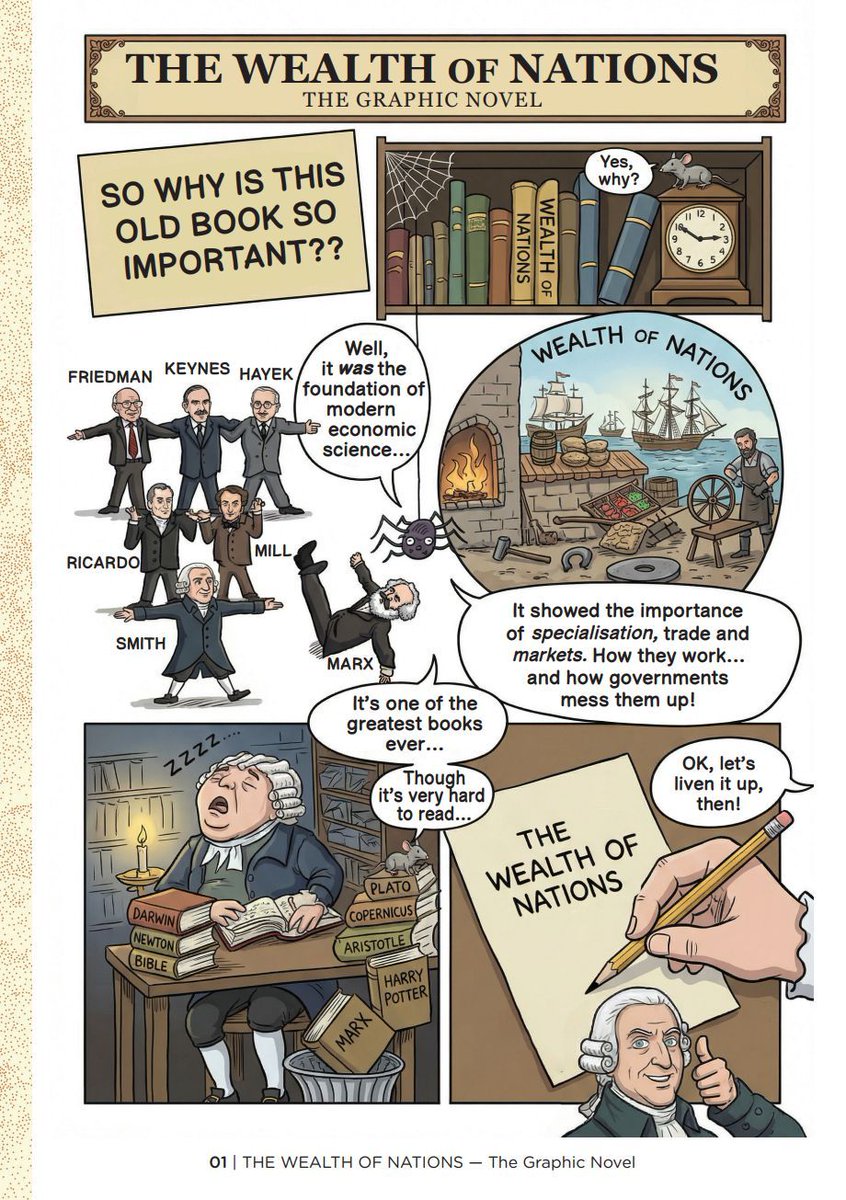
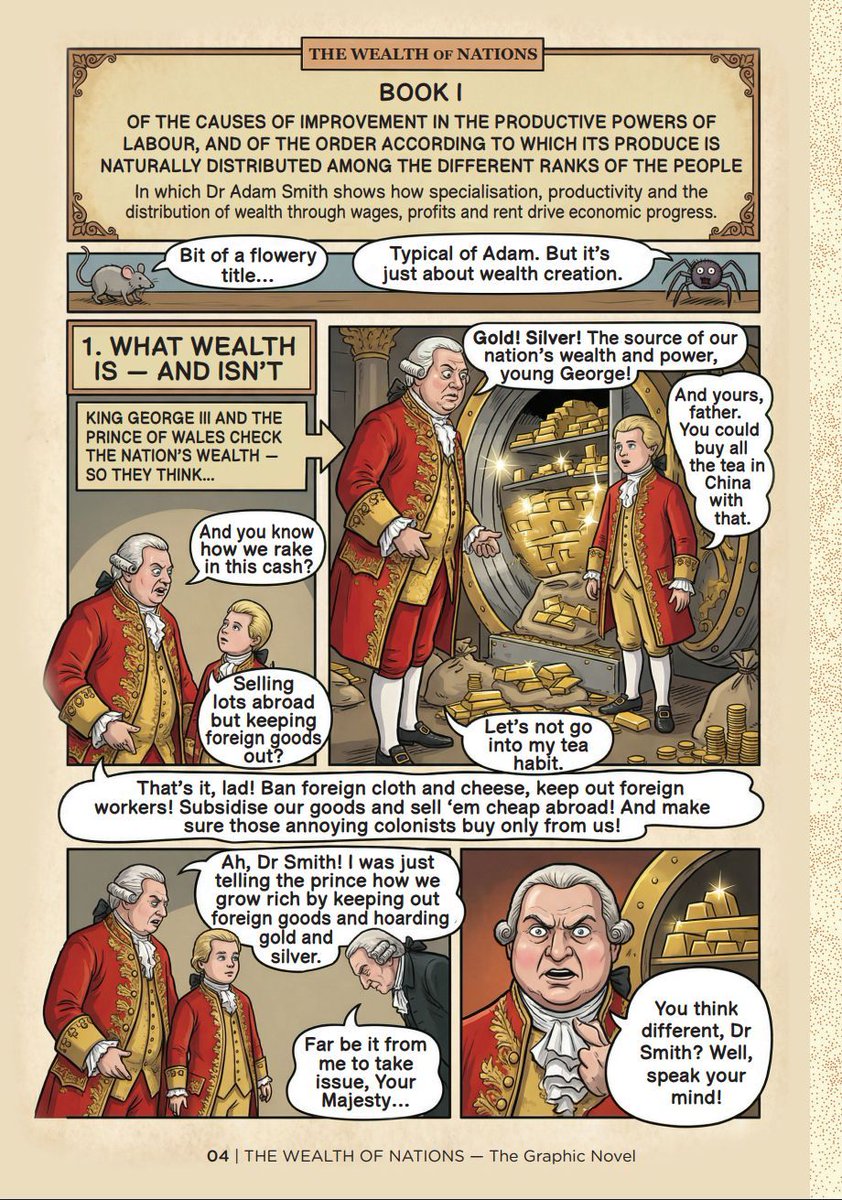
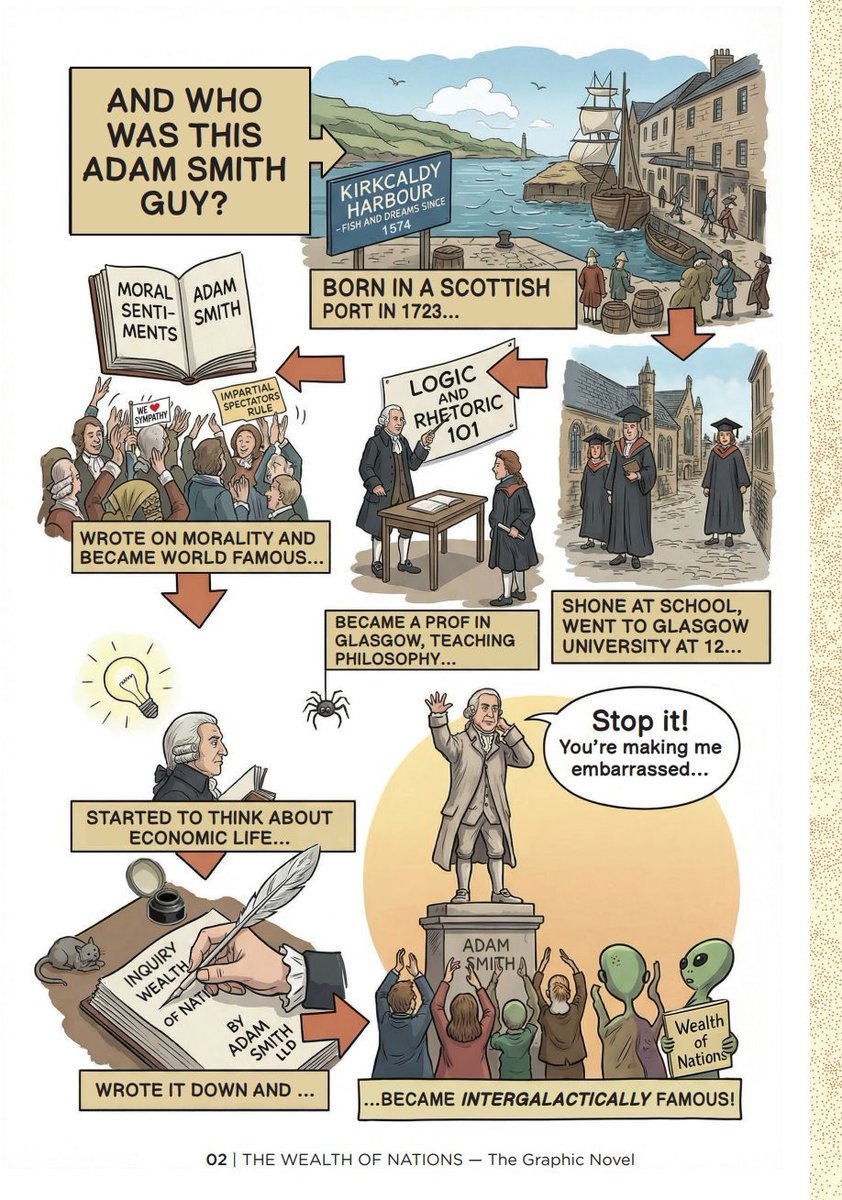
Today marks 250 years since the publication of The Wealth of Nations.
We're celebrating this anniversary by turning The Wealth of Nations into a graphic novel!
Here are some preview pages: https://t.co/XOBbwFh4h7
Don't focus on career, money, attention, etc. These are all effects. Focus on the underlying cause. Focus on building a machine that produces value. Everything else is a byproduct.