The Committee of Five—John Adams, Benjamin Franklin, Thomas Jefferson, Robert Livingston, and Roger Sherman—was appointed to draft the Declaration of Independence 250 years ago today.
Jefferson's draft of the document is here at the Library, and will be featured in a new exhibition opening July 3.
Ray’s Rock - Omaha Beach
On the morning of June 6, 1944, 23 year old Staff Sergeant Arnold “Ray” Lambert came ashore with the first wave of the 1st Infantry Division on the eastern side of Omaha Beach. At this small patch of concrete he saved nearly 20 lives:
The division came under intense fire from several German bunkers surrounding the entrance to the Colville Draw (one of two exits off Omaha Beach). Ray, a medic, immediately went to work.
He was shot in the arm. Moments later he was hit by shrapnel in the leg, but Ray kept pulling men to safety. He pulled nearly 20 wounded soldiers to cover behind this 8ft wide obstacle, treating each soldier before going out in search of others.
After several hours under fire, while pulling a wounded soldier from the ocean, he was struck by a landing craft. It dropped its ramp on top of him, breaking his back. He fell face down in the water, drowning. The craft backed up and nearby soldiers pulled an unconscious Ray to safety, eventually evacuating him off the beach.
Remarkably, Ray had already earned two Silver Stars and three Purple Hearts in Sicily and North Africa, prior to landing in France. But here in Normandy his war would end.
He awoke in a hospital back in England a day later. In the next bed over was his brother, who had also been wounded at Omaha.
When asked about his work on D-Day, Ray simply said, “I did what I was called to do.”
Ray Lambert passed in 2021 at 100 years old. He exemplified the best of American grit and why remembering this day is so important.
The largest amphibious invasion in human history began in the dark.
At dawn on June 6, 1944, nearly 7,000 vessels carrying 160,000 Allied troops closed in on the beaches of Normandy.
Through courage and sacrifice, they secured a foothold in Nazi-occupied France and began the liberation of Western Europe.
Today, we honor the heroes of D-Day.
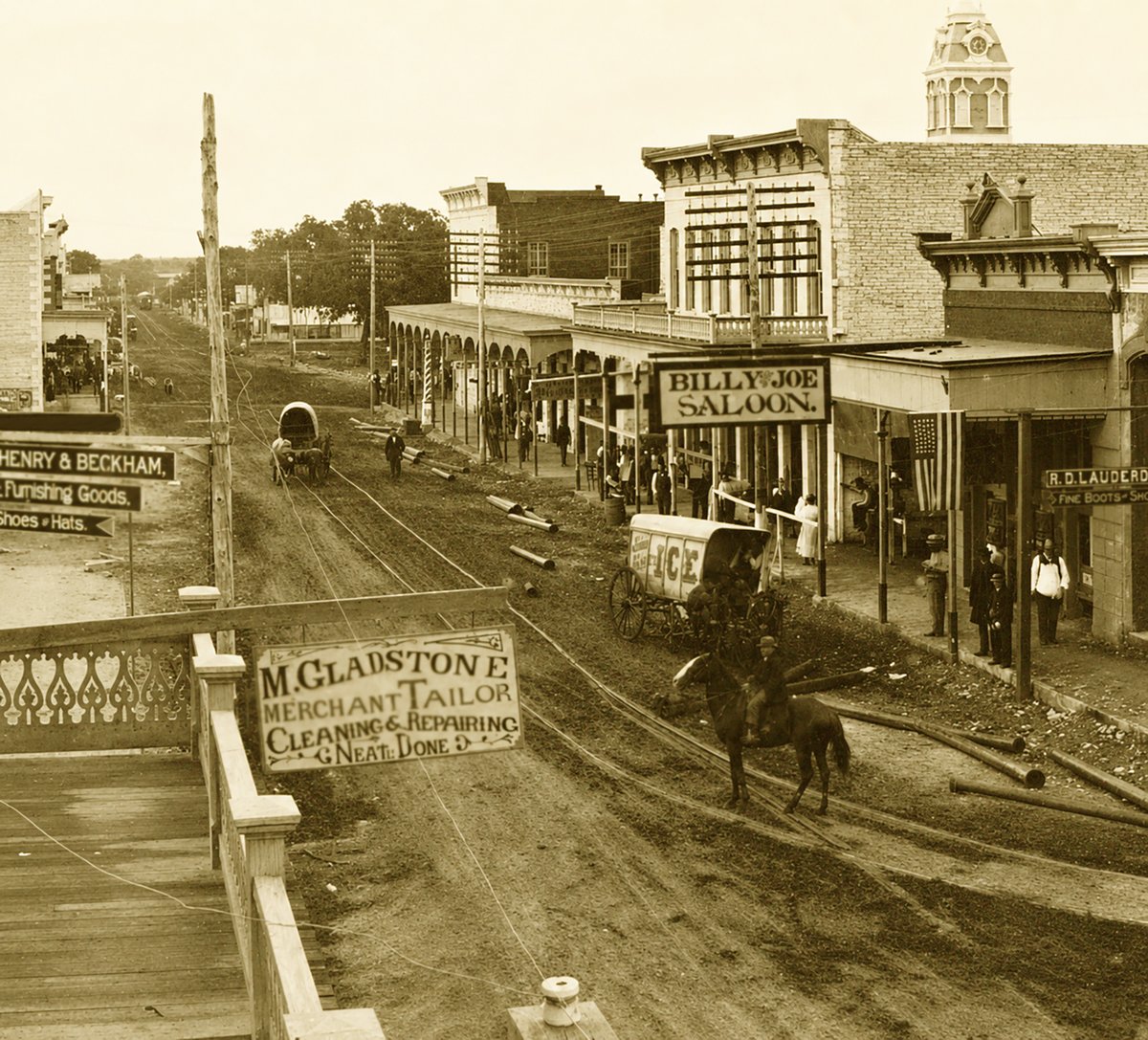
3rd street in Lampasas during the 1880s. What an extraordinary photo. I see an ice wagon (isn't it interesting that you could get ice in Lampasas in the 1880s?), signs for M. Gladstone, a merchant and tailor, a sign for Henry and Beckham furnishing goods, a sign for R.D. Lauderdale, fine boots and shoes, and ---- last but not least ---- the Billy Joe Saloon. I'd love to know if any of these buildings still stand.
From the fantastic Lawrence T. Jones III archive at SMU's Degolyer Library.
New @ChinaSelect Report | Research Security for America’s Future in Space: NASA’s Enforcement of the Wolf Amendment
According to our latest report released today, federally funded @NASA research, intended to advance American innovation, has been repeatedly linked to collaborations with institutions embedded in China’s defense and military ecosystem.
In one case alone, researchers produced more than 200 co-authored publications between 2020 and 2025 with Chinese defense-affiliated institutions, while still receiving U.S. federal funding. @ChinaSelect also found multiple active grants, some running through 2026 and 2027, supporting research conducted alongside entities linked to China’s military-industrial base, including those on U.S. restricted lists.
These findings reveal systemic failures in oversight, disclosure, and enforcement of the Wolf Amendment, allowing taxpayer-funded research to flow into China’s military-civil fusion strategy and raising urgent national security concerns that demand immediate action.
https://t.co/N9UCx3cI2p
This is incredible. The new @NASA image release from #Artemis includes a sequence of 'Hello World' still photographs.
I've been processing / animating them and here's what the original didn't show us:
Satellites, including their solar arrays, lightning storms
and dancing aurora!
From liftoff to splashdown and back again! The Artemis II Orion spacecraft has returned to Kennedy Space Center after its historic journey around the Moon. 🚀🌕 Now at the Multi-Processing Payload Facility, technicians will de-service Orion, including retrieving data to inform procedures for future Artemis missions.
ARTEMIS II UPDATE
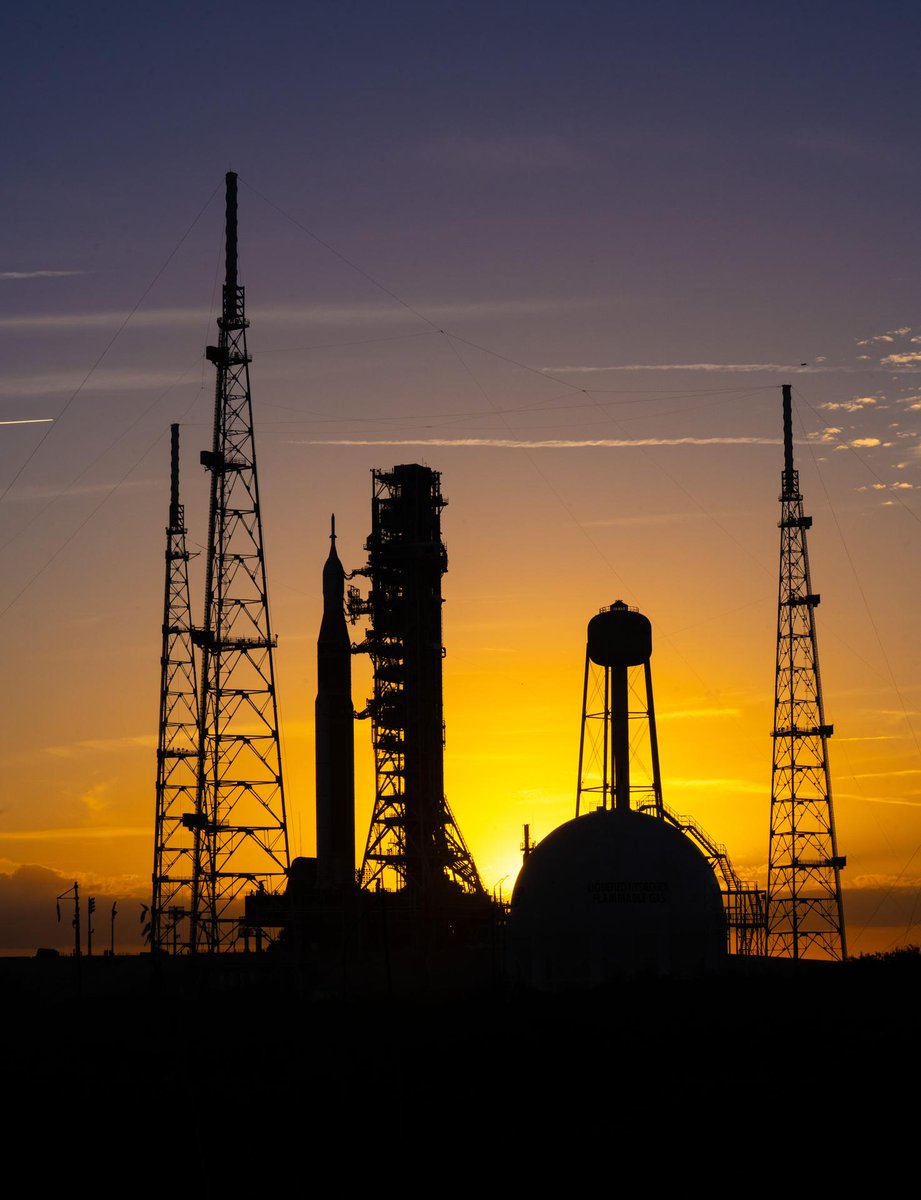
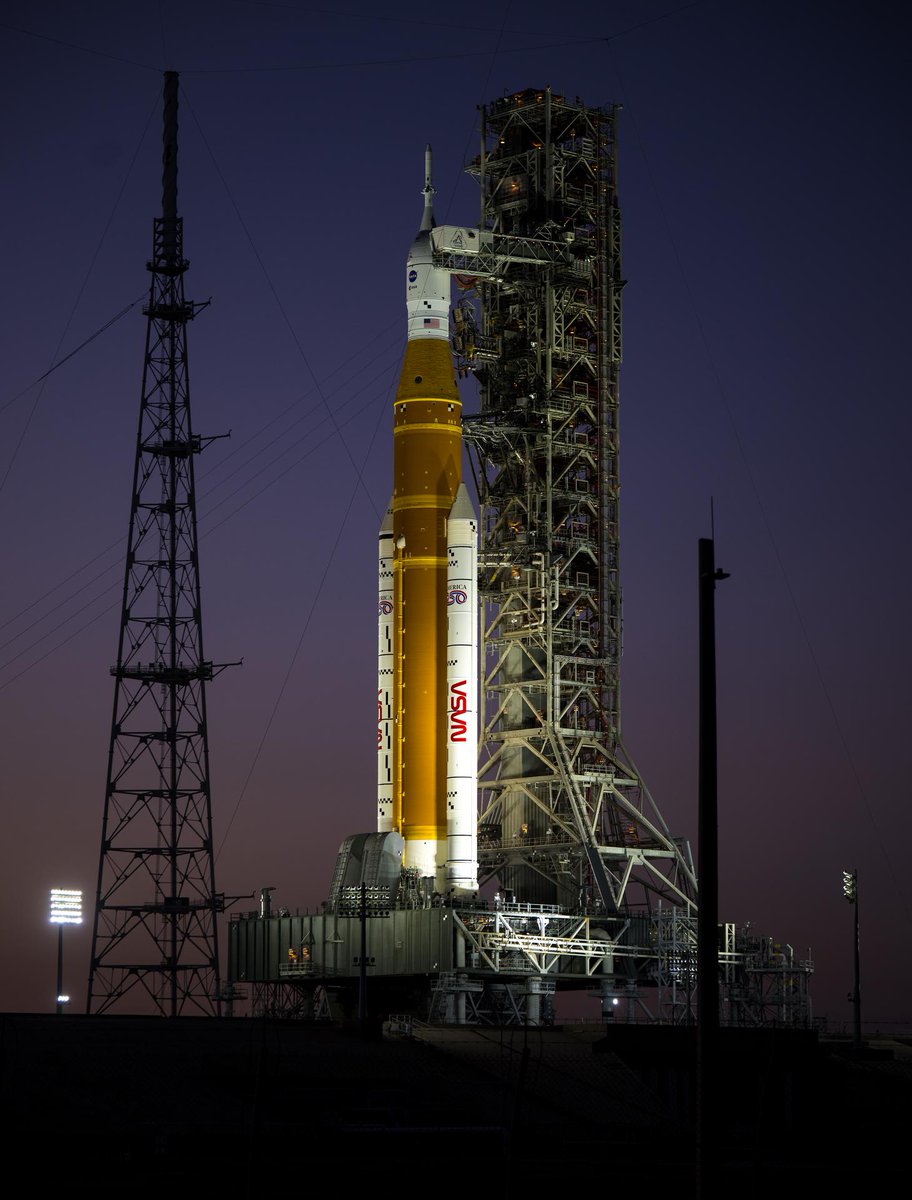
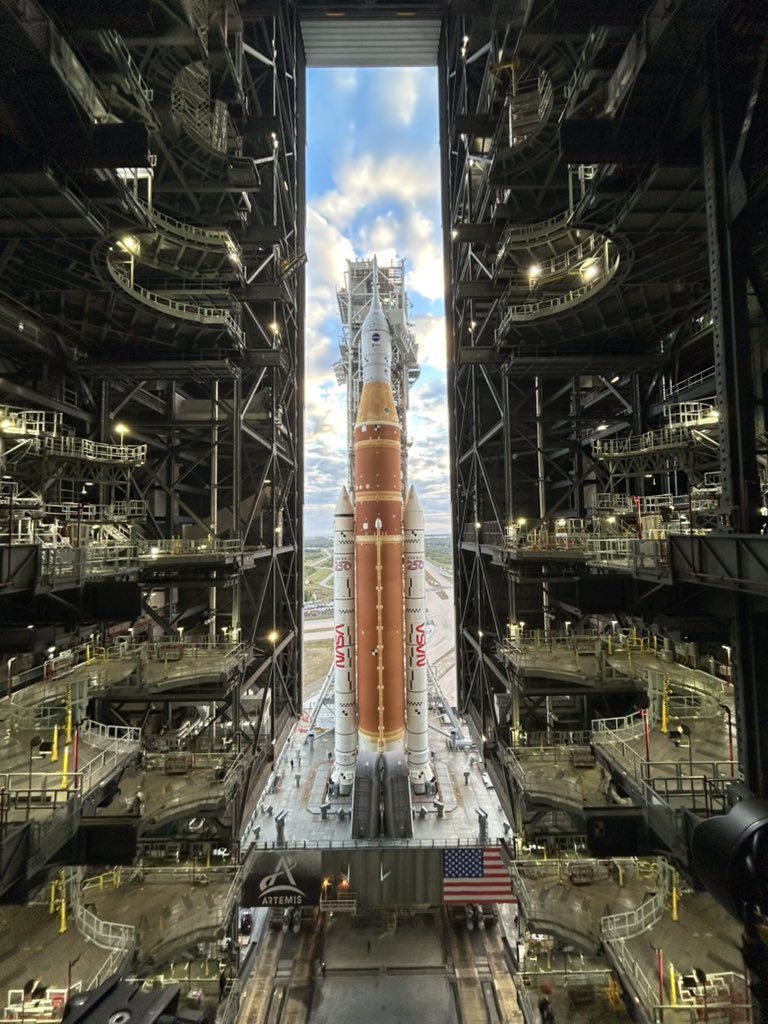
NASA is targeting March 19 to roll Artemis II back to LC-39B from the VAB.
Pending work in the VAB and the pad, NASA is targeting no earlier than April 1, 2026, for the launch of Artemis II around the Moon. 🚀🌙
📸: NASA/Cory S Huston
This is Don Enrique Esparza, the last surviving witness of the Battle of the Alamo, late in his life. In November, 1902, the San Antonio Light Newspaper published the following article about Enrique Esparza and it is fantastic. Here is the text, verbatim:
"Since the death of Senora Candelaria Villanueva, several years ago at the age of 112 there is but one person alive who claims to have been in the siege of the Alamo. That person is Enrique Esparza, now 74 years old, who, firm-stepped, clear-minded and clear-eyed, bids fair to live to the age of the woman who for so long shared honors with him.
Enrique Esparza, who tells one of the most interesting stories ever narrated, works a truck garden on Nogalitos street between the southern Pacific Railroad track and the San Pedro creek. Here he lives with the family of his son, Victor Esparza. Every morning he is up before daybreak and helps load the wagons with garden stuff that is to be taken up town to market.
He is a farmer of experience and contributes very materially to the success of the beautiful five acres garden, of which he is the joint proprietor.
While claims of Enrique Esparza have been known among those familiar with the historical work done by the Daughters of the Republic, an organization which has taken great interest in getting first-hand information of the period of Texas
Independence, the old man was not available up to about five years ago, for the reason that he resided on his farm in Atascosa county. This accounts for the fact that he is not well enough known to be included in the itinerary when San Antonians are proudly doing the town with their friends.
Esparza tells a straight story. Although he is a Mexican, his gentleness and unassuming frankness are like the typical old Texan. Every syllable he speaks to uttered with confidence and in his tale, he frequently makes digressions, going into details of relationship of early families of San Antonio and showing a tenacious memory. At the time of the fight of the Alamo he was 8 years old. His father was a defender, and his father's own brother an assailant of the Alamo. He was a witness of his mother's grief, and had his own grief, at the slaughter in which his father was included. As he narrated to a reporter the events in which he was so deeply concerned, his voice several times choked and he could not proceed for emotion. While he has a fair idea of English, he preferred to talk in Spanish.
"My father, Gregorio Esparza, belonged to Benavides' company, in the American army," said Esparza, "and I think it was in February, 1836, that the company was ordered to Goliad when my father was ordered back alone to San Antonio, for what I don't know. When he got here there were rumors that Santa Ana was on the way here, and many residents sent their families away. One of my father's friends told him that he could have a wagon and team and all necessary provisions for a trip, if he wanted to take his family away. There were six of us besides my father; my mother, whose name was Anita, my eldest sister, myself and three younger brothers, one a baby in arms. I was 8 years old.
"My father decided to take the offer and move the family to San Felipe. Everything was ready, when one morning, Mr. W. Smith, who was godfather to my youngest brother, came to our house on North Flores street, just above where the Presbyterian church now is, and told my mother to tell my father when he came in that Santa Ana had come. (Northeast corner of Houston and N. Flores Streets.)
"When my father came my mother asked him what he would do. You know the Americans had the Alamo, which had been fortified a few months before by General Cos.
"Well, I'm going to the fort" my father said.
"Well, if pop goes, I am going along, and the whole family too.
"It took the whole day to move and an hour before sundown we were inside the fort. Where was a bridge over the river about where Commerce street crosses it, and just as we got to it we could her Santa Anna's drums beating on Milam Square, and just as we were crossing the ditch going into the fort Santa Anna fired his salute on Milam Square.
"There were a few other families who had gone in. A Mrs. Cabury[?] and her sister, a Mrs. Victoriana, and a family of several girls, two of whom I knew afterwards, Mrs. Dickson, Mrs. Juana Melton, a Mexican woman who had married an American, also a woman named Concepcion Losoya and her son, Juan, who was a little older than I.
"The first thing I remember after getting inside the fort was seeing Mrs. Melton making circles on the ground with an umbrella. I had seen very few umbrellas. While I was walking around about dark I went near a man named Fuentes who was talking at a distance with a soldier. When the latter got near me he said to Fuentes:
"Did you know they had cut the water off?"
"The fort was built around a square. The present Hugo-Schmeltzer building is part of it. I remember the main entrance was on the south side of the large enclosure. The quarters were not in the church, but on the south side of the fort, on either side of the entrance, and were part of the convent. There was a ditch of running water back of the church and another along the west side of Alamo Plaza. We couldn't got to the latter ditch as it was under fire and it was the other one that Santa Anna cut off. The next morning after we had gotten in the fort I saw the men drawing water from a well that was in the convent yard. The well was located a little south of the center of the square. I don't know whether it is there now or not.
"On the first night a company of which my father was one went out and captured some prisoners. One of them was a Mexican soldier, and all through the siege, he interpreted the bugle calls on the Mexican side, and in this way the Americans know about the movements of the enemy.
"After the first day there was fighting. The Mexicans had a cannon somewhere near where Dwyer avenue now is, and every fifteen minutes they dropped a shot into the fort.
"The roof of the Alamo had been taken off and the south side filled up with dirt almost to the roof on that side so that there was a slanting embankment up which the Americans could run and take positions. During the fight I saw numbers who were shot in the head as soon as they exposed themselves from the roof. There were holes made in the walls of the fort and the Americans continually shot from these also. We also had two cannon, one at the main entrance and one at the northwest corner of the fort near the post office. The cannon were seldom fired.
"I remember Crockett. He was a tall, slim man, with black whiskers. He was always at the head. The Mexicans called him Don Benito. The Americans said he was Crockett. He would often come to the fire and warm his hands and say a few words to us in the Spanish language. I also remember hearing the names of Travis and Bowie mentioned, but I never saw either of them that I know of.
"After the first few days I remember that a messenger came from somewhere with word that help was coming. The Americans celebrated it by beating the drums and playing on the flute. But after about seven days fighting there was an armistice of three days and during this time Don Benito had conferences every day with Santa Anna. Badio, the interpreter, was a close friend of my father, and I heard him tell my father in the quarters that Santa Anna had offered to let the Americans go with their lives if they would surrender, but the Mexicans would be treated as rebels.
"During the armistice my father told my mother she had better take the children and go, while she could do so safely. But my mother said:
"No!, if you're going to stay, so am I. If they kill one they can kill us all.
"Only one person went out during the armistice, a woman named Trinidad Saucedo.
"Don Benito, or Crockett, as the Americans called him, assembled the men on the last day and told them Santa Anna's terms, but none of them believed that any one who surrendered would get out alive, so they all said as they would have to die any how they would fight it out.
"The fighting began again and continued every day, and nearly every night,. One night there was music in the Mexican camp and the Mexican prisoner said it meant that reinforcements had arrived.
"We then had another messenger who got through the lines, saying that communication had been cut off and the promised reinforcements could not be sent.
"On the last night my father was not out, but he and my mother were sleeping together in headquarters. About 2 o'clock in the morning there was a great shooting and firing at the northwest corner of the fort, and I heard my mother say:
"Gregorio, the soldiers have jumped the wall. The fight's begun.
"He got up and picked up his arms and went into the fight. I never saw him again. My uncle told me afterwards that Santa Anna gave him permission to get my father's body, and that he found it where the thick of the fight had been.
"We could hear the Mexican officers shouting to the men to jump over, and the men were fighting so close that we could hear them strike each other. It was so dark that we couldn't see anything, and the families that were in the quarters just huddled up in the corners. My mother's children were near her. Finally they began shooting through the dark into the room where we were. A boy who was wrapped in a blanket in one corer was hit and killed. The Mexicans fired into the room for at least fifteen minutes. It was a miracle, but none of us children were touched.
"By daybreak the firing had almost stopped, and through the window we could see shadows of men moving around inside the fort. The Mexicans went from room to room looking for an American to kill. While it was still dark a man stepped into the room and pointed his bayonet at my mother's breast, demanding:
"Where's the money the Americans had?"
"If they had any,' said my mother, "you may look for it.'
"Then an officer stepped in and said:
"What are you doing? The women and children are not to be hurt.
"The officer then told my mother to pick out her own family and get her belongings and the other women were given the same instructions. When it was broad day the Mexicans began to remove the dead. There were so many killed that it took several days to carry them away.
"The families, with their baggage, were then sent under guard to the house of Don Ramon Musquiz, which was located where Frank Brothers store now is, on Main Plaza.(Southeast corner of Soledad and Commerce Streets, now a parking lot, 1991). Here we were given coffee and some food, and were told that we would go before the president at 2 o'clock.
On our way to the Musquiz house we passed up Commerce street, and it was crowded as far as Presa street with soldiers who did not fire a shot during the battle. Santa Anna had many times more troops than he could use.
"At 3 o'clock we went before Santa Anna. His quarters were in a house which stood where L. Wolfson's store now is.(Middle of Commerce Street, north side, between Main Avenue and Soledad Street). He had a great stack of silver money on a table before him, and a pile of blankets. One by one the women were sent into a side room to make their declaration, and on coming out were given $2 and a blanket. While my mother was waiting her turn Mrs. Melton, who had never recognized my mother as an acquaintance, and who was considered an aristocrat, sent her brother, Juan Losoya, across the room to my mother to ask the favor that nothing be said to the president about her marriage with an American.
"My mother told Juan to tell her not to be afraid.
"Mrs. Dickson was there, also several other woman. After the president had given my mother her $2 and blanket, he told her she was free to go where she liked. We gathered what belongings we could together and went to our cousin's place on North Flores street, where we remained several months."
Doesn't Don Enrique Esparza have a truly magnificent face? The photo is courtesy the Dolph Briscoe Center for American History at UT-Austin, which is a wonderful place for Texas history buffs to visit. Among their holdings is the first photo of the Alamo.
We are targeting no earlier than March 6 for the launch of Artemis II, pending completion of required work at the launch pad and analysis of test data.
The Artemis astronauts have entered quarantine to remain in good health before the mission. https://t.co/SEq4DPmluZ
Launch controllers have arrived at their consoles at @NASAKennedy to begin the second wet dress rehearsal for Artemis II.
The tanking portion of the test will be streamed live to our YouTube channel on Feb. 19. Timely updates can be found on our blog: https://t.co/40PMWktQjO
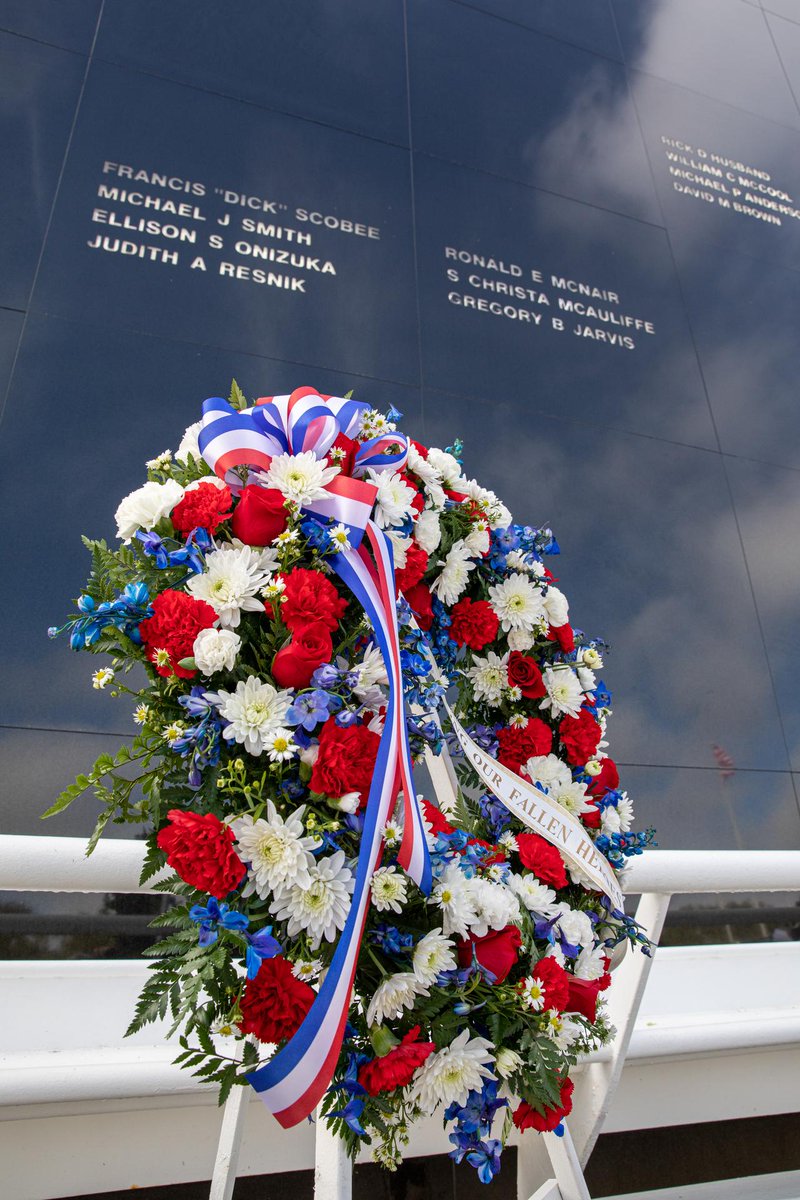
Today is the 40th anniversary of the Challenger disaster.
As we prepare for our Artemis missions to and around the Moon, it's important that we honor members of the NASA family who lost their lives while furthering the cause of exploration and discovery.
Rollout of the stacked Space Launch System rocket and Orion spacecraft has officially started at 7:04am ET.
Watch the Artemis II Moon rocket travel four miles from the Vehicle Assembly Building to the historic Launch Pad 39B at @NASAKennedy: https://t.co/DNJFpQjLvF









![TracesofTexas's tweet photo. This is Don Enrique Esparza, the last surviving witness of the Battle of the Alamo, late in his life. In November, 1902, the San Antonio Light Newspaper published the following article about Enrique Esparza and it is fantastic. Here is the text, verbatim:
"Since the death of Senora Candelaria Villanueva, several years ago at the age of 112 there is but one person alive who claims to have been in the siege of the Alamo. That person is Enrique Esparza, now 74 years old, who, firm-stepped, clear-minded and clear-eyed, bids fair to live to the age of the woman who for so long shared honors with him.
Enrique Esparza, who tells one of the most interesting stories ever narrated, works a truck garden on Nogalitos street between the southern Pacific Railroad track and the San Pedro creek. Here he lives with the family of his son, Victor Esparza. Every morning he is up before daybreak and helps load the wagons with garden stuff that is to be taken up town to market.
He is a farmer of experience and contributes very materially to the success of the beautiful five acres garden, of which he is the joint proprietor.
While claims of Enrique Esparza have been known among those familiar with the historical work done by the Daughters of the Republic, an organization which has taken great interest in getting first-hand information of the period of Texas
Independence, the old man was not available up to about five years ago, for the reason that he resided on his farm in Atascosa county. This accounts for the fact that he is not well enough known to be included in the itinerary when San Antonians are proudly doing the town with their friends.
Esparza tells a straight story. Although he is a Mexican, his gentleness and unassuming frankness are like the typical old Texan. Every syllable he speaks to uttered with confidence and in his tale, he frequently makes digressions, going into details of relationship of early families of San Antonio and showing a tenacious memory. At the time of the fight of the Alamo he was 8 years old. His father was a defender, and his father's own brother an assailant of the Alamo. He was a witness of his mother's grief, and had his own grief, at the slaughter in which his father was included. As he narrated to a reporter the events in which he was so deeply concerned, his voice several times choked and he could not proceed for emotion. While he has a fair idea of English, he preferred to talk in Spanish.
"My father, Gregorio Esparza, belonged to Benavides' company, in the American army," said Esparza, "and I think it was in February, 1836, that the company was ordered to Goliad when my father was ordered back alone to San Antonio, for what I don't know. When he got here there were rumors that Santa Ana was on the way here, and many residents sent their families away. One of my father's friends told him that he could have a wagon and team and all necessary provisions for a trip, if he wanted to take his family away. There were six of us besides my father; my mother, whose name was Anita, my eldest sister, myself and three younger brothers, one a baby in arms. I was 8 years old.
"My father decided to take the offer and move the family to San Felipe. Everything was ready, when one morning, Mr. W. Smith, who was godfather to my youngest brother, came to our house on North Flores street, just above where the Presbyterian church now is, and told my mother to tell my father when he came in that Santa Ana had come. (Northeast corner of Houston and N. Flores Streets.)
"When my father came my mother asked him what he would do. You know the Americans had the Alamo, which had been fortified a few months before by General Cos.
"Well, I'm going to the fort" my father said.
"Well, if pop goes, I am going along, and the whole family too.
"It took the whole day to move and an hour before sundown we were inside the fort. Where was a bridge over the river about where Commerce street crosses it, and just as we got to it we could her Santa Anna's drums beating on Milam Square, and just as we were crossing the ditch going into the fort Santa Anna fired his salute on Milam Square.
"There were a few other families who had gone in. A Mrs. Cabury[?] and her sister, a Mrs. Victoriana, and a family of several girls, two of whom I knew afterwards, Mrs. Dickson, Mrs. Juana Melton, a Mexican woman who had married an American, also a woman named Concepcion Losoya and her son, Juan, who was a little older than I.
"The first thing I remember after getting inside the fort was seeing Mrs. Melton making circles on the ground with an umbrella. I had seen very few umbrellas. While I was walking around about dark I went near a man named Fuentes who was talking at a distance with a soldier. When the latter got near me he said to Fuentes:
"Did you know they had cut the water off?"
"The fort was built around a square. The present Hugo-Schmeltzer building is part of it. I remember the main entrance was on the south side of the large enclosure. The quarters were not in the church, but on the south side of the fort, on either side of the entrance, and were part of the convent. There was a ditch of running water back of the church and another along the west side of Alamo Plaza. We couldn't got to the latter ditch as it was under fire and it was the other one that Santa Anna cut off. The next morning after we had gotten in the fort I saw the men drawing water from a well that was in the convent yard. The well was located a little south of the center of the square. I don't know whether it is there now or not.
"On the first night a company of which my father was one went out and captured some prisoners. One of them was a Mexican soldier, and all through the siege, he interpreted the bugle calls on the Mexican side, and in this way the Americans know about the movements of the enemy.
"After the first day there was fighting. The Mexicans had a cannon somewhere near where Dwyer avenue now is, and every fifteen minutes they dropped a shot into the fort.
"The roof of the Alamo had been taken off and the south side filled up with dirt almost to the roof on that side so that there was a slanting embankment up which the Americans could run and take positions. During the fight I saw numbers who were shot in the head as soon as they exposed themselves from the roof. There were holes made in the walls of the fort and the Americans continually shot from these also. We also had two cannon, one at the main entrance and one at the northwest corner of the fort near the post office. The cannon were seldom fired.
"I remember Crockett. He was a tall, slim man, with black whiskers. He was always at the head. The Mexicans called him Don Benito. The Americans said he was Crockett. He would often come to the fire and warm his hands and say a few words to us in the Spanish language. I also remember hearing the names of Travis and Bowie mentioned, but I never saw either of them that I know of.
"After the first few days I remember that a messenger came from somewhere with word that help was coming. The Americans celebrated it by beating the drums and playing on the flute. But after about seven days fighting there was an armistice of three days and during this time Don Benito had conferences every day with Santa Anna. Badio, the interpreter, was a close friend of my father, and I heard him tell my father in the quarters that Santa Anna had offered to let the Americans go with their lives if they would surrender, but the Mexicans would be treated as rebels.
"During the armistice my father told my mother she had better take the children and go, while she could do so safely. But my mother said:
"No!, if you're going to stay, so am I. If they kill one they can kill us all.
"Only one person went out during the armistice, a woman named Trinidad Saucedo.
"Don Benito, or Crockett, as the Americans called him, assembled the men on the last day and told them Santa Anna's terms, but none of them believed that any one who surrendered would get out alive, so they all said as they would have to die any how they would fight it out.
"The fighting began again and continued every day, and nearly every night,. One night there was music in the Mexican camp and the Mexican prisoner said it meant that reinforcements had arrived.
"We then had another messenger who got through the lines, saying that communication had been cut off and the promised reinforcements could not be sent.
"On the last night my father was not out, but he and my mother were sleeping together in headquarters. About 2 o'clock in the morning there was a great shooting and firing at the northwest corner of the fort, and I heard my mother say:
"Gregorio, the soldiers have jumped the wall. The fight's begun.
"He got up and picked up his arms and went into the fight. I never saw him again. My uncle told me afterwards that Santa Anna gave him permission to get my father's body, and that he found it where the thick of the fight had been.
"We could hear the Mexican officers shouting to the men to jump over, and the men were fighting so close that we could hear them strike each other. It was so dark that we couldn't see anything, and the families that were in the quarters just huddled up in the corners. My mother's children were near her. Finally they began shooting through the dark into the room where we were. A boy who was wrapped in a blanket in one corer was hit and killed. The Mexicans fired into the room for at least fifteen minutes. It was a miracle, but none of us children were touched.
"By daybreak the firing had almost stopped, and through the window we could see shadows of men moving around inside the fort. The Mexicans went from room to room looking for an American to kill. While it was still dark a man stepped into the room and pointed his bayonet at my mother's breast, demanding:
"Where's the money the Americans had?"
"If they had any,' said my mother, "you may look for it.'
"Then an officer stepped in and said:
"What are you doing? The women and children are not to be hurt.
"The officer then told my mother to pick out her own family and get her belongings and the other women were given the same instructions. When it was broad day the Mexicans began to remove the dead. There were so many killed that it took several days to carry them away.
"The families, with their baggage, were then sent under guard to the house of Don Ramon Musquiz, which was located where Frank Brothers store now is, on Main Plaza.(Southeast corner of Soledad and Commerce Streets, now a parking lot, 1991). Here we were given coffee and some food, and were told that we would go before the president at 2 o'clock.
On our way to the Musquiz house we passed up Commerce street, and it was crowded as far as Presa street with soldiers who did not fire a shot during the battle. Santa Anna had many times more troops than he could use.
"At 3 o'clock we went before Santa Anna. His quarters were in a house which stood where L. Wolfson's store now is.(Middle of Commerce Street, north side, between Main Avenue and Soledad Street). He had a great stack of silver money on a table before him, and a pile of blankets. One by one the women were sent into a side room to make their declaration, and on coming out were given $2 and a blanket. While my mother was waiting her turn Mrs. Melton, who had never recognized my mother as an acquaintance, and who was considered an aristocrat, sent her brother, Juan Losoya, across the room to my mother to ask the favor that nothing be said to the president about her marriage with an American.
"My mother told Juan to tell her not to be afraid.
"Mrs. Dickson was there, also several other woman. After the president had given my mother her $2 and blanket, he told her she was free to go where she liked. We gathered what belongings we could together and went to our cousin's place on North Flores street, where we remained several months."
Doesn't Don Enrique Esparza have a truly magnificent face? The photo is courtesy the Dolph Briscoe Center for American History at UT-Austin, which is a wonderful place for Texas history buffs to visit. Among their holdings is the first photo of the Alamo.](https://pbs.twimg.com/media/HCvnerCXUAEDj38.jpg)