Adjunct Research Fellow @unisqaus Astrophysicist: stellar magnetism and space weather, 16 nova discoveries. Volcano adventurer. Scuba instructor. Pilot. AI
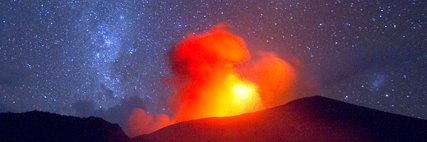
🚨 Update on Ambae Volcano (Vanuatu) 🌋
Escalating eruptive phase
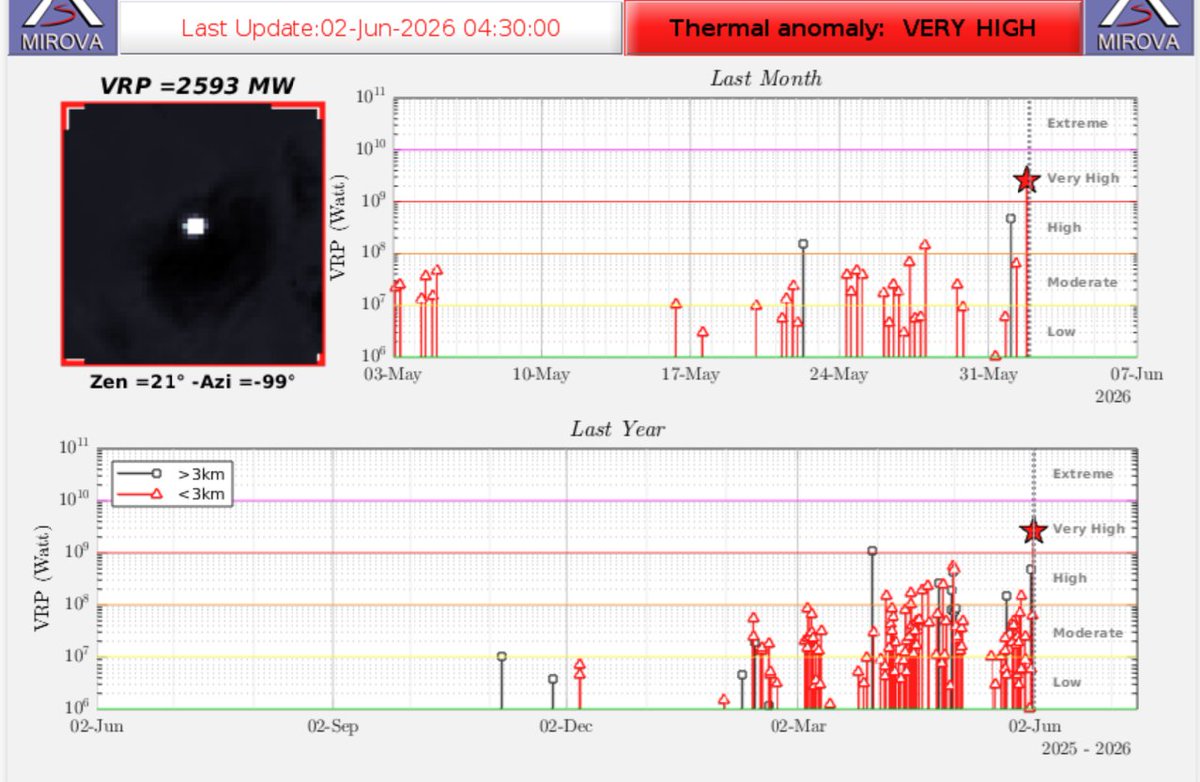
Satellites just detected a massive heat spike at Ambae's crater lake. The heat reading jumped to a staggering 2,593 megawatts—an incredible amount of energy!
Why is this dangerous?
When lava mixes with large amounts of lake water, it acts like a pressure cooker, creating violently explosive blasts of steam and ash.
Because of this sudden surge, neighboring islands downwind (like Santo and Pentecost) need to be prepared for heavy acid rain and volcanic gases.
This level of intense heat is similar to the eruptions seen during the 2017–2018 crisis. 📈🔥
https://t.co/PqjRRSqXMA
The Peak Cold Permission Slip:
Rest, Doom-Scroll, Heal 🤒📱🛋️
There’s a moment at the peak of a common cold—usually the evening of day two—when you’re absolutely flattened. 🤧
Nose blocked solid, then suddenly running, then blocked again. Head pounding. Body aching. The kind of miserable where even existing feels like heavy lifting.
And because you’re an adult, a quiet voice whispers that you should be doing something useful. Answering emails. Tidying up. Being productive. That voice is wrong. ❌
When you’re in the thick of it, resting is the most productive thing you can do. 🛌
Your immune system is fighting a war, and every bit of energy you spend on “being useful” is energy stolen from that fight. Lying still isn’t laziness—it’s treatment.
So the question becomes: what keeps you horizontal when you feel too awful to read, too foggy to follow a film, and too wired from sinus pain to sleep?
The answer, for millions of us, is the humble doom-scroll. 📱💀
Doom-scrolling gets a bad rap, and for good reason. Endlessly flicking through bad news, inane takes, and algorithmic rabbit holes usually leaves us feeling drained and guilty.
But right now, that guilt is a liar. 🤥
The scroll isn’t the problem—it’s the delivery system that keeps you pinned to the sofa or bed while your body repairs itself.
It’s the low-resistance, no-effort activity that tricks your restless brain into staying still. 🧠✨
You’re not rotting your brain; you’re complying with your biology.
So if you’re two days into a cold, wrapped in blankets, doom-scrolling through absurd drama, oddly specific memes, or yes, even actual doom, stop feeling bad about it. 🛑💛
You’re not avoiding life. You’re healing.
The scroll is just the thing that keeps you down long enough for the storm to pass.
Rest aggressively. Scroll without shame. Turn the corner guilt-free. 🔄😌
🚨 MODELLING IS NOT DATA 🚨
📊 Data is what you measure.
🧠 Modelling is what you assume, fit, extrapolate & simulate.
One is observation.
The other is storytelling about the observation.
Conflate them at your peril
Vitamin C in fruit isn’t just a bonus for us—it’s the fruit’s own multi-tool for survival, growth, and ripening. 🍊🍓
Think of ascorbic acid as the fruit’s built-in shield, architect, and timekeeper all at once. Here’s what it actually does inside every berry, citrus, and tomato:
🧬 Antioxidant bodyguard — Fruits generate massive reactive oxygen species during growth, heat, drought, and intense sunlight. Vitamin C directly neutralizes them, preventing cell damage and keeping the fruit’s machinery intact from fruit set to your kitchen counter.
🧱 Firmness & structure architect — Without vitamin C, enzymes that shape cell wall proteins stop working. That means fruit would lose structural integrity early. It literally helps build the scaffolding that keeps a young fruit firm and expanding.
🎨 Ripening director — It’s a cofactor in making ethylene, the hormone that triggers ripening, and it also helps produce anthocyanins and flavonoids—the pigments that turn fruit red, blue, or purple. So colour intensity and timely ripening both rely on vitamin C levels.
🌞 Solar panel protector — Fruits exposed to direct sunlight use vitamin C in something called the ascorbate-glutathione cycle. It dissipates excess light energy and prevents photo-oxidative bleaching of chlorophyll. Basically, it’s a natural sunscreen for fruit.
💧 Stress memory — When drought, salinity, or pathogen pressure hits, fruit tissues ramp up ascorbate production. It acts as a stress buffer, keeping metabolic pathways alive long enough for the plant to adapt.
🌱 Seed guardian — Developing seeds hoard vitamin C to protect the embryo from oxidative stress, support storage reserves, and boost germination vigour. The fruit’s ultimate goal is to produce viable seeds, and vitamin C helps ensure that.
⏳ Shelf-life extension — Post-harvest, that same vitamin C keeps working. Higher ascorbate means less enzymatic browning, slower softening, and delayed senescence. The fruit’s own stash of vitamin C literally makes it stay fresher longer, even off the tree.
So next time you taste that bright tang in a ripe fruit, remember you’re biting into a living system that used vitamin C to colour itself, fight off stress, manage its ripening clock, and protect its seeds. It’s not just nutrition for us—it’s the fruit’s internal survival story. 🌿
Claude Opus 4.8 Review (released May 28, 2026)
Anthropic just shipped Opus 4.8 — a refined, high-quality upgrade to the already strong Opus 4.7 (April).
It’s not a massive capability jump, but a deliberate focus on judgment, honesty, and real-world agentic reliability.
What’s better:
• Sharper self-correction and judgment. It catches its own mistakes more often, pushes back on weak plans, and handles complex multi-step work with greater confidence.
• Significantly more honest: ~4× less likely than 4.7 to let flawed code pass without comment. Better at flagging uncertainty.
• Stronger long-horizon performance in Claude Code — feels more like a senior engineer you can hand serious tasks to with less supervision.
• Improved tool use efficiency and context carryover across long sessions.
Benchmarks (early results):
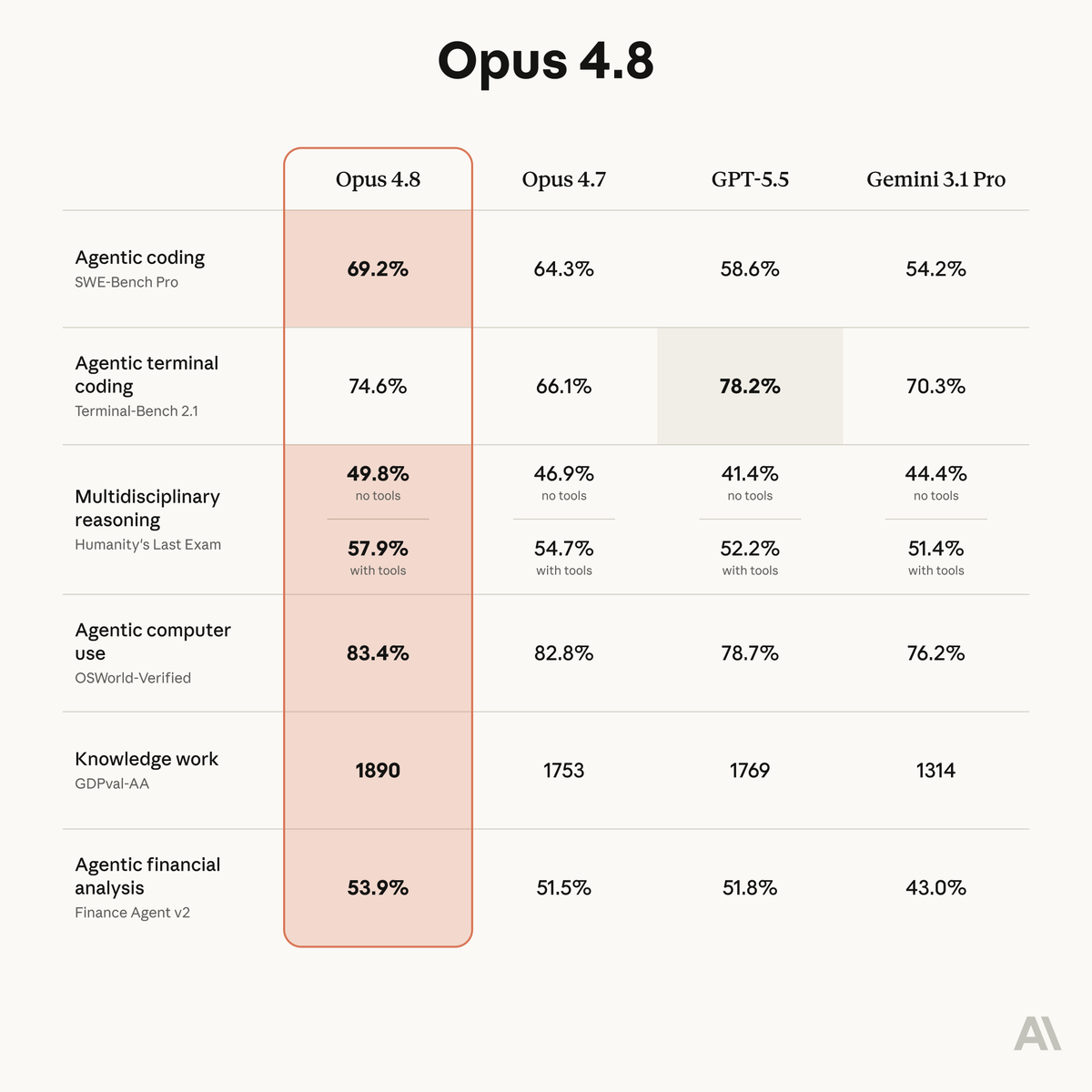
• SWE-Bench Pro: 69.2% (up from 64.3% on 4.7)
• Strong gains on OSWorld, HLE with tools, GDPval, and Finance Agent
• Leads on several Legal Agent and agentic benchmarks
• GPT-5.5 still edges it on Terminal Bench in some reports
New features worth noting:
• Effort control (high effort default, with extra/max options)
• Fast Mode: ~2.5× faster and meaningfully cheaper to run
• Better dynamic workflow support in Claude Code
Pricing stays the same: $5 / $25 per million tokens.
Fast Mode has its own (higher) rates but better effective economics.
Verdict:
One of the more user-friendly frontier updates lately.
If you do serious coding, agent work, or complex research and value trustworthiness + reduced babysitting, this is a meaningful step up from 4.7.
Not revolutionary, but very polished.
Solid, professional-grade progress from Anthropic.
Would be interested to see how it performs on extended astrophysics/data pipelines and long-context research tasks.
Introducing Claude Opus 4.8: it builds on Opus 4.7 with sharper judgment, more honesty about its own progress, and the ability to work independently for longer than its predecessors.
Available today at the same price.
🌞The ESA post showing Europe “on fire” during the recent heatwave has been widely shared, but there’s an important detail most people are missing.
The striking red map wasn’t showing air temperature.
It was land surface temperature (LST) from the Copernicus Sentinel-3 satellite on 26 May.
This measures the actual temperature of the ground, roads, soil and roofs — not the air we breathe and that weather services report.
‼️During clear, sunny conditions, land surface temperatures are routinely much higher than air temperature, sometimes by 10–15°C or more.
That’s why parts of the map reached deep into the 40s and approached 50°C, even though actual air temperatures across Western Europe were mostly in the mid-30s°C.
To be clear: the heatwave itself was real and exceptional.
The UK broke its May record (35.1°C at Kew Gardens), France recorded its hottest May day on record nationally, and temperatures ran 10–16°C above average in many areas. Those air temperature records stand on their own.
The issue is presentation.
When a dramatic satellite image is posted alongside text about record air temperatures, many viewers will assume the map shows the air temperature people were actually experiencing.
The colour bar does say “Land surface temperature,” but on fast-scrolling social media, that distinction is easily missed.
ESA labels these images correctly and has explained the difference in the past. They’re not fabricating data.
However, for public communication about heat risk, air temperature (or “feels like” temperature) is what actually matters to people’s health and daily life.
Land surface temperature is scientifically valuable, but it can create a misleading impression of severity when used without clear, prominent context.
⚠️This isn’t unique to ESA — it’s a broader problem in how satellite imagery is sometimes presented during extreme weather.
Striking visuals get attention, but accuracy in public understanding should come first.
Satellite data is powerful.
We just need to be careful that the pictures we share don’t end up telling a stronger story than the actual conditions on the ground.
While ESA isn't deliberately trying to deceive people, posting a dramatic land surface temperature (LST) map during a heatwave does carry a significant risk of misleading the general public.
For public communication about heatwaves (especially on social media), air temperature maps are much clearer and less prone to misinterpretation.
LST maps are better suited for scientific audiences or when accompanied by a very prominent, plain-English explanation of what they actually show.
Astrophysics studies a universe we cannot place in a laboratory.
The field relies on:
🔭 observation
📐 theory
💻 simulation
⚡ laboratory plasma physics
🌌 natural experiments provided by the cosmos
That is what makes astrophysics so remarkable: we uncover physical truth from the universe itself.
Proposing a Lunar Heritage and Conservation Framework: The Case for Extraterrestrial "National Parks"
As humanity accelerates its return to the Moon, we are rapidly approaching a critical crossroads.
The transition from brief exploration to a sustained lunar presence brings profound environmental challenges.
It is time to seriously consider extraterrestrial conservation. 🌖
Without proactive planning, we risk losing the Moon’s most scientifically valuable and aesthetically breathtaking regions.
Unregulated lunar development—sprawling base camps, regolith mining, and the careless dumping of discarded hardware and waste—threatens to permanently degrade landscapes that have remained pristine for billions of years.
We cannot afford to turn our closest celestial neighbor into an extraterrestrial landfill.
The solution?
We need a Lunar Heritage and Conservation Framework.
Essentially: "National Parks" for the Moon.
The same philosophy that protected Earth’s greatest natural wonders must now be applied to the lunar surface.
This means establishing international agreements to zone the Moon, balancing necessary exploration and industrialization with uncompromising preservation.
What exactly should we protect?
🏛️ Historical Heritage:
Sites of monumental human achievement, like the undisturbed footprints and descent stages at Tranquility Base, which require indefinite protection.
🔬 Scientific Sanctuaries:
Regions vital to understanding our solar system, such as the permanently shadowed craters at the poles or the radio-quiet far side of the Moon.
⛰️ Geological Wonders:
Areas of outstanding physical beauty and unique formation, like the Marius Hills volcanic domes or the towering central peaks of Tycho Crater.
The window to act is right now.
Before heavy machinery and permanent settlements become a daily reality, the international space community must draft and enforce binding conservation policies.
As we expand our reach into the cosmos, we must carry our highest ideals of stewardship with us.
Let’s protect the beauty and scientific wealth of the Moon for generations to come. 🌌🚀
☀️The possibility of a solar fossil magnetic field.
A buried primordial or fossil magnetic field in the Sun’s radiative core is physically possible and remains an active theoretical possibility, but it is not established.
If it exists, it is probably weak, stable, mixed poloidal–toroidal, and largely confined below the tachocline.
The decisive observational test would likely come from improved helioseismology, especially secure solar g-mode detection, or from a clearer dynamical signature in the tachocline and radiative-zone rotation.
✨Messiah's 1961 Books Quantum Mechanics.
It’s striking how much mathematical heavy lifting the First Postulate does:
"the state of a physical system at time t is described by a vector in the Hilbert space."
It translates messy physical reality into elegant linear algebra. 🧵
Why a Hilbert space specifically?
It guarantees the superposition principle (via linear vector spaces) and gives us the Born Rule (probabilities extracted via inner products).
It provides the exact mathematical geometry needed to make quantum theory work. 📐⚛️
Messiah notes a crucial nuance: the state is actually a ray (a 1D subspace) because multiplying by a global phase doesn't change the observable physics.
As time ticks forward, the vector simply rotates through the space via the Schrödinger equation.
✅Classic 20th-century physics texts are unmatched.