karpathy’s sequoia talk is basically a manual for the post-vibecoding era and how to become a 10x engineer
> since december 2025 agentic tools have become more reliable, consistent, accurate and fast requiring minimal human intervention when it comes to refactoring code bases, implementing new features and services, analyzing approaches. that's why he has been feeling more behind than ever in terms of software engineering skills
> he splits software into 3 eras:
- software 1.0: humans write explicit code
- software 2.0: humans collect and process datasets, develop machine learning models (neural nets) and evaluate their performance.
- software 3.0: humans instruct llms through prompts, context, tools and examples. the llm's contextual knowledge is the lever.
an example of software 3.0 implementation is openclaw's platform agnostic installation process, which involves a human just copy pasting a skills file, and the agent doing the rest of the work
> he created menugen in order to visualize the dishes of a restaurant he didn't know but he eventually understand that instead of creating a full stack app for it, the whole process could be outsourced to a single neural network inference invocation (multimodal model). essentially, in the future apps could be abstracted into a single neural net inference.
> coding agents introduce more primitives than just sped up coding tasks. one example is his llm wiki implementation which recursively compiles files and comes up with a organization/personaliy specific wiki. [https://t.co/JYOgLmmTse]
> verifiability is what drives the constantly improving performance of these tools. tasks like math and coding involve auotmatic rewards and success signals which are ideal for Reinforcement learning processes.
> besides verifiability, a model's performance is a function of the training data. if a task was part of the pre-training process, the final model will be able to perfomr it really well. a formula looks like this
capability spike ~= verifiability x training attention x data coverage x economic value
> vibecoding vs agentic engineering: vibecoding is about quickly building MVPs, while agentic engineering is about maintaining quality, security, and system integrity while leveraging agents. it’s the professional discipline on top of vibe coding
> agentic engineers are the real manifestation of the “10x engineer”, but likely at a much higher multiple. the leverage comes from orchestrating agents, not writing everything manually
> how to become an agentic engineer: design specs, orchestrate agents, build eval loops, and rigorously review outputs to preserve quality, security, and system integrity
> 2 key founder insights:
1. ask what workflows were impossible to automate pre-ai and automate them
2. build in verifiable, valuable, undertrained by frontier labs domains
> infrastructure needs to become agent-native: APIs, CLIs, structured logs, machine-readable schemas, and copy-pasteable instructions for agents instead of human-first UX
final takeaway: you can outsource thinking, but not understanding. humans remain responsible for direction, judgment, and knowing when the system is wrong
https://t.co/NzaNPjNc4M
Built clawsweeper, which runs 50 codex in parallel around the clock, scans issues/prs deep and closes what is already implemented or what makes no sense.
Closed around 4000 issues today, a few thousand are in the pipeline. (rate limits are rough) https://t.co/AiNNDcvGke
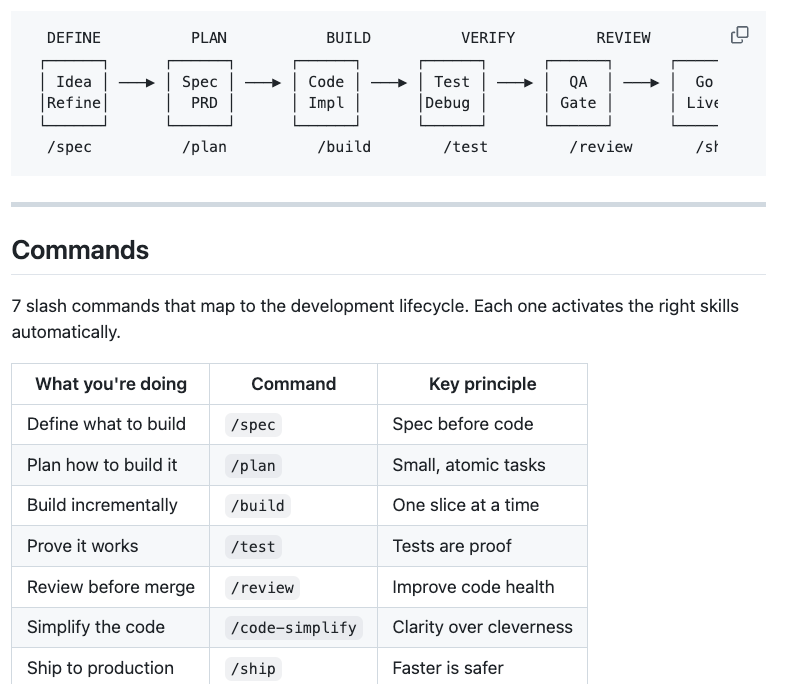
Have you installed these production-grade engineering skills for AI coding agents, courtesy of @addyosmani?
https://t.co/t38B2QZ1bZ
The repo is trending on GitHub this week (https://t.co/FFtTldC7Z7) with 16k stars.
I just added them to my @geminicli.
Aggressive prediction: the CEOs like @jack and @tobi who are slinging code and open source and all the way at the edge are leading from the front. Their companies will make it
Others still in manager mode? Oof maybe less so
In every startup, you need:
- Someone who always wants to get shit done
- Someone who obsesses over numbers
- Someone who is honest about shit that doesn't work
- Someone who is eternally optimistic
Conducting a research study for @protocollabs which will be publicly available when it's finished, and it's all about the current experiences of users in the metaverse.
(1/4)
The assumption that the Metaverse is primarily an AR/VR thing isn't crazy. In my book it's all VR. And I worked for an AR company--one of several that are putting billions of dollars into building headsets. But...
The work of Starling Lab is so important to capture, verify and store humanities most important information
Fantastic conversation on Humanity’s most important records between Jonathan Dotan from Starling Lab with @zackseward at #FILAustin
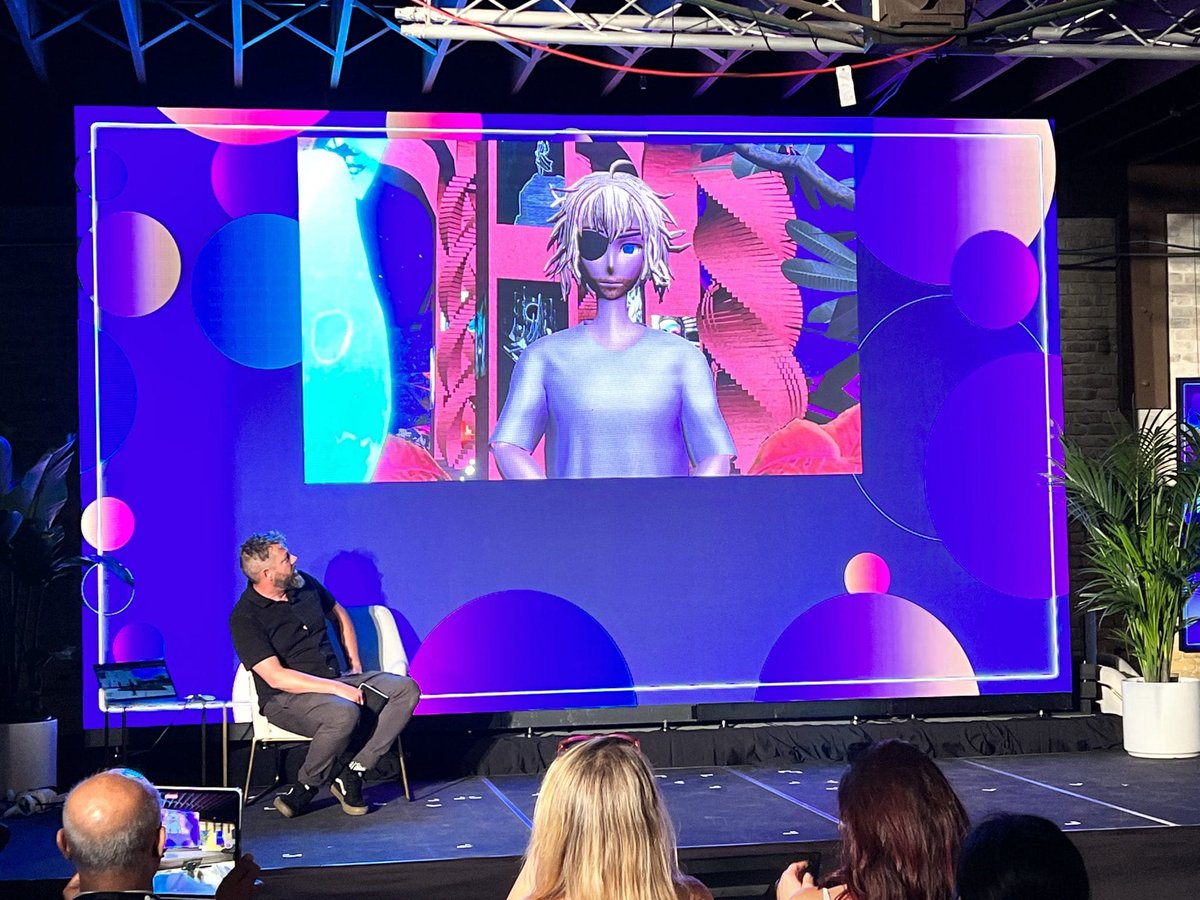
#FILAustin is happening in the Metaverse as well for everyone who can‘t be in Austin! It’s pretty awesome!
Check it out on @decentraland
https://t.co/lsMjE4RpoF