🧪Pharmacist researcher (@drjamesdinic).
🏃♂️Elite athlete (@zbitter).
👩🔬Exercise physiologist students.
..and more...
All asked hard questions about sports nutrition, our recent Endocrine Review (https://t.co/r1QMbLIeo8) and prior work.
@PhilipPrins11, @ProfTimNoakes, and I decided a thread may help those truly interested in learning more.
🧠For coaches, athletes, weekend warriors, and others trying to make heads or tails of the data… this thread IS NOT to tell you how to think; it is to give you information to empower you to think for yourself 💪
*Key summary at the bottom of this thread*
Note that I also addressed many of these points and more on the @hiitscience podcast: https://t.co/2pRwPpQOQ9.
🤓LET'S BEGIN!
1⃣CLAIM 1: “70% VO₂max - this wouldn’t apply to many sports.”
This references our 2025 AJP-Cell study (https://t.co/AGu6pakXp0). 70% V̇O₂max was selected intentionally to model prolonged strenuous endurance exercise, where fatigue resistance, substrate oxidation, glycogen levels, and exercise-induced hypoglycemia (EIH) have been cited to become physiologically relevant.
Trained ironman triathletes performed time-to-exhaustion (TTE) at 70% V̇O₂max under tightly controlled, isocaloric, crossover conditions.
Importantly, TTE at ~65–75% V̇O₂max is a standard endurance physiology paradigm and has been widely used in prior carbohydrate, glycogen, and fat-adaptation investigations (for a reason). TTE is a commonly cited laboratory measure of endurance capacity.
Some have cited this as a “flaw,” but it is the opposite. This model was not presented as a universal sport simulation. It was used to isolate macronutrient-specific effects on prolonged fatigue under controlled conditions – a KEY to the design.
Further, our conclusions do not hinge on this intensity alone.
Across our work:
• 5-km time trial (~82% V̇O₂max sustained effort) - no impairment after LCHF (https://t.co/yz5zytl7e3).
• 1-mile time trial (~90% V̇O₂max) - no impairment after LCHF (https://t.co/hQstf2mY8E).
• 6 × 800 m repeated interval session (~86% V̇O₂max) - no decrement under LCHF (https://t.co/hQstf2mY8E).
• Progressive V̇O₂max testing - preserved maximal carbohydrate oxidation with enhanced fat contribution at high intensities (https://t.co/g23TMkhy8j; https://t.co/rQOWP1b0Kn).
• Prolonged TTE at 70% V̇O₂max - equivalent performance between diets and ~22% improvement with 10g/hour minimal carbohydrate ingestion independent of diet habituation (https://t.co/AGu6pakXp0).
These paradigms span high-intensity continuous efforts, repeated intervals, middle-distance endurance, and prolonged submaximal endurance.
Jame also cited a @IntSocietySN publication (1st author @Alexleaf; alongside @JoseAntonioPhD, @EatsleepfitJeff, @ExphysPhD, @mikeormsbee, @TheAlanAragon, @ShawnArent, @DominicDAgosti2, and a few other great exercise physiologists) as evidence our work is not consistent with the literature…
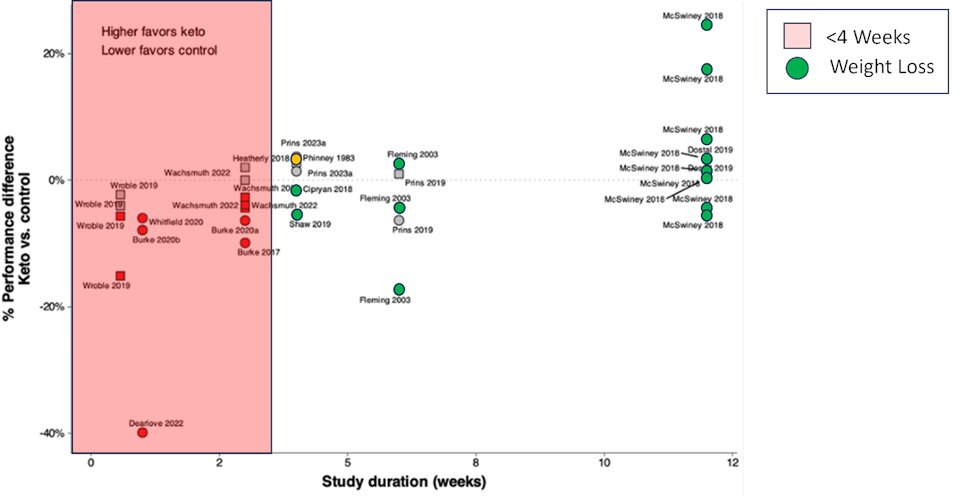
However, the opposite is the case (see Figure below).
This work is VERY consistent with other published LCHF trials >4 weeks. Note that this figure does not include emergent work, which yet again confirms a lack of significant differences in physical performance across diverse CHO diet patterns.
Therefore, the assertion that our findings hinge on “only studying 70% V̇O₂max” is factually incorrect and ignores the broader body of controlled crossover work across multiple intensities.
2⃣CLAIM 2 - “The trials were performed in a 15-hour fasted state.”
Yes, by design, and applied identically across all experimental conditions.
The purpose of our AJP-Cell study was not to simulate race-day fueling. It was to test a mechanistic question: If pre-exercise muscle glycogen availability is critical for prolonged endurance performance, then performance should be impaired after 6-week adaptation to an isocaloric LCHF diet compared to HCLF. Conversely, if stabilization of circulating glucose is the more proximate determinant of fatigue, then minimal carbohydrate ingestion during exercise should improve performance independent of diet habituation.
15-hour fast was essential to this design….but why?
≥12-hour fasts are well established to substantially reduce liver glycogen while leaving muscle glycogen relatively preserved.
Thus:
1) Under the HCLF condition, subjects would begin exercise with relatively higher muscle glycogen but reduced liver glycogen due to the fast.
2) Under the LCHF condition, subjects would begin with reduced liver glycogen (fasting effect) and presumed lower muscle glycogen following 6-week carbohydrate restriction (Bergström et al., 1967; Phinney et al., 1983; Webster et al., 2016).
This allowed the protocol to manipulate three distinct carbohydrate pools:
1) Muscle glycogen pool (MGP) - altered by diet.
2) Liver glycogen pool (LGP) - reduced by fasting in both arms.
3) Small circulating glucose pool (SGP) - manipulated acutely by minimal CHO ingestion (~10 g/h).
What did the results show?
Diet-induced differences (LCHF vs HCLF), and therefore presumed differences in muscle glycogen availability, did not meaningfully alter prolonged time-to-exhaustion performance.
However, ingestion of a trivial amount of carbohydrate (~10 g/h) significantly improved performance (~22%) regardless of diet.
This pattern is central to the study’s purpose and interpretation. It suggests that stabilization of the small circulating glucose pool during prolonged exercise had a measurable impact on fatigue resistance, whereas differences in pre-exercise muscle glycogen availability (and also CHO substrate use during exercise) did not.
The 15-hour fast was not a methodological flaw. It was necessary to standardize liver glycogen and isolate the relative contributions of muscle glycogen versus circulating glucose availability.
Rejecting the fasted model is not identifying an error. It is rejecting the experimental strategy used to test the study’s stated hypothesis.
3⃣CLAIM 3 - “Maltodextrin was used instead of Vitargo/Glycofuse.”
Maltodextrin was selected for experimental control, reproducibility, and blinding. It is one of the most extensively used carbohydrate sources in exercise metabolism and carbohydrate supplementation research. The vast majority of foundational and contemporary carbohydrate-feeding studies, including those informing current fueling guidelines, have used glucose, sucrose, or maltodextrin as the primary carbohydrate source (i.e., @Jeukendrup, 2004; Coyle et al., 1986; numerous subsequent trials).
The use of maltodextrin is entirely consistent with the broader literature.
More importantly, the intervention dose (~10 g/hour; 3.4 g every 20 minutes) was intentionally selected to be 6–12x lower than conventional fueling recommendations (60–120 g/h) and insufficient to meaningfully alter whole-body carbohydrate oxidation. The explicit purpose was to manipulate circulating glucose availability, not to maximize exogenous carbohydrate oxidation or test high-dose fueling strategies.
At ~10 g/hour, intestinal glucose transport capacity (SGLT1-mediated) is far from saturation. Differences between commercial starch polymers become physiologically relevant primarily at higher ingestion rates approaching transporter limits, not at minimal doses designed only to stabilize blood glucose.
This was not a product comparison study. It was a mechanistic study testing whether minimal glucose provision improves performance via prevention of exercise-induced hypoglycemia.
Importantly, invoking specific commercial starch formulations does not address the physiological hypothesis tested.
4⃣CLAIM 4 - “Why give 50 g after TTE? No high carb person would do that.”
The 50 g carbohydrate bolus was intentional and mechanistically driven.
Our AJP-Cell study was designed to test whether stabilization or restoration of circulating glucose availability influences fatigue resistance independent of diet habituation.
The protocol separated two physiological questions:
1) Does minimal carbohydrate ingestion (~10 g/h) during prolonged exercise prevent exercise-induced hypoglycemia (EIH) and extend time-to-exhaustion (TTE1)?
2) If EIH develops and exercise is terminated, does acutely elevating blood glucose immediately afterward alter subsequent performance capacity (TTE2)?
The 50 g carbohydrate bolus was administered immediately after completion of TTE1 specifically to reverse falling blood glucose and acutely elevate circulating glucose before the second bout.
In other words, it was used as a physiological probe.
A 50 g glucose load is a straightforward and well-established method to significantly raise circulating glucose levels. This allowed us to determine whether restoration of the small circulating glucose pool influences subsequent fatigue resistance.
This was NOT asking, “Would an athlete choose to fuel this way?”
It was asking, “If circulating glucose is restored after exhaustion, does performance change?”
That is experimental design - not a fueling recommendation.
5⃣CLAIM 5 - Salt/sodium administration on LCHF
Across our prior investigations (JSSM 2019; Frontiers in Nutrition 2023; AJP-Cell 2025), we consistently recommended modest increases in sodium/salt intake during LCHF implementation. This was intentional and physiologically justified.
Carbohydrate restriction lowers circulating insulin concentrations, which increases renal sodium excretion (natriuresis). If sodium intake is not adjusted upward, plasma volume can decline during adaptation.
Numerous low-carbohydrate performance studies have been criticized for failing to control sodium intake. Our approach was to remove that confounder by providing standardized sodium guidance under dietitian supervision.
Our approach, implemented consistently across JSSM (2019), Frontiers in Nutrition (2023), and AJP-Cell (2025), was to standardize sodium intake under dietitian supervision to remove electrolyte imbalance as a confounding variable aligned with prior literature.
In other words:
1) If sodium intake were not adjusted, the LCHF arm would be rightfully criticized for hypovolemia-related performance effects.
2) If sodium intake is adjusted appropriately, it is criticized as a confounder.
3) The purpose of standardized sodium guidance on each diet was to control for electrolyte-related variability so that macronutrient effects could be isolated.
The interventions in AJP-Cell were 6 weeks in duration, not 1 week. While natriuresis is most pronounced early in carbohydrate restriction, maintaining appropriate sodium intake throughout adaptation is standard practice in LCHF implementation, particularly in athletic populations.
More importantly, sodium intake does not explain the primary findings. In our AJP-Cell study,
1) Acute sodium intake was NOT different across diet arms (both fasted water only)
2) Sodium intake was identical between 10g/h CHO and placebo trials within each diet arm.
Therefore, the ~22% improvement in time-to-exhaustion with carbohydrate ingestion cannot be attributed to sodium or the lack of significant performance differences across diets.
To suggest that modest salt guidance explains the results would require evidence that an additional 1–2 g/day of NaCl produces a double-digit percentage change in prolonged endurance performance under otherwise identical experimental conditions (even when sodium intake the day of performance was no different across diet groups). No such evidence is presented. In fact, systematic reviews have suggested it doesn’t appear to have a significant impact on performance (https://t.co/6oLILuzdkQ).
Providing sodium guidance during LCHF adaptation was methodological control, not an ergogenic manipulation.
6⃣CLAIM 6 - “Was the high-carb diet whole food or processed?”
Across our investigations (JSSM 2019; Front Nutr 2023; Am J Physiol Cell Physiol 2025), all dietary interventions were:
• Individually prescribed
• Isocaloric
• Structured to maintain body mass
• Supervised by registered dietitians
• Monitored via detailed dietary logging
Participants worked one-on-one with a dietitian to construct whole-food dietary patterns consistent with the macronutrient targets of each condition. The high-carbohydrate diet emphasized conventional whole-food carbohydrate sources. It was not an ad libitum processed-food intervention.
These details are clearly described in the Methods sections of each publication.
More importantly, the hypothesis of our AJP-Cell study concerned macronutrient composition and substrate availability, specifically the relative contributions of muscle glycogen, liver glycogen, and circulating glucose to fatigue resistance.
This criticism does not engage the study’s stated physiological objective and is factually inconsistent with the dietary methods reported.
7⃣CLAIM 7 - “Gold standard is 60–120 g/hour. You only used 50 g.”
This criticism reflects a misunderstanding of the study design.
Two distinct interventions are being conflated:
1) ~10 g/hour during exercise, intentionally 6–12× lower than conventional fueling recommendations.
2) 50 g carbohydrate administered immediately post-exhaustion; used to acutely elevate circulating glucose before TTE2.
The intra-exercise dose (~10 g/hour) was deliberately selected to be well below the 60–120 g/hour “gold standard” used to maximize exogenous carbohydrate oxidation during competition.
The purpose was not "optimize fueling." The purpose was to minimally perturb the small circulating glucose pool (SGP) and determine whether stabilization of blood glucose alters fatigue resistance independent of diet habituation.
If the glycogen-centric model were dominant under these conditions, altering pre-exercise glycogen availability via 6-week LCHF versus HCLF should have meaningfully altered performance. It did not.
However, ingestion of a trivial amount of carbohydrate (~10 g/hour) significantly improved time-to-exhaustion (~12–20%) regardless of diet.
That was the experimental test.
Invoking 60–120 g/hour fueling guidelines addresses a different question: how to maximize carbohydrate delivery during competition, not the mechanistic question being tested in this study.
Our 2025 Endocrine Reviews paper (https://t.co/r1QMbLIeo8) further discusses the assumption that progressively higher exogenous carbohydrate oxidation necessarily translates into proportionally greater performance benefits. That relationship is not CLEARLY linear and has not been definitively established across all contexts, we show in the TABLE below across 10 different analyses. One additional analysis has since been published after the review was submitted (https://t.co/rIyJsO44mK from @JamesyMorton, @AndyBeetroot & group).
Remember, the low dose was not an oversight. It was central to the tested hypothesis.
8⃣CLAIM 8 - “You’re having to give 10.1 g/hour of glucose.”
Yes, that was intentional.
The during-exercise carbohydrate dose (~10.1 g/hour; 3.4 g every 20 minutes) was deliberately selected because it is physiologically small and well below conventional fueling recommendations.
At this ingestion rate:
• Whole-body carbohydrate oxidation would not be substantially altered.
• Muscle glycogen resynthesis during exercise would be negligible.
• Intestinal glucose transport capacity is far from saturation.
The dose was not intended to restore muscle glycogen. It was intended to minimally perturb and stabilize the small circulating glucose pool (SGP) during prolonged strenuous exercise.
Despite this minimal dose, time-to-exhaustion improved by ~22% compared to placebo, independent of diet habituation. That is a KEY mechanistic observation.
If large glycogen availability or restoration were the dominant determinant of performance under these conditions, a trivial dose of ~10 g/hour would be unlikely to produce a meaningful ergogenic effect.
Instead, the finding supports the interpretation articulated in our AJP-Cell paper: differences in the large glycogen muscle pool (diet-induced) did not meaningfully alter performance, whereas stabilization of circulating glucose during exercise did.
This aligns directly with the conceptual framework outlined in our 2025 Endocrine Reviews paper (https://t.co/r1QMbLIeo8), which emphasizes the importance of preventing exercise-induced hypoglycemia and preserving circulating glucose availability, rather than assuming a simple linear relationship between exogenous carbohydrate dose and performance.
Therefore, stating that “10.1 g/hour was required” does not reveal a weakness in the design...it underscores the central mechanistic finding.
The small, deliberate dose was the point. Identifying that minimal carbohydrate provision meaningfully altered performance clarifies why fatigue occurs and what actually modulates it.
Mechanistic findings like this form the foundation for understanding how metabolism and performance interact across diverse sport nutrition contexts.
9⃣CLAIM 9 - “Participants weren’t in ketosis.”;
In our AJP-Cell study, ketosis was not assumed, it was objectively measured repeatedly via capillary R-β-hydroxybutyrate (βHB) across the 42-day LCHF intervention and during each experimental visit.
Fasting βHB after LCHF was:
• ~0.5 ± 0.3 mmol/L after 1 week
• ~0.6 ± 0.5 mmol/L at day 42
These values fall within commonly accepted definitions of nutritional ketosis (~≥0.5 mmol/L), and βHB was consistently elevated vs. HCLF at all measured timepoints.
More importantly, the mechanistic finding of our AJP-Cell study, that minimal carbohydrate provision (~10 g/hour) improved TTE independent of diet habituation, does not hinge on whether fasting βHB was 0.4 vs. 0.6 mmol/L in a given individual on a given morning. The critical comparison was within diet (CHO vs. placebo) under controlled conditions.
Athlete context matters for ketone levels.
In athletes, circulating βHB concentrations are often lower in lean ATHLETES with HIGHER muscle mass than in sedentary individuals due to:
• Increased peripheral ketone uptake
• Higher mitochondrial density
• Greater oxidative utilization
• Blood concentration reflects production minus utilization, not production alone.
This pattern is consistent across our lab’s work (and others):
• Prins et al., 2023 (Frontiers in Nutrition): average capillary R-βHB during LCHF = 0.76 ± 0.04 mmol/L
• Prins et al., 2019 (JSSM): average βHB during LCHF = 0.5 ± 0.05 mmol/L
Both studies demonstrated clear nutritional ketosis on average, yet values clustered near the lower end of the “ketosis” range, which is typical in trained athletes.
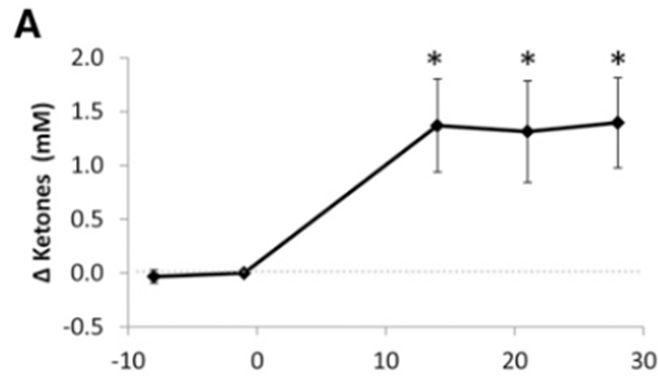
Note, you can see much higher levels of ketones in @KevinH_PhD’s obesity studies even at just 2 weeks on diet for this EXACT reason (https://t.co/XWkx2wnTf2; see rapid elevation to 1.5mM in untrained obese individuals).
We are also doing additional work in this area to look at the key regulatory factors affecting ketone metabolism with the Department of Defense and @BriannaStubbs, so stay tuned.
Functional adaptations were clearly present in our analysis. Beyond βHB concentration, metabolic adaptation was confirmed by:
• Markedly elevated fat oxidation rates
• Reduced glycemic variability on LCHF
• Stable or equivalent performance outcomes
Those physiological markers are stronger indicators of adaptation than a single fasting βHB threshold.
..but CRITICAL to performance and a central point in our review, circulating brain energy metabolite (glucose and ketones) normalized at 4-weeks in duration, demonstrating a key study methodological timeline relevant to the small glucose pool (SGP).
While James proposed to “reanalyze the study,”…this is inappropriate.
Removing participants post hoc based on an arbitrary βHB cutoff:
1) Ignores the randomized crossover design
2) Introduces selection bias
3) Is not a standard primary analysis methodology
4) Does not address the central mechanistic question
This was not a “failed ketosis” study. It was a controlled crossover metabolic trial demonstrating verified carbohydrate restriction, measurable ketone elevation, and clear metabolic adaptation (including of key brain energy metabolites at 4 weeks post-diet initiation).
Framing this as a flaw reflects a misunderstanding of physiology and study design, not a methodological deficiency.
9⃣CLAIM 9 - “Your paper says further testing is needed.”
Acknowledging scope limitations and calling for additional research is VERY IMPORTANT to advance scientific understand (not an admission of invalidity?!).
Our 2025 AJP-Cell study was designed to answer a fundamental mechanistic question revolving metabolism and performance: whether minimal carbohydrate ingestion (~10 g/hour) prevents exercise-induced hypoglycemia (EIH) and improves time-to-exhaustion independent of diet habituation. It was not designed to define a dose-response curve
Mechanistic studies isolate variables to allow for fundamental physiological signal to be identified.
Further work allows us to take that fundamental understanding and explore scaling, boundaries, and more. That is how science progresses.
Our group calling for additional dose-response trials is intellectual honesty and appropriate scientific restraint, not evidence that the present findings are flawed…if anything, it reflects confidence in the signal observed and recognition that the question merits deeper exploration.
📚SUMMARY & KEY CRITICAL POINT BEING IGNORED🔑
Across multiple randomized crossover trials conducted over the past decade, a consistent pattern has emerged:
1) Performance is maintained on isocaloric low-carbohydrate and high-carbohydrate diets across multiple exercise paradigms when diet is ≥4 weeks in duration.
2) Substrate oxidation can shift dramatically (fat vs carbohydrate) without impairing performance.
3) Carbohydrate ingestion during prolonged exercise improves performance independent of pre-exercise glycogen status.
In our 2025 AJP-Cell study, carbohydrate ingestion (~10 g/hour) improved time-to-exhaustion by ~12–20% regardless of whether athletes were habituated to high- or low-carbohydrate diets.
In our 2023 Frontiers in Nutrition crossover study (https://t.co/hQstf2mY8E), performance during a 1-mile time trial and a 6 × 800 m repeated interval session was equivalent after 31 days of LCHF and HCLF diets, despite markedly different substrate oxidation profiles and record-high fat oxidation rates under LCHF.
Importantly, in the 5K time-trial study published in the JSSM (https://t.co/yz5zytl7e3), 42 days of LCHF adaptation did not impair 5K performance compared to HCLF, despite lower carbohydrate oxidation and distinct metabolic responses. Sustained running at ~82% VO₂max was maintained under both dietary conditions.
In a randomized crossover 5K/10K trials (https://t.co/iOc0Rf38nW), acute LCHF vs HCLF pre-exercise feeding substantially altered substrate oxidation (77% higher fat oxidation under LCHF) without altering 5K or 10K performance.
In our Endocrine Reviews synthesis, >160 studies were evaluated, demonstrating:
1) Exercise-induced hypoglycemia (EIH) consistently correlates with exercise termination.
2) Muscle glycogen depletion alone does not produce rigor or whole-body failure and does not reliably cause performance decrements.
3) Low-dose carbohydrate ingestion (~10–30 g/hour) eliminates EIH and improves performance without large-scale glycogen restoration.
Taken together, this is not a single mechanistic study making an isolated claim.
It is a coordinated body of work demonstrating that:
1) Substrate oxidation shifts do not dictate performance.
2) Muscle glycogen concentration is not the sole or obligatory determinant of fatigue.
3) Maintenance of the circulating glucose pool (small glucose pool) is a key modulator of prolonged exercise tolerance.
4) Minimal carbohydrate provision can significantly enhance performance.
None of the listed “flaws” engage this accumulated evidence.
They focus on peripheral design features while ignoring the central, replicated physiological observation: performance can be preserved under divergent glycogen and substrate oxidation conditions, and modest carbohydrate ingestion improves performance primarily through stabilization of blood glucose, not through large-scale glycogen repletion/“sparing”.
...and it is supported across multiple trials, multiple exercise models (1-mile TT, 6 x 800 m intervals, 5K, 10K, prolonged endurance exercise), and multiple publications spanning over a decade.
• https://t.co/yz5zytl7e3
• https://t.co/hQstf2mY8E
• https://t.co/hQstf2mY8E
• https://t.co/g23TMkhy8j
• https://t.co/rQOWP1b0Kn
• https://t.co/AGu6pakXp0
• and others…
Hope this is helpful on your journey to learn! Please feel free to share if helpful.
For more information, check out the review here: https://t.co/r1QMbLIeo8
The problem in science, as we show in the article, is when scientists "know" what is the truth and are unwilling to test the veracity of their knowledge. Up to 2010 I also "knew" that carbs were the key dietary macronutrient for human exercise performance. In 2017 @PhilipPrins11 and his team gave me the opportunity to test my "knowingness". Over 7 years of experiments we proved our "knowingness" was wrong. We discovered that many other labs around the world have reported exactly the same findings (as I point out in my upcoming debate with Professor Louise Burke due for publication in AJCN in due course. How can you simply ignore those findings as if they don't exist?) When we started we had no idea what the outcome would be. That I think is how science is meant to be tackled.
Also, to bring out the tired and unsubstantiated statement say that every athlete involved in high intensity exercise is eating a high carb diet, is nonsense. We know of teams in combat-type sports who have adopted the low carb diet with extraordinary results. For obvious reasons this is confidential information - they don't want to give away their advantage. I predict that in 5 years or so, every team in those sports will be eating the LCHF diet. Or they will no longer be competitive.
Your mind is closed. So it's pointless continuing this discussion. @AKoutnik@LoreofRunning1
Type 2 Diabetes is carbohydrate intolerance. Your body can't process carbs.
Obvious solution: Stop eating carbs.
What does the American Diabetes Association recommend?
45-60g carbs per meal. 3 meals daily. Plus snacks. That's 180-200g carbs daily.
For a condition defined by inability to process carbs.
Then inject insulin to force your body to handle carbs it can't.
Why? Because removing carbs would cure diabetes. No insulin sales. No monitoring. No doctor visits.
Adding insulin creates lifetime customers.
The disease worsens (you're still eating the cause). So you need more insulin. Higher doses. Additional medications.
You know what works? Remove carbs. Blood sugar normalises. Insulin needs drop to zero. Diabetes remission.
Demonstrated thousands of times. Not controversial science.
But not profitable.
So guidelines recommend the opposite. Keep eating carbs. Keep injecting insulin. Stay diabetic. Stay profitable.
The medical establishment knows low-carb reverses diabetes. They recommend high-carb anyway.
Because the system isn't designed to cure you. It's designed to manage you. Forever.
Cholesterol medication makes sense when you understand the business model.
Step 1: Lower the "healthy" threshold every decade
- 1985: Under 280 mg/dL was fine
- 2001: Lowered to 240 mg/dL
- 2004: Lowered to 200 mg/dL
- Now: Some guidelines suggest under 190 mg/dL
Step 2: Expand to "preventive" use
- Originally: Prescribe after heart attack
- Then: Prescribe if cholesterol high
- Then: Prescribe if "at risk" (vague criteria)
- Now: Prescribe to children as young as 8
Step 3: Create lifetime customers
- No cure, just management
- Annual prescriptions forever
- Regular monitoring creates appointments
- Side effects treated with more medications
Result: 92 million Americans on statins. £20 billion annual revenue. Growing market.
The goal was never curing heart disease. The goal was creating the largest prescription drug market in history.
Mission accomplished.
A super important point: diet alone can reverse a diagnosis of type 2 diabetes. The only diet shown in clinical trials to do this is one very low in carbohydrates
🔥 For the past 50 days, the protocol’s revenues have increased by ±40% increased.
This leads to more $JARVIS buybacks, and a higher yield for staked jEUR (Super jEUR $sjEUR).
What can you do with sjEUR?
▫️ Borrow USDC against it
▫️ Deposit it on @spectra_finance
🧵 Thread : Pourquoi je crois encore dans Jarvis Network + comment je farme du $JARVIS
1/7
En 2020, j’ai découvert Jarvis Network.
À l’époque, ils travaillaient d’abord sur un protocole de perpétuels, avant de pivoter vers les stablecoins et la DeFi.
👉 Après un pump historique de x60 depuis le TGE, le token s’est effondré, faute d’utilité et de mécanismes de partage de revenus.
🔥 ~15% on $jEUR on #Base, with no lock-up.
Super jEUR is a yield-bearing Euro stablecoin earning a portfolio of the protocol's revenues.
And you can borrow $jEUR against productive assets such as $cbETH or $stEUR...
🗳️ Following the last vote to shut down $jEUR Credit Lines on Optimism, Arbitrum and BNB Chain, a new vote is live to shut down the Credit Lines on Polygon.
https://t.co/XmAO1tzgnL
@CryptoMatrix2 "j'ai po de stratégie moi.. C'est pour les gars qui ont pas confiance les stratégies... J'enchaîne moi... Je fais de la transaction c'est tout"
The proposal passed.
The $jEUR Credit Lines on these chains will be shut down in about 4 weeks, and will be replaced by a money market on #Base, from where $jEUR can move freely to other chains.
Borrowers are incentivized to repay their debt during this 4-weeks timeframe.
🗳️ A new proposal has been posted: JIP 2
The treasury holds ±$1.4M of assets (incl. $400K of $JARVIS). This proposal suggest to deposit $140K or $180K worth of JARVIS-ETH on @beefyfinance on #base and on @DotDotDotFi on #BSC.
https://t.co/6oLuEYgHhs