A PhD's success depends more on the fit between the student, the advisor, and the lab than on the specific topic being studied (it barely matters at all).
Similarly, a lab's success depends more on how excited (or miserable) its researchers are than on the precise project they are working on (it could be virtually anything).
This information isn't in papers or in grant proposals, you have to ask the researchers.
You want to start tomography? Solve structures inside cells? Reach Nyquist😳?
We have a website for you! https://t.co/ulvbbhEY6d
You'll find a tutorial on how to reconstruct tomograms, pick particles and do subtomo averaging, using different software!
Hope it will be useful !
The MPM XXXVI page is now live - Sept 14th to Sept 18th. Check it out on the https://t.co/lrjDRvK7TX website. Organized this year by Richarch McCulloch @rmc9z, Photini Sinnis, Marc-Jan Gubbles @MJGubbels, Deepali Ravel @Deepali_Ravel & Omar Harb @omartheharb
GRiP-ing seminars, 2025 edition starts next Friday, live from Glasgow! Come, join us!
Our first speaker is Emma Wilson @Toxobrains from @UCRiverside.
Please RT. DM to get mail alerts about these excellent talks.
Link: https://t.co/Q38h4g9dwK
Passcode: 410932
It is a great honour to invite you to a symposium to celebrate the career of Mark Carrington. An exciting set of talks for anyone fascinated by trypanosomes!
Did you know there are more than bilayer #membranes in nature? Meet the #archaeal monolayer and its surprising mechanical properties! New #preprint! (1/7)
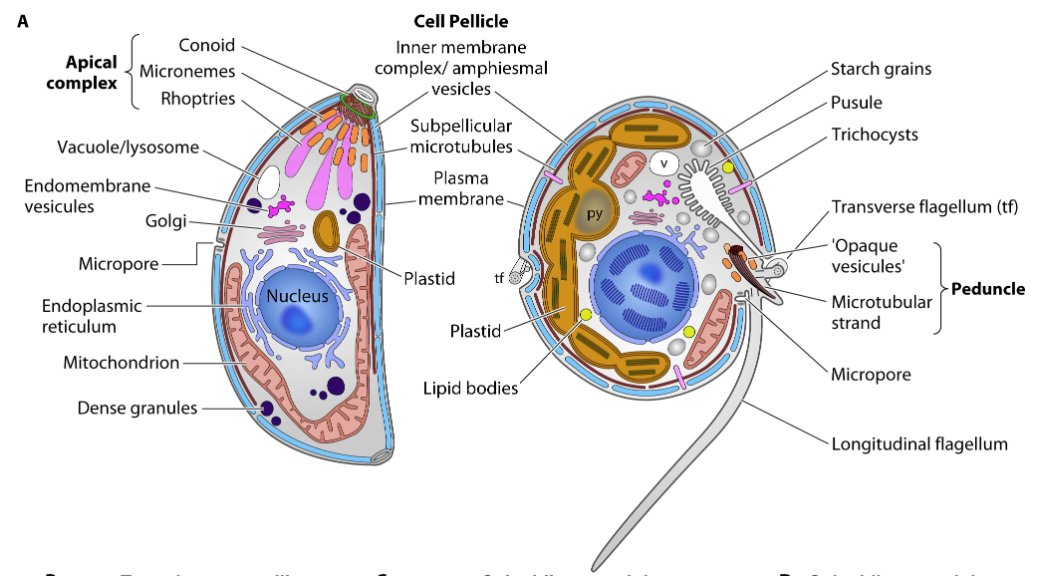
@VernCarruthers and I had a great time writing this review pondering the versatility of key adaptations common to #apicomplexans, #dinoflagellates and other myzozoans that have made this group so prolific and successful. (1/3)
https://t.co/RvIRPK1vDA
Niels Weidemann edited a volume of Methods in Enzymology on mitochondrial import. I was honoured to write a review about yeast genetics together with Maya Schuldiner! I hope it will be useful.
https://t.co/Owz7FG2BDE
The 2024 #NobelPrize laureates in chemistry Demis Hassabis and John Jumper have successfully utilised artificial intelligence to predict the structure of almost all known proteins.
In 2020, Hassabis and Jumper presented an AI model called AlphaFold2. With its help, they have been able to predict the structure of virtually all the 200 million proteins that researchers have identified. Since their breakthrough, AlphaFold2 has been used by more than two million people from 190 countries. Among a myriad of scientific applications, researchers can now better understand antibiotic resistance and create images of enzymes that can decompose plastic.
Read more about their story: https://t.co/nWxcZs6wqC
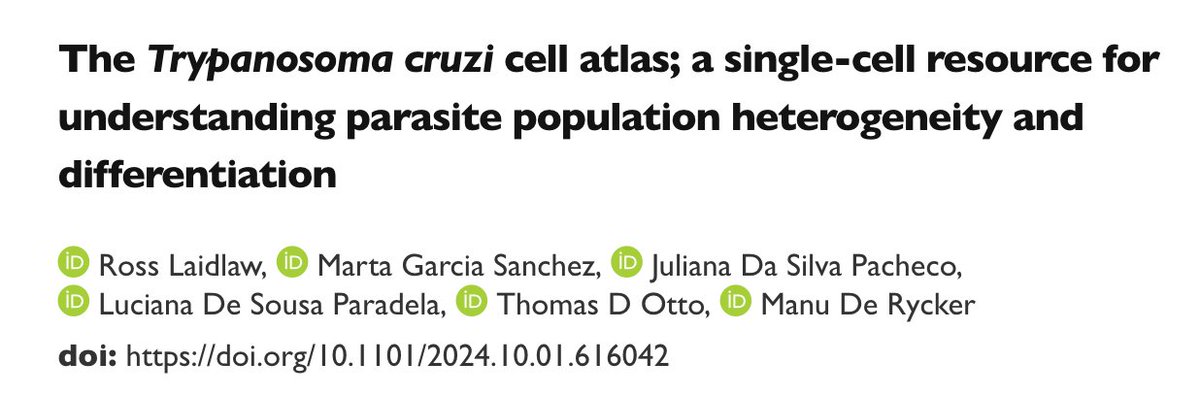
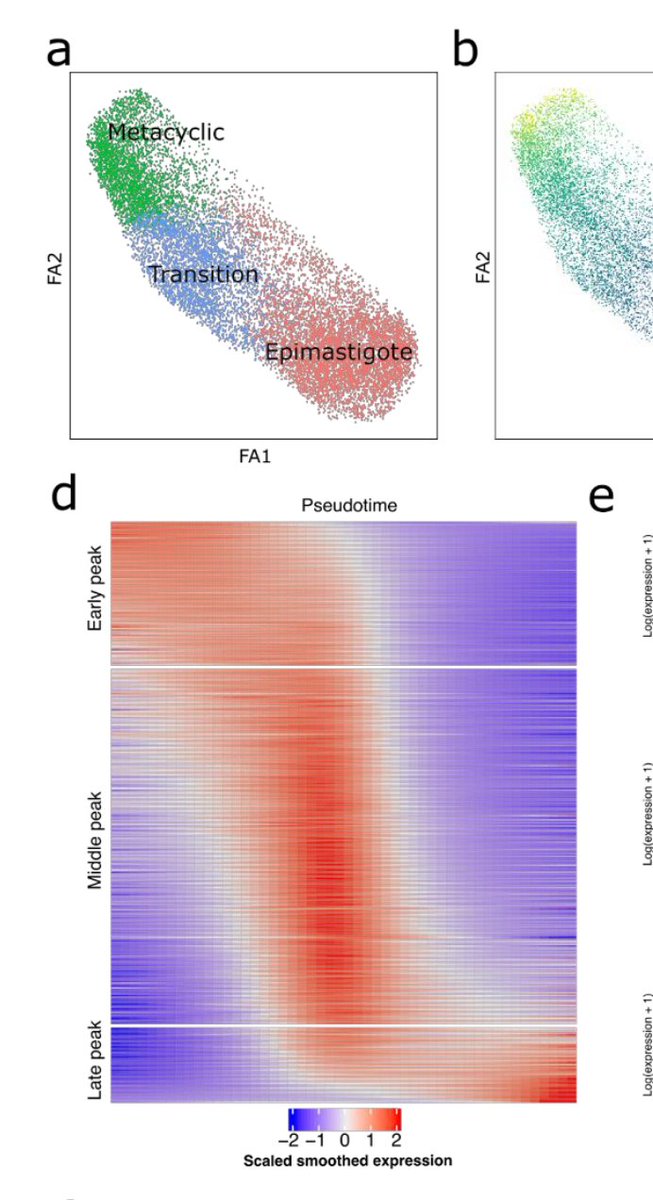
Have a look at the first complete Trypanosoma in vitro cell atlas: https://t.co/9j5PjEZ7GM. T. cruzi is a weird parasite, the genome a mess, transmitted by the "kissing bug" although it poohs on your eyelid and we are still missing good drugs. Maybe our work can make a difference
Happy to share our little discovery with @SimoneMattei19 team on how ribosomes hibernate upside down on mitochondria during cellular stress is now out @NatureComms! A collaboration between @medicineUVA, @EMBL, @EmblImaging, MEMC. Congrats to all authors! https://t.co/DE6eAamt5I
BREAKING NEWS
The 2024 #NobelPrize in Physiology or Medicine has been awarded to Victor Ambros and Gary Ruvkun for the discovery of microRNA and its role in post-transcriptional gene regulation.
Evolution of Thylakoid Structural Diversity!🌱🦠🌍
Annemarie's deep dive🤿 into the wide wild world of photosynthetic complexes and thylakoid architecture and is now available open access @AnnualReviews.
She also made beautiful figures🎨. Check it out!
https://t.co/KWKLbm6UaL
Here’s our human protein-protein interactome. We mined the SRA, devised a new distillation dataset for protein complexes, trained a new version of RF2 to screen millions of protein pairs, and identify > 18k binary interactions. https://t.co/rfEOJIlW1x