@factor_members If you only have 1 unit, do you take profit at the 1x target or implement one of the moving stop rules so the trade has the potential to keep running?
I closed the trade at the target but am now wondering if I should have let it run given type 1 and strong adx.
@jonbking@jonbking Do you consider today's close above the neckline confirmation that the structure is still intact with a brief out off line movement yesterday/today? Or did that close yesterday make the chart bearish?
Let me walk you through what happened one hour before Trump announced the five day moratorium on Iran strikes.
$1.5 billion in notional S&P E-mini futures contracts. Four to six times normal activity.
One hour before the announcement.
Simultaneously, $192 million in crude oil futures purchased at the same time.
They made between $300 and $400 million dollars off those trades.
Trump claimed he spoke to an Iranian official to negotiate the moratorium.
The Iranians said that person doesn't exist and the conversation never happened.
This is not the first time.
It has happened multiple times. He says something. The trade goes on. He says another thing. The market moves.
But whatever you call it — they are laughing at you and they are laughing at me while they do it.
Hunter Biden sold a painting and Washington lost its mind.
These people are making hundreds upon hundreds of millions of dollars trading on information that only exists inside the most powerful office in the world.
I think we are dramatically underreporting how much money is actually being made here.
This isn't politics anymore.
This is a financial operation running out of the White House.
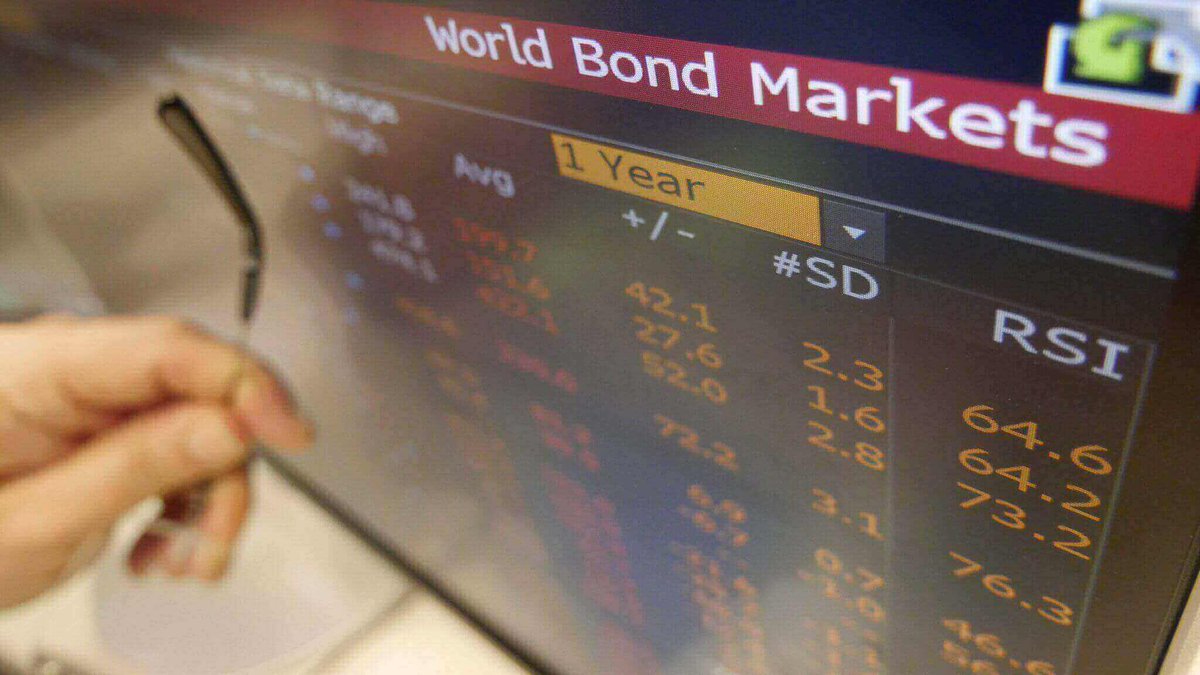
The Bond Market Is Whispering a Warning
When the Smart Money Starts to Sweat
Bonds don’t shout. They whisper. Stocks are the loud drunk at the party; bonds are the sober man in the corner who’s seen enough cycles to know how this ends and lately, that man has started tapping me on the shoulder.
The last 60 days have delivered one of the strangest yield curve behaviors I’ve seen since the early 2000s:
The long end (10Y–30Y) quietly grinding higher.
The front end stubbornly anchored by central-bank chest-beating.
Liquidity thinning at the edges.
Duration hedging picking up among institutions that never hedge unless they feel something.
If you listen carefully, the bond market is whispering the same warning it gave in 2007, 2000, 1994, and—if you want a darker analogy—1930:
“Growth is being mispriced. Again.”
A Yield Curve That Wants to Normalize, but Can’t
The yield curve inversion has been the macro story of the last two years. What matters now is how it dis-inverts.
There are two ways an inversion ends:
- Soft landing: short rates fall.
- Hard landing: long rates spike because inflation becomes unanchored.
We are seeing pieces of both simultaneously, which is rare and unsettling.
Inflation expectations are drifting upward. Wage growth is sticky. Fiscal deficits are still running like we’re in wartime.
The term premium is crawling back from the dead.
The last time this combination occurred?
1967–1969, right before the U.S. sleepwalked into a decade of monetary chaos.
The Term Premium Resurrection
For 15 years, the term premium sat in a shallow grave.
A byproduct of QE, ZIRP, and the idea that central banks could suppress time itself.
Now?
The corpse is moving.
Not violently — but enough that every desk I know is modeling the probability of a structural drift higher in long-term yields.
You can thank:
- Persistent fiscal expansion
- Rising geopolitical risk
- Declining foreign demand for Treasuries
- Quiet but real de-anchoring of inflation expectations
The world is less stable. The dollar is less predictable.
When the narrative anchors slip, term premium rises.
The Quiet Liquidity Problem No One Wants to Discuss
There are three “liquidity deserts” forming:
- Off-the-run Treasuries
- MBS duration hedging cycles
- Treasury auctions absorbing greater-than-expected supply
Foreign central banks aren’t stepping in. U.S. households aren’t stepping in. Money-market funds are locked inside the reverse repo loop.
That leaves primary dealers doing the heavy lifting — and they’re not built for it. Liquidity is a fair-weather friend. When yields rise in illiquid markets, they rise faster than they should.
The Macro Domino: Housing & Credit Tightening
Mortgage rates north of 7% aren’t an anomaly — they’re the new base case. Corporate credit spreads have stopped tightening. Default expectations are rising at the lower end of the junk spectrum.
Commercial real estate refinancing timelines look like a spreadsheet from the ninth circle of hell.
If long-end yields push another 50–70 bps higher, something in the credit plumbing snaps.
It always does.
What the Bond Market Is Really Telling Us
The whisper is clear:
“This is not a cycle. It’s a regime change.”
Here’s what that implies:
- Inflation is no longer transitory — it’s episodic
- Central banks are losing narrative control
- Fiscal dominance has entered the chat
The market is starting to price a world where the cost of money actually costs something.
Real assets outperform
Leverage becomes a liability, not a strategy
This is exactly how new eras begin: quietly, with basis points that snowball.
Portfolio Positioning (Not investment advice)
If I were back on the trading desk tomorrow, this is what I’d do:
- Increase real-asset exposure: gold, energy, infrastructure
-Underweight long-duration tech
- Overweight short-duration value
- Buy volatility whenever it’s mispriced
- Limit leverage
Avoid anything that only works in zero-rate world.
Stay liquid enough to strike when the cracks widen.
The next major repricing won’t be loud.
It will be a soft rumble — then a sudden break.
I’ve learned to trust the whisper.
Ben.
@anymanfitness There is some truth to this but your missing the cost of living to income ratio and how much wider that gap is compared to the time you’re referencing