Tweetorial time!
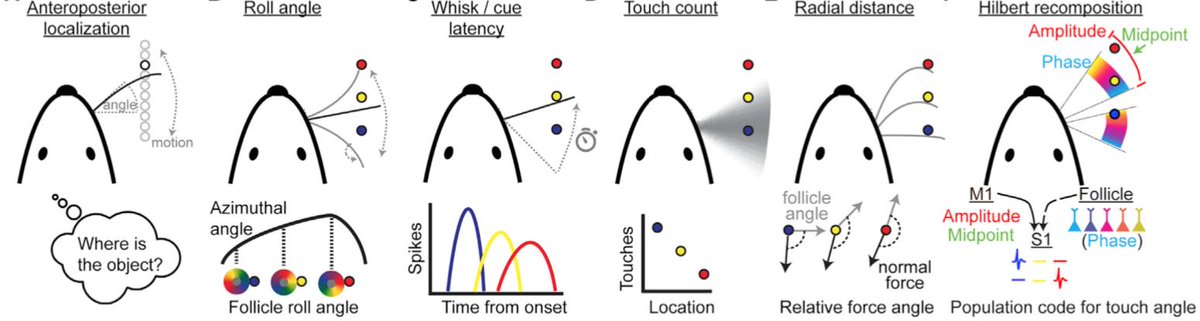
1. Question: How do mice locate objects with their whiskers? There are many models, but nobody knows for sure.
We investigated six models of whisker-guided object localization to determine the simplest model that fit behavior best.
https://t.co/B1DwRbpPxo
@chamath I’m an ML Engineer/DS and launched a POC a to speed up RnD for a battery manufacturer amongst a variety of other projects. Would love to be a part of this!
Where do I sign up on the site? Don’t currently see any positions listed.
Lots of people are wondering whether #GPT4 and #ChatGPT's performance has been changing over time, so Lingjiao Chen, @james_y_zou and I measured it. We found big changes including some large decreases in some problem-solving tasks: https://t.co/jgulqjvPAO
🔮Ever wished you could just say what behavioral analysis you wanted? ... "Plot the animal's trajectory" "Count the head hips in the open arm"
👀🪄we present AmadeusGPT🎻 to do this ...
🗞@shaokaiyeah@jessy_lauer@zhoumu53@trackingplumes and me https://t.co/PAazDd3iXj
🧵⬇️
Another deep learning breakthrough:
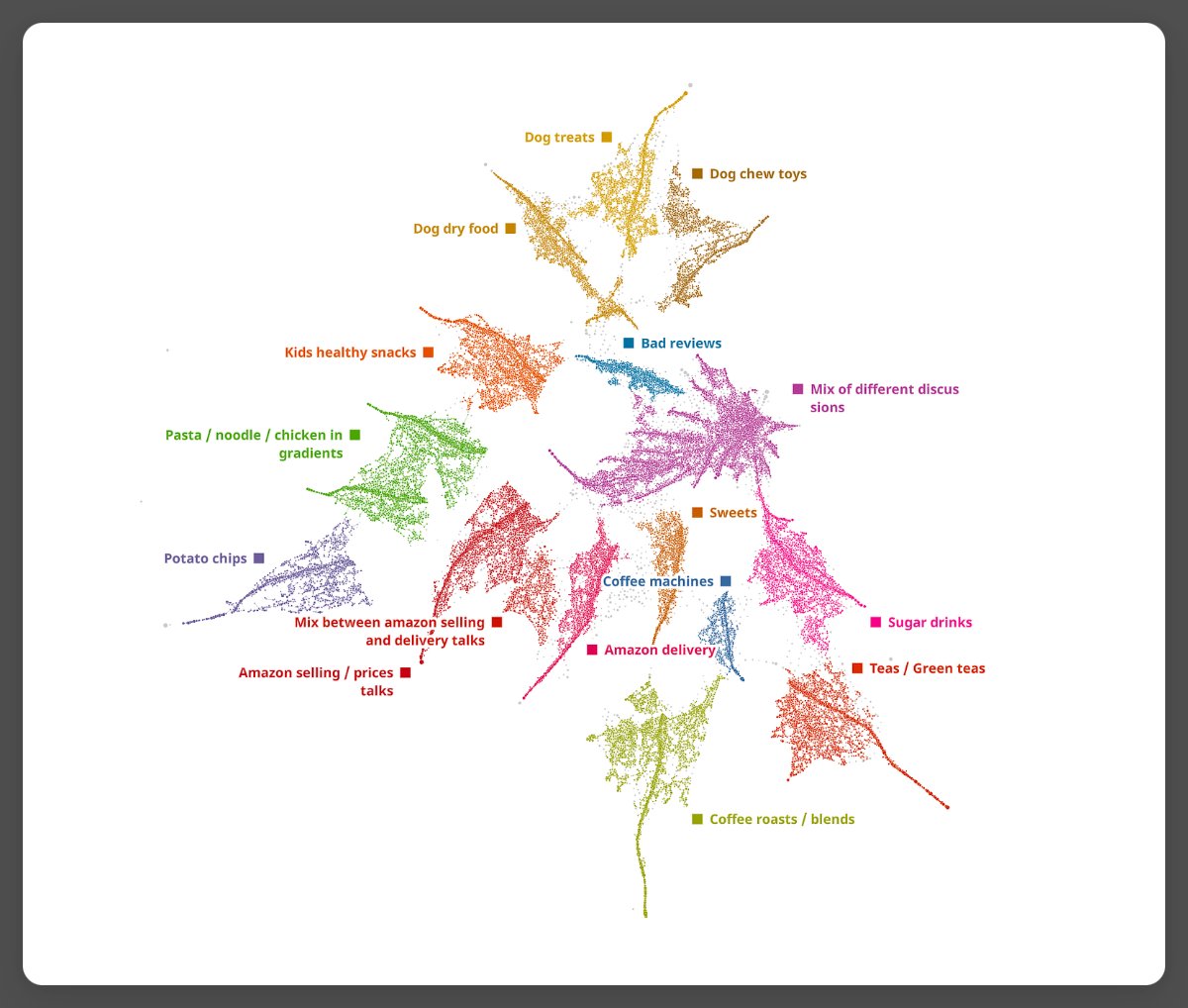
Deep TDA, a new algorithm using self-supervised learning, overcomes the limitations of traditional dimensionality reduction algorithms.
t-SNE and UMAP have long been the favorites. Deep TDA might change that forever.
Here are the details:
I’m thrilled to announce I’ve been promoted to tenured Associate Professor in the Neurobiology section of Biological Sciences at @USC. Science is a community endeavor, and I’m incredibly privileged to have worked with, mentored and inspired by an incredible cast of characters over the past 25 years.
I could easily fill a 4000 character tweet with people to thank, but I’d inevitably forget a few, so in particular, I’d like to thank the lab members that did the work: Jinho Kim, John Cheung, Lily Zou, Andrew Erskine, Stef Walker, Samson King, Phil Maire, Tanisha London, Issac Cohen, Chao Wang, undergrads Mariah Kim, Jason Strawbridge, Isis Wyche, Jonathan Sy, Vincent Huang, Erika Chang-Sing, Jennifer Yao, Simon Trinh, and many more…. Much of our newer work is not out yet, I’m eager to report their results soon.
The environment at USC has been consistently excellent, with creative and collaborative colleagues, as well as supportive administrators and staff making it easy to stay inspired and execute our research program.
I also have a deep appreciation for the training, guidance and support I received over many years from my formal mentors (Karel, Loren, Roger) and informal ones (you know who you are). I don’t think I ever lived up to some of your high standards but relieved it was still good enough.
Excited for the next stage!
New release of @huggingface transformers includes a new pipeline called Document Question Answering ❓📄
This is a pipeline you can use to extract information from PDFs! Let's take a closer look 👀
Excited to share my first postdoc publication in @NatureComms. We integrated CUP and interferometry to achieve phase imaging at 200 billion frames per second. Below, we imaged current flows accompanying APs between nodes of Ranvier on myelinated axons. https://t.co/f94MGU2Ilw
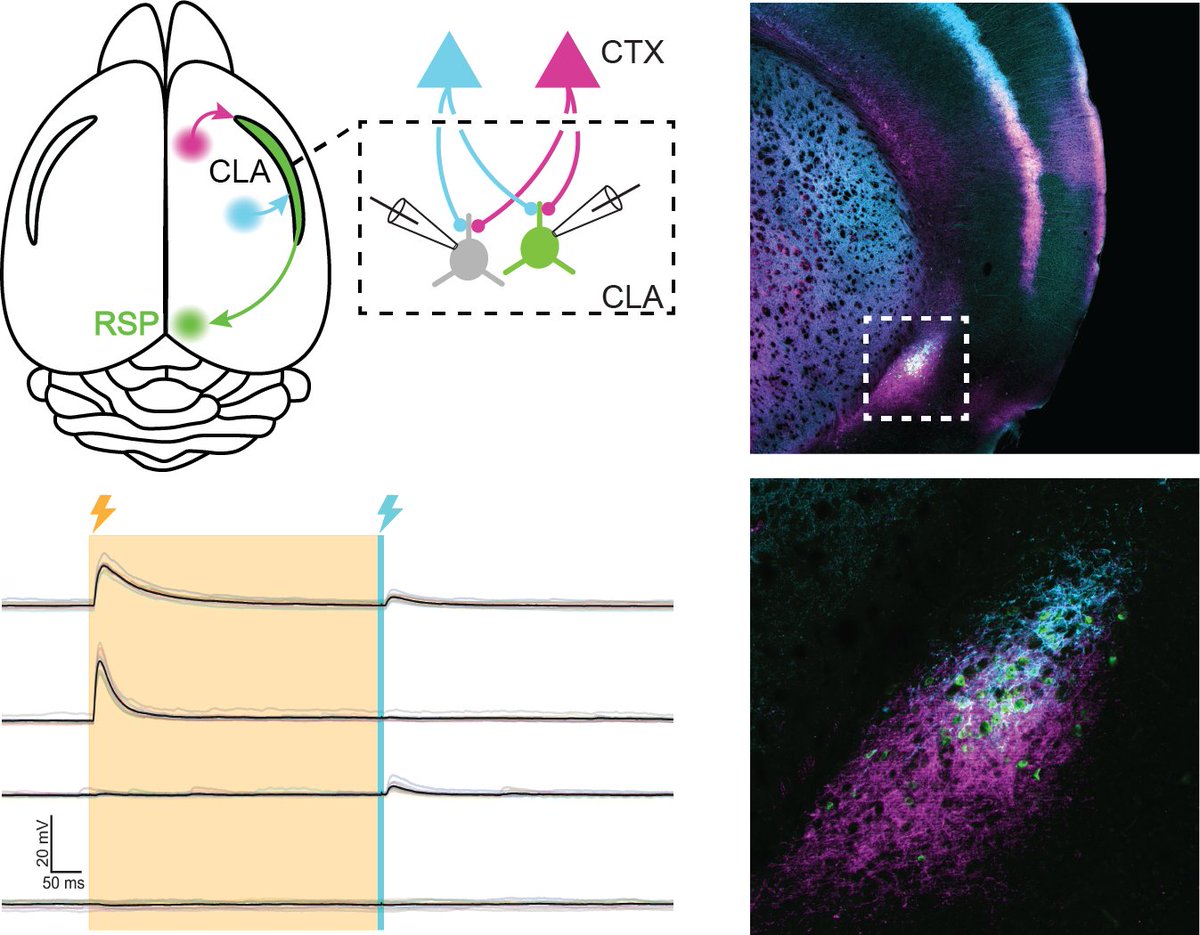
The #claustrum (CLA) is connected with many brain areas BUT we don’t know all the connectivity rules for single neurons at the functional level. We found that CLA INTEGRATES.
👇Read on & see our preprint to learn more!
https://t.co/f4lRjjhCcs
(1/11)
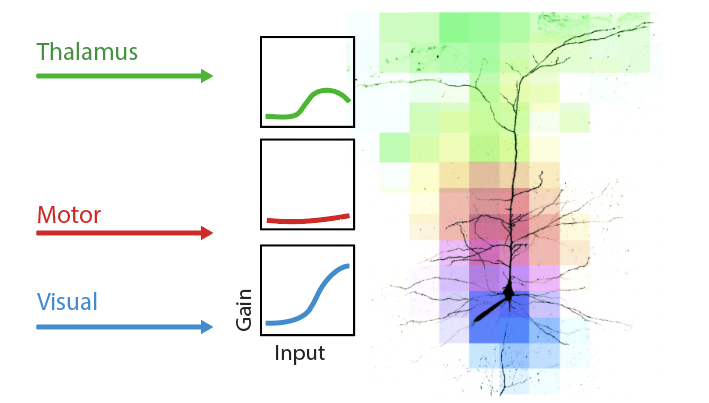
How do neurons actually sum up inputs? Turns out, it depends a lot on where the synapses are! Team effort by Lafourcade et al. in Harnett lab finds parts of dendrites are linear➕ others nonlinear❌, depending on location on dendrites, via AMPA/NMDA ratio. https://t.co/3imydYmH3L
Our paper on the hippocampal mechanisms supporting the memory for nonspatial event sequences just came out in @NatureComms! Very proud of our collaborative team of neuroscientists (@ucicnlm, @UCIBioSci) and data scientists (@UCIbrenICS). Details to come! https://t.co/MYM5bSxICe
AI and natural intelligence (NI) appear so different.
A group of us asked “why?”
The answer: we have to go back to the future!
https://t.co/FuEZZOpkQX
A thread.
1/6
@raykurzweil wrote in 2014 that a single neuron is more complex than the entire cortex. So how complex is it? see our recent Neuron paper by @DavidBeniaguev and @Segev_Lab at: https://t.co/G2GBziJ1qT
@chrisXrodgers@EmoryNeurosurg CONGRATS!! I remember seeing your work in its infancy at a Barrels conference back in 2014/2015. Excited to see the work you’ll be pumping out at Emory.
How do we recognize an object using just touch🖐️? How does the brain🧠respond? 3 papers from @NeuroCellPress (including mine) looked into it in mice🐭.
(Painting: The sense of touch by Ribera).