Article: An analysis of tide gauge data from around the world provides more precise constraints on local vertical land motion, which can help refine projections of relative sea-level change
https://t.co/oSQq1QcwFS
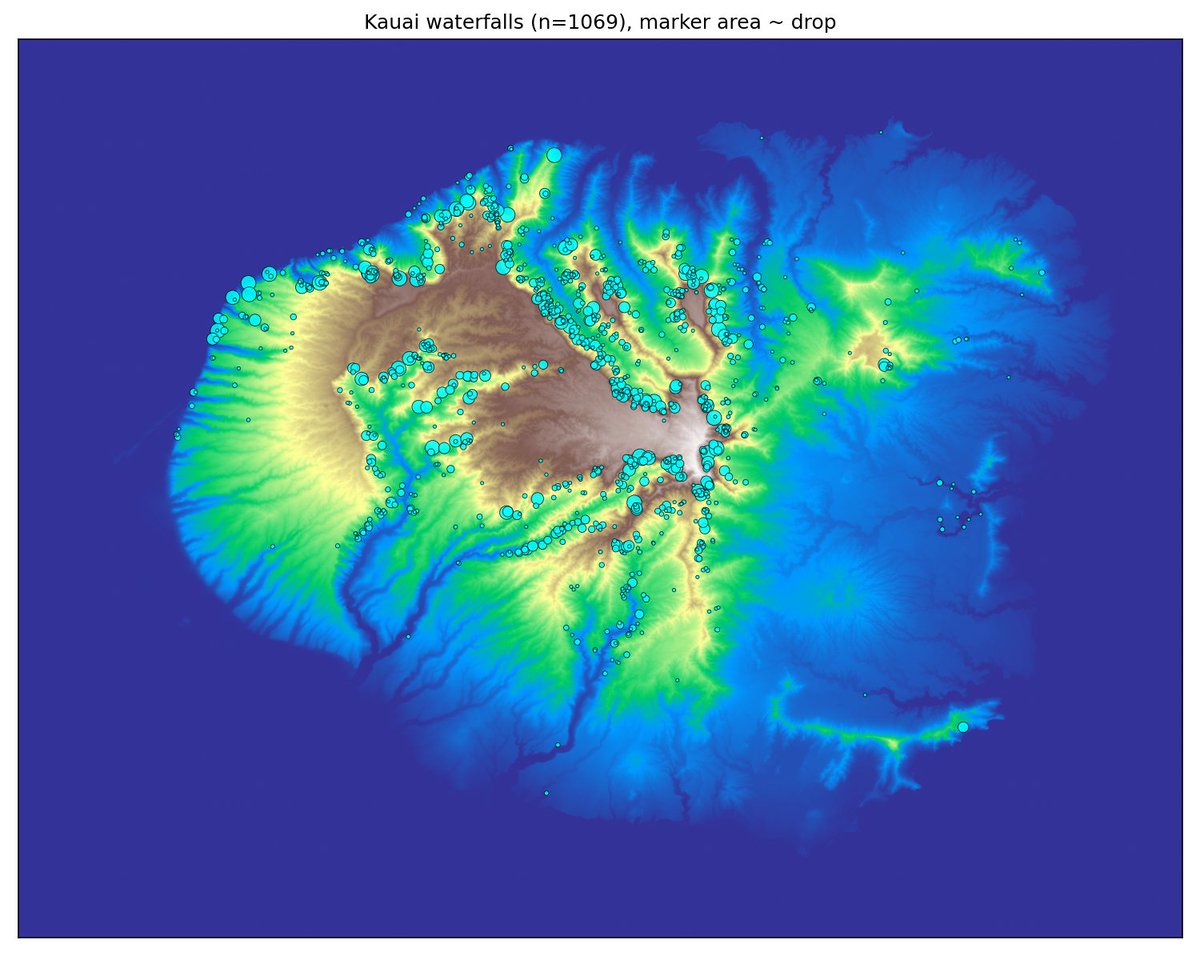
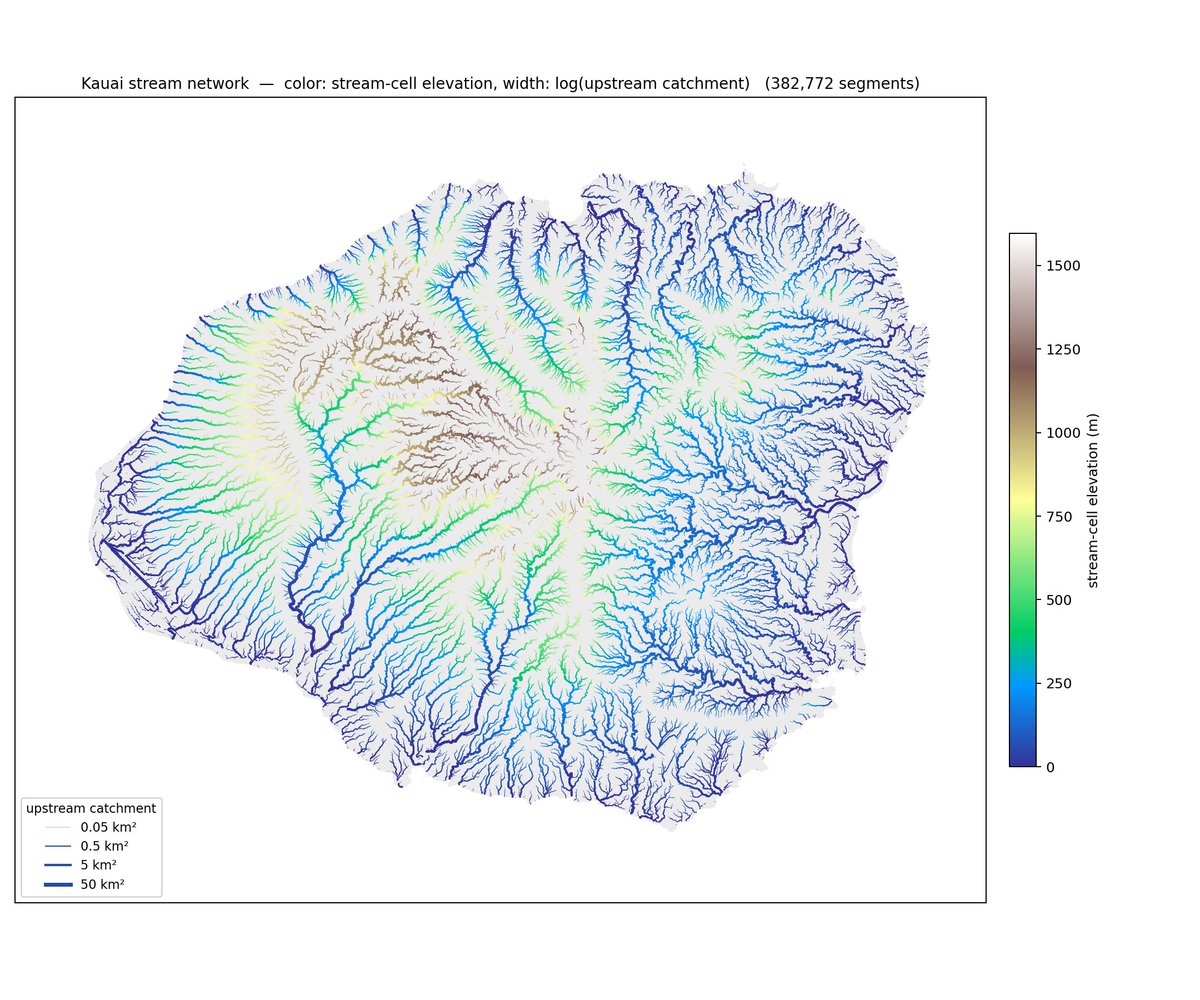
About 7 years ago I vacationed in Kauai and being a giant nerd, wondered how many waterfalls there are. I went home and wrote some neat Mathematica code and counted them all. Today, I wondered about that project, but not having access to the data, I simply prompted Claude Code to do it all from scratch. It took me about 2 minutes to kick this off, and it did much more comprehensive data analysis and graphing that I ever had time to bother with the first time.
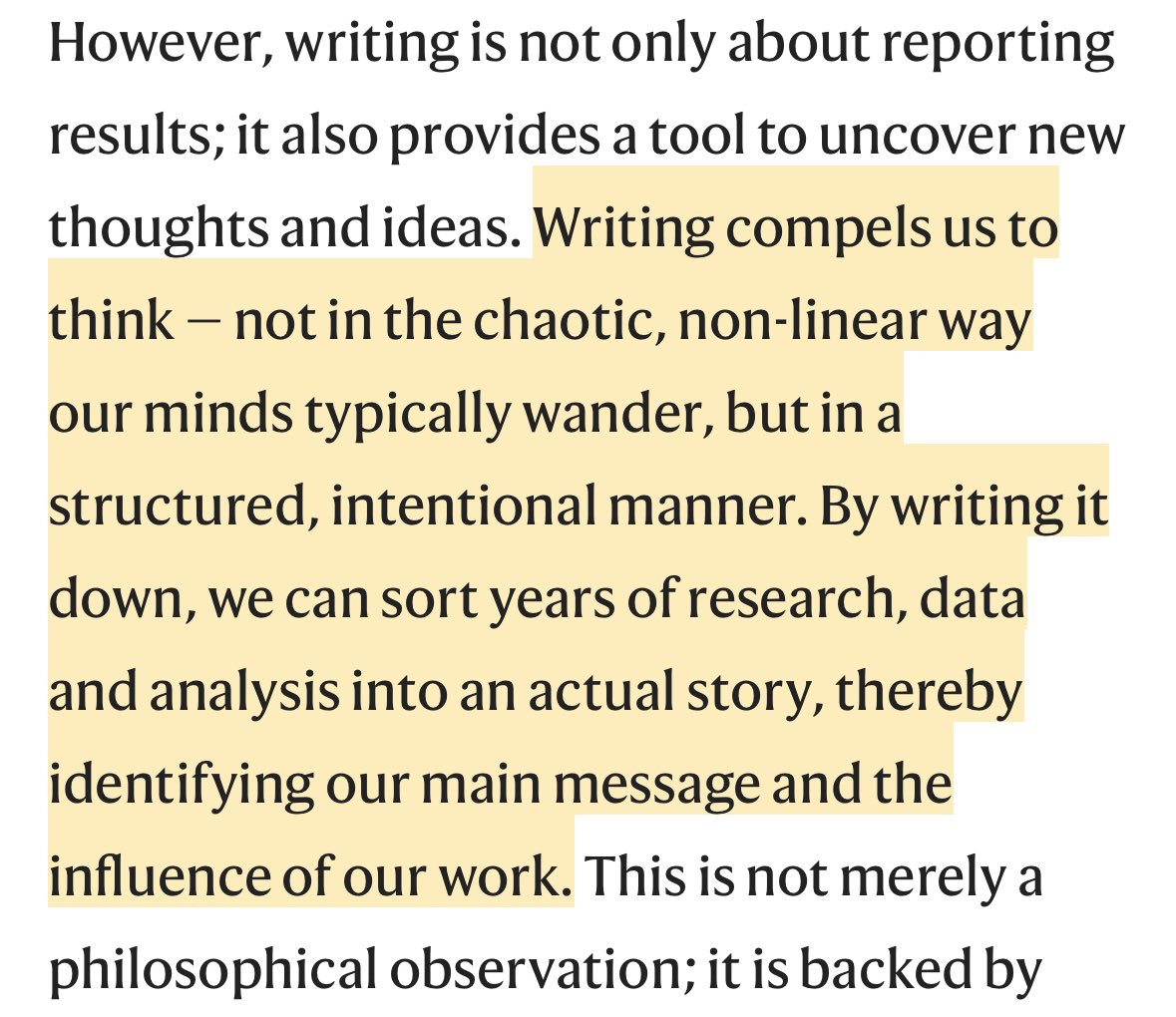
This is a worthwhile read if you are concerned about skills atrophy due to AI.
https://t.co/LGmWLLoS7t
I’m not 100% sure where I stand on this.
On the one hand, I see the value of “grinding through” a problem to learn it.
On the other hand, I think AI has the potential to move that “grind” up a level.
For example, I cannot compute a logistic regression by hand.
Nor can I manually compute the area of a complex shape like an isochrone.
However, each of those tasks is a single line of R code, and I have completed those tasks successfully in many projects.
Allowing me to tackle more complex problems.
AI has worked for me in a similar way.
Recently I completed a task that required generating 300+ vector tilesets on a tight deadline.
I used my tool freestiler for this task, and completed it successfully because of its Rust backend, allowing the pipeline to compute very quickly.
Does it matter that I did not personally write the Rust code, but rather supervised my LLM doing the coding?
In this case, it allowed me to focus on other challenges like data architecture and deploying the tiles (which AI as of yet cannot do on its own).
So while AI will likely lead to some erosion of skills -
It also enables us to tackle even harder problems.
Rescue aircraft have flown to remote parts of coastal Alaska after remnants of Typhoon Halong swamped communities and knocked homes off their foundations. Here's the latest: https://t.co/HJZ0tmWYfb
Blue puddles of water were visible on the East Antarctic ice shelf after periods of record melting that took place at the end of 2024. These melt ponds are areas where the snow has melted and pooled in low spots on the shelf.
Details: https://t.co/RydqboXKsv
“The rare storm brought more snow to New Orleans than has fallen in Anchorage, Alaska, since the start of meteorological winter.”
Truly historic event.
https://t.co/ydwYne3BSB
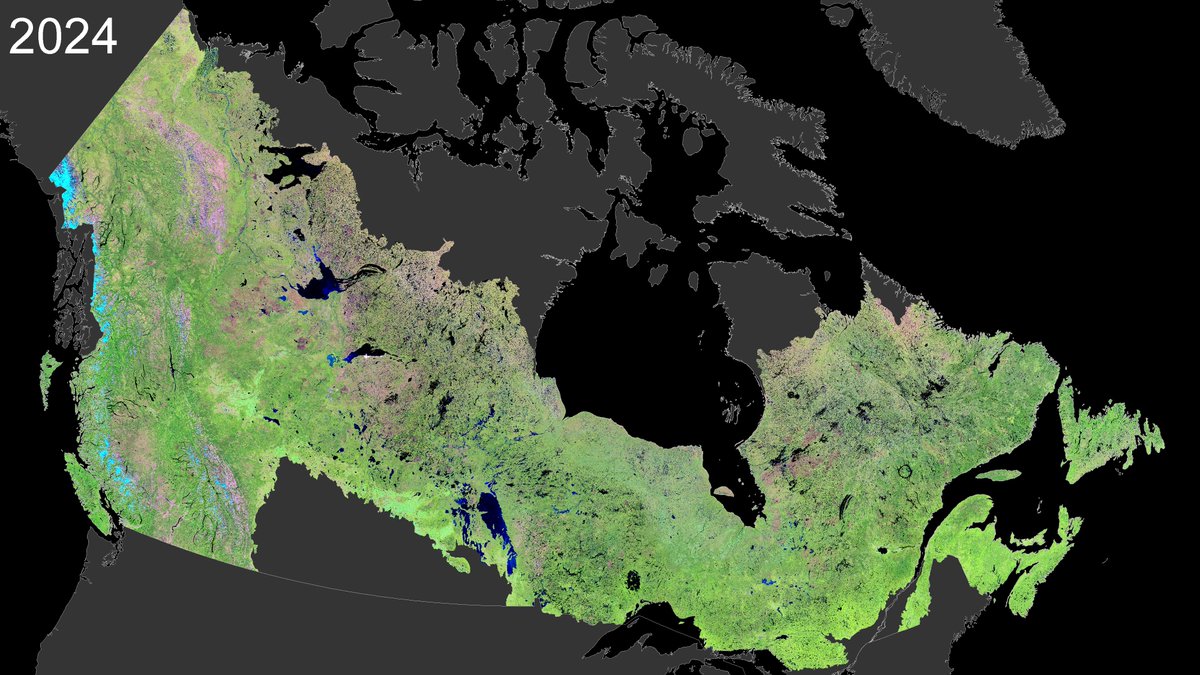
2024 mid-summer image composite of Canada's forests.🌲
Updating compositing methods and data sources. Now using 1000s of images per year of #opendata from Harmonized #Landsat#Sentinel2 (HLS). 30 m.
Data is key input to National Terrestrial Ecosystem Monitoring System (#NTEMS).🇨🇦
I’m very excited to finally share the results of a passion project that has been on my mind for nearly a decade. You can find the pre-print below, but what follows is the saga of how this project came to be: