@rohit_jsfreaky@priya_Thakur786 I needed to upgrade AMD microcode to work on my laptop, and a lot of problems with my bluetooth mouse..... 11 years using debian
Puedes montar tu propia IA en casa y sin pagar la nube cada mes.
La guía acaba de salir en GitHub y viene de una marca que nunca adivinarías: la que vende escritorios y sillas ergonómicas.
Se llama autonomous-computer, de Autonomous. Código abierto, licencia MIT.
La guía cubre todo, desde elegir las piezas hasta encender la máquina:
→ montaje paso a paso con fotos reales
→ ajustes para que las tarjetas gráficas rindan al máximo sin ralentizarse
→ lista de materiales completa, con precios y enlaces
→ versiones más accesibles con 2 o 4 tarjetas gráficas según el presupuesto
Pensada para investigadores, desarrolladores y cualquiera que quiera su propia IA en casa.
El repo 👇
Quantum computers will one day break the encryption protecting your messages. Apple is preparing for that now and they just made their work public.
Apple has open-sourced the post-quantum cryptography code from corecrypto, the encryption library running on over 2.5 billion Apple devices. It protects iMessage, VPNs, and HTTPS connections.
Here is why this matters.
Most encryption used today relies on math problems that regular computers find nearly impossible to solve. Quantum computers can solve those same problems with ease. They do not exist yet at the scale needed, but the threat is considered real enough that governments and major tech companies are already preparing.
The solution is post-quantum cryptography, a new generation of algorithms designed to resist quantum attacks. Apple has picked two of the NIST-standardised ones: ML-KEM and ML-DSA.
By open-sourcing the code and the mathematical proofs behind it, Apple is letting independent experts verify that there are no hidden flaws. This is a big deal because a single bug in corecrypto could compromise the security of every app and feature running on 2.5 billion devices.
And independent review already proved its value here. During formal verification, researchers found a flaw in an early implementation that standard testing would have missed entirely.
This is how security should work. Build it in public, let others verify it, fix what gets found.
Apple does not always get credit for open-source contributions. This one deserves it.
The company that once called Linux a "cancer" is now the one shipping its core tools to Windows users.
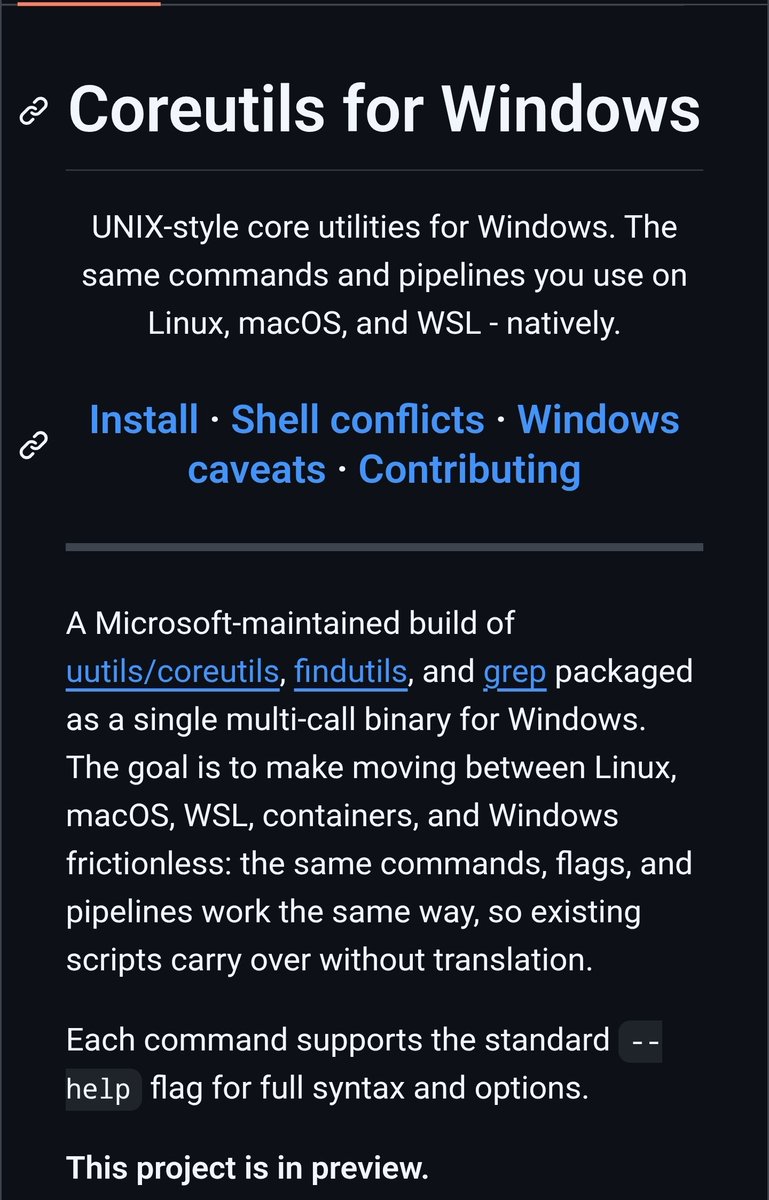
Microsoft just shipped GNU coreutils for Windows.
ls. grep. cat. cp. find. The same commands that have powered Unix and Linux systems for over 50 years are now available natively on Windows, maintained by Microsoft itself.
For context: GNU coreutils are the foundational utilities that every Linux and macOS system relies on for basic file operations, text processing, and shell scripting. They are the bedrock of Unix computing. Tens of millions of scripts, pipelines, and workflows run on them every day.
And now Microsoft is shipping and maintaining a build of them for Windows.
This is not WSL. You do not need a Linux subsystem running in the background. These tools run natively on Windows, with the exact same flags and behavior as on Linux. Your existing scripts just work.
Microsoft's goal: make moving between Linux, macOS, WSL, containers, and Windows completely frictionless. Write a script once. Run it anywhere.
The package bundles uutils/coreutils (a modern Rust rewrite of GNU coreutils), findutils, and grep into a single multi-call binary. Every command supports standard flags. Same commands, same pipelines, no translation needed.
The project is still in preview. But the direction is unmistakable.
The legendary Ian Murdock
• Founded Debian in 1993 at age 20, while a Purdue undergrad
• Name "Debian" = Debra (his girlfriend) + Ian — she later became his wife
• Debian became the base for Ubuntu, Linux Mint, Raspberry Pi OS, hundreds of distros, arguably the most influential Linux project ever
• Worked at Sun Microsystems on Solaris
• Became Chief Operating System officer at Docker, right at the peak of container adoption
• Died December 28, 2015, age 42, officially ruled suicide
• His final hours: a series of distressed tweets describing a violent encounter with San Francisco police (claimed they beat him during an arrest), followed by increasingly erratic posts, then silence
• His Twitter account was deleted by the family shortly after; the tweets are preserved in archives
Debian is still going strong, 30+ years later, without him but his contributions can never be forgotten.
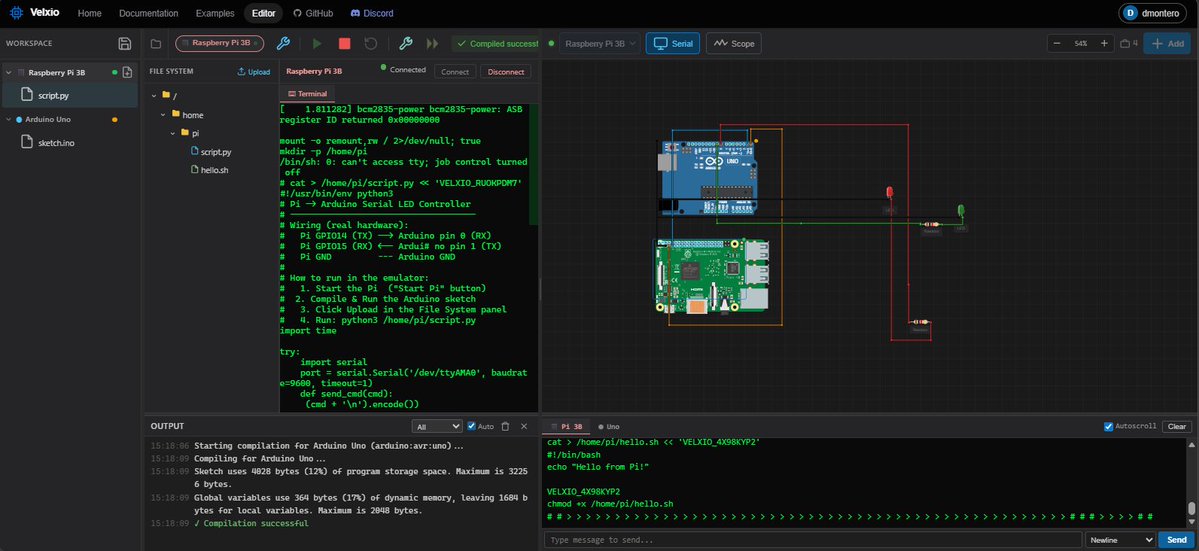
Programar un Arduino sin Arduino ya es posible.
Velxio es un emulador en el navegador para Arduino junto con ESP32 y Raspberry Pi 3.
19 placas, 5 arquitecturas de CPU, 48 componentes interactivos.
Open source. Sin instalar nada.
🔗 https://t.co/7MJp20KNjP
Wait, what. This DIY ThinkPad 701c throwback is powered by a Framework Laptop 13 Mainboard! Maglev-Rabbit is working in the open and sharing source: https://t.co/ceib9V3bQx