Él es K9 Valor, salvó la vida de 47 soldados, sobrevivió a un primer terrorista suicida y mató a 3 más, diente contra cuchillo, luego se posicionó entre una explosión y su controlador.
La mitad de su cara quedó destrozada, perdió su ojo y oreja izquierda. Lo llevaron a Alemania donde parcialmente le reconstruyeron la mandíbula.
El Pentágono le otorgó La medalla de honor del congreso y un aplauso y ovación de más de 8 minutos. Un verdadero héroe.
Mitochondria respiration: "Impact of physical activity on physical function, mitochondrial energetics, ROS production, and Ca2+ handling across the adult lifespan in men." https://t.co/rV7HoWRHXX @brunovellas@JuanluSanchez5@m_aubertin@mikelizquierdo_
@MikelEscocia@cfcanet@teledeporte Aún así ingero ni tan mal, pero la periodista que le suele acompañar en las sesiones de tarde de los campeonatos, no se entera de nada
Must read for anyone working with rodents, including those studying aging:
“Control” laboratory rodents are metabolically morbid: Why it matters https://t.co/T6No1KyB7a
Muscle power—your ability to generate force quickly—is one of the strongest predictors of longevity, even more so than being lean. This is sometimes referred to as the 'fat but powerful' paradox.
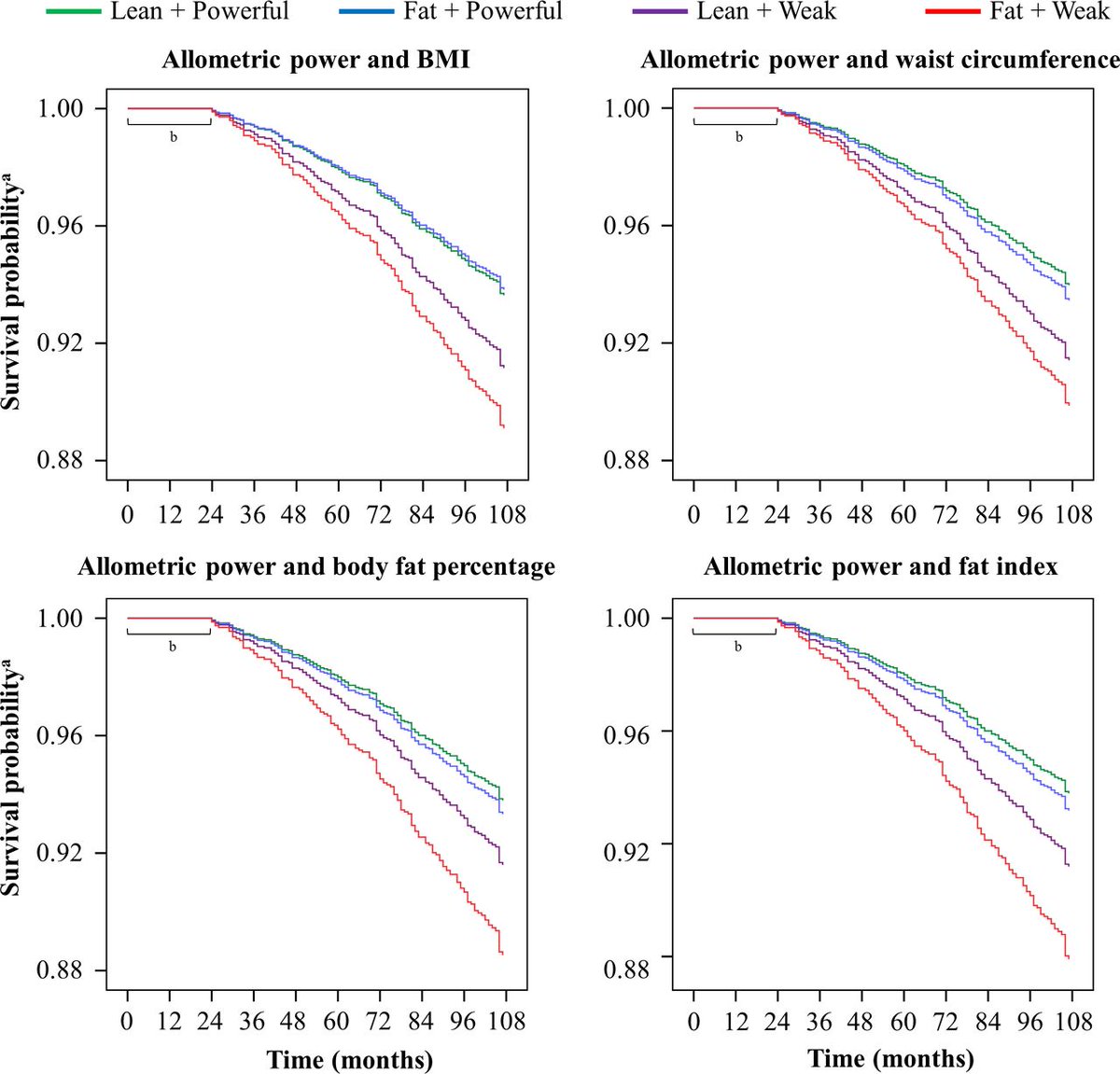
In a recent study, older adults with normal and high levels of relative muscle power had better 9-year survival than older adults with low muscle power.
Muscle power was even protective against death in older adults with high levels of body fatness measured using BMI and waist circumference.
Being fat and powerful reduced mortality just as much as being lean and powerful—by 43–45%.
Being lean and weak, however, provided no survival advantage compared to being fat and weak.
Interestingly, when body fatness was measured using body fat percentage or the fat index (body fat % normalized to height), the protective effect of muscle power was mitigated—only lean and powerful participants experienced a mortality benefit.
This highlights the continued importance of minimizing excess adiposity for long-term health, even when physical fitness is optimized.
The takeaway here isn’t to downplay the risks of obesity for longevity—maintaining a healthy weight is still critical. But fitness, particularly muscle power, deserves more attention as a key lever we can pull to improve both lifespan and healthspan. It’s one of the most actionable metrics to track and improve.
If you want to know more about muscle power for longevity and how to improve it, I’ll cover it in this week’s newsletter.
Study - PMID: 38523229
Why do hybrids and endurance profiles thrive from critical speed work?
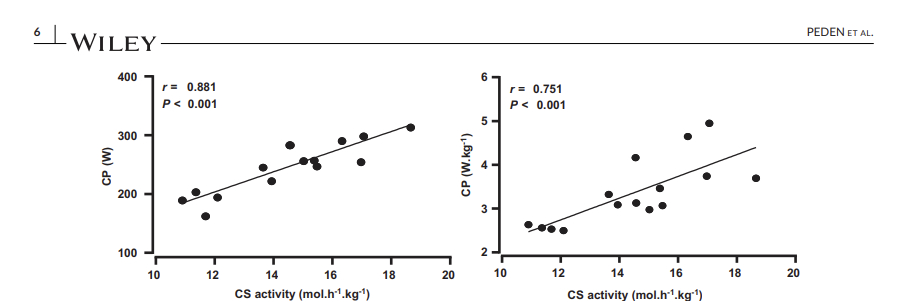
New study shows large correlation between critical power and mitochondrial density.
Hybrids and endurance profiles have larger slow twitch muscle %.
And more mitochondria increase the capacity for both oxygen use,
And buffering from high intensity performance.
@jake_tuura I was also recommended, as I tried to recover my tendinopathy with Percutaneous Electrolysis, and didn't work.
because I listened to your recommendations, I haven't used PRP.
right now, I'm trying to improve my tendinopathy by improving my strength with Hypertrophy clusters 💪