Microsoft has released an open-source tool that helps teams learn ontology design before choosing a knowledge graph platform.
It is called Ontology Playground.
The project is a fully static React app, which means it does not need a backend, account system, database, or hosted service to run.
The goal is simple:
Help people understand what goes inside a graph before they buy or build the graph database.
Ontology Playground includes six pre-built domain ontologies:
→ Retail
→ Healthcare
→ Finance
→ Manufacturing
→ E-Commerce
→ Education
Each one gives users a starting point for understanding entities, relationships, properties, and how domain knowledge gets structured.
The app also includes a live visual designer, structured learning paths, hands-on labs, and RDF/XML export for Fabric IQ.
Because it is static, it can be deployed almost anywhere.
No backend.
No vendor lock-in.
No platform commitment upfront.
This matters because many teams jump into knowledge graphs too early.
They focus on the database first.
But the harder question is usually:
What should the graph actually know?
Ontology Playground teaches that layer first.
Here’s an Apple secret:
Success comes from culture, not technology.
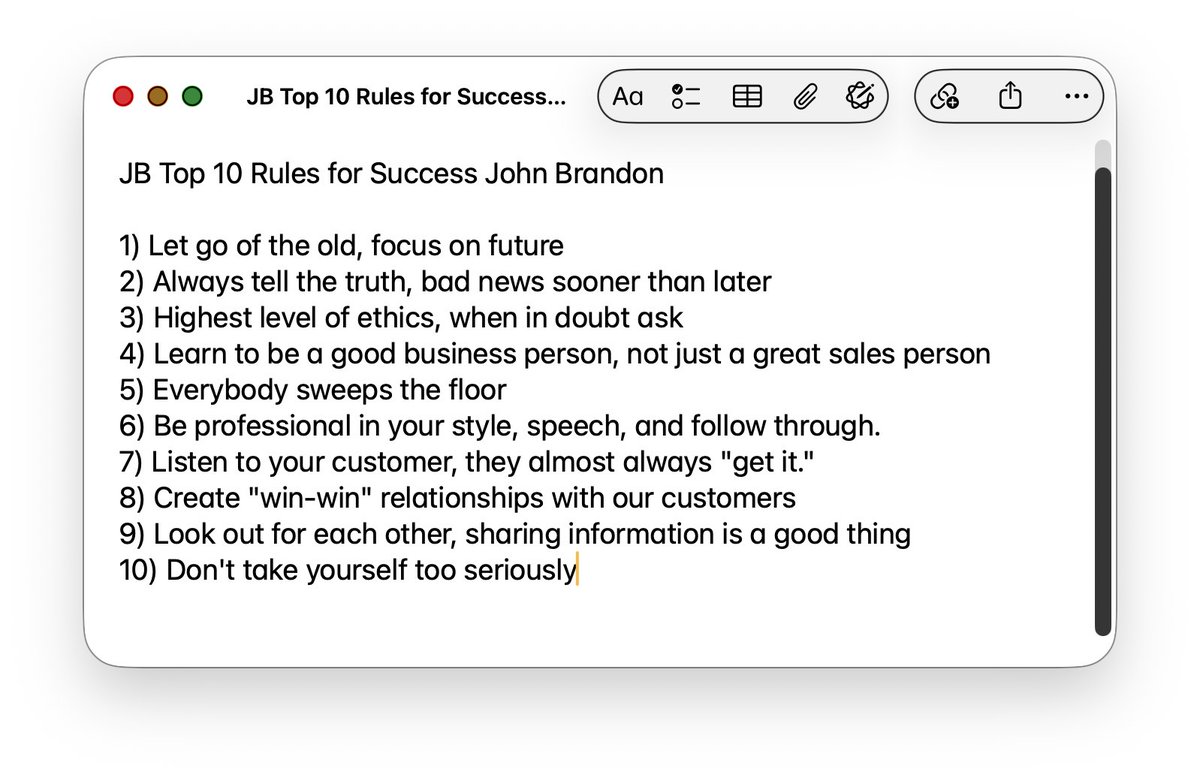
Like many at Apple, I worked for many years under John Brandon, our longtime head of sales. He had his “Top Ten Rules for Success” which I carried around and lived by.
It’s easy to spot someone from Brandon’s team by how they collaborate. I tried to be one of them. I mopped the floor (literally at times), I shared everything I knew without gatekeeping, I always assumed the customer knew their business.
I think about AI the same way. Most AI advice right now is for builders. Almost nobody is helping the marketers, sales engineers, and execs who actually have to put AI in front of customers. That’s the gap I work in.
I left Apple last month after 22 years. After some thinking and a lot of conversations, I’m now doing what I did inside Apple, but for other organizations: AI positioning, helping businesses understand AI, and creating Apple-level presentations and content.
I think you are misunderstanding what this tech demo actually is, but I will engage with what I think your gripe is — AI tooling trivializing the skillsets of programmers, artists, and designers.
My first games involved hand assembling machine code and turning graph paper characters into hex digits. Software progress has made that work as irrelevant as chariot wheel maintenance.
Building power tools is central to all the progress in computers.
Game engines have radically expanded the range of people involved in game dev, even as they deemphasized the importance of much of my beloved system engineering.
AI tools will allow the best to reach even greater heights, while enabling smaller teams to accomplish more, and bring in some completely new creator demographics.
Yes, we will get to a world where you can get an interactive game (or novel, or movie) out of a prompt, but there will be far better exemplars of the medium still created by dedicated teams of passionate developers.
The world will be vastly wealthier in terms of the content available at any given cost.
Will there be more or less game developer jobs? That is an open question. It could go the way of farming, where labor saving technology allow a tiny fraction of the previous workforce to satisfy everyone, or it could be like social media, where creative entrepreneurship has flourished at many different scales. Regardless, “don’t use power tools because they take people’s jobs” is not a winning strategy.
In a democracy, elections can be cause for disappointment and even anger, but they shouldn’t be an occasion for despair. The worst thing about elections is losing, but the best thing about losing is that you live to fight another day — through the ballot box in the next election.
@HelenBranswell@NIH@sabinvaccine This is what the response to Covid -should- have been. Had not a coronavirus 1 vaccine been “spiked”, had not a readiness plan been ditched and had not the CDC been proven completely ineffectual, and had international cooperation been a thing.
Sports betting is starting to hit Americans' portfolios
Some findings:
• For every $1 bet, household investments drop $2
• Investments dropped ~14% in states w/sports betting
• Low income homes are putting more income into bets
We promise the Jets ML won't save you
A final decision has not been made, but I now believe it is more likely than not that Starliner's crew returns on Dragon. I asked NASA about this and their reply was not a denial, but rather, "we're evaluating all options." Story:
https://t.co/MazPtCjyIO