Firmware has secrets. Time to dig in!
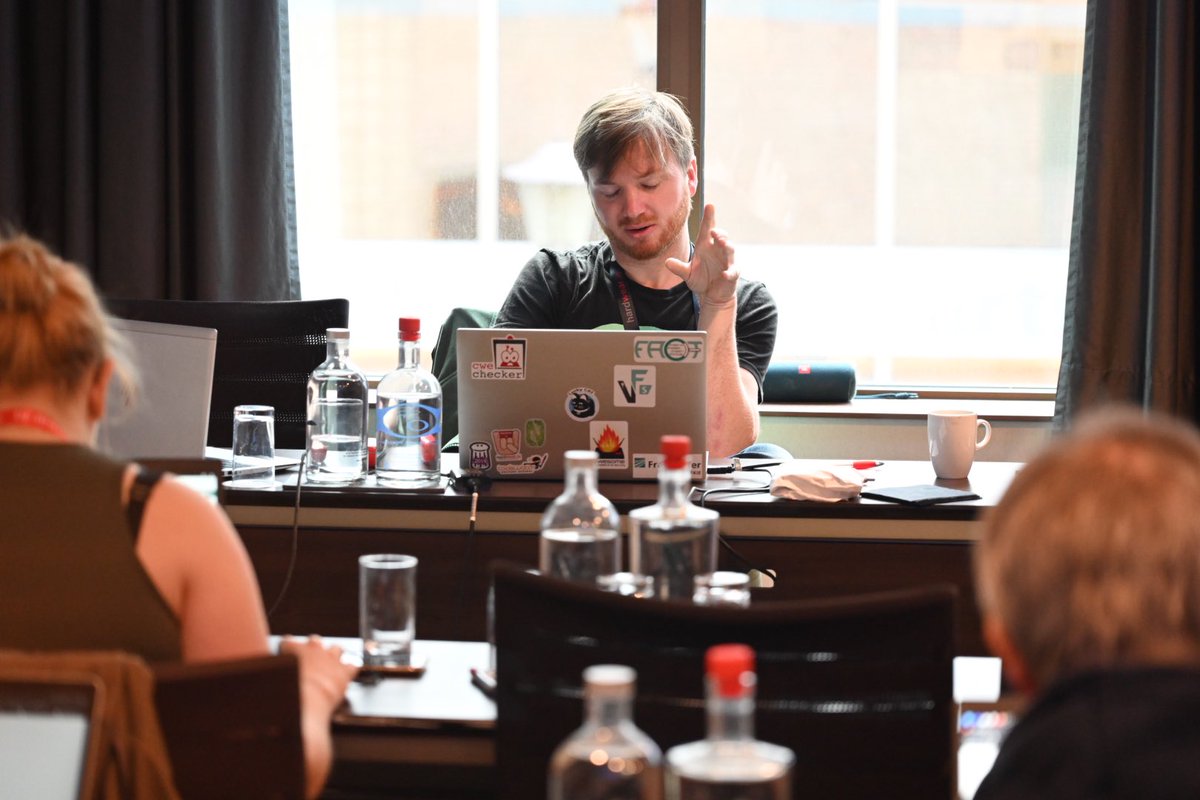
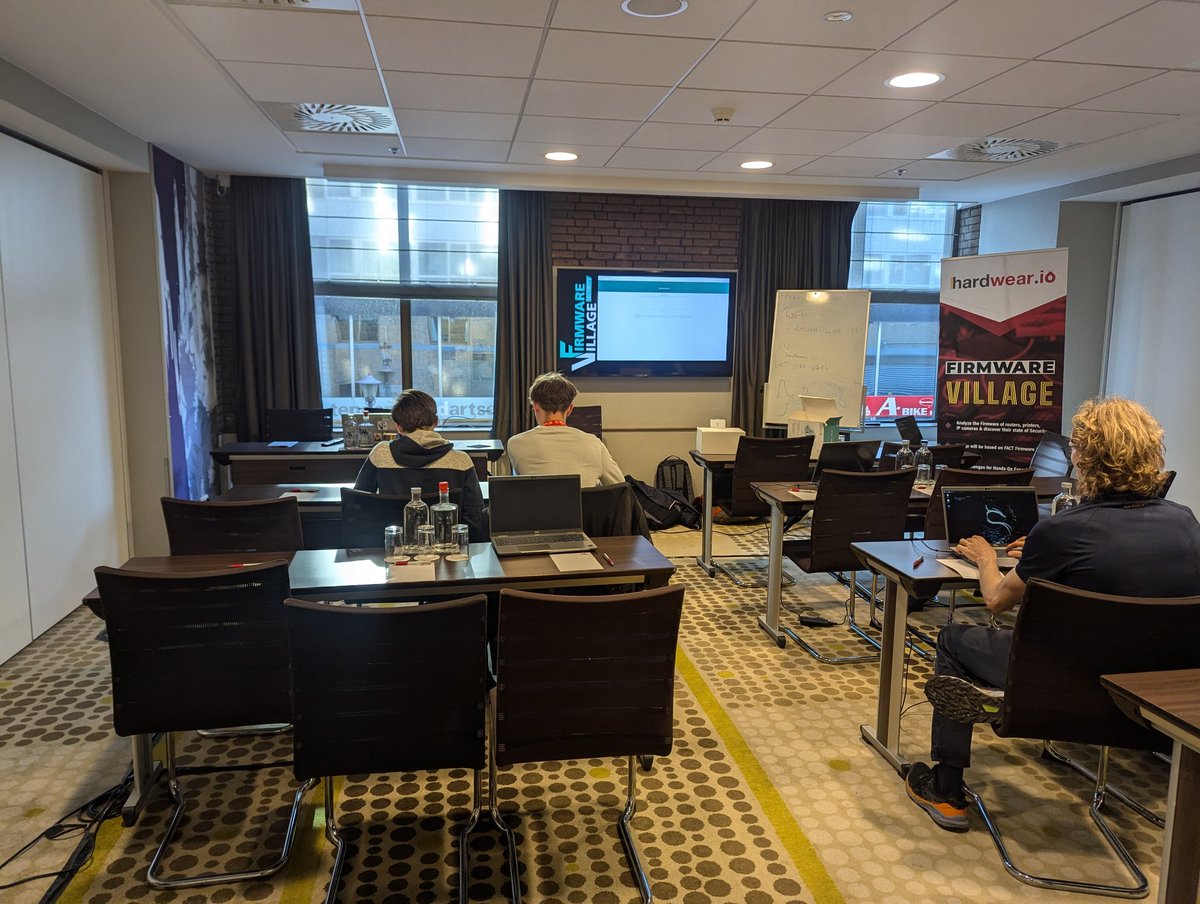
Join @jovomdorp & Veit Eysholdt at the Firmware Security Village during https://t.co/g3vGGlphWi NL 2026, for hands-on firmware analysis and research.
Register now: https://t.co/nMDJ48wiII
#HardwearioNL2026#FirmwareSecurity
New blog post: How to use BoringSecretHunter to automate byte-pattern extraction for hooking BoringSSL with friTap on Android for TLS key extraction. Read more: https://t.co/AG26TXqnQV
From building Malpedia to tracking malware families at scale, Daniel Plohmann @push_pnx is shaping how we fight cyber threats.
https://t.co/2JqepWPJVI
In this Hunt interview, he shares insights from his research at Fraunhofer FKIE and how music fuels his creativity in security.
Read the full conversation and see how Daniel connects technical expertise with artistic passion ⬇️
#CyberSecurity #ThreatIntelligence #CyberThreats
This week, @jp_bennett chatted Linux security with @adulau and Quentin Jérôme! It's Kunai and CIRCL talking threat detection, why your security solution should be using eBPF and more! See the whole thing at https://t.co/hKz9OPI9HO
2-day physical Hackathon, held in Luxembourg on April 8th and 9th, 2025 (9:00-17:00), focuses on the development of free and open-source software for cybersecurity. Registration is still open.
#hackathon#opensource#CyberSecurity
https://t.co/Bhy0xURNmN
We have a PhD position opening over at the University of Birmingham! If you are interested in embedded systems, low-level hacking, telco security or trusted execution environments, feel free to reach out. Happy to discuss. Current Application deadline: Dec 5th.
🛠️ ✨ Our Firmware Security Village offers a unique opportunity to explore firmware security with hands-on challenges and the FACT analysis tool. Are you ready to test your skills?
👉 https://t.co/wNb6KRmGHR
@jovomdorp & Valentin Obst at #hw_ioNL2024#firmware#security#ctf
My newest blog post showcasing the Bounty Hunter Plugin was just released on the official @MITREcaldera blog! Its main contribution is intelligent #AdversaryEmulation with complete, realistic attack chains. Give it a read!
#redteam#cybersecurity
https://t.co/YdosLu7m4v
v0.9 is out today! Users get experimental support for the analysis of LKMs and a new check for CWE252. Devs can use the new taint analysis abstractions to write powerful analyses in even less LOC, and benchmark them with our new microbenchmarking support.
We received a Distinguished Artifact Award for our #usesec24 paper "You Cannot Escape Me: Detecting Evasions of SIEM Rules in Enterprise Networks"! 😊
https://t.co/XaudGK1Bh7
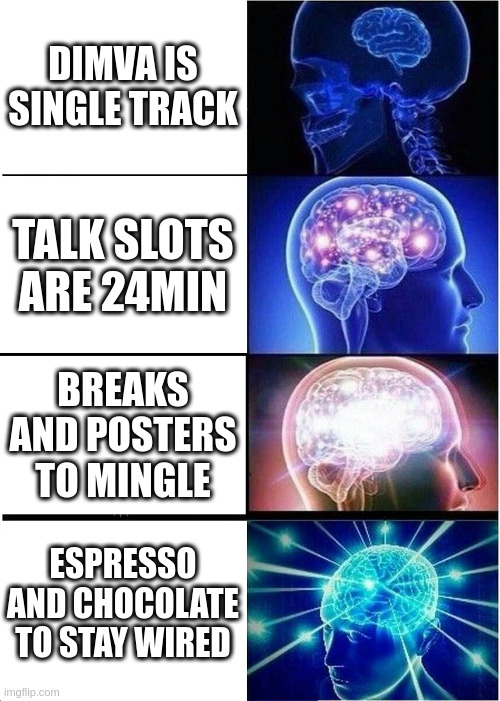
Tired of 5min talks? Consider @DIMVAConf! #DIMVA24 is single track, talk slots are 24min (allowing substantial detail) with lots of space to mingle and discuss.
Ticket pre-sales for DEATHCon 2024 are now live! If you attended last year, please see the #announcements channel in Slack. If you aren't still on Slack, DM me and I'll get you the info!
In a recent discussion on SigmaHQ. L015H4CK (Louis) brought up a topic that is often forgotten or ignored. Which is the idea that PowerShell ScriptBlock logs can and will be split into different "blocks" if the script is large enough (i.e the size of one block exceeds the size of an event log msg size).
This opens up an interesting area of bypass for powershell detections that are string / scrtipblock based that are applied only on a single block at a time.
In theory an attacker can pad a malicious script with enough garbage data at the start so that every "malicious" string is located near the end of the block. Which in turns will make the EventLog/PowerShell provider split the string into a different block which will break the detection.
This piece by Louis highlights this concept a bit more https://t.co/a5u9IcvHo5 give it a read.