Subst. m. 1) ein unreifer Mensch; ein unbedacht handelnder, naseweiser Jüngling ohne Erfahrung; auch mit Bezug auf einen grünschnäbligen, überheblichen Autor
Something Nagel observes in the interview is that academic philosophy of mind has, instead of better informing public opinion on this issue, only served to lend institutional credence to the fantastic, though broadly unfounded, claims of AI firms and tech CEOs.
Anthropic, as Nagel remarks, is the worst of the bunch because it takes conscious steps to humanize its proprietary model with all sorts of familiar spontaneities as to better mimic human self-consciousness. Researchers, counseled by AI ethicists, are creating the impression of the thing that they believe to be the case because they take the human mind to be scarcely different from a really-complex computer.
Much of the confusion surrounding consciousness and AI has to do with the misuse of metaphor.
A spectre is haunting the United States - the spectre of Marx. All the billionaires have entered into a Holy Alliance to exorcise this specter. But its spirit not only lives on. Only now do we begin to understand its meaning and feel its power.
Das passiert, wenn die Forschung zu – und kommerzielle Entwicklung von – „KI“ sich von philosophischer Prüfung von Prämissen abschottet: Fehlschlüsse auf allen Ebenen, unehrliche Werbung mit vermeintlich philosophisch bedeutsamen Entwicklungen.
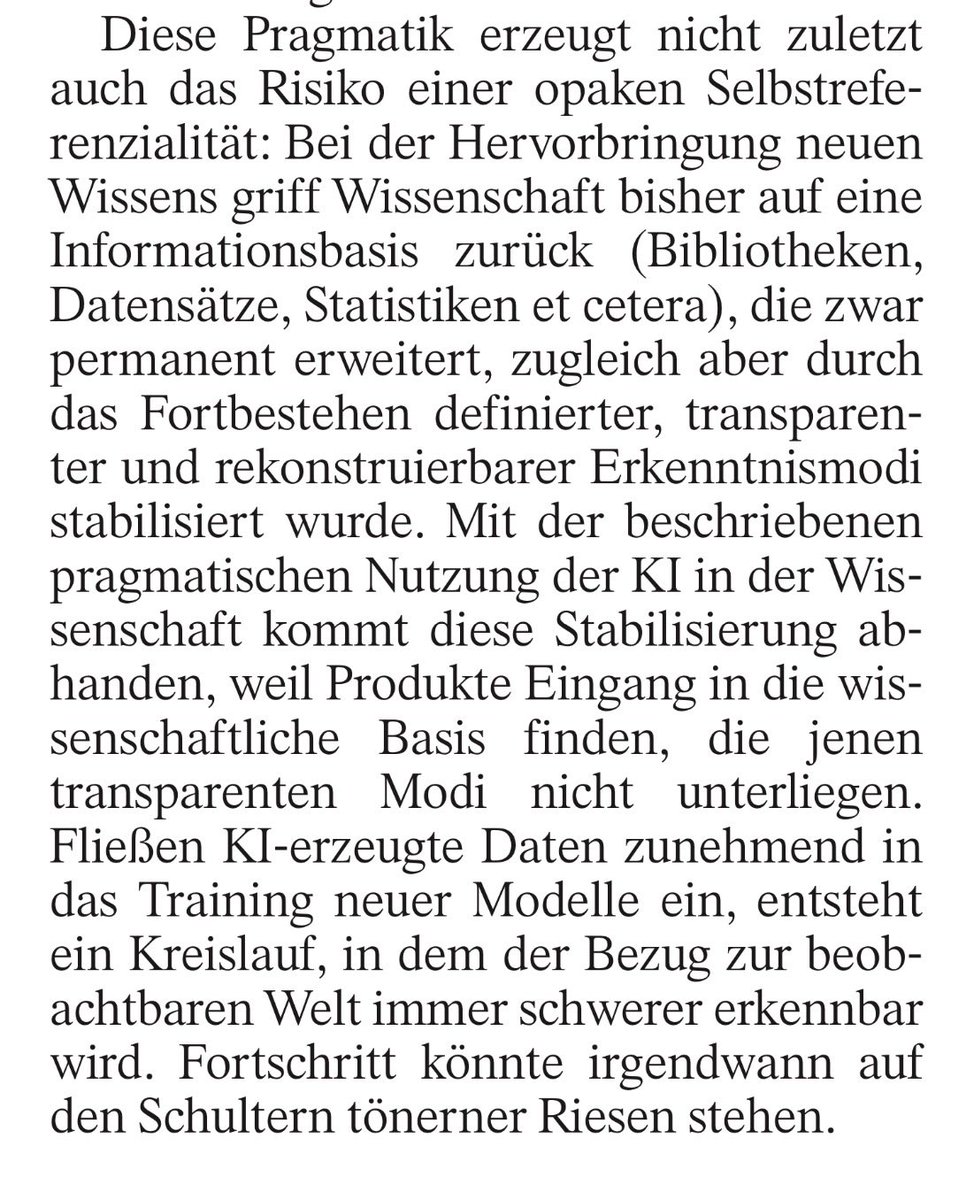
Wolfgang Rohe und Johannes Meier in der morgigen Ausgabe darüber, zu welchen Verwerfungen Künstliche Intelligenz, als Werkzeug der Trennung von Verstehen und Funktionieren, in der Wissenschaft führen wird.
6/
Ha-Joon Chang and I tested this on 2,425 economists. Switch a mainstream name for a less-/non-mainstream one and agreement with identical statements drops significantly, even though 82% of them said they judge statements on content alone. https://t.co/yEV4nilNtR
Außerdem, auf der morgigen Sachbuchseite: @replayNIKO über den Untergang der britischen und chinesischen Arbeiterklasse sowie Jens Hacke über den profanen Gründungsmoment der Bundesrepublik.
Abdul El-Sayed: “If it is your sense of your discomfort and or fear that has to keep me quiet while I watch 70,000 people get killed, their homes annihilated, their hospitals destroyed, their universities decimated, and I can’t critique that then I think what you’re telling me is that their humanity matters less than yours.”
Nagel: “There’s no mental life there in the ordinary sense. It’s not a mind. It’s not somebody that we have to care about. It’s a machine. Here are some of the smartest people on the planet being completely idiotic”
“Is tax even the right tool?”
Creating a wealth tax would be “immensely difficult”, radical accountant @RichardJMurphy tells @AaronBastani on Downstream.
He argues that the left needs to think more broadly about what it’s trying to achieve – and how best to get there.
If we’re trying to tackle money being transferred into tax havens, then we could tax money leaving the UK. If we’re trying to stop billionaires hoarding resources, then we could challenge how shares are valued.
“Stop thinking in your silo,” he asserts.
Watch the full episode of Downstream on our YouTube channel.
@maticulis Sure, but this is my point: anti‐AI humanists, a group I count myself in, are focused on nit‐picking temporary technical shortcomings like the voice audio being bad. Doing so is defending territory we will eventually lose as the tech improves. Better to defend the high ground.
French Presidential Candidate Jean-Luc Mélenchon:
Life itself, its direction and its force, are constantly pushing us to become one single people, increasingly united, with all our peculiarities.
Being binational is not being a little bit of each. It is something else. It is creole. You understand? It mixes things together and produces unexpected things.