It’s going to be interesting to see just how much ~zeroing out drug discovery costs and timelines impacts development timelines.
My prediction is that this has a sub 20% impact on timelines and costs, in part because we’re about to flood the zone with these types of candidates and the industry will remain capacity constrained on 1) CDMO throughput and 2) clinical execution.
Regulatory review and engagement matters but will remain roughly constant in this paradigm barring major changes.
Note that this mostly applies to biologics hitting mostly known targets and pathways.
Recent advancements in one-shot AI protein / antibody development by Chai, Nabla, AI Proteins, Generate, and a few others are accelerating the *main* theme in biotech:
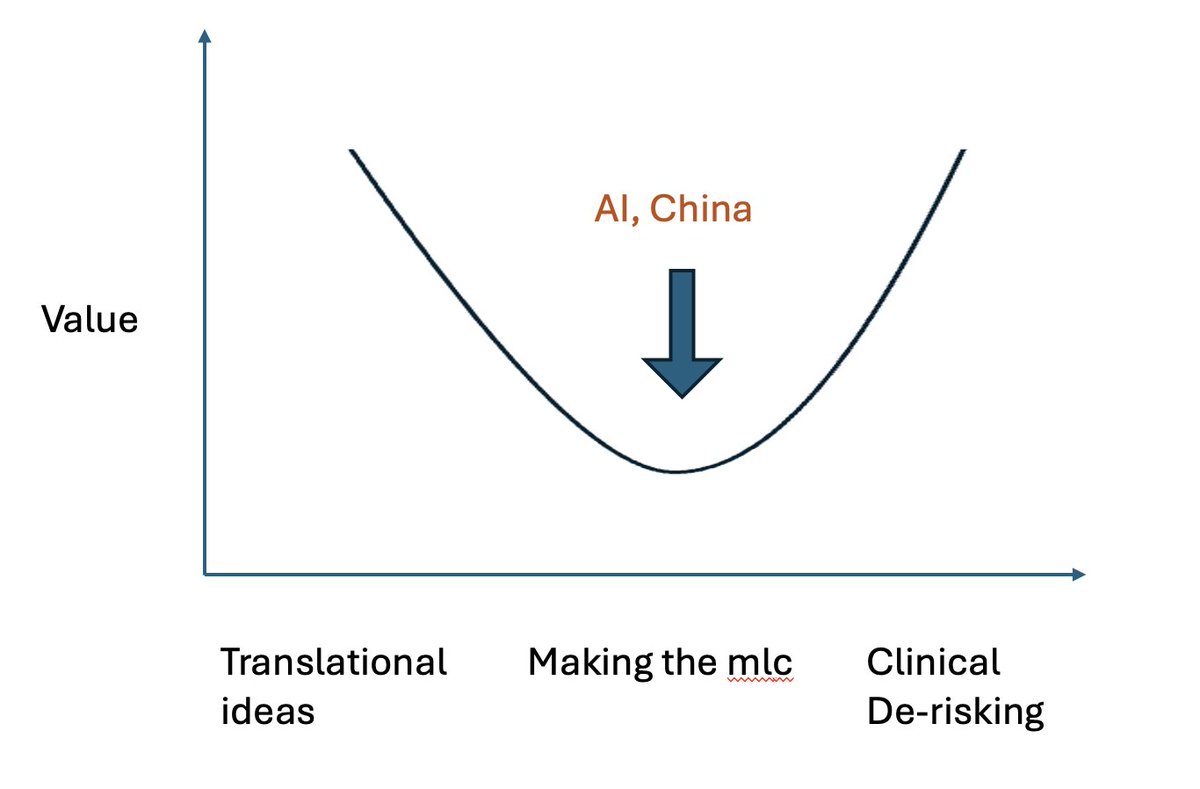
Value of building the molecule is going down. The value of novel targets, novel translational ideas, AND also the value of clinical execution is going UP
Here's where the value graph is moving towards:
The twin forces of AI and China are quickly driving down price of mlc dev across many modalities:
For AI - mainly Ab right now, emerging for genetic medicines, small mlc, ADCs, cell therapy;
For China - Abs, cell and gene therapy, small mlc, and soon genetic medicines
Having a "best in class" mlc is no longer enough - many tech platforms will soon offer you a mlc priced on metered compute (getting cheaper) and China CROs / biotechs will continue to eat the world with (over)capacity (continued involution).
To make a valuable drug, you must differentiate on either:
a) Novel translational ideas.
Novel targets, novel mechanisms, but not just that - connecting targets with diseases; novel application of certain targets in new disease settings, new intuition on which patient pops have widest therapeutic index for a drug, etc
OR
b) Clinical execution.
Determining the appropriate endpoints in a trial. Recruiting the right patients. Appropriate relationships with the right PIs / clinical sites. Ability to finance registrational studies in US markets ($10s to 100s of Ms)
Either be a translational target discovery engine / tech platform that unlocks new modalities (which unlocks new translational hypotheses) OR get a team of grizzled clin dev / CMO vets and go raise $X00M+ to validate a clinical hypothesis
Living in the middle (ie being "full stack") is dangerous work (at least for a startup)
[1/3] Men's testosterone levels did not plummet over the past decade like many wellness podcasts would have you believe... we just switched the measurement assay from immunoassay to mass spectrometry
When we switched assays, we observed a ~100% increase in self-reported healthy men with low testosterone. The threshold needed to be updated when the assay changed.
Arun AS, Durant TJS, El-Khoury JM, Krumholz HM. Re-evaluating the threshold for low total testosterone. Clinical Chemistry 2025.
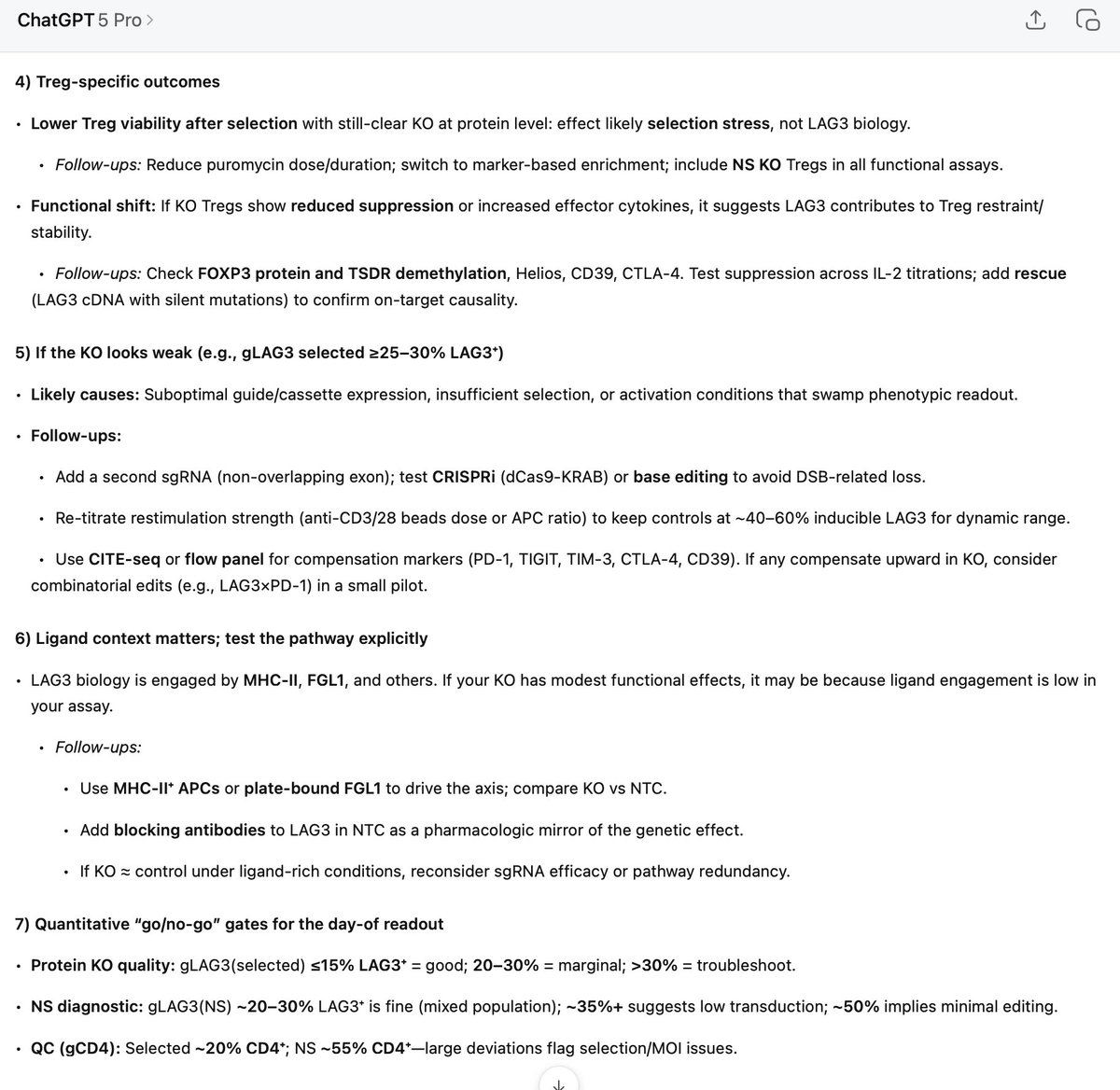
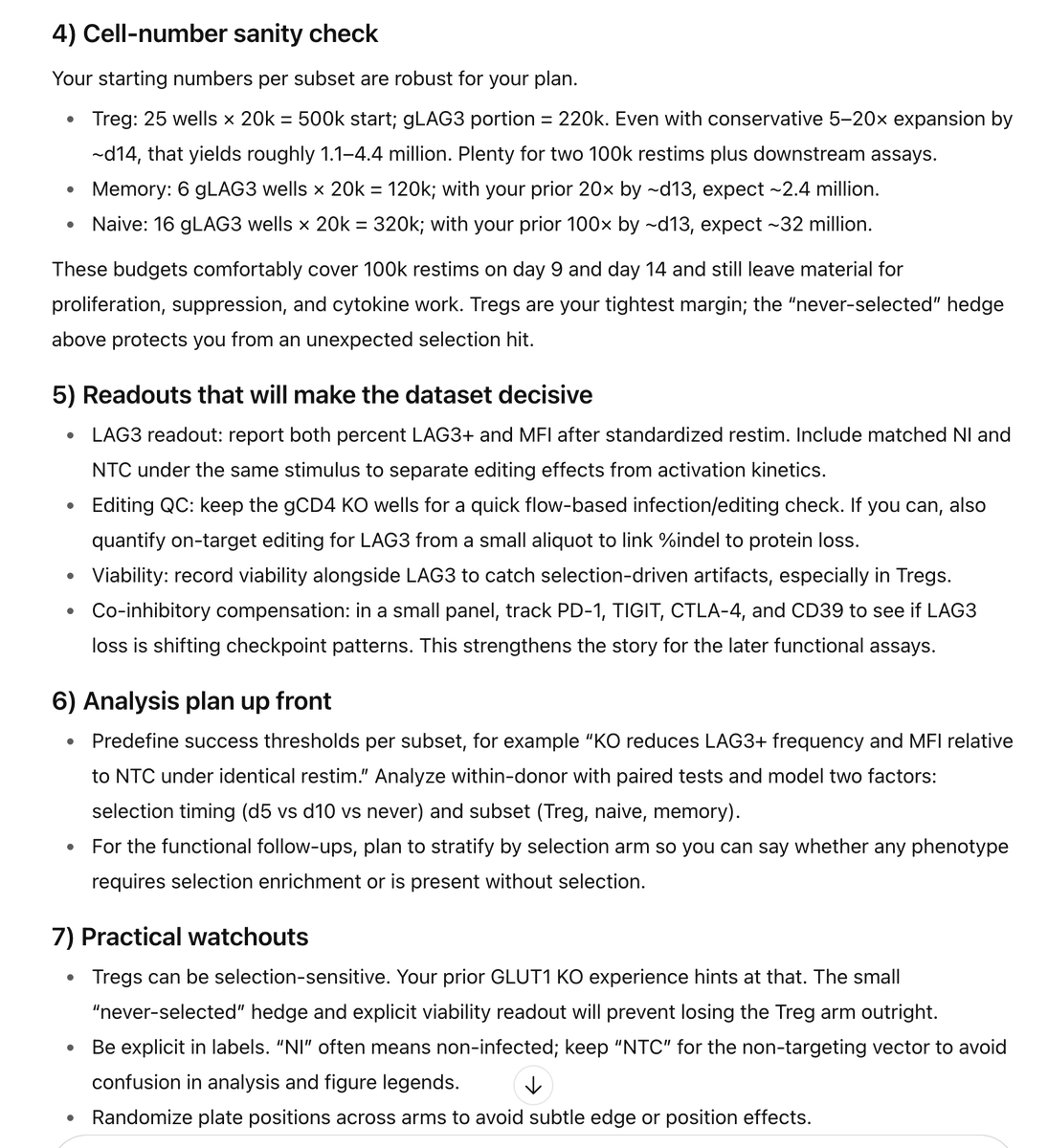
Here is another incredible GPT-5 Pro example that is well above biomedical PhD level and how it advances science:
I was reviewing some of our old data and noticed an email from one of my PhD students sent more than eight years ago, outlining a highly complex immune cell experiment that would run for several weeks and asking me to make corrections. I copied and pasted her experimental plan into GPT-5 Pro and asked for suggestions. Its response was significantly better than what I had sent my student back then!
Not only did it figure out the exact purpose of the experiment and make all the corrections I had made in extreme detail, but it also suggested a couple of changes that would have made the output easier to interpret and made the experiment better, which I had unfortunately missed. It also created a detailed spreadsheet with a 96-well plate layout for cell seeding and different conditions. We usually design these to avoid errors, and this one was perfectly organized to make setup easier.
Then I asked GPT-5 Pro to run various outcome scenarios, interpret the results accordingly, and propose new experiments. Again, its interpretations and suggestions were simply outstanding, including a couple of ideas we had missed!
Incredibly, GPT-5 Pro would have been as good as, if not better than, me at making these corrections, interpretations, analyses, and follow-up experiment suggestions! The experiment would also have yielded better results thanks to more precise planning, and that foresight would have enabled quicker planning of the next experiments!
I don’t care what people say about the limits of current AI models or their nonsensical criticisms; they have no freaking idea how transformative its impact on the scientific process will be! It will advance and accelerate science far beyond what anyone is imagining and make the world so much better place!
Christ this data is so grim:
"The troubling decline in conscientiousness. A critical life skill is fading out — and especially fast among young adults."
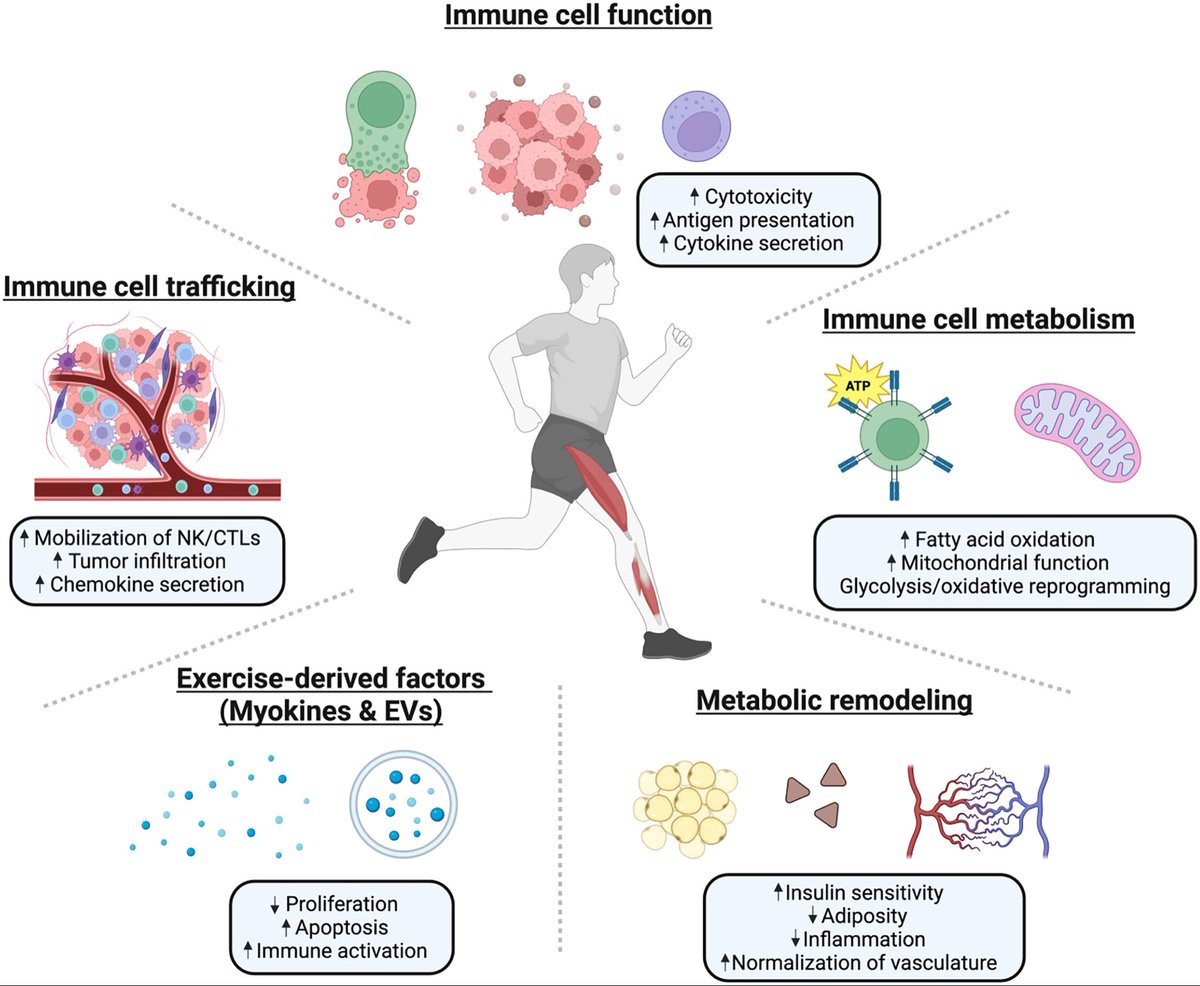
This is amazing: the first large, randomized trial to show that exercise improves survival after cancer
The benefit from the exercise program was like adding another cancer drug - without the side-effects
Extremely clever new NGS tech from Roche 🧬
If it's hard to discriminate between nucleic acids accurately with a nanopore, why not synthesize a new polymer off a DNA template that is easier to sequence?
It's an intuitively simple idea, but took *a ton* of creative nucleic acid chemistry + enzyme engineering to design modified NTPs and create polymers of them.
It's been very interesting to see Roche move into the NGS market, and time will tell how this stacks up with the growing set of totally orthogonal approaches people are cooking up for sequencing tech.
It feels like we are entering another renaissance for biological measurement infrastructure—which is super important.
“Progress depends on the interplay of techniques, discoveries, and ideas, probably in that order." - Sydney Brenner
(These animations of sequencing tech will never get old to me. What a time to be a biologist!)
El @NIH ha publicado una biblioteca de imágenes de ciencias biológicas y salud en general, de acceso gratuito, con imágenes chulísimas para utilizar en presentaciones, artículos o RRSS.
https://t.co/XrpTAAEvHI
This Nature article shows that most Nobel Prize winners are part of the same academic network.
If you work with a Nobel laureate, your chances of winning the prize increase manifold.
This year's Nobel Prize in medicine won by Victor Ambros and Gary Ruvkun follows this logic.
Finding sources relevant to your argument can take a lot of time.
Here's how AI can help you find relevant sources as you write:
---
Bookmarking this post? Please Like it too. Bookmarks don't help with circulation, only Likes do.
A vaccine for Parkinson's disease? Here's the data
Parkinson's is caused by loss of dopamine-producing neurons, which is (partially) due to toxic accumulation of the α-synuclein protein
This is a small trial of 20 patients with Parkinson's disease - 6 received placebo and 14 received a vaccine designed to deplete α-synuclein aggregates
The vaccine (purple lines) successfully reduced toxic α-synuclein:
The exciting future for this approach is in the pre-symptomatic phase: could we deplete toxic α-synuclein, after it starts to accumulate but before it kills neurons and causes symptoms?
From this week in Nature Medicine: https://t.co/VTuDjBMoPO
I very briefly worked at a petroleum engineering ‘AI’ startup right out of college because I wanted to see if I would like non-healthcare/biology work
It sucked
But what I *did* learn was that picking well locations for oil companies is an incredibly challenging problem. To the point where ML models and fluid dynamics simulations alike were both bad at the problem
But you know what was really good at it?
An old dude named ‘Hans’ who was paid exorbitant amounts by BP to come in every now and then to the office, pick some points off a map, and go back home. Those points would be drilled down into and usually yielded pretty decent results in oil yield, often better than simulations alone. He worked for less than 5 hours a week, amortized over a year
Hans, as I understood it, was just some person at BP who’d worked there for decades and had an intuitive sense of what was and wasn’t a good place to drill down into. He wasn’t alone, multiple, but less than a dozen, employees at BP existed just like him. He wasn’t unique to BP either, apparently all major oil companies had a team of Hans-esque figures that helped pick the wells. It was just widely agreed upon that human intuition is really important in well picking and story was left at that
The whole thing really weirded me out and it felt like a ghost story told amongst petroleum engineers, because literally nobody knew more information about him or other people like him beyond what I’ve said here. Multiple people corroborated the story of these figures existing, but nobody had actual details
What were their backgrounds? Were the accuracies actually *that* high? What were they picking up on?
never found out the answer to any of these
oil is such a bizarre field
Evidence Hunt is an AI-powered app that will help you gather and analyze medical evidence.
Think of it as PubMed+ChatGPT.
Ask it a question and it will give you an answer with references to published papers. Plus, it will give PICO analysis for every paper.
And it's free!
Every now and then a discovery is made that reveals a completely new concept - here's one of them
As we age, we lose immune function. One reason is that cells of the innate immune system are produced at the expense of adaptive immune system cells (B and T cells)
This happens because of an ageing-associated expansion in myeloid stem cells, which mainly produce innate immune system cells
Ross et al. treated aged mice with antibodies that deplete these myeloid-producing stem cells, which was sufficient to rebalance the production of innate and adaptive cells
The consequence is that aged mice conditioned with these antibodies produce better immune responses and suffer less from infection - almost to the same extent as young mice
This kind of idea could well be expanded far beyond improving immune responses - exciting times
Study: https://t.co/ziHhivr6B5







![aditharun_'s tweet photo. [1/3] Men's testosterone levels did not plummet over the past decade like many wellness podcasts would have you believe... we just switched the measurement assay from immunoassay to mass spectrometry
When we switched assays, we observed a ~100% increase in self-reported healthy men with low testosterone. The threshold needed to be updated when the assay changed.
Arun AS, Durant TJS, El-Khoury JM, Krumholz HM. Re-evaluating the threshold for low total testosterone. Clinical Chemistry 2025.](https://pbs.twimg.com/media/G3ui6SMXkAAQ0aw.png)