Digital infrastructure strategies should be tailored to the financial maturity of each economy, the study recommends. Policymakers cannot assume that adding more digital infrastructure will produce the same economic effect everywhere.
AMR is already linked to nearly 5 million deaths a year.
@WHO’s new strategy to preventing infections — through sanitation, vaccination, stewardship & stronger systems — is central to slowing drug resistance.
✍️ @stefancanderson@IFPMA@TheLancet@wto
Interesting storyline for NHL Finals: Carolina Hurricanes GM Eric Tulsky has a PhD in Chemistry from Berkeley.
Before joining them in 2014, he was offered a job with Apple to work on battery tech (but turned it down).
Started in the analytics department and since hired neuroscientists and mechanical engineers for the NHL team.
The Athletic profile has this anecdote:
➡️ “In 2021, Tulsky was the Carolina Hurricanes assistant GM and had built a small analytics department in the organization, with a web developer, a data engineer and a neuroscientist helping him lead the team’s push into new frontiers for the sport.
But because of what he saw in the tracking data, Tulsky believed his next addition needed to be someone who was working on autonomous vehicles — perhaps “a robot submarine,” he says now — and had an advanced mechanical engineering background.
“I knew that that was the kind of problem that put people thinking about the kinds of data that we had and the kinds of problems we faced,” Tulsky explained.
It goes without saying that there aren’t many robot submarine engineers working in NHL front offices. So Tulsky began a deep search through universities’ mechanical engineering departments.
He would scour the faculty listing and professors’ research interests to see if they might align with what he was looking for, then reach out to learn more about their work. He started with the top schools in Canada, reasoning that there was a greater chance he would find someone interested in working on a hockey problem.
And that was how an NHL team came to fund the PhD research of a young engineering student named Jonathan Arsenault at McGill University in Montreal.
His thesis, the first to be backed by a professional hockey team? “Quantitative Analysis of Hockey Using Spatiotemporal Tracking Data.” ⬅️
***
NYT/The Athletic: https://t.co/EgO3Qoo6Wq
The future of mobility in Kenya is being defined—be in the room where it happens. ⚡️
Join industry leaders, innovators, and policymakers at the 4th Annual E-Mobility Stakeholders Conference & Expo 2026 as we drive bold conversations, unlock partnerships, and accelerate real solutions for a cleaner, smarter transport future.
Register now and take your place at the forefront of Kenya’s e-mobility revolution.
https://t.co/1YzbXgNDIX
#EmobilityKE #PoweringKenya #PamojaTwangaa ^ZM
Webinar Alert!
Join the 2nd Clean Cooking Policy Dialogue: From Policy to Investment – Unlocking Finance for Clean Cooking at Scale. 13 May 2026 (15:00–16:30 CAT)
Register here: https://t.co/1CqdO0f2Vs
#CleanCooking#ClimateAction#ClimateFinance#EnergyAccess#AFREC#SDG7
Finance Bill 2026 makes for an interesting & fairly technical read both from a tax policy & administration standpoint.
A 🧵 on the 11 things that stand out from what we are seeing so far for me.
This evening I want to speak directly to contractors, consultants, and companies run by single directors without proper structures.
In the current tax environment, you must ADJUST or PERISH .
Let’s be honest.
-Many of you don’t formally record expenses. -You procure casually without proper invoices or compliance checks. -You don’t have solid bookkeeping. -You mix personal and business money. -You withdraw everything that hits the account. -You don’t plan for tax.
And worst of it all -YOU DON’T KNOW YOUR TAX OBLIGATION
Yet a significant percentage of that consultancy income is TAX .
Now here’s what has changed.
With eTIMS framework and the operationalization of Income and expense validation , every invoice you issue is visible and every expense demand validation by being eTIMS supported! -If your client claims your invoice as an expense, it must match your declaration. -If you claim an expense, it must be supported by a compliant supplier invoice.
There is no “we’ll adjust later.”
The system validates both sides.
This is the era of structure.
-If you operate casually, the system will calculate your tax for you.
-If you operate strategically, you control your outcome.
5 PRACTICAL THINGS YOU CAN START WITH
1. Separate yourself from the business! Let business money be business money
2. Understand your Business model ( Profit equation ) and Structure
3. Know your Tax Obligations and plan for them
4. Account for every shilling as far as its business money !
5. Ensure that every business transaction is supported by an eTIMS invoice or TIMS invoice
-End -
KRA has refused to let Java House go.
You definitely know Java House.
Me, I first encountered it in 2015 while hunting for an attachment in the streets of Nairobi.
All along, I thought it was a biig college teaching Java coding. With branches in every corner.
Until my boss asked to meet me there.
I rushed thinking the legend had enrolled for classes.
Only for him to order coffee for me.
Since then, it has been my favourite coffee joint.
Buana ushamba iheshimiwe.
Now,
In 2012, the two founders of Java House had made their kill after running the company for 13 straight years since 1999.
It was time to go to the beach. They sold the company to ECP Africa in Mauritius.
There was no capital gains tax in Kenya then. So the boys left with their money KRA free.
Before ECP bought the company, they knew:
- Kenya changes laws very fast.
- If they bought shares directly in Kenya
- And later sold them
- They could face taxes if laws changed
So they got smart. They set up a shell company in Mauritius. Called it Java House Mauritius Limited. This company is the one that bought Java House Kenya.
So we now have:
- ECP Africa (Mauritius) owning
- Java House Mauritius
- Which owns Java House Kenya
Clean stuff.
Time came to cash out.
ECP Africa remembered it was also owned by ECP fund in Washington DC.
And ECP DC had a subsidiary management company in Kenya called ECP Kenya Limited.
They agreed and tasked ECP Kenya to:
- To study Java house and improve the business to make more valuable on behalf of ECP Africa.
- Decide when to sell it
- Find a buyer
- Negotiate the deal
In short, ECP Kenya was managing the entire investment.
As all this was happening, they are unaware of one dangerous sentence chilling quietly in Kenyan tax law.
It reads:
• Any company managed and controlled from Kenya is a Kenyan resident company.
In 2017, ECP Africa sold Java house Mauritius company to a Dubai mogul for $100M.
- About 10B shillings.
Everything happened in Mauritius. No shares moved in Kenya to trigger anything.
• Deal is closed. 0 tax.
Bahati mbaya, KRA caught wind that Java is gone.
KRA immediately embarked on a fault finding mission.
And in 2022, found that:
- The entire transaction was managed from Kenya
- Through ECP Kenya
They invoked the one dangerous sentence. You remember it?
• Any company managed and controlled from Kenya is Kenyan company.
KRA said:
• This deal is Kenyan
• Tax must be paid in Kenya
Tax demanded: 2.5B
ECP Kenya to pay it.
ECP Kenya ran to the tax appeal tribunal. Tribunal sided with KRA.
ECP Kenya ran to the High Court. They judge looked at the case and asked KRA why it behaved like a bitter ex.
KRA responded: My Lord, imagine educating your wife, then akigraduate she leaves you for a man of her class. How would you feel?
Judge akakubali inauma.
ECP wakaambiwa walipe tax.
Case closed.
Lesson.
• Structure your offshore deal properly.
• Or KRA will structure it for you.
Kenyan engineer Joseph Nguthiru turns water hyacinth into biodegradable plastic, reducing mosquito breeding grounds, cutting plastic waste, and creating green jobs for the community.
Fear of losing money keeps many broke in the long run. Saving is good, but investing is what builds real wealth.
• Inflation quietly eats your savings every year. Sh 10,000 today may only buy Sh 7,000 worth of goods in a few years.
• Bank interest rates (4-6%) are often lower than inflation, so your money is actually losing value while sitting “safe”
• Money under the mattress earns zero return and can be stolen, destroyed by fire, or eaten by mice.
• You miss out on dividends, capital growth, and compounding that quality NSE stocks like EQTY, BAT, and SCOM can provide.
Ever wondered how long a single day lasts on each planet?
From Mercury’s 58-day marathon to Jupiter’s dizzying 10-hour spin; watch the white dots rotate at their REAL speeds!
Why Didn’t They Land?
Because the Moon Is No Longer the Destination
The question keeps coming up. NASA went all the way out there and came back without touching the surface. If they did it fifty years ago, why not now?
Because repeating history was never the point.
Artemis II Was the Exam
Before anyone lands, you need proof that humans can survive out there beyond Earth’s magnetosphere, in real deep space radiation. Artemis II collected that proof. Life support, radiation exposure, communication blackouts behind the Moon, crew decision-making under pressure, and the violent re-entry home. Every system stress-tested. No shortcuts.
You don’t attempt the landing until you pass that test.
Artemis III Is Where It Gets Real
SpaceX’s Starship lander launches first but parks in Earth orbit. It’s too large to carry full fuel for both launch and the lunar journey in one go, so a dedicated refueling mission tops it up. The first in-space refueling attempt in history. Only then does it head to the Moon and wait.
Orion follows with four astronauts. It docks with the waiting lander in lunar orbit. Two astronauts transfer across and descend to the surface.
The South Pole Changes Everything
The target is the lunar south pole. Permanently shadowed craters that scientists believe hold water ice. If confirmed in usable quantities and early data is promising that ice becomes drinking water, breathable oxygen, and rocket propellant made on-site.
That single resource turns the Moon from a place you visit into a place you can operate from.
Six days on the surface. Studying ground stability, temperatures, light behaviour, and most critically — how much ice is actually there and whether it’s accessible.
Why Orion Never Lands
Orion is a deep space transport and return vehicle. Redesigning it to land would mean starting from scratch : new structure, new propulsion, years of delay. NASA kept it doing what it’s already proven to do and contracted landing systems to the private sector. Smarter, faster, cheaper.
This Is No Longer Just NASA
Blue Origin is building a second lunar lander. Axiom Space is developing next-generation spacesuits. ESA supplied Orion’s service module. JAXA is building a pressurised rover astronauts can live and work in on the surface. Canada is building Canadarm3 for lunar orbit operations.
This is a space economy in formation.
The Real Question
Artemis III won’t plant a flag and leave. It will answer something harder — can humans actually work on another world long enough to make staying worthwhile?
If yes, and if the ice holds up, the Moon stops being the destination.
It becomes the gateway.
📷 Artist rendering: Starship Human Landing System (HLS) concept design
What the Artemis II astronauts did over the last 10 days was a testament to their bravery. And the fact that they traveled farther from Earth than anyone ever has, re-entered our atmosphere at more than 24,000 mph, and splashed down safely was a testament to human ingenuity. Thanks to everyone at @NASA for making this mission possible, and for taking us along for the ride.
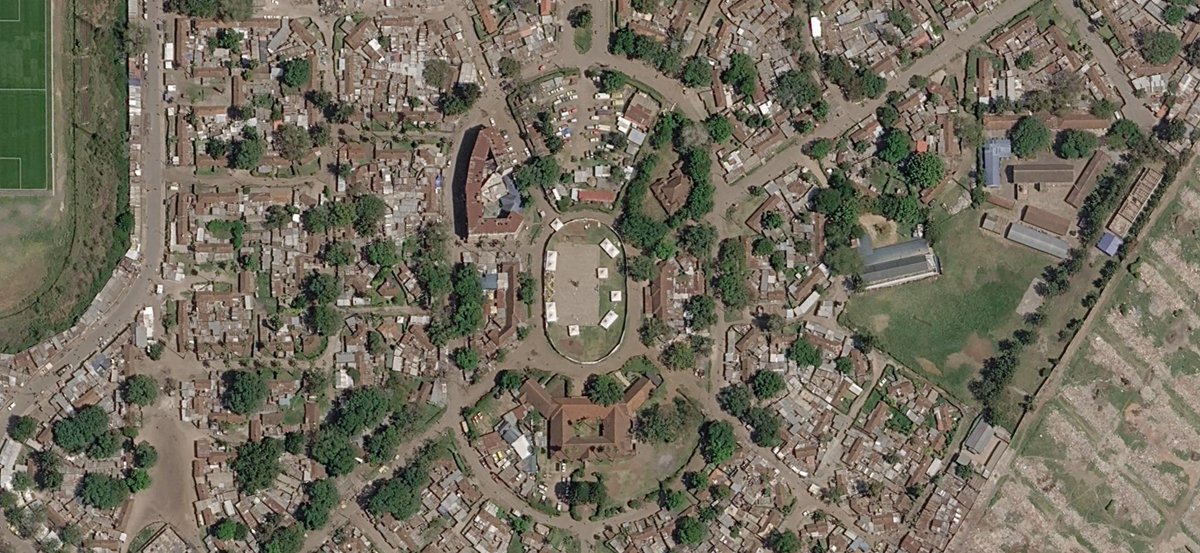
Kaloleni (also popularly known as “Ololoo”) is one of Nairobi, Kenya's 🇰🇪🏘️ oldest formal residential estates, located in the Eastlands area along Jogoo Road. It was conceived as a pioneering colonial-era housing project for Africans and remains a historically significant neighborhood unit. Tucked directly behind it lies Nairobi City Stadium, an integral part of the area’s development.
Origins and Design (1927–1943)
The estate’s planning began in 1927 during British colonial rule. It was originally recommended by Sir Charles Mortimer, who chaired the African Housing Committee (AHC), to address the housing needs of urban Africans in Nairobi.
The design drew heavily from American urban planner Clarence Perry’s Neighborhood Unit concept (itself rooted in British Garden City principles promoted by Ebenezer Howard and Patrick Geddes). The 1927 plan envisioned a self-contained “garden city” community to house around 3,000 people (initially planned as bachelors in single dwellings and duplexes), with bungalows arranged in loops or courts, communal green spaces, a social hall, library, clinic, shops, and other amenities to foster orderly family life.
The actual architect and planner was A.J.S. Hutton, a British imperial planner who had been senior colonial architect in Malaya (now Malaysia). He was seconded to the Nairobi Municipal Council in 1942 and produced the detailed 1943 layout and building plans (including one-room and two-room family dwellings). These featured stone construction, Mangalore-tile roofs (imported from India), and cement-screed floors—higher-quality materials than typical African housing of the era.
Construction and Builders (1945–1948)
World War II delayed building, but construction finally took place between 1945 and 1948 (some sources note groundwork or planning activity from around 1942–43). The estate was built by Italian prisoners of war captured by British forces and interned in Kenya. They provided the labor using the pre-existing designs.
Development of City Stadium (1950s–1960s)
Adjacent to Kaloleni, visible in aerial views as the large open space immediately west of the estate, Nairobi City Stadium was developed in the 1950s as the principal multi-purpose venue in Nairobi. Originally known as African Stadium (later Donholm Road Stadium and Jogoo Road Stadium after independence in 1963), it was built on what is now Jogoo Road to serve the growing Eastlands African community. With a capacity of around 15,000, it focused primarily on football and hosted major local matches, nurturing talent and becoming a vibrant hub for community sports and events. It remained Nairobi’s main stadium until Nyayo National Stadium and Moi International Sports Centre were constructed in the 1980s.
Purpose and Who It Was For
Kaloleni was one of the first formal public housing estates in Nairobi built specifically for African families (as opposed to earlier barracks-style housing for single male migrant laborers). It formed part of a broader post-WWII British Colonial Office shift toward a more “developmentalist” approach—aiming to create model suburban neighborhoods that would “civilize” and stabilize the African urban population while reinforcing colonial social order.
When completed in 1948, the bungalows were gifted to African soldiers (veterans of the King’s African Rifles) who had fought for the British in World War II. Over time it housed a wider range of African families, many of whom passed the homes down through generations. It quickly became home to prominent figures in Kenya’s independence movement, including Tom Mboya, Jaramogi Oginga Odinga, Charles Rubia (Nairobi’s first African mayor), and even Ugandan political figures like Milton Obote. The Kaloleni Social Hall served as a major venue for nationalist politics in the 1950s (sometimes called Kenya’s “first parliament”).
Legacy
The estate was celebrated at the time as a progressive, well-planned model neighborhood. Today it is still largely intact in layout (though the buildings have deteriorated due to decades of under-maintenance, overcrowding, and informal extensions), and residents have advocated for its preservation as cultural heritage. The neighboring City Stadium further cemented Kaloleni’s place in Nairobi’s sporting and social history as a cradle of Kenyan football.
In short: Kaloleni was a British colonial model housing estate designed by A.J.S. Hutton (1943 plans) for African families/veterans, built by Italian POWs (1945–48) as part of a Garden City/Neighborhood Unit vision to provide better living conditions while advancing colonial urban policy. The adjacent City Stadium, developed in the 1950s, extended the area’s role as a community and sports hub. It later became a cradle of Kenyan nationalism.
(for those who know.. that cluster of shops near the roundabout.. is where you can find the best motorcycle riding gear in Nairobi today)
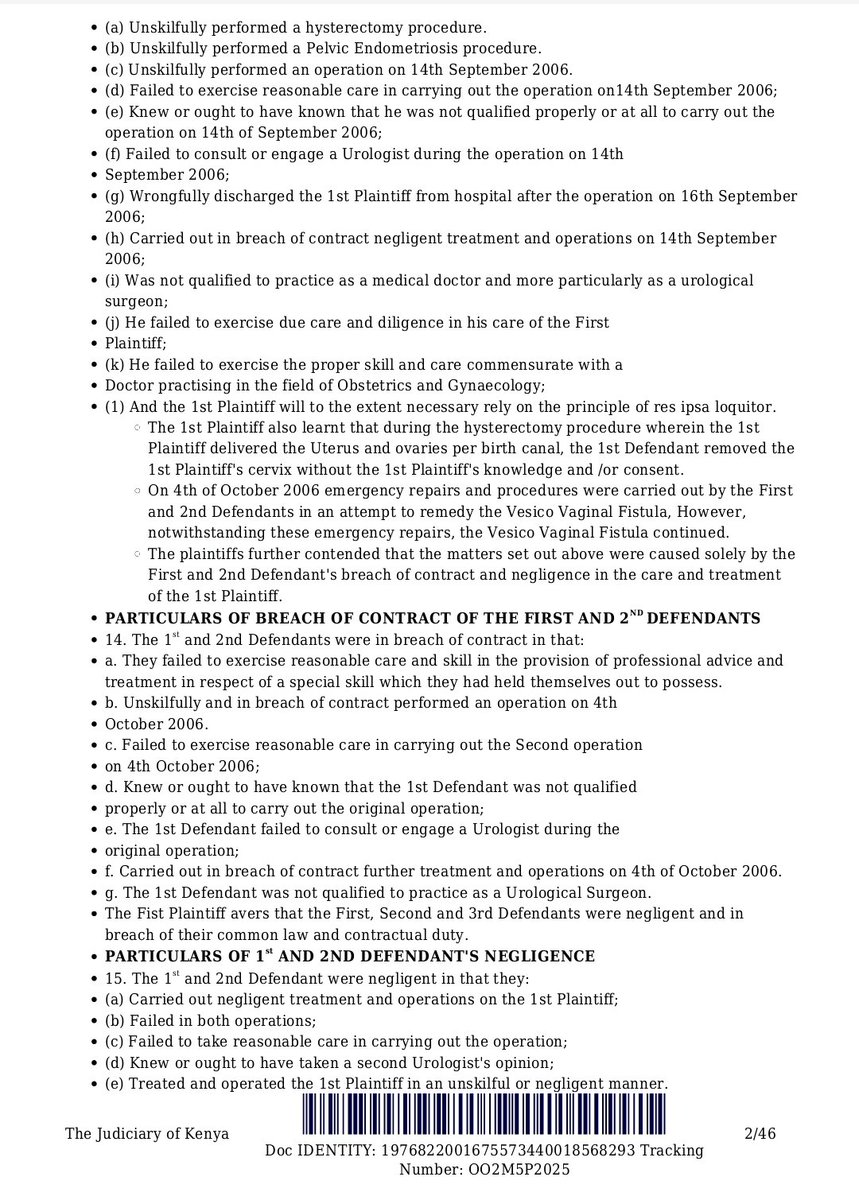
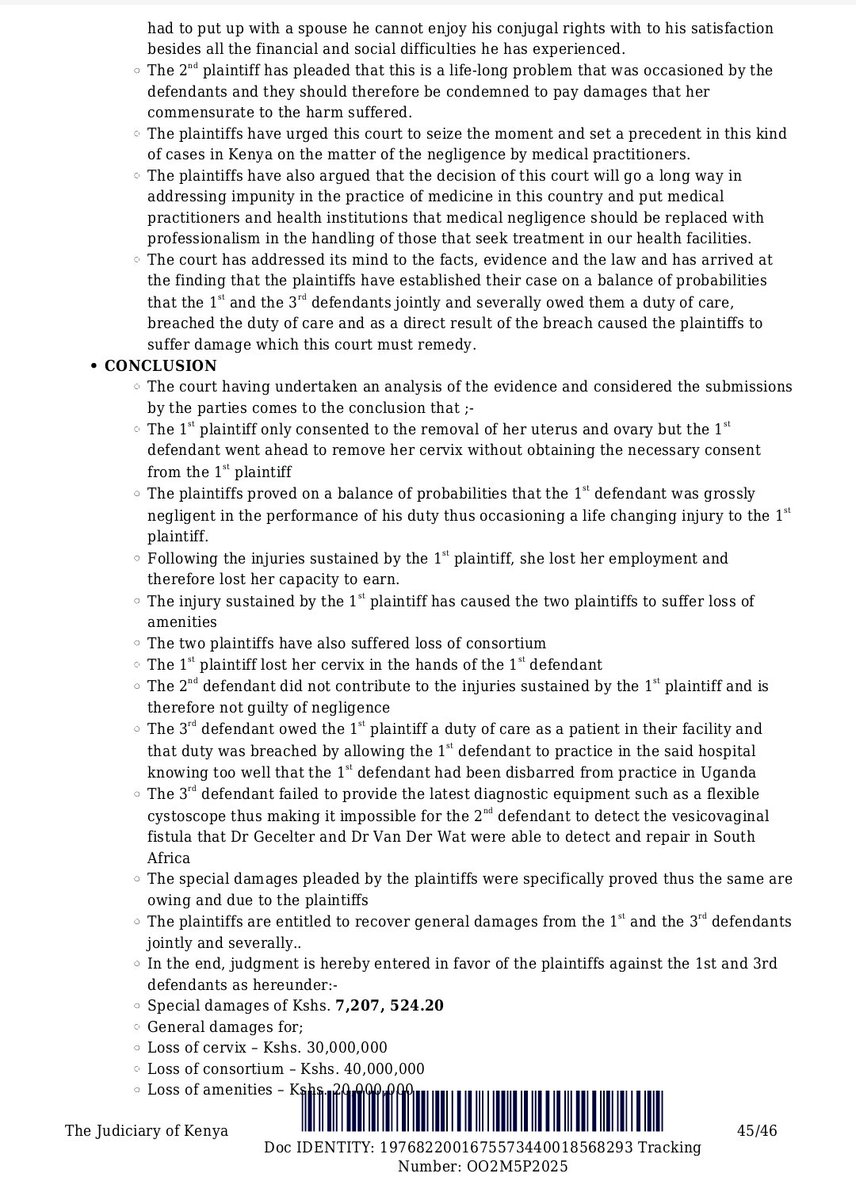
Aga Khan Hospital was ordered to pay Kshs. 157 MILLION in a landmark High Court judgment over severe medical negligence.
The court found that a patient underwent surgery without informed consent, including removal of her cervix, and later suffered catastrophic complications after further treatment by the same doctor.
The judge also held the hospital jointly liable for failing to properly vet and supervise the consultant, reinforcing that corporate negligence in healthcare attracts heavy financial consequences.
Your Android phone’s storage is full.
You delete photos, videos, apps. It’s still full.
Because it’s not the visible files that are eating up your storage. Most of it is the HIDDEN junk that Android never tells you about.
I cleaned mine yesterday and got 23GB back without deleting a single photo.
Here’s how:
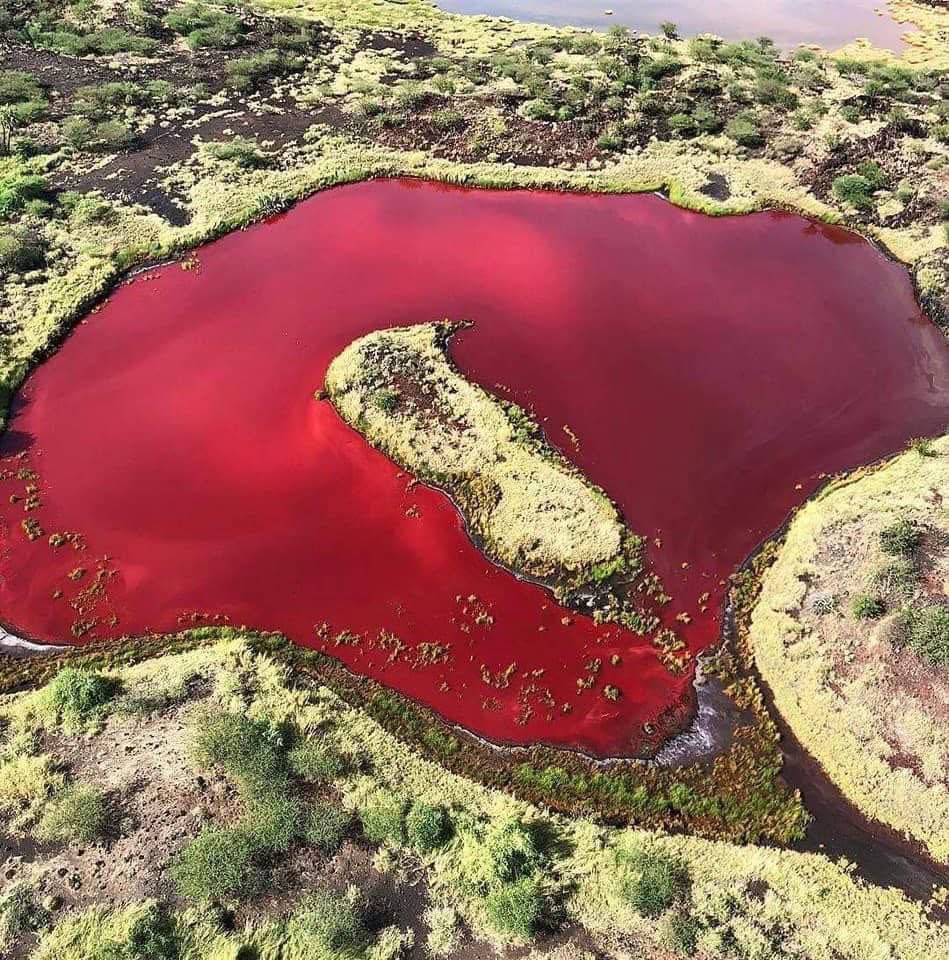
This is Lake Logipi.
Hidden deep within the silent, sun scorched expanse of the Suguta Valley lies Lake Logipi, a place so extreme, yet so beautiful, it feels almost unreal. Often referred to as part of the “Valley of D£ath,” this remote landscape is one of the hottest and most inhospitable regions on Earth. And yet, against all odds, it holds life.
Lake Logipi is a shallow saline alkaline lake, stretching about 6 kilometers long and 3 kilometers wide, with a depth of only 3 to 5 meters. Its waters are rich in sodium bicarbonate, with an alkalinity reaching a pH of 9.5 to 10.5. Along its edges, white crusts of trona, a sodium rich mineral form naturally, giving the shoreline a striking, almost otherworldly appearance.
Despite these harsh chemical conditions, the lake supports a unique and thriving ecosystem. Its waters often shift in colors like green, brown, deep red and orange due to the presence of heat tolerant cyanobacteria and algae, particularly Arthrospira. These microscopic organisms form the foundation of life here, providing food for one of the most iconic inhabitants of the lake, the flamingos.
In recent years, Lake Logipi has emerged as a critical sanctuary for Lesser Flamingos. Aerial surveys conducted in late 2024 and 2025 recorded nearly one million birds gathering here to feed and breed, transforming the lake into a breathtaking sea of pink. In such a hostile environment, this spectacle is nothing short of extraordinary, a reminder of nature’s resilience and adaptability.
Geographically, the lake lies just south of Lake Turkana, separated by the rugged Barrier volcanic complex a chain of relatively young volcanoes that define the dramatic landscape. During periods of extreme rainfall, like in 2020, Lake Turkana expanded and overflowed into Logipi, temporarily altering its size, salinity and ecological balance.
Even in times of intense drought, Lake Logipi endures. Saline hot springs feed the lake along its northern shores and near Cathedral Rock, a towering volcanic formation that rises from the lake like a silent monument. These geothermal inputs help sustain the lake when surrounding conditions become almost unbearable.
At times, when the rains return, the Suguta River carries fish such as tilapia and catfish into the lake, briefly enriching its biodiversity. Predators like golden jackals may appear along the shores, taking advantage of the temporary abundance of birdlife. These fleeting moments of balance highlight the delicate and ever changing nature of this ecosystem.
Lake Logipi is not easily accessible. It is remote, isolated and unforgiving. But perhaps that is what makes it so powerful. It is a place where fire, salt, water and life come together in a rare and fragile harmony, hidden oasis in one of the most extreme environments on Earth.
~ Betty Kiende