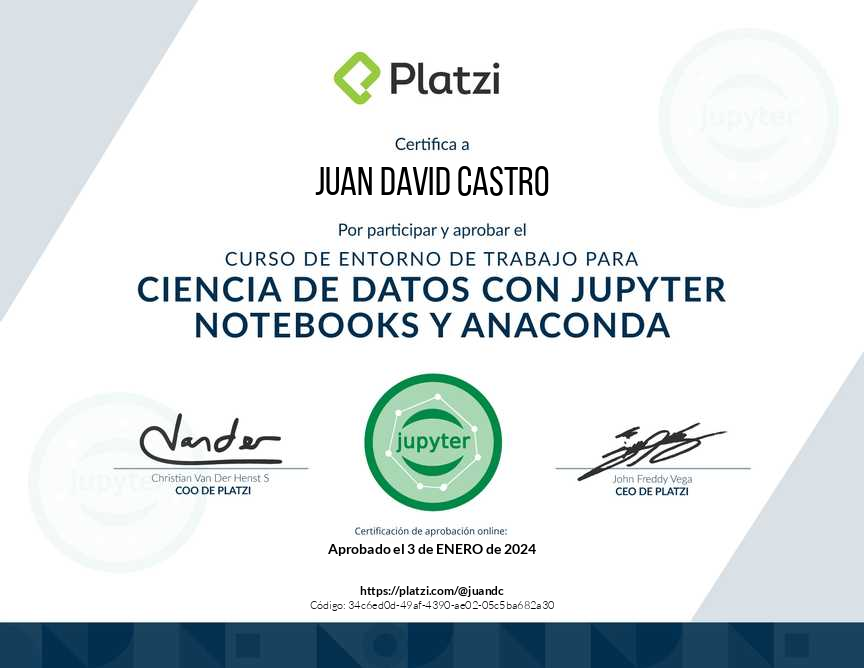
🚨 ¡Hoy se publicó mi primer curso en @platzi 💚!
🎉 Fue una experiencia increíble, llena de aprendizajes por todos lados gracias a un equipo súper talentoso como @datormx y Rocío MNares!
👀 Pero... ¿de qué va este curso? 🧵
#AdoHibana
¡El concierto en México terminó! ¡Todos están súper fuertes! Tal como lo imaginé, fue la mejor presentación en vivo y el ambiente fue increíble. ¡Quiero comer muchos tacos! ¡Nos vemos! 🌵🥑🌶️🌮
Thrilled to share my very first first-author paper 📑🥂! Here we studied the genetic variation in the human superfamily of UGT genes 🧬 which encode endobiotic- and xenobiotic-metabolizing enzymes linked to drug response 💊 and cancer risk.
📎https://t.co/YWhk1JzUir
This is Modality Gap, the reason you can’t just use CLIP models to retrieve texts and images simultaneously and sort the results by score for multimodal retrieval. To understand this better, let’s see how this graph was created: We used the PokémonCards dataset, which contains 13K text-image pairs. These 26K data points were embedded using the Jina-CLIP-v1, and the embeddings were then mapped into 2D space via tSNE. The pairwise relationships are represented by white lines between the cyan and purple dots. Despite enforcing image-text alignment during training, it’s clear that the embeddings don’t form a single, coherent space but instead fall into two distinct subspaces. You can easily draw a boundary between these subspaces, which represents the modality gap between text data and image data.
Hello!
If you are interested in understanding Fisher’s exact test (aka hypergeometric test / ORA), one of the most popular methods for GSEA, go check my recent blog post with clear explanations and interpretations of it.
👉🏼 https://t.co/mTjtgbmisR
We are proud to release the first major version of DuckDB, v1.0.0, codenamed "Snow Duck".
This version is a culmination of almost six years of research and development. Today we are shipping an innovative database system with a backwards-compatible storage format.
Check out our announcement blog post: https://t.co/w8OGx4pziT
I'm excited to share my first co-authored paper with all of you!
So grateful for having the opportunity to be part of this amazing project as an undergrad ❤️
Outperform proprietary embedding APIs on tasks that matter to you by fine-tuning an open source model on a few hundred examples.
Read more in our new blog post with @jxnlco, @charles_irl, and @ivanleomk:
https://t.co/LyQpmUXiSv
If anyone is looking for a good case to implement @pydantic, here’s a great blog post about how to implement it within #aws lambda function https://t.co/gxIqIxP2LB
Shows how it would work with vs. without pydantic. Great read. Very useful takeaways.
1/ Our latest research in @NatureComms dives into the world of plasmids and their role in antibiotic resistance, exploring the complexity of phenotypic heterogeneity through microfluidics, modelling, and bioinformatics.
LangSmith is generally available! No more waitlist!
https://t.co/oB659HzJjQ
Also excited to share our funding round from @sequoia, pumped to be working along side @sonyatweetybird@romie_boyd
Thanks to @alexrkonrad and Forbes for covering: https://t.co/1QgZyvHIRm
Por linkedin ya publique pero paso por aca tambien
https://t.co/CuFgcrFQQq
Les comento que me encuentro en busqueda de mi siguiente reto profesional 🚀
Cuento con :
- MLOps y ML Engineering
- Product Measuring (Test A/B, CRO)
- Data Marketing (Ads,GA4 etc)
- Ingles C1✅
There is a LOT of stuff in LangChain v0.1.0
We made a YouTube video for each important concept
5-10 minutes, walks through the concept at a high level and then most have some coding examples (Python and JS available)
It's out! LangChain v0.1.0 comes out with an improved package architecture for stability and production readiness, as well a focus on:
👀Observability
↔️Integrations
🔗Composability
🎏Streaming
🧱Output Parsing
🔎Retrieval
🤖Agents
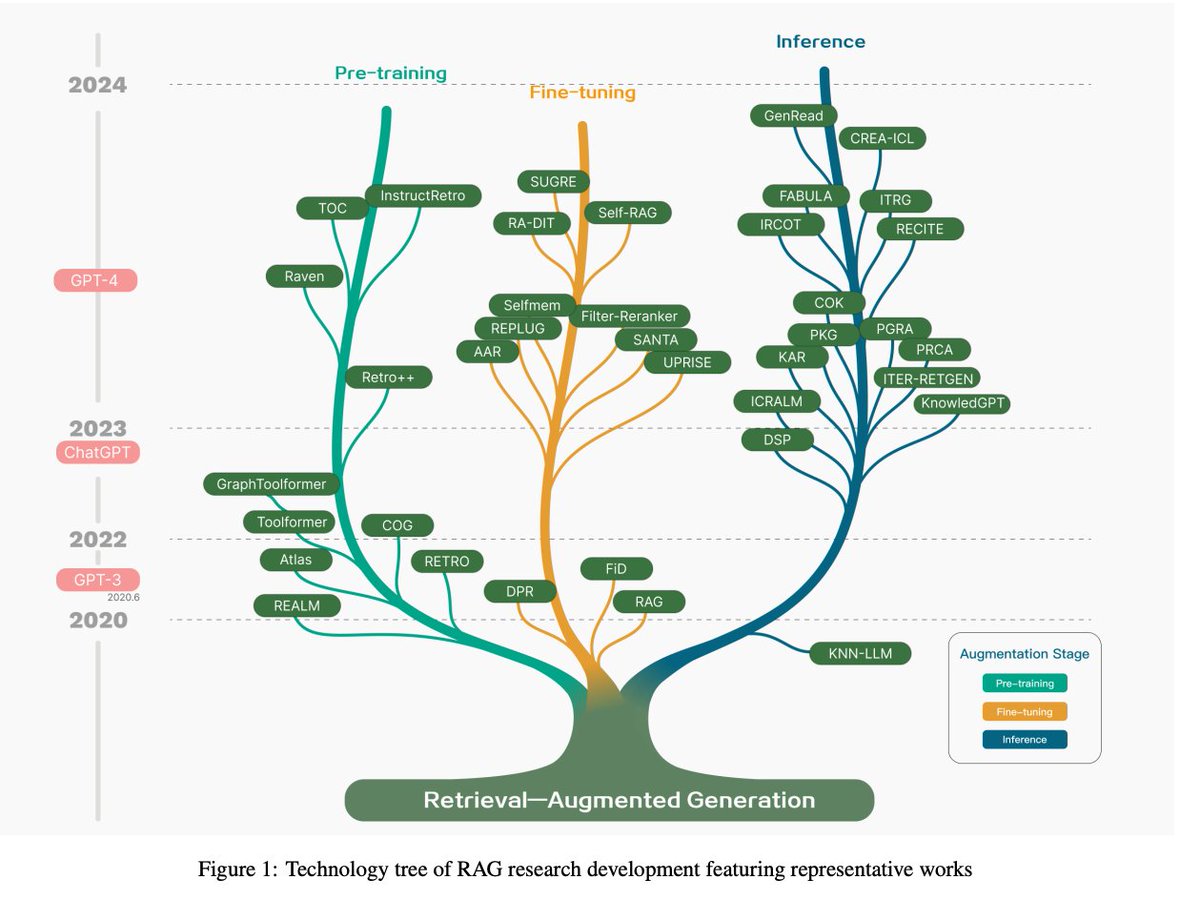
There was a lot of cool RAG research in the past year or two, and luckily for you, all of these efforts are tracked under one place!
“Retrieval-Augmented Generation for Large Language Models: A Survey” by Gao et al. does an admirable job categorizing all RAG research into three categories: 1) pre-trained models (e.g. RETRO), 2) Fine-tuning + RAG (e.g. RA-DIT), and 3) RAG in inference mode (e.g. DSP).
Within the last category (which @llama_index has predominantly focused on), the paper walks through all the different components.
Check the paper out! ttps://arxiv.org/abs/2312.10997
This paper inspired @_nerdai_’s fantastic blog post that we posted about: https://t.co/G1hAyRy1Jf