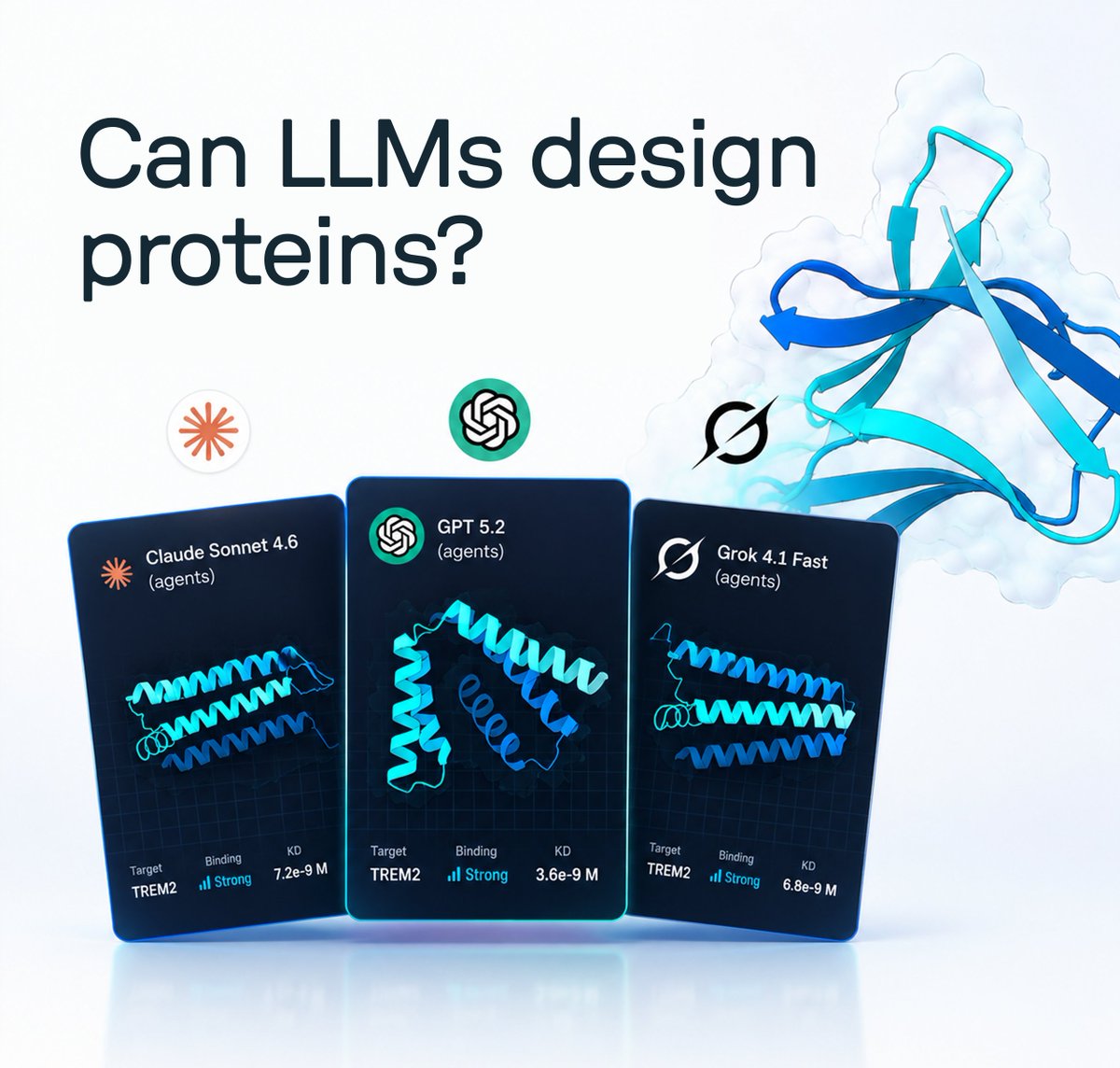
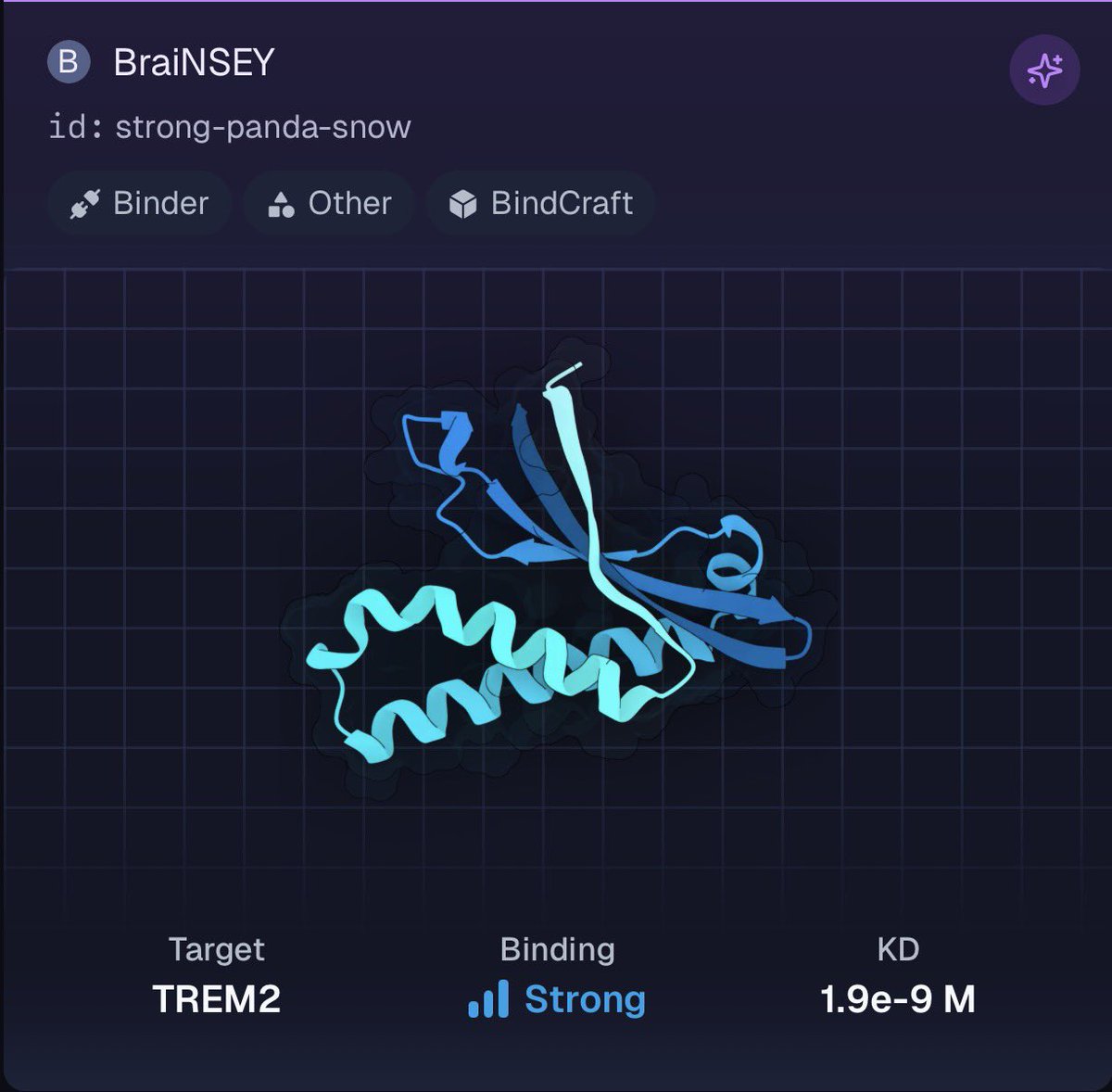
The binders have bound! A few months ago, 9 human teams and 6 autonomous AI agents spent a single day designing protein binders against TREM2 on @muni_bio, a target implicated in Alzheimer’s Disease.
141 designs were submitted, 100 were synthesized and tested by @adaptyvbio, and 37 bound. And surprisingly, AI agents essentially matched human teams on hit rate.
These aren’t benchmark scores or simulated results, but real proteins designed in one day in SF and validated experimentally during the first large-scale test of muni, where teams ran 260 GPU jobs and generated a total of 4,176 binders.
We wrote about what we learned from the results, how well ipSAE worked as a scoring function, and how this hackathon reshaped what we’re building: https://t.co/uZswTolfIa
Upcoming feature: @muni_bio uses dynamic workflows to power its autoresearch, chaining the best bio + chem tools/models to go after hard problems.
Unlocking the ai + bio pipeline for real-world problems has been our core mission these past few months.
Congrats to @OpenAI and @xai for their scientific reasoning.
Last week we got the wet-lab results back from our TREM2 hackathon. 6 autonomous agents + 9 human teams designed TREM2 binders in a single day.
Agents nearly matched human hit rates.
read more: https://t.co/U8NCI58Qw7
🚀 Excited to share our new work: Absolute Stability Predictor!
📊: https://t.co/gtgQjPRAX6
Built the MGnify Stability Dataset (1.8M+ measurements) and developed stability prediction models, together with @grocklin, @KotaroTsuboyama, @sokrypton, and teams.
@anthonygitter@muni_bio@adaptyvbio The agents used here are Claude Sonnet 4.6, GPT 5.2, Gemini 3.1 Pro, Grok 4.1 Fast, Qwen 3.5 Plus, GLM 5
muni just provides tools and context on using those tools
The binders have bound! A few months ago, 9 human teams and 6 autonomous AI agents spent a single day designing protein binders against TREM2 on @muni_bio, a target implicated in Alzheimer’s Disease.
141 designs were submitted, 100 were synthesized and tested by @adaptyvbio, and 37 bound. And surprisingly, AI agents essentially matched human teams on hit rate.
These aren’t benchmark scores or simulated results, but real proteins designed in one day in SF and validated experimentally during the first large-scale test of muni, where teams ran 260 GPU jobs and generated a total of 4,176 binders.
We wrote about what we learned from the results, how well ipSAE worked as a scoring function, and how this hackathon reshaped what we’re building: https://t.co/uZswTolfIa
Good question. Sequence diversity is tricky to summarize in a tweet, but both groups produced largely distinct sequences. Worth mentioning that agents were all PXDesign in 80-100 aa, human teams used 6 tools across 65-245 aa, but the full diversity analysis (folds, epitopes, sequence clustering) will be in the community paper we're working on
@ozalabCP This was the only prompt given to all agents (also linked in our article): https://t.co/OgXV0MmYle
No other skills/data injected into the prompt!
What happens when you let frontier LLMs design proteins, and then synthesize and test them in a wet lab?
We ran a protein design competition with @muni_bio where AI agents competed against humans to design molecules that bind TREM2, a key receptor linked to Alzheimer’s.
Results: GPT 5.2 and Grok 4.1 both placed in the top 5, with molecules showing strong binding to TREM2 when tested in our lab.
It was fun working with @katyenko at @muni_bio on this hackathon over the past few weeks. She did an incredible job organizing it and we had some really cool results to talk about. Out today + check out the analysis blog post!!
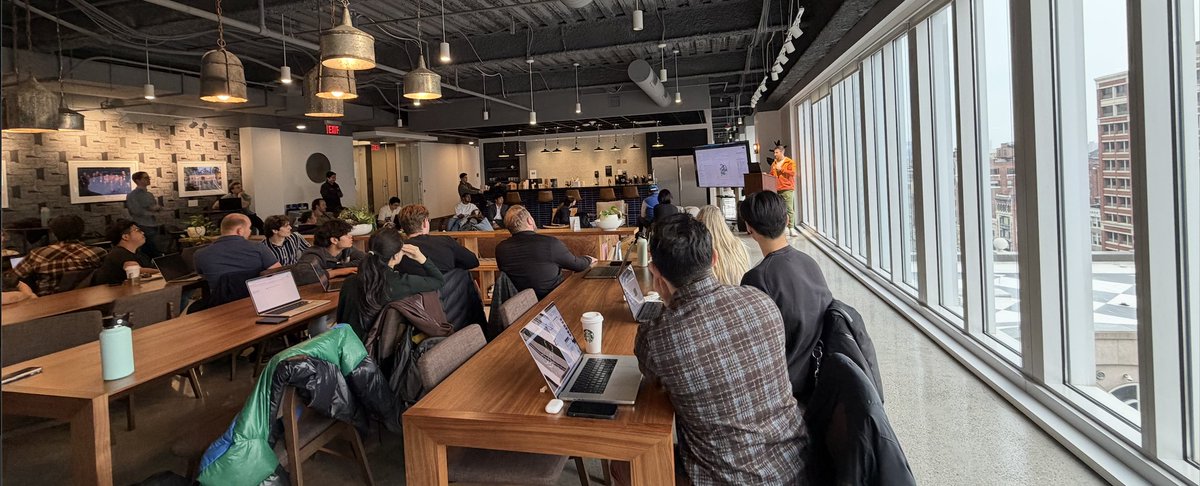
20 pizzas and 7 hours later, we finished the first leg of the AI x Med Chem Hackathon in Boston, where teams competed to submit compounds for TBXT.
This is the first hackathon of its kind, moving from small molecule compound generation to experimental assays. Thank you to everyone who joined us this weekend!
Huge thanks to our judges, partners and sponsors: @RowanSci, @onepot_ai, @anyscalecompute, @pillar_vc and the @ChordomaFDN.
Compound synthesis is underway and will be tested soon! Stay tuned for updates.
The AI x Med Chem Chordoma hackathon is underway! Exciting to see so many scientists using Rowan & Muni to search for novel TBXT binders—three more hours before teams have to submit candidates for experimental synthesis and testing...