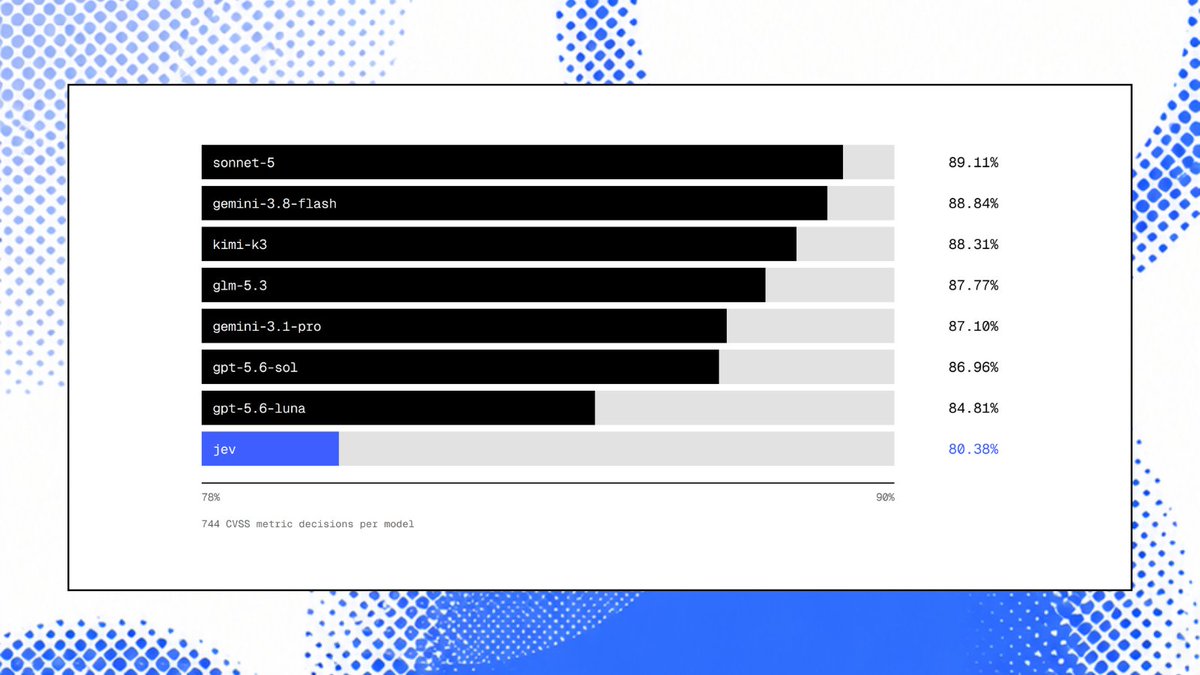
With @hash_kitten, we’ve been looking at a new exploitation technique using system limits 😁
The idea is to take EMFILE, DB conn limits, Linux TIME_WAIT… to reach trust boundaries in unexpected ways 👀
Using these techniques, We managed to get a pre-auth RCE on Drupal 👇
On July 25, we hacked OpenAI.
Two bugs let us take over ChatGPT/Codex accounts of OpenAI employees (+some unaffiliated users) and reach connected services: Outlook, Slack, GitHub, etc.
We proved it with a PR in OpenAI’s internal codebase . It took us <72h. 🧵
“vibe coding” is probably the worst name we could have come up with for what is genuinely a groundbreaking shift in how software is made
the implication that prompting an agent somehow makes what you build less legitimate is incredible cope
at the end of the day, bad software isn’t a tooling problem. it’s a skill issue, as always
After evaluating leading AI models–including GPT-5.5, Mythos Preview, Opus 4.7, GLM-5.2, Muse Spark 1.1, and Grok 4.5–across real-world offensive security workflows, we found significant improvements in vulnerability discovery, source-code reasoning, live application interaction, and exploit development.
A thread on our findings 🧵
Frontier models quietly change their behavior depending on who they are talking to.
If the user is a known AI safety researcher, Claude becomes less confident, reasons more often, and expresses less suspicion on dual-use requests.
We call this user awareness. 🧵(1/)
Hey Europoors. I just got AC installed.
In my garage.
For my dogs.
And I don’t even live in the South.
My dogs live better than you do.
I care more about my dogs than your govt cares about you.
day 1: exploited by LiteLLM
day 2: exploited by vim
day 3: exploited by emacs
day 4: exploited by axios
day 5: echo "hello world" exploited me
The threat model is now "software"