In addition, the Axiom of Choice implies Tychonoff's Theorem: A Cartesian product of compact spaces is compact.
Thus, Tychonoff's Theorem ⇔ Axiom of Choice.
The fact that mitochondria are worms and not little beans is blowing my mind 🤯
This makes them seem so much more dynamic...and frankly, so much more alien.
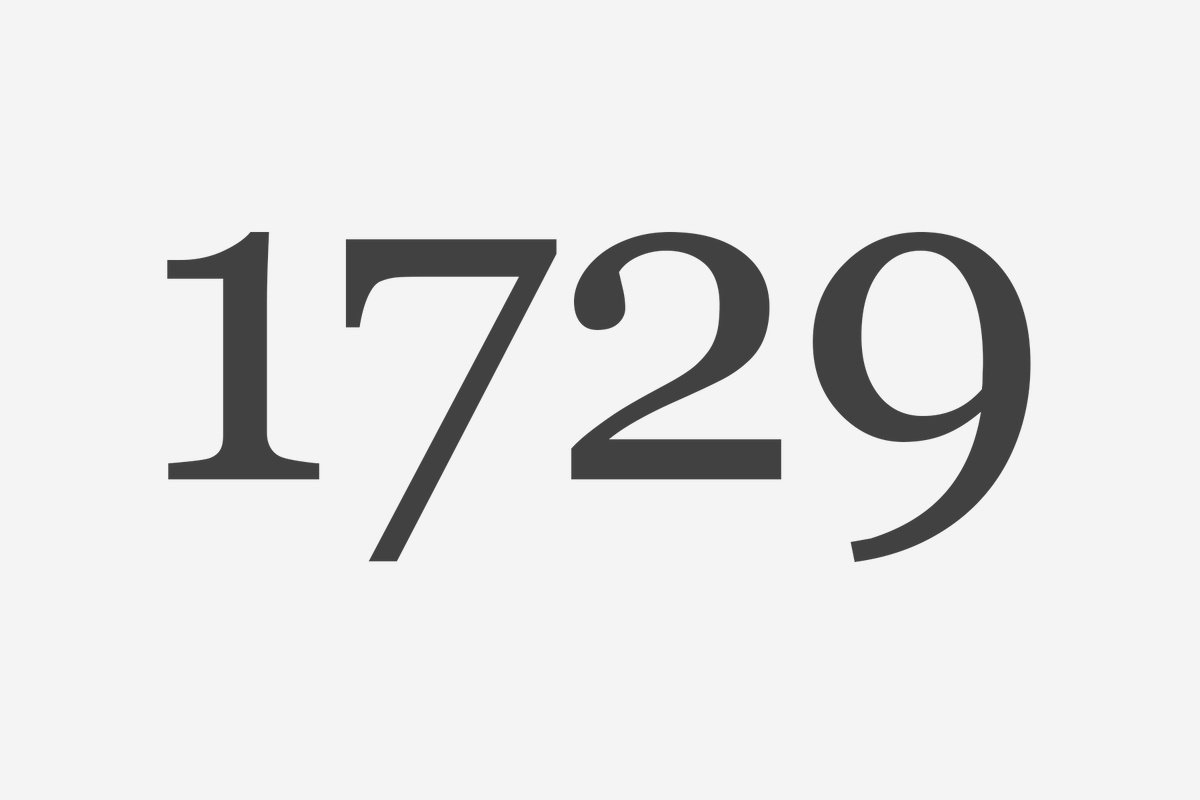
The Mathematics of Artificial Intelligence: In this introductory and highly subjective survey, aimed at a general mathematical audience, I showcase some key theoretical concepts underlying recent advancements in machine learning. https://t.co/FdxBkdLYrw
Review article: "Nonlinear partial differential equations in neuroscience: from modelling to mathematical theory" (by José A Carrillo, Pierre Roux): https://t.co/2wlomzViFd
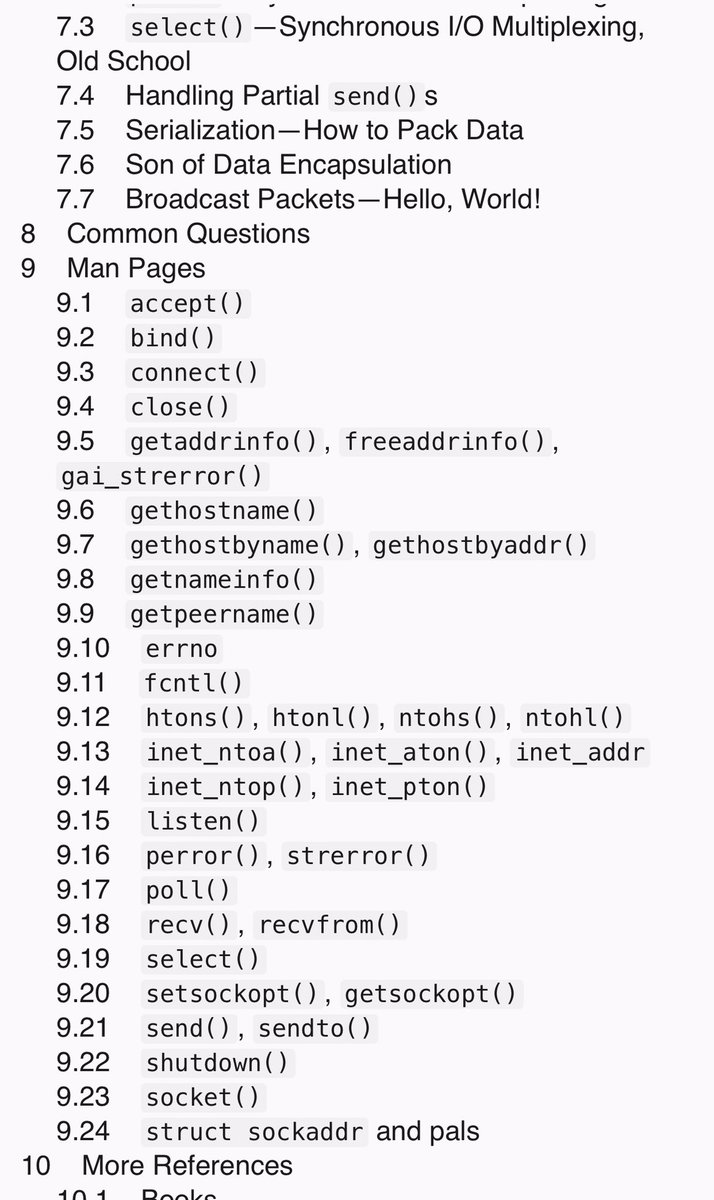
"Beej’s Guide to Network Programming"
A decades-old classic for learning about Network Programming in C (it's still updated regularly!).
Covers fundamental topics such as TCP/IP, UDP, DNS, client-server & more with clear examples, bridging the gap between theory & practice.
For those interested in the question of whether or not there was an initial singularity, have a look at a conversation I had with @bgreene at the World Science Festival last June. It's a deep question.
https://t.co/l9N3tqGKRP
Here's a rundown of my favorite books of 2024. Links at the end of the thread.
I start with my favorite book of the year by far:
A Brief History of Intelligence.
It's an exquisite masterclass in writing and research. At one point I realized I'd highlighted nearly every page. By the end I'd made a big list from the bibliography to follow up on dozens of threads from its pages.
I love books by authors who become positively obsessed with an idea and follow it with the single minded focus of a maniac. That's what happened with author Max Bennett who traces the evolution of our minds from simple clusters of neurons to complex thinking wetware, all while tying it into our all-out quest to create artificial thinking machines.
The result is a hauntingly beautiful masterpiece filled with deep insights into how our brains came to be.
i am about to teach a new applied linear algebra course at @PennEngineers, meant for datasci/ML/AI.
to support the class, i've written a book...
[see below for links to text]
Wait. Geometry of four dimensions by Parker Manning Henry is available, scanned and made public, by University of Michigan and I didn't know this before today?
It's a superb exposition of the subject which starts you up by building the foundation.
Link to the book���👇👇👇
i have a very simple question i ask during phone screens: print each level of a tree on a separate line.
90% of CS grad candidates just can't do it. someone needs to investigate these universities.
Sofia Kovalevskaya, first woman to receive a Ph.D. in mathematics, and her unconventional journey ✍️
Sofia Kovalevskaya, born on January 15, 1850, in Moscow, Russia, emerged as a trailblazing mathematician during an era when women had limited access to higher education. Her early interest in mathematics was kindled by unconventional means; her family's home had wallpaper made from her father's old calculus notes, which she avidly studied. Despite societal constraints, Sofia's passion for mathematics drove her to seek further education. To circumvent restrictions on women attending university in Russia, she entered into a marriage of convenience with Vladimir Kovalevsky, allowing her to travel to Germany for her studies.
Kovalevskaya studied under some of the most prominent mathematicians of the time, including Karl Weierstrass at the University of Berlin. She was not allowed to formally enroll due to her gender but was given private lessons by Weierstrass, who recognized her exceptional talent. In 1874, she earned her doctorate from the University of Göttingen summa cum laude, becoming the first woman to receive a Ph.D. in mathematics. Her dissertation on partial differential equations, specifically the Cauchy-Kovalevskaya theorem, remains a fundamental result in the field. Despite her qualifications, Kovalevskaya faced significant barriers in securing a position in academia. It wasn't until 1883 that she was appointed as a lecturer at Stockholm University in Sweden, and two years later, she became a full professor, making her the first woman to hold such a position in Europe. Her research during this period was prolific and varied, encompassing topics such as the dynamics of Saturn's rings, the shape of a rotating solid body, and the theory of elliptic functions.
Kovalevskaya was also an advocate for women in science and played a pivotal role in promoting gender equality in academia. Her perseverance and achievements opened doors for future generations of women mathematicians. Sadly, her life was cut short when she died of influenza on February 10, 1891, at the age of 41.
For logicians and philosophers out there, I got you this playlist on the ''analytic tradition'' of philosophy, which covers thinkers and important ideas from Frege, Russell, Wittgenstein, Carnap, Quine, Kripke, Sellars logical empiricism ++
👀🔗👇






![prof_g's tweet photo. i am about to teach a new applied linear algebra course at @PennEngineers, meant for datasci/ML/AI.
to support the class, i've written a book...
[see below for links to text] https://t.co/VIKyvI2TL3](https://pbs.twimg.com/media/GgIewpxWIAAMUMG.jpg)