Quick takes on the Social Signals from #ASCO26.
🧬 RASolute-302: @marklewismd 's tweet regarding the standing ovation for RASolute-302 really made that trial stand out. The momentum here was massive, fueled by high expectations from the @RevMedicines PR, #AACR26 presentations,and the high-profile Ben Sasse interviews.
⚔️ PROTEUS: One of the more interesting trials from a social media perspective, as the radiation oncology community on X was highly critical of the trial's surgical paradigm.
🔄 CROWN: Felt a bit like an incredible replay of the Plenary from years ago—steady, practice-confirming data.
🎬 HARMONi-6: Perhaps the most compelling narrative twist. The discussant, Dr. Julie Brahmer, masterfully set up the Plenary audience using The Devil Wears Prada as a research metaphor. It begs the question: Is VEGF back?
🚀 LIBRETTO-432: A massive surprise for many attendees. Lung cancer specialists were thrilled about @LillyOncMed selpercatinib in the adjuvant setting for RET-positive NSCLC. The core takeaway from @christine_lovly presentation was loud and clear: "This is why we test."
🔬 OPTIMA: Really got the breast cancer community excited about using @Veracyte 's test to safely reduce the chemotherapy burden for many of their patients.
📦 WU-KONG28: Had such an interesting vibe. Great data from @Dizal_Global , but it leaves the KOLs asking the same commercial question: Why isn't this readily available to patients in the US yet?
Follow the #ASCO26 Pre and Post highlights here: https://t.co/KmTOtRTvJB
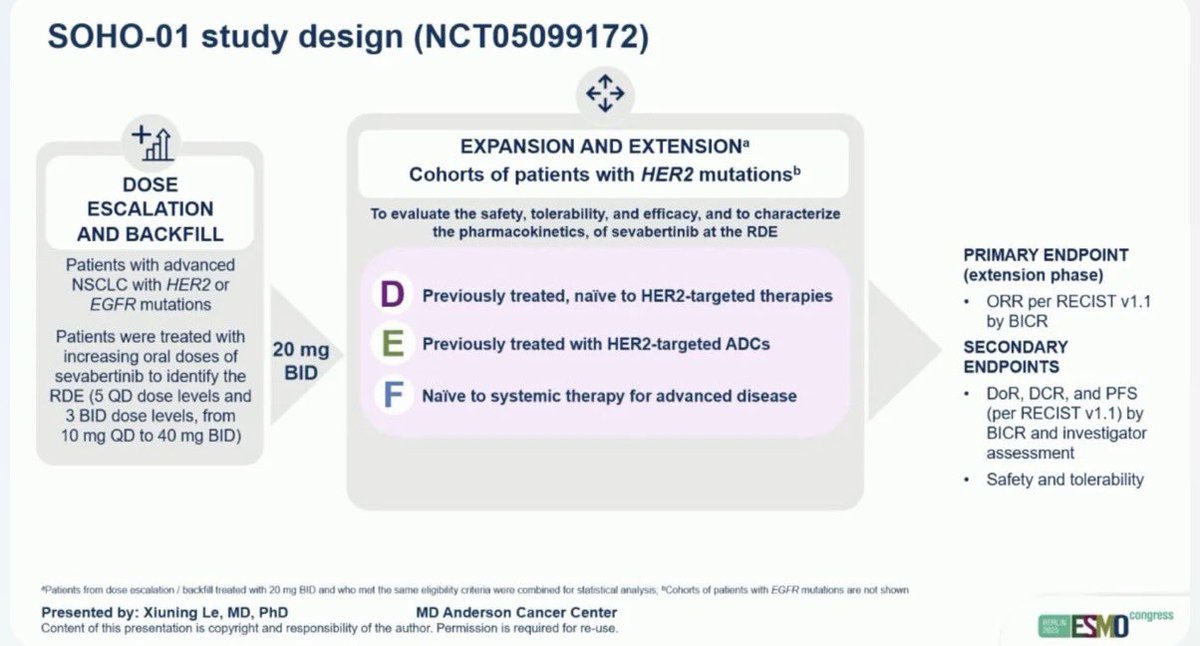
Sevabertinib recibe aprobacón acelerada por la FDA para adultos con CPCNP no escamoso, localmente avanzado o metastásico, con mutaciones en 𝐻𝐸𝑅2 con base en la evidencia del ensayo clínico SOHO-01:
📊 TRO del 71%
🗓️ DdR de 9.2 meses en pacientes sin terapias previas dirigidas contra 𝐻𝐸𝑅2
💊 20 mg vía oral, dos veces al día con alimentos
⚠️ Perfil de seguridad: riesgo de hepatotoxicidad, neumonitis, toxicidad ocular y diarrea
🔗 https://t.co/I6VUFBpZV5
#ScienceLink #FDA #Sevabertinib #CPCNP #HER2 #SOHO01
Sevabirtinib is now @FDA ✅ in 1L HER2/ERBB2 TKD mutated mNSCLC based off SOHO-01:
- ORR: 75%
- 73% of responding pts had DOR ≥ 6 months and 38% had ≥ 12 months
- AEs: Diarrhea, LFTs, and Pneumonitis
#Lcsm#WCLC26#OncTwitter@OncUpdates
🚨🔥@OncoAlert Hot off the press.
@US_FDA approves:
⭐️#Sevabertinib
❇️For #FirstLine Tx in patients with advanced #HER2 (#TKD) mutant Non-Small Cell #LungCancer.
This is an #Expansion of existing indication/approval in 2nd line.
Approval based on #SOHO-01 trial’s results:
✅#ORR (in 1st line): 75%
✅73% of responding pts with DOR ≥ 6 months
👇🏻
https://t.co/x0ZkVOrBlo
What happens when a cancer drug costs $500,000? A Wall Street investment banker who focuses on healthcare has an unlikely answer:
“A breakthrough that cannot be reached by the patient is a scientific success but a healthcare failure.”
@wbbsec@Forbes
https://t.co/7DhTKK8jM8
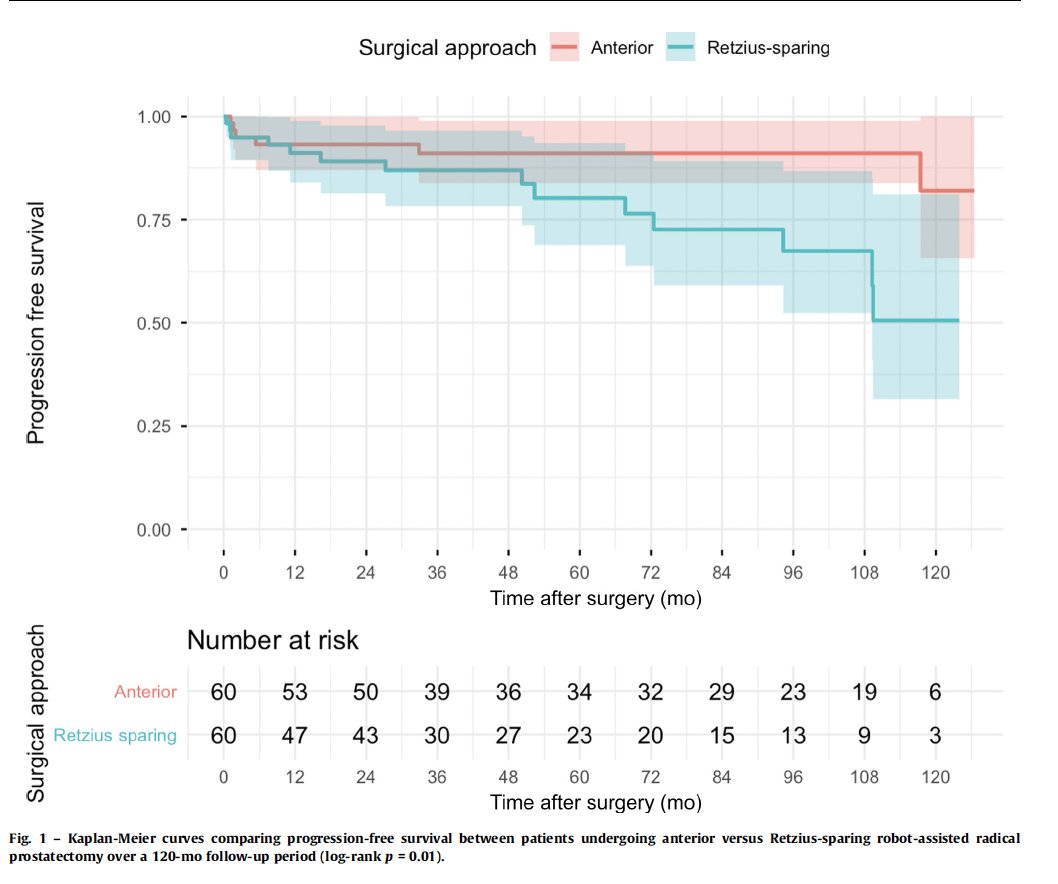
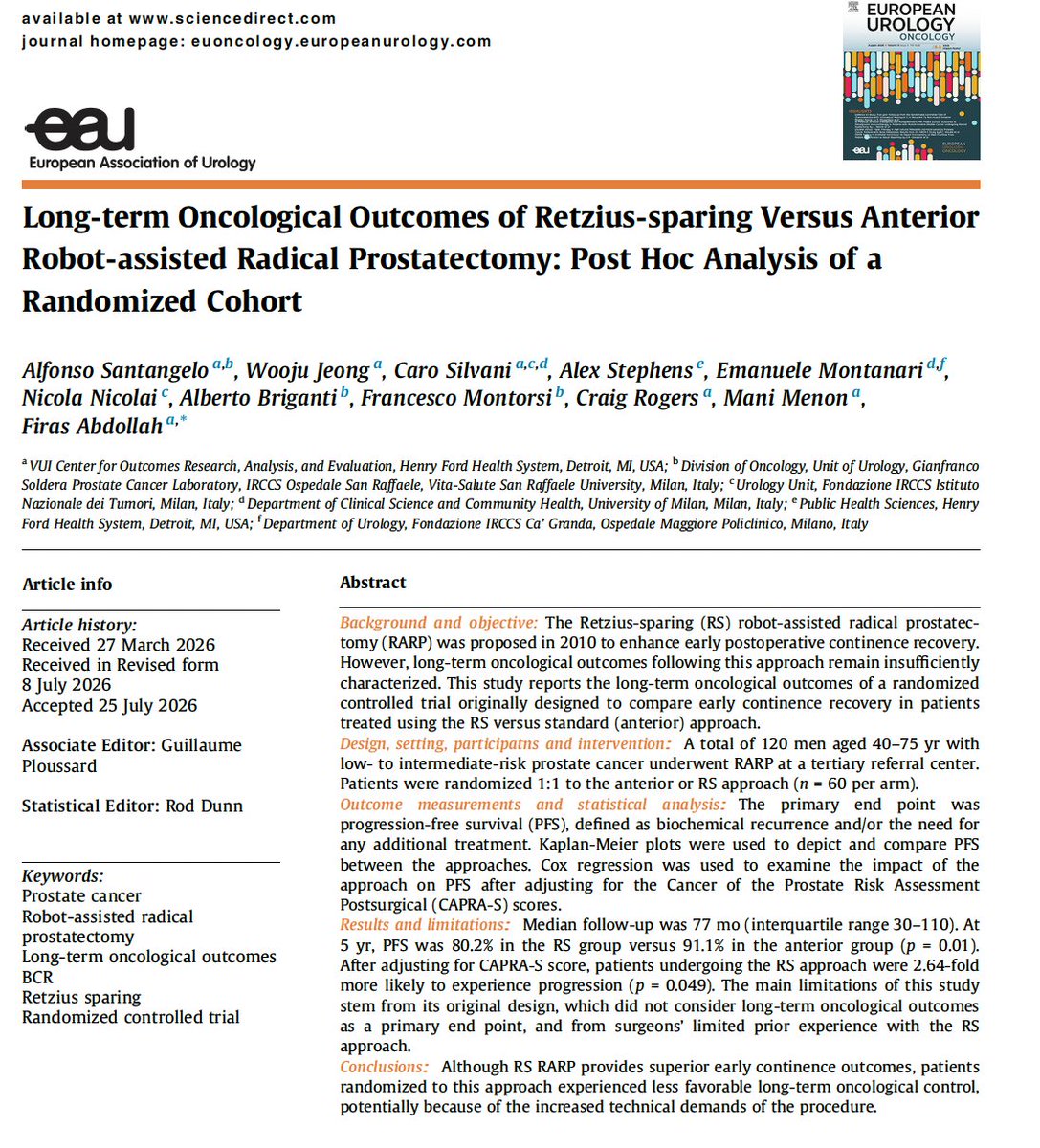
🚨 Retzius-sparing RARP: better early continence, worse long-term cancer control in the first randomized trial 10-yr readout 🚨
@EurUrolOncol, post hoc analysis of an RCT
👥 120 men, NCCN low/intermediate risk PCa, randomized 1:1 RS vs anterior RARP
⏱️ Median f/u 77 mo, 20 progression events (BCR and/or any additional tx)
✅ 5-yr PFS: 80.2% RS vs 91.1% anterior (p=0.01)
✅ 10-yr PFS: 50.5% vs 82.0%
✅ Adjusted for CAPRA-S: HR 2.64 for progression w/ RS (95% CI 1.01 to 6.91)
⚠️ Signal held in negative-margin pts only: 5-yr 81.1% vs 96.1% (p=0.042), so not just a margin story
⚠️ RS arm had more pT3 (45% vs 23%) and numerically more PSMs (25% vs 13%)
⚠️ Small trial, oncology not the original endpoint, only 9 pts at risk at 10 yr, and the 2 surgeons had done just 60 RS cases total. Expert series suggest ~100 to flatten the learning curve
🎯 First randomized long-term evidence that the oncologic equivalence of RS RARP cannot be assumed.
👉Not a final verdict on RS in high-volume hands
🔗 https://t.co/SCHgWNmK7V
@AmerUrological@UroOnc@SUO_YUO@PCF_Science@PCFnews@UrologyTimes@urotoday
2/ AA is a bet. Patients with few or no options can get a drug early. The company wins in short-term but then has onus to run RCT. The stakes are high - if the trial misses the drug gets pulled. This highlights tensions between speed and access and regulatory rigor.
What's not fine is a drug sitting in AA for 10 yrs with nobody knowing whether it works. We actually had a lot of that.
Why we need RCTs 👇🏼—Beyond the primary analysis, they often/usually provide the best evidence on secondary questions.
(Looking forward to similar analyses re: MDT using ongoing trials like STAMPEDE 2, METANOVA, TERPS, TRITONS)
Read the backstory behind the phase I GlutaPanc trial in this @NatureCancer#ResearchBriefing, including challenges in funding this unconventional therapy in #PDAC when glutamine deprivation, not supplementation, was the historical approach
https://t.co/iTliZGqV2G
@OncoAlert
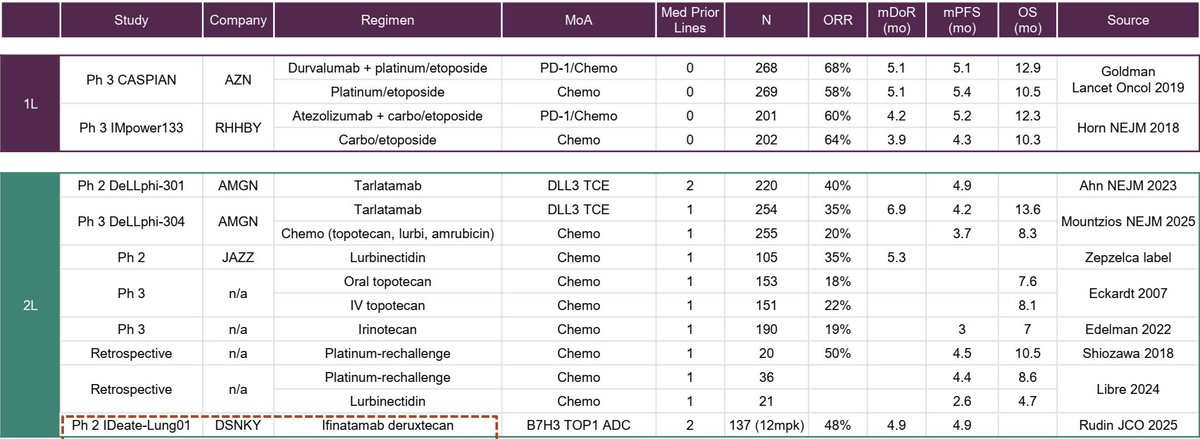
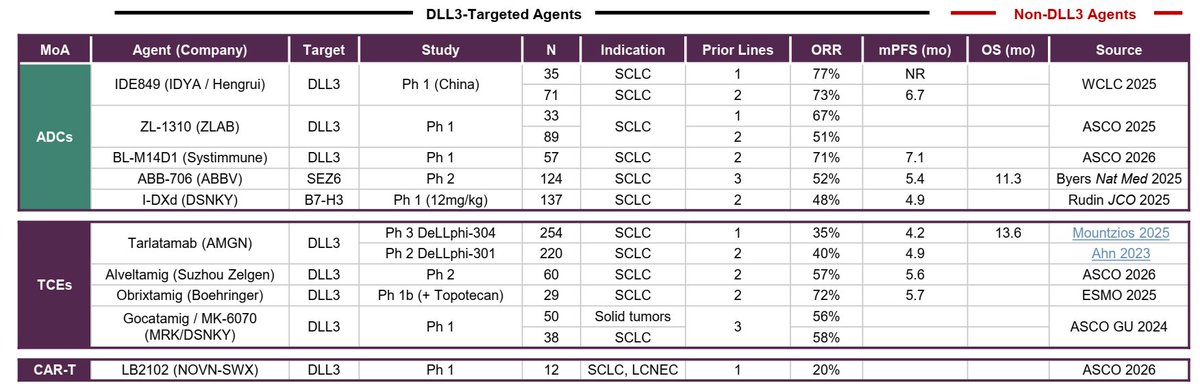
SCLC landscape from Guggenheim.
Great to see how TCEs and ADCs are transforming this aggrsessive tumor type.
$AMGN's Imdelltra will probably become SOC in first line as maintenance (study hit OS but still no data) leaving 2nd line to ADCs where there are 3 validated targets (B7H3, DLL3, SEZ6) that look very effective.
Daiichi's B7H3 will reach the market first but $ZLAB, $IDYA and $ABBV recently started P3s.
Long term could ADCs replace 1st line chemo followed by maintenance DLL3 TCE+ PDL1 ?
🔥Osimertinib in uncommon EGFR-mutant NSCLC: real-world data from Italian ATLAS registry
🆙 @ESMO_Open
🎯ORR 66%, mPFS 18.3 mo, mOS 34.5 mo overall
🎯Ex19 delins showed superior ORR/PFS/OS vs other ucEGFR mut & mirrored classical ELREA outcomes
🎙Dr. Giovanni Farinea
#LCSM @On@OncoAlert@Larvol@EGFRResisters
https://t.co/fLZXHlrACS
1/ I was on the @FDAOncology ODAC for sotorasib, a KRAS G12Ci tested in NSCLC. We voted no, almost unanimously. A year later adagrasib + cetuximab got accelerated approval (AA) for colorectal cancer based on KRYSTAL-1.
KRYSTAL-10 was a phase 3 RCT testing that combo and just reported negative findings. Last week adagrasib came off the market.
I've already seen this called a failure of accelerated approval (AA). I'd argue the opposite.
Can targeted drugs make better ADC payloads, especially when there's no cytotoxic involved? A few companies are exploring this concept in the clinic already.
We've been exploring how some new directions could go either way: https://t.co/EL6FwyM6Bm
I’ve been following Jared Seehafer’s work for the past couple of years and wanted to comment on his selection as FDA’s first Deputy Commissioner for Technology and Artificial Intelligence.
I was excited when he joined FDA as Senior Advisor in the Office of the Commissioner, and I’m especially excited to see him advance into this newly created role.
Before joining FDA, Jared founded and led Enzyme, which built regulatory and quality management software for medical device, digital health, and biopharma companies.
What I personally like about Jared is his willingness to question existing regulatory structures while still caring deeply about evidence and accountability. When he announced that he was joining FDA, he wrote, “Speeding time to market without compromising patient safety has been the overarching aim of my professional life.” Over the past couple of years, I’ve seen that consistent through line in his thinking: an FDA that is more flexible and more technologically capable, but also clearer about what the evidence shows and more serious about making sure evidence promised after approval is actually produced.
He’s also expressed strong support for advisory committees, a topic that, as you all know, is right up my alley.
AI will transform patient care, medical product development, and FDA’s own work. Getting it right will require reliable evidence, transparency, and strong postmarket monitoring. It’s an incredibly exciting time for medicine and technology, and Jared is exceptionally well suited to lead FDA’s work at the intersection of technology, AI, and medicine.
Congratulations, @seehafer! And best wishes to the other FDA leaders selected for these important positions.
Would you call Imdelltra a Bite? I see publications increasingly doing this, on the basis that it stands for "bispecific T-cell engager"... but I always thought the $AMGN Bite format implied an Fc-less fragment.
"Arlo-cel (GPRC5D CAR-T) hopefully en route to approval someday soon based on this." — @RahulBanerjeeMD
Registrational Phase 2 QUINTESSENTIAL met its primary ORR endpoint — and the key secondary CR rate — with arlo-cel (arlocabtagene autoleucel, first-in-class GPRC5D CAR T) in quadruple-class exposed R/R myeloma, a population already treated with BCMA-targeted therapy and including prior CAR-T patients. Numbers at an upcoming congress; investigational.
Thoracic Oncologists react to the top line PR of DeLLphi-305 in ES-SCLC
Full verbatim reactions in today's digest:
https://t.co/1k5Yovicue
@bmsnews #mmsm #MultipleMyeloma