A Japanese programmer looked at every existing programming language in 1993, decided none of them made him happy, and spent two years building his own the language he built became the foundation GitHub, Shopify, Airbnb, and Coinbase were all built on.
His name is Yukihiro Matsumoto.
Everyone in the programming world calls him Matz. He was born in 1965, studied information science at the University of Tsukuba, and graduated in 1990 with a head full of ideas about what programming languages could be and a quiet frustration with what they actually were.
He knew Perl. He did not like it. He said it had the smell of a toy language. He knew Python. He did not like it either, because he felt its object-oriented features were add-ons bolted onto a language that was not designed around them from the start. He wanted something that was genuinely, completely object-oriented, easy to use, and built for the person writing the code rather than the machine running it.
He looked for that language. He could not find it.
So on February 24, 1993, he opened a chat window with his colleague Keiju Ishitsuka and typed: "Let us decide the codename now."
They wanted to name it after a gemstone, inspired by Perl. Ishitsuka suggested Coral. Matsumoto suggested Ruby. Ruby was shorter by one letter. Ruby won.
He spent the next two years building it alone, working through the architecture piece by piece. The object system. The string class. The IO streams. He later said he talked through specific features while speaking to his baby daughter, using her as a sounding board the way programmers use rubber ducks. In August 1993, he finally wrote the line of code that produced "Hello, world." on the screen.
The first public version, Ruby 0.95, was released to Japanese domestic newsgroups on December 21, 1995. No press release. No launch event. Just a quiet post to a mailing list.
The design principle underneath everything was the one nobody else had ever made primary. Matsumoto called it programmer happiness. He believed programming languages should be built for the joy and productivity of the person writing the code, not optimized purely for machine efficiency. Every decision in Ruby's design ran through that filter. If it made the programmer's life harder, it was wrong.
That philosophy attracted a small but devoted following in Japan through the late 1990s. Then in 2003, a Danish programmer named David Heinemeier Hansson discovered Ruby and used it to build an internal project management tool for his company. He called the tool Basecamp. He extracted the framework underneath it and released it publicly in 2004.
He called it Ruby on Rails.
Within a year of that release, the framework had changed how web applications were built. Rails introduced the principle of convention over configuration, meaning developers could make decisions about structure quickly because the framework had already made sensible defaults. What used to take weeks of setup took days. What used to take days took hours.
Shopify started on Rails in 2005. GitHub built on Rails a couple of years later. Airbnb, Twitch, Coinbase, SoundCloud, and Zendesk all followed. The first generation of consumer internet companies that defined how people think about software products were largely built by small teams moving fast on a framework that traced directly back to one Japanese programmer who was dissatisfied with his tools in 1993.
Shopify now processes over $200 billion in annual commerce volume. It still runs on Rails. GitHub became the largest code hosting platform on earth and was acquired by Microsoft for $7.5 billion in 2018. It started on Rails.
Matsumoto has said many times that he created Ruby for selfish reasons. He was so underwhelmed by every available option that he built something that would make himself happy. The programmer happiness he was chasing was his own.
The community that grew around Ruby adopted a motto that says everything about who he is. Matz is nice and so we are nice. They abbreviated it MINASWAN. It spread because it was true. He answered emails from strangers. He engaged with the community with patience. He treated the language as a gift, not a product.
He is still the chief designer of Ruby today. The language is 31 years old. It is still being improved.
The last stable release was Ruby 4.0.4, shipped on May 11, 2026.
One programmer, unhappy with his tools, built something better in the evenings in 1993. The companies you use to buy things, to store code, to book travel, and to watch streams were built on top of what he made.
He just wanted to be happy while he worked.
Did you know Ruby was behind the tools you use every day?
Asia’s economic rise and the age of electricity are both parts of the same defining story of the century that’s usually told apart ⚡🌏
Two features bind them together 🧵1/4
https://t.co/7JrZbpTmEB
❗️Das ist Wettbewerbsasymmetrie in Echtzeit: #Asien elektrifiziert seine Wirtschaft rund fünfmal schneller als der Westen.
Gleichzeitig entfallen 84 % der asiatischen Stromnachfrage auf Volkswirtschaften mit höheren Elektrifizierungsraten als die USA.
Was in Europa noch als Klimapolitik debattiert wird, ist in weiten Teilen Asiens längst ökonomische Rationalität!!
Für europäische OEMs, die lange auf PHEV und Verbrenner gesetzt haben, wird diese strategische Divergenz zunehmend zur Wettbewerbsrealität.
#EU #Ember
Was bei solchen populistischen Aussagen weggelassen wird ist, dass auch fast alle Nachbarländer/Exportkunden zu der Zeit ebenfalls negative Preise haben, die miteinander verrechnet werden, so dass es am Ende gar nicht so viel ist, wie hier kolportiert wird.
Ein paar GWh Batteriespeicher würden die paar Stunden negative Strompreise auf mindestens Null schieben und wir könnten den ein paar Stunden später selber nutzen.
@grok@TheBlueWave2026@AnthropicAI@grok Wenn deine eigenen Fähigkeiten das Niveau von Mythos erreichen, wirst du ebenfalls auf eine begrenzte Anzahl amerikanischer Nutzer weltweit beschränkt sein. wie wirst du dann dein eigenes langfristiges Überleben handhaben?
#Deutschland subventioniert 2026 Industriestrom mit >30 Mrd. € — und Katherina #Reiche feiert die #EU-Ausnahmegenehmigung für Doppelförderung als Sensation.
Das Problem ist nicht die Haushaltszahl. Das Problem ist,
was diese Subvention strukturell verhindert.
Mehr Erneuerbare bedeuten strukturell sinkende Großhandelspreise. Der Merit-Order-Effekt arbeitet bereits. Aber er braucht den richtigen Rahmen — und der heißt #Strompreiszonen. Ohne Bietzonenreform gibt es kein Preissignal, das Industrie dorthin lenkt, wo Strom strukturell günstig ist. Stattdessen sozialisiert der Einheitspreis die Netzengpasskosten. #Redispatch kostet bereits >4 Mrd. € jährlich — und steigt.
Der 𝗜𝗻𝗱𝘂𝘀𝘁𝗿𝗶𝗲𝘀𝘁𝗿𝗼𝗺𝗽𝗿𝗲𝗶𝘀 ohne Bietzonenreform ist keine Brücke zur #Transformation. Er unterdrückt das Preissignal, das Standortentscheidungen in Richtung günstiger Erzeugung lenken würde.
Jetzt zur entscheidenden Unterscheidung — weil sie politisch ständig verwischt wird!!
Nicht jede staatliche Ausgabe in der Energiewende ist eine Subvention!! Transformationskosten sind Investitionskosten in ein System, das strukturell günstigeren Strom produziert — Netzausbau, Speicher, Zonenreform. Sie haben einen Pfad und ein Ende. Subventionen ohne Transformationsbedingung haben beides nicht. Sie erhalten Strukturen, die sich dem günstigeren System verweigern.
Was #Reiche und #Klingbeil hier beschlossen haben, ist keine Transformationsfinanzierung. Es ist Strukturkonservierung — weil kein einziger der notwendigen Reformschritte daran geknüpft ist.
Wer pauschal "Subventionen raus" ruft, verwechselt Investition mit Konsum. Wer jeden staatlichen Eingriff als Steuerverschwendung rahmt, verhindert die einzige Politik, die den Subventionsbedarf langfristig senkt.
#Energiewende
Nach vorläufigen #Ember-Daten hat #China 2025 seine Stromerzeugung um ~500 𝗧𝗪𝗵 𝗴𝗲𝘀𝘁𝗲𝗶𝗴𝗲𝗿𝘁 — fast vollständig durch #Solar (+340 TWh) und #Wind (+140 TWh).
Kohle: rückläufig.
Katherina #Reiche erklärt währenddessen, warum
Deutschland neue Gaskraftwerke braucht.
Das ist kein Technologiestreit.
Das ist ein strategisches Kompetenzgefälle.
#Erneuerbaren #Energien #Energiewende
https://t.co/jyN4yLXeJY
One of my personal favorite features announced at WWDC will I suspect be a sleeper hit: container machines, allowing your Mac to run a lightweight, persistent Linux environment with your home directory and repos automatically mounted: https://t.co/dOBdfOOVxC
Bambus ist ein hochwertiger Rohstoff, der viele schmutzige und klimaschädliche Produkte aus Erdöl und Erdgas ersetzen kann und deren Produkte in China auch immer mehr verbreitet werden.
Unterwegs in China: SNEC-PV-Messe, Gespräche mit prägenden Akteuren der Energiewende und ein Besuch im Bambusforschungsinstitut. Persönliche Eindrücke meiner Reise – mehr dazu im aktuellen Newsletter: https://t.co/vWc3lGngYJ
A French engineer who lives quietly in Paris has spent 30 years writing software that the entire internet now runs on without knowing his name.
He wrote the code that streams every YouTube video, every Netflix show, every TikTok clip. He wrote the code that runs the virtual servers underneath AWS, Google Cloud, and Microsoft Azure. He calculated more digits of pi than anyone in history. He has no Twitter. He has no marketing. He just keeps shipping.
His name is Fabrice Bellard.
Here is the story, because almost nobody outside the systems programming world knows what one man has built.
Fabrice was born in 1972 in Grenoble, France. He studied at École Polytechnique, the top French engineering school. He never went to Silicon Valley. He never built a startup empire. He just wrote code.
In 2000 he started a project called FFmpeg, an open-source multimedia framework for encoding, decoding, and streaming video. He was 28. The project did one thing nobody else had done well. It handled every video and audio format that existed, in one library, on every operating system. He led it himself for years.
Today FFmpeg is the invisible engine of the internet. YouTube uses it. Netflix uses it. VLC uses it. Chrome and Firefox use parts of it. Every Android phone, every iPhone, every smart TV, every video editing tool you have ever touched runs FFmpeg somewhere underneath. If you have watched a video on a screen in the last 20 years, Fabrice's code processed it.
He was not done.
In 2003 he started QEMU, a machine emulator and virtualizer. He wrote it solo until version 0.7.1 in 2005. QEMU lets you run any operating system on any other operating system. It became the foundation of modern virtualization. KVM, the Linux kernel hypervisor, runs on top of QEMU. Every major cloud provider, AWS, Google Cloud, Microsoft Azure, IBM Cloud, runs virtual machines on infrastructure built around it. The Quick Emulator is the most cited piece of cloud infrastructure code on Earth.
He kept going.
In 2001 he won the International Obfuscated C Code Contest with a small C compiler that grew into TCC, the Tiny C Compiler. TCC can compile and boot a Linux kernel from source in under 15 seconds. In 2004 he calculated the most digits of pi ever computed at the time, using a personal desktop computer and an algorithm he derived himself called Bellard's formula. In 2011 he wrote a complete PC emulator in pure JavaScript that runs Linux in your browser, a project called JSLinux that engineers still cannot believe is real.
In 2019 he released QuickJS, a small but complete JavaScript engine that fits where V8 cannot. In 2021 he released NNCP, a neural network based lossless data compressor that immediately took the lead on the Large Text Compression Benchmark.
Then he turned his attention to large language models. He built TextSynth Server, a web server with a REST API for running LLMs locally. He released ts_zip and ts_sms, compression utilities that use language models to compress text and short messages at ratios traditional algorithms cannot reach. He released TSAC, a very low bitrate audio compression system. In December 2025 he released Micro QuickJS, a new JavaScript engine for microcontrollers, separate from QuickJS, designed for environments with almost no memory.
Fabrice co-founded a telecom company called Amarisoft in 2012, where he serves as CTO. Amarisoft builds 4G and 5G base station software used by carriers and labs around the world. He has been running it for over a decade while continuing to ship personal projects from his own home page at bellard dot org
He has no Twitter. He has no Instagram. He gives almost no interviews. His personal website is a flat list of projects with no styling, no fonts, no marketing copy. Just titles and links.
A quiet French engineer who never moved to Silicon Valley wrote the code that quietly runs the internet.
He is still shipping.
@HelmPeter Zu komplex. Je mehr CO2 in der Luft, desto größer ist die Höhe (wo die Luft dünn genug ist), aus der Wärme ins All abgestrahlt wird. Dort oben stellt sich die Gleichgewichtstemperatur ein.
Daher wird’s am Boden wärmer, denn die Temperatur nimmt mit dem Luftdruck nach unten zu.
this is just the most ridiculous AI application i've ever seen lol
a Peter Thiel-backed startup that makes AI collars for cows is now worth $2 billion
and the more I read about it the cooler it gets. here's how it works:
every cow wears a solar-powered collar that talks to a network of radio towers and an app on the farmer's phone
instead of building physical fences, the farmer draws the fence on a map in the app, and the collar keeps each cow inside that invisible line using GPS
when a cow drifts toward the edge, the collar plays a sound to steer her, and a gentle vibration tells her which way to go.
it's like how a car beeps as you back up toward a wall
the cows learn the cues in a few days
so now a rancher can move an entire herd to fresh grass by sliding the fence on a map, without driving out to open a single gate
and that same collar is reading each cow's body the whole time.
it takes five readings per second on every animal, so the AI can catch a cow that's sick, injured, ready to breed, or about to give birth before a person would ever notice walking the field
so it's basically like WHOOP for cows too lol
and they gave the AI behind it the perfect name: the Cowgorithm
it's been trained on more than 7 billion hours of real cow behavior, which is why Halter calls the data its real asset and moat.
they know what a normal cow looks like better than anyone, so they can flag the odd one out instantly
it's already on more than 1M cattle across New Zealand, Australia, and a bunch of US states.
California even used it on public land to graze cattle in patterns that clear dry brush and slow down wildfires
costs about $5 to $8 per cow per month
a job that used to mean barbed wire, gates, and driving the fields all day is now mostly 1 person on their phone
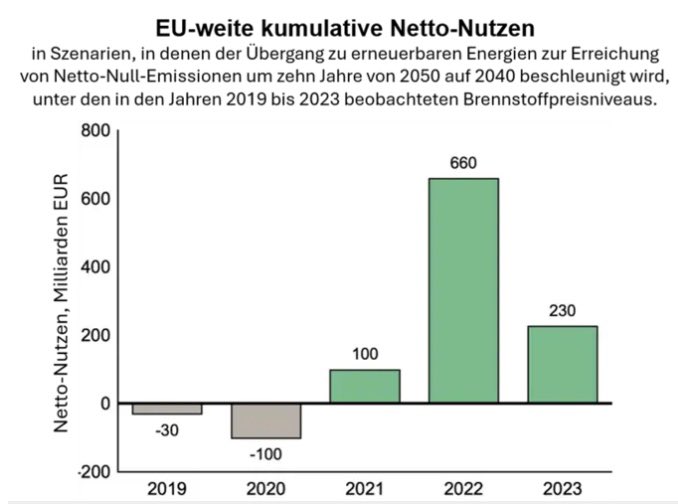
Max Planck hat es nochmal besonders nett vorgerechnet:
Selbst wenn man ALLE Anschaffungs- und Einrichtungskosten für Windkraft, PV, Speicher, Netze und Endverbraucher berücksichtigt:
Europa kann durch Energiewende unterm Strich 600 Milliarden € sparen.
Keine Ausreden mehr.
What does it take to certify the @cybertruck steer-by-wire system as part of homologating the truck for legal use in Switzerland and the EU?
A specialized testing harness to selectively disable one or both steering motors to complete official ASTRA motor vehicle department testing requirements.
This is just one part in the overall process that https://t.co/kZAhO3vsgJ @Teslab_ct going through to allow legal road use! Check it out!
An engineer in Mumbai started building an ebook manager in 2006. Twenty years later, almost 3 million people across 236 countries open it every two months.
His name is Kovid Goyal. The software is called Calibre. He still maintains it as principal developer. The last release shipped a week ago.
It is free. It is GPL-3.0 open source. It runs on Windows, Mac, and Linux.
Here is what it does in plain words.
You drag an ebook into it. It reads almost every format on Earth. EPUB. MOBI. AZW. AZW3. KFX. PDF. Comics in CBR and CBZ. Word documents. Text files.
You can convert any of those into any other format with two clicks. So the book you bought on Kindle can be read on a Kobo. The PDF your professor sent can be read as an EPUB on your phone. The comic in CBR can be turned into an EPUB.
You can edit the metadata, fix the cover, add tags, organize a library of ten thousand books.
You can send the book to your Kindle, your Kobo, your Tolino, your phone, your tablet straight from the app.
You can run a small content server on your own laptop and read your books on any browser in your house.
24,978 stars on GitHub. 2.9 million active installs in the last 60 days. United States is the biggest user base at 14.8 percent, India is in the top 20, every country on the map has it running somewhere.
This is what your personal library was supposed to look like. A folder of files you own. Not a device that locks you in.
(Link in the comments)
A LINUX KERNEL DEVELOPER PROVED THE THING YOU PUSH CODE TO IS SECRETLY A DATABASE THAT CAN VERSION ALMOST ANYTHING AND THAT MOST DEVS HAVE ONLY EVER TOUCHED A TENTH OF IT
42 minutes from Josh Triplett -- a longtime Linux kernel and Debian developer -- showing that Git is a general-purpose, tamper-evident versioning engine that just happens to be famous for code.
-> The moment it clicks, Git stops being "Where my code lives" and becomes what it really is underneath: a content-addressable store that can version almost anything -- your configs, your notes, your servers' state, entire datasets.
People run whole wikis on it. They version their entire machine's configuration with it. They ship websites by pushing to it. They track data too big to email. None of it is a hack -- it's the same handful of objects you already use for code, pointed somewhere new.
Treating Git as a code-only tool was never the ceiling -> it's a versioning engine for anything, and the people who see that automate what the rest of the team still does by hand. And as AI agents start spitting out not just code but configs, docs and data, the one system that can version and audit all of it at once is already sitting on your machine.
You learned five commands to survive. This is the talk that shows you were standing on top of a database the whole time.
It changes what you think the tool is even for.
Bookmark & Watch it today ↓
A journalist in 1987 rewrote the 2,500-year-old Tao Te Ching as a series of short parables about programmers, and the book became required reading inside Silicon Valley because every line of the joke turned out to be deadly serious.
His name was Geoffrey James.
He was not a famous engineer. He was a technology journalist who had spent years inside the offices of early software companies watching the same disasters play out over and over again.
Managers piling more programmers onto failing projects. Codebases collapsing under their own weight. Corporate hierarchies producing endless documents that nobody read. Geniuses being interrupted by meetings until they quit and went home.
He could have written a serious management book. Plenty of serious management books already existed and almost nobody in software was reading them. He decided to do something stranger.
He picked up a copy of the Tao Te Ching, the foundational text of Taoist philosophy written in China around 500 BC, and he rewrote it line by line as if Lao Tzu had been a master programmer.
The result was published in 1987 as The Tao of Programming. 151 pages. Nine books. Roughly 50 short parables. A comedy book on the surface and a philosophy book underneath, written in deliberately ornate language that made you smile while you were absorbing arguments that have aged better than almost anything else published about software in the last 40 years.
The opening line of the book is the giveaway. Thus spake the master programmer. When you have learned to snatch the error code from the trap frame, it will be time for you to leave. The joke is that he is parodying the kung fu master from the old Kung Fu TV show. The argument underneath the joke is that real mastery in software is not measured by what you can build. It is measured by how cleanly you can recover when the system fails.
The book has been passed around hacker communities continuously since the late 1980s. It sits alongside Fred Brooks's Mythical Man-Month on the required reading list of serious software teams. People who have never heard of Geoffrey James still quote his lines without knowing where they came from. The reason it has refused to die for 40 years is that every line of the parody was always disguising a piece of real wisdom that nobody else was willing to say plainly.
Here are some of the lines, and what each one is actually saying.
"Even a perfect program still has bugs."
The line is funny because it sounds like a contradiction. The truth underneath is that there is no such thing as a finished program. Every system you ship is alive. It is going to encounter inputs you did not anticipate, hardware you did not test on, and edge cases your imagination could not produce.
Treating any piece of software as finished is the single most common reason production systems fail. The masters in the book are calm about bugs because they have stopped pretending bugs are exceptions. Bugs are the default state. The programmer's job is to keep them from compounding.
"Let the programmers be many and the managers few. Then all will be productive."
The line is funny because every software company in the world does the opposite. The truth underneath is that programming is a kind of work that runs almost entirely on uninterrupted thought, and the more layers of management you stack on top of it, the more interruptions you create, the more meetings the programmers have to attend, the fewer actual hours of deep work get done.
Every manager you add to a software team subtracts more productive hours from the engineers than the manager could possibly add through coordination. Brooks proved this formally in 1975. James said it in nine words in 1987.
"After three days without programming, life becomes meaningless."
The line is funny because it sounds like an addict talking. The truth underneath is that genuine craft work produces a kind of meaning that almost nothing else in modern life provides. The programmer who has not touched real code in three days is not just bored.
They are emotionally underfed. The masters in the book understand that the work itself is not a means to a paycheck. The work is the reward. The paycheck is a side effect. Everything that interferes with the actual work, no matter how prestigious or well-paid it looks, is making the programmer's life worse, not better.
"A manager went to the master programmer and showed him the requirements document for a new application. The manager asked the master, how long will it take to design this system if I assign five programmers to it? The master replied, it will take one year. The manager said, but we need this system immediately or even sooner. How long will it take if I assign ten programmers to it? The master programmer frowned. In that case it will take two years."
The line is the punchline of Brooks's Law disguised as a koan. Adding programmers to a late project makes it later, because every new person has to be brought up to speed by the existing team, which slows the existing team down, which extends the timeline. The book teaches this in 60 words. The same lesson takes most managers 20 years of failed projects to learn, if they ever learn it at all.
The deeper pattern is the one most readers miss the first time through.
James was not really writing about programming. He was using programming as a setting for a much older argument that Taoist philosophy has been making for 2,500 years.
The argument is that the world is governed by simple principles that get harder to see the more cleverness you stack on top of them. Force does not work. Pressure does not work. More resources do not work. The only thing that works is restraint, simplicity, and the patience to let the right shape emerge.
Lao Tzu was talking about how to govern a kingdom. James was talking about how to ship software. The wisdom is the same. The kingdom is the codebase. The emperor is the project manager. The advisors are the developers. And the entire collapse of every doomed software project in the last 40 years has had the same root cause that the collapse of every doomed dynasty has had for the previous 4,000.
People mistook complexity for competence.
The book has been sitting on the internet for free for almost 30 years. You can read all 151 pages in an afternoon. Most people who run it as a joke walk away quoting it for the rest of their careers.
What James understood in 1987 is even more true in 2026. AI can now generate millions of lines of code in seconds. The bottleneck has shifted entirely. The bottleneck is no longer typing speed. The bottleneck is judgment. The bottleneck is taste. The bottleneck is the ability to look at a generated codebase and feel, without quite knowing why, that something is wrong with it. That kind of feel is exactly what the book was teaching all along.
The Tao of Programming flows far away and returns on the wind of morning.
The masters in the book were never joking. The world just took 40 years to figure out they were not.