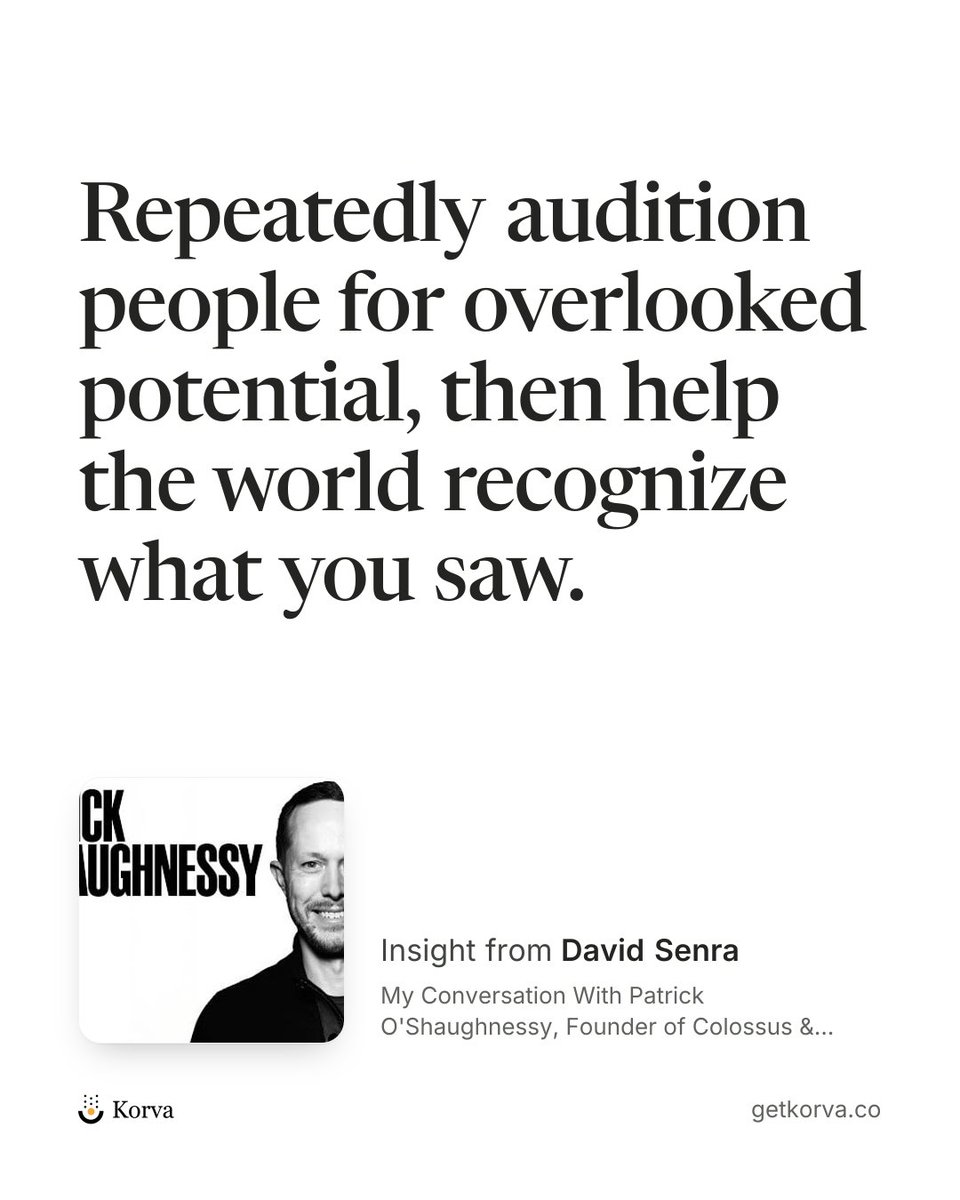
In his conversation with @davidsenra, @patrick_oshag describes something he wants to keep doing throughout his life: finding people with enormous potential that others haven’t recognized yet, helping them develop it, and helping the world see what he sees.
That starts with spending time with people and learning from them. When Patrick sees something exceptional, he wants to make introductions and help their work reach more people. He applies this to investing, his own team, and friendships. Seeing those people succeed is what he finds most satisfying.
David gives an example from his own life. Founders was still a small, paywalled podcast when Patrick recommended its Estée Lauder episode to his audience. David had spent years working on the show with little recognition. The next day, he opened his inbox to a stream of new-subscriber emails. Patrick’s recommendation had brought people to work David had struggled to get them to notice.
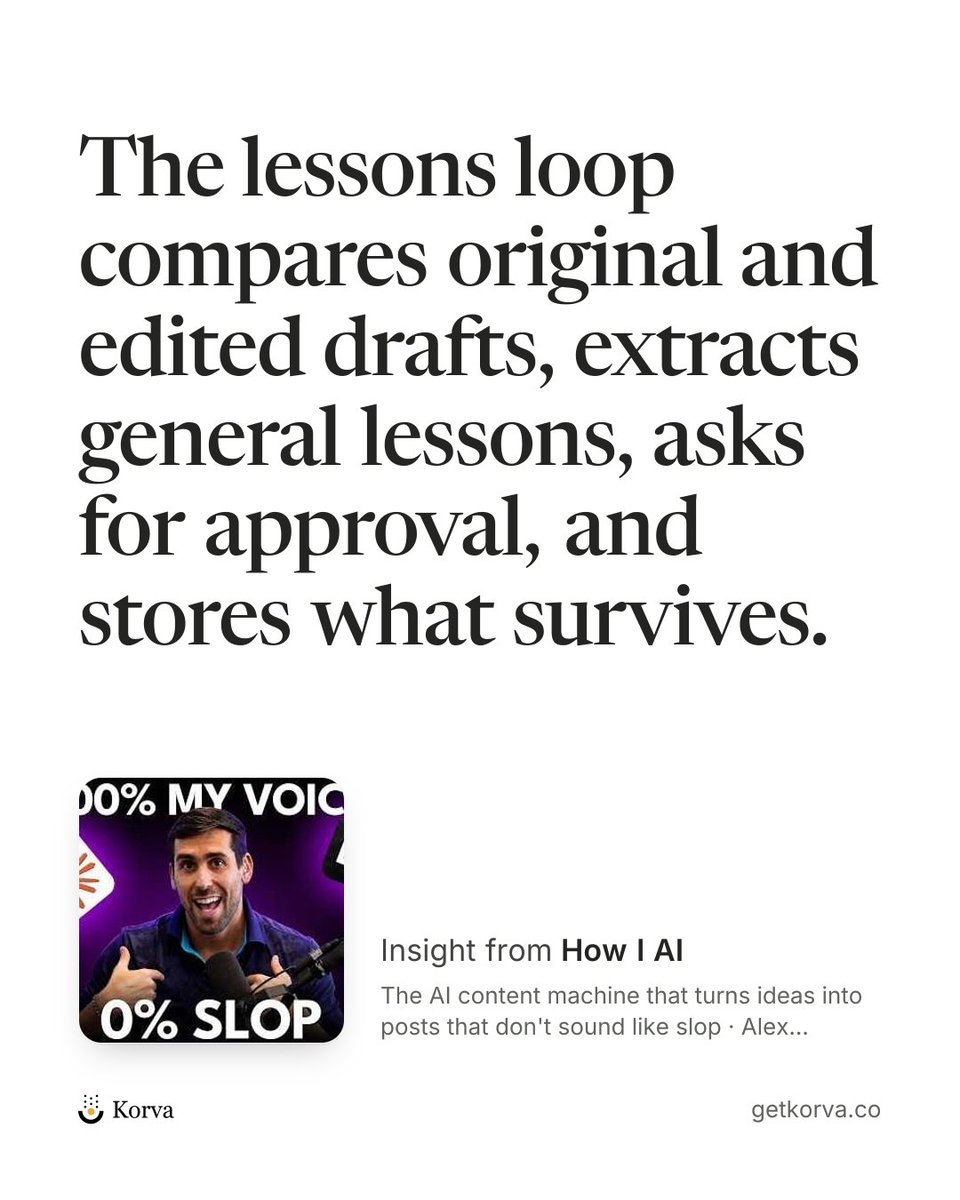
If you keep making the same edits to AI drafts, that feedback needs somewhere to live. Otherwise, you can fix today’s draft and still end up making the same corrections tomorrow.
In his conversation with @clairevo, @businessbarista explains a workflow that compares an original draft with his edited version. The system uses those differences to extract lessons about how he wants the writing to change, then asks him to approve the lessons before saving them.
When it works on later drafts, it consults those saved lessons. That gives the next draft more to work with than the original instructions: it also has feedback from work he has already reviewed and corrected.
I’m thinking about changing how I market Korva and how I talk about it. I got too focused on explaining what it does, rather than the value people get from it and how I want Korva to make them feel.
I’ve made adding a podcast extremely easy. But pitching it as a way to “save the insights from your podcast” still sounds like work. It makes adding something feel like the starting point.
My grand vision for Korva has always been a place with the internet’s best insights, without the slop.
We all know and love the experience of coming across something interesting online. A juicy detail, a fun fact, or an idea that makes you curious and leaves you wanting to know more. I want Korva to give people more of that, with less slop between the good stuff.
Open it and scroll. The insights are one or two sentences. You can go deeper, return to the original source, and discuss them with other people as the community grows.
For some people, it can be a companion to what they already watch, read, or listen to. For others who are too busy to listen, read, or stay up to date, it can still be a way to find something fun and interesting, and give that curious side of you something to enjoy. And if you’re bombarded with things to consume, it can help you decide what deserves your time and discover something you become a fan of.
We’ll see whether this gets more people interested in Korva, but I think it captures the value better than leading with the utility.
So my question: what would make you more interested? An app positioned as a way to save insights from podcasts, or a collection of the internet’s best insights, where you can get more of those moments we all love: coming across an interesting tidbit, a fun fact, or an idea you want to know more about?
An ant can fall from an airplane and survive. It weighs so little compared with its surface area that air resistance keeps it from reaching a dangerous speed.
But being tiny creates a different problem in water. Surface tension makes the water’s surface behave like a stretched skin. An insect caught there can struggle to pull free because that force is so large compared with its weight.
The same small size that makes a huge fall survivable can make an ordinary drop of water a trap.
https://t.co/Tgt8T4u1ds
Explore the Insight Card:
https://t.co/wTFXZG8QwC
Listen to the full episode, “How to Make and Sustain Friendships as an Adult,” from This Feels Familiar with Minaa B.:
https://t.co/Lswsl8amWo
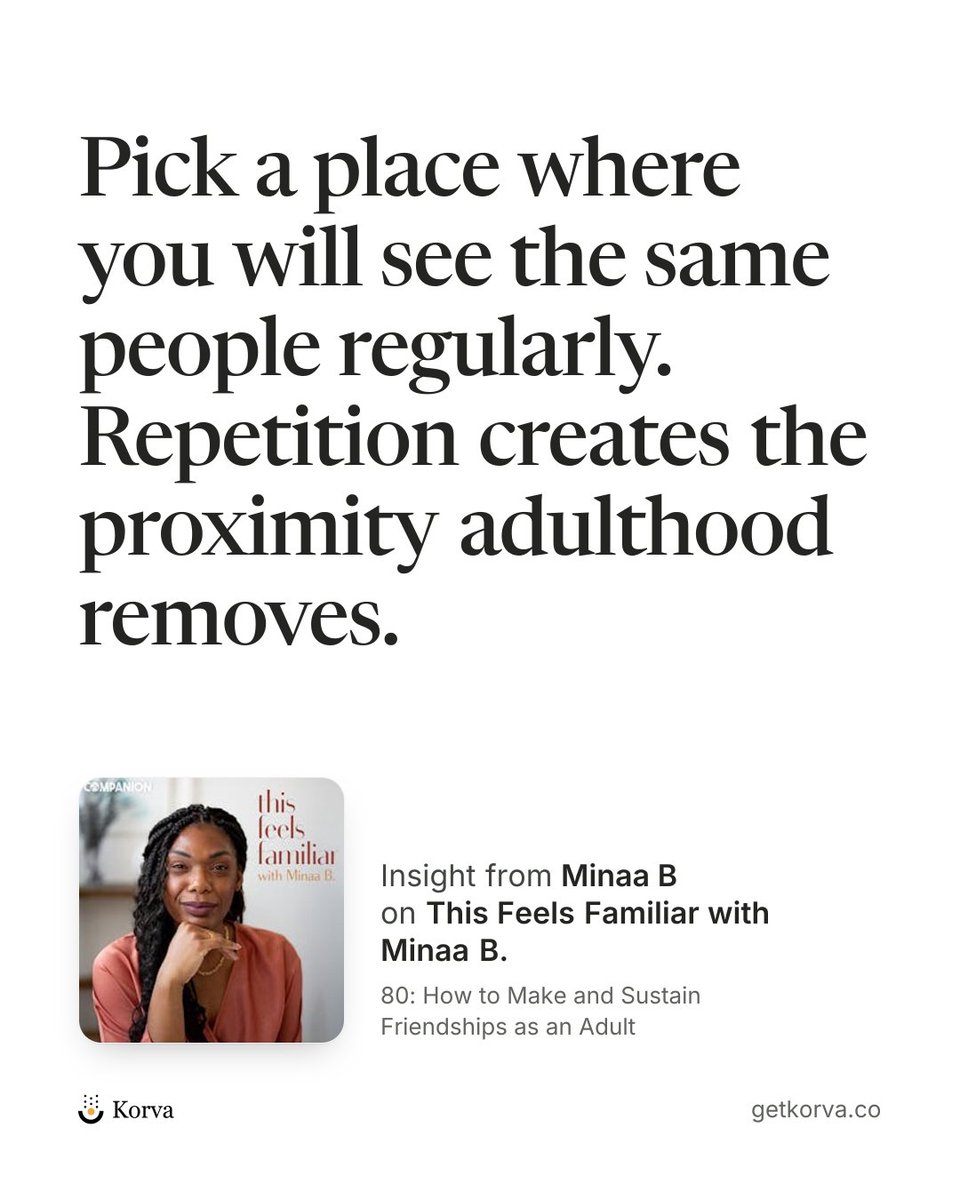
School made it easy to see the same people again without having to arrange it. As an adult, even meeting someone you like can turn into “we should hang out sometime” and then nothing.
A recurring class, volunteering shift, or running group gives you another chance without starting from scratch each time. You don’t have to become friends the first time you meet.
@MinaaBe’s advice offers a practical starting point: choose somewhere you’d enjoy going anyway, then keep showing up.
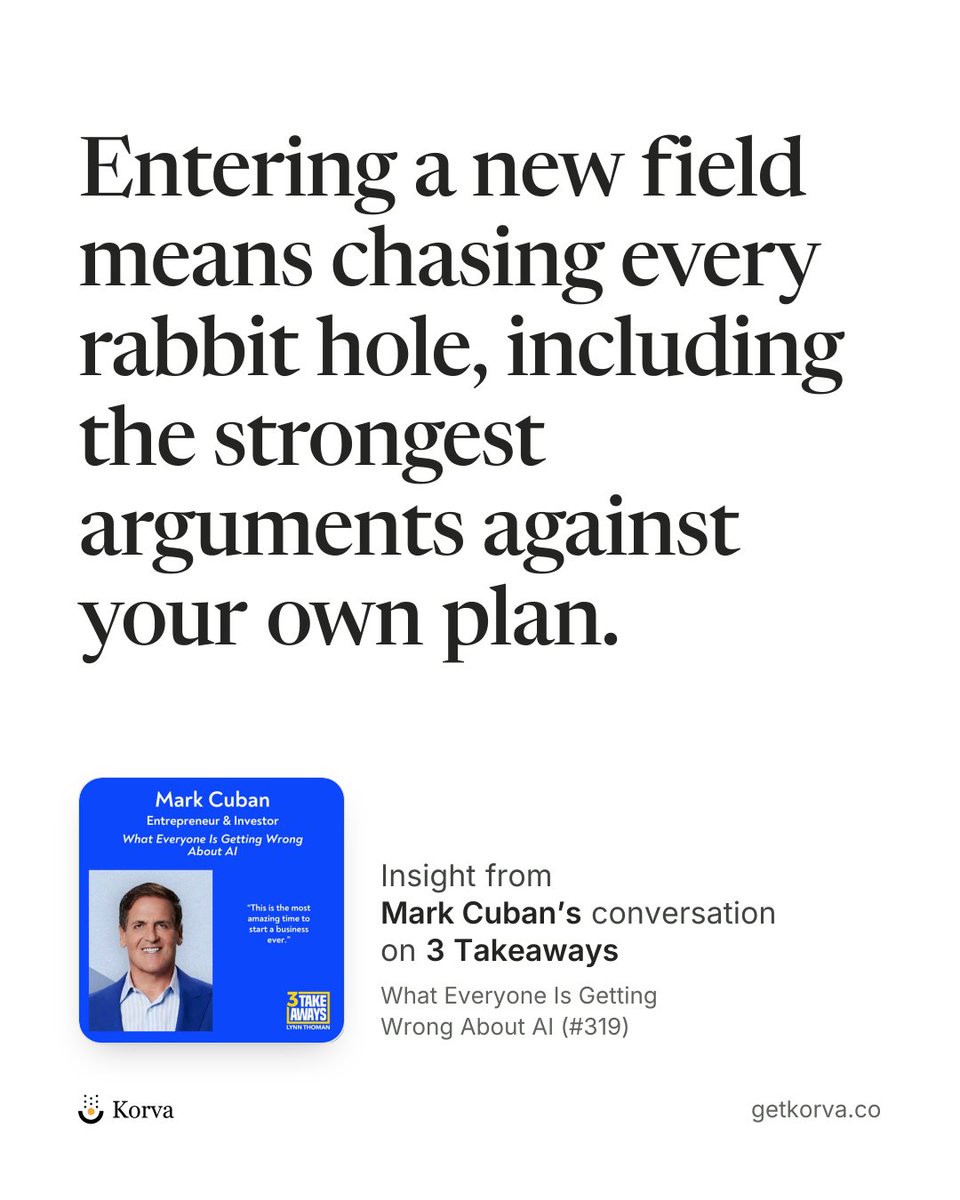
When @LynnThoman asks @mcuban how he learns a completely new field on 3 Takeaways, he describes going down every rabbit hole he can find, including the reasons someone would think his plan is crazy.
He says understanding those objections helps him deal with people's hesitations and respond to them. It's a useful standard for research: could you explain why someone disagrees with your idea, or only why you believe in it?
Cuban also says that adapting to change means understanding its wider effects. One way to apply that advice: when a new technology appears, ask how it might change what customers expect, how competitors operate, and what your own business needs to do differently.
For something you need to learn, he suggests using AI to create a study guide and following up with tutorials. But he puts the responsibility for learning back on the person: “You always have to want to learn it.”
A Korva card from the conversation:
https://t.co/jPx5CZdwOO
Listen to the full episode:
https://t.co/QiD8KURC8N
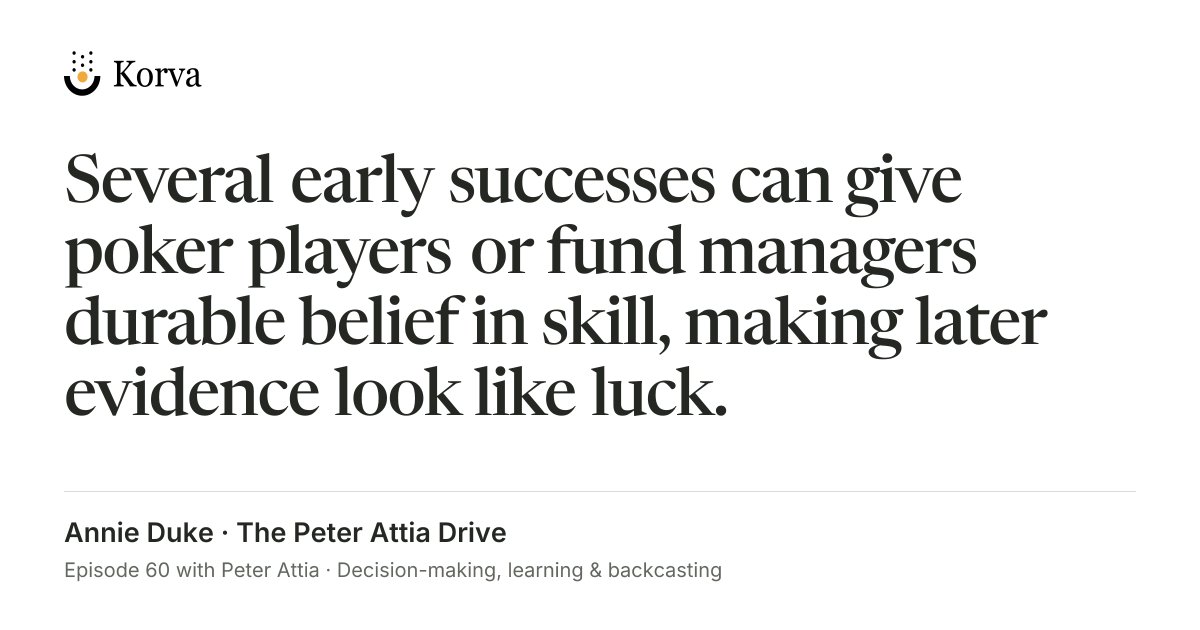
Annie Duke talks about how winning early can make it harder to learn.
A poker player wins a couple of tournaments and decides he's good. When the losses come, they're easier to explain away as bad luck. The early wins still count as evidence of skill, but the losses never seem to count against it.
She connects this to fund managers too. A strong start can give you a story about your own ability that survives long after the results stop supporting it.
From @AnnieDuke’s conversation with @PeterAttiaMD on The Drive, episode 60.
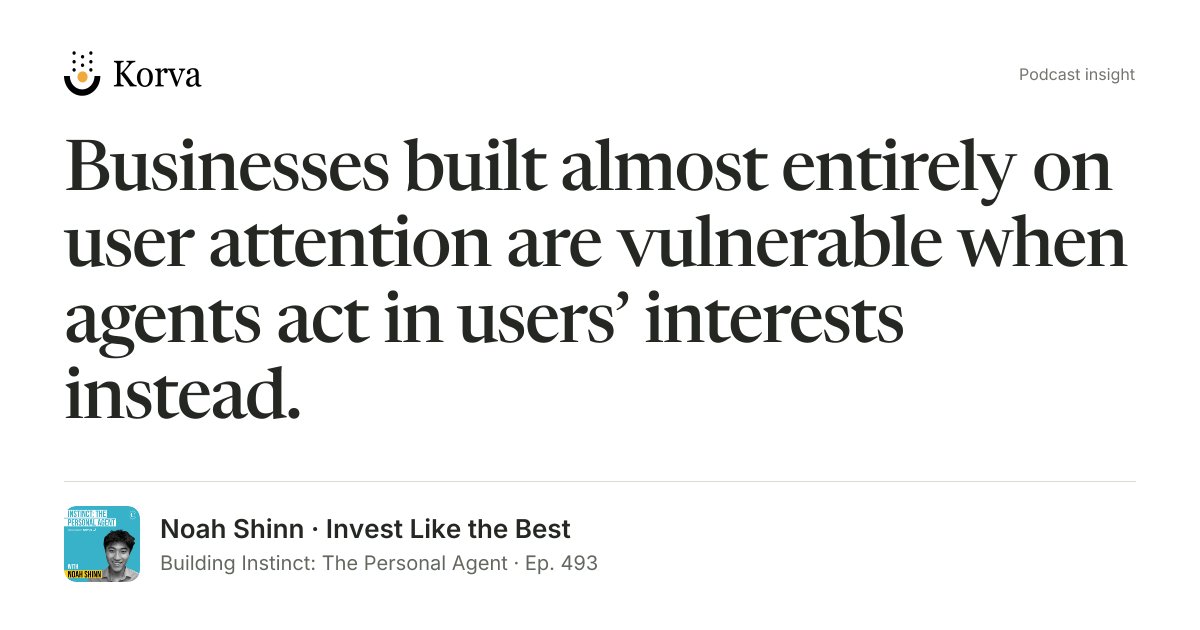
@firesidealpha A restaurant still gets paid if an agent books the table. The harder case is a business that needs you scrolling past ads before you get what you came for.
@JamesonCamp@patrick_oshag@noahrshinn Noah's point about buying compute ahead of demand stuck out. At 10% daily growth, demand doubles roughly every week. Buy too little and you can't keep up. Buy too much and you're betting that growth won't slow down.
A restaurant doesn't care whether you book the table yourself or an AI does it for you. It still gets the booking.
But what happens to businesses that make money from keeping you scrolling?
@noahrshinn on Instinct with @patrick_oshag.