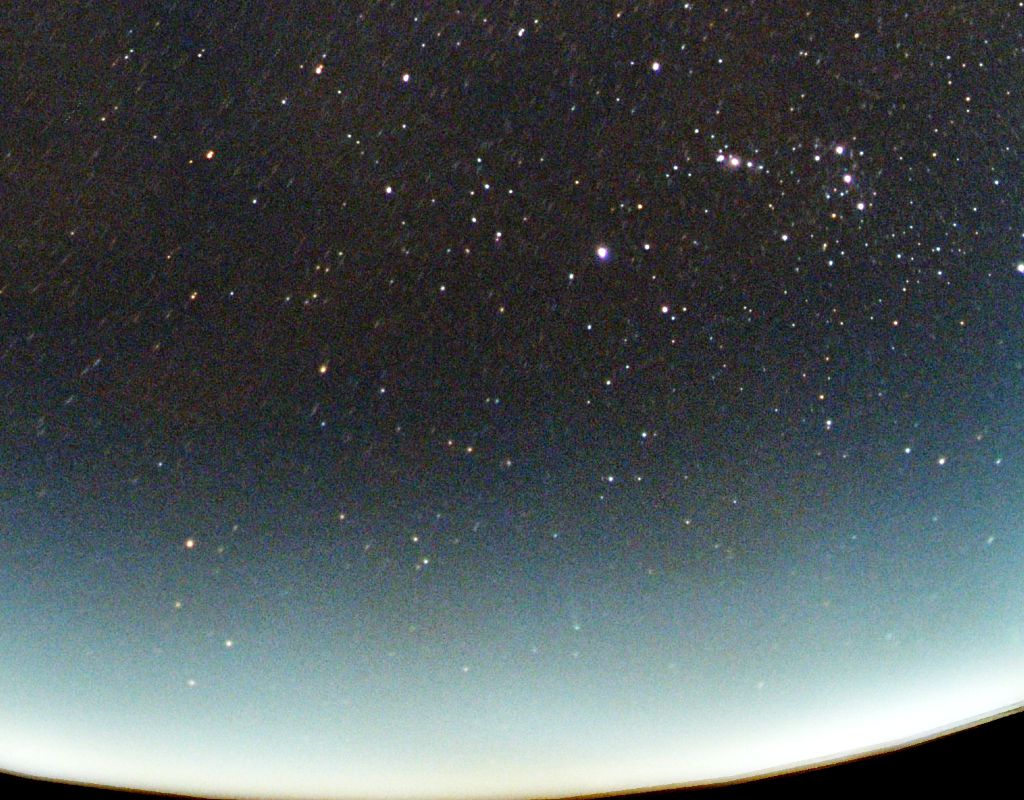
#MeteorSighting: Eyewitnesses in several U.S. states across the southeast reported a bright fireball on the night of June 14 at 10:26 p.m. CDT. The meteor, which was also captured by three NASA meteor cameras, was first spotted above Tupelo, Mississippi, moving to the northwest at 56,000 mph. It traveled 300 miles before disintegrating above the Mark Twain National Forest in Missouri. The object moved too fast and was too small to produce meteorites.
More on this fireball: https://t.co/xW1pDWJHG0
Eyewitness accounts supplied by the American Meteor Society
Motion of the nearby red dwarf star Wolf 359 captured over a 7 yr period.
Wolf 359 is a small red dwarf star about 7.9 light-years from Earth, making it one of the Sun’s nearest stellar neighbours. It lies in the constellation Leo and is far too dim to see without a telescope.
Its proper motion is unusually high: about 4.7 arc seconds per year, meaning its position shifts noticeably against background stars over just a few years.
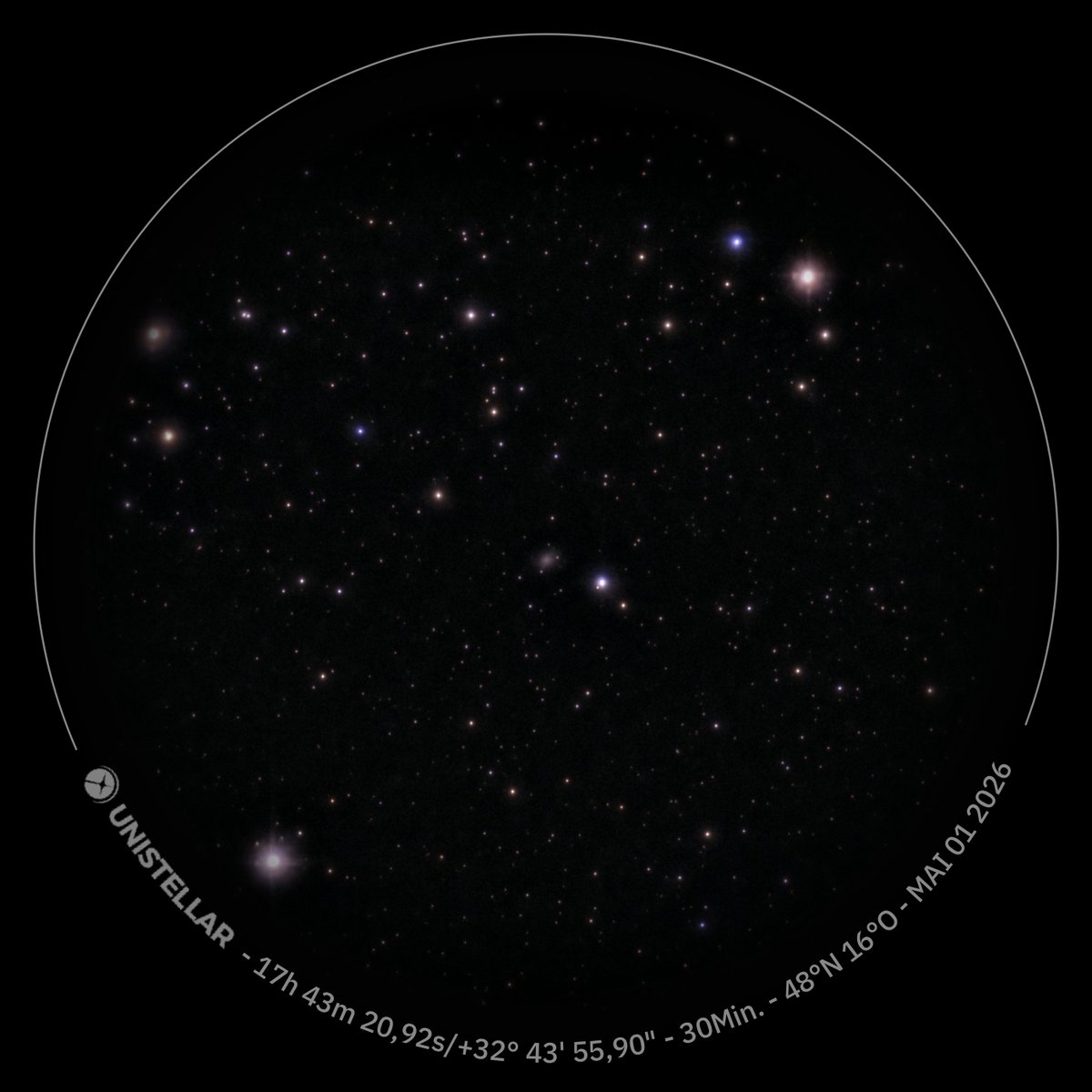
220P/McNaught outburst as imaged with a #Unistellar telescope on 2 June 2026. Over the last week comet 220P/McNaught has brightened by about 10,000x from mag 18 to mag 8. In the morning sky it is located about 11 degrees to the upper right of Saturn.
-- Kevin Heider
Every day, remarkable things happen overhead: meteors, satellites, drones, atmospheric events, and sometimes phenomena we cannot yet explain. Too often, they are captured as blurry videos with missing context — or not captured at all.
@Skymapperspace is launching SkySphere, an AI-powered all-sky observatory designed to continuously monitor and analyze the sky in real time. Built for citizen scientists, educators, researchers, observatories, and skywatchers, #SkySphere combines wide-sky imaging, edge AI, scientific metadata, and cryptographically secured records, enabling events to be detected, documented, and studied with confidence.
The SETI Institute is supporting this effort because better sky observations mean better data — for science, education, and discovery. SkySphere is more than a camera. It is a step toward a citizen-powered global network of trusted sky monitoring.
Help bring SkySphere to Life on Kickstarter: https://t.co/xr2tK3kb7z
@drew4worldruler We detected 63P/Wild as a fuzzy in a 2 minute exposure with a Stellarvue SVX152T refractor. I will post the image when we (the Sacramento Astronomical Society) get them better processed in a few days.
We've suddenly encountered a dense clustering of near Earth asteroids, getting as close as 0.1 lunar distances. This is a shared jet stream which on cosmic scales allows for elastic-free collisions and condensation. It's quite normal, and these would burn up in our atmosphere
Spiralling global temperatures (1850-2026)
It is exactly 10 years since I first put this animated graphic of changes in global temperature online. #ClimateSpiral
It instantly went viral.
People watched it over and over again.
It still offers the power to shock a decade on.
A rocket booster will slam into the Moon on August 5. 2025-010D is the upper stage of a Falcon 9 rocket that brought the Blue Ghost Mission 1 to the Moon.
今朝のC/2025 R3です。
今日は、お隣のPlaneWaveも稼働中の様で助かりました。
2026-04-30T23:29:50Z- 30sec x10
SIGMA ART 105mm F1.4 +ASI2600MC + MX-HD
site : Observatorio El Sauce(Obstech)