🚨 BLOODBATH IN SOUTH KOREAN STOCKS.
₩400,000,000,000,000 has been wiped out from South Korea’s stock market today after the KOSPI crashed -8.44%, its biggest single day collapse since March 4.
Trading was also temporarily halted after a circuit breaker was triggered.
1/ The Fed threatening rate hikes is 90% jawboning. Cheap talk to psychologically cool asset bubbles before they actually hike. Real estate and bonds get wrecked by this noise, but stocks are different. Institutions can dump all they want - retail liquidity just absorbs it and pumps anyway. Liquidity and vibes beat interest rates.
2/ “Higher rates kill inflation” is only half true. Hikes crush demand, but supply is the real boss. For decades we had ultra-low inflation with zero rates thanks to one giant cheat code: China exporting massive deflation by flooding the world with cheap goods.
3/ That era is dead. Welcome to de-globalization.
Textbooks say build factories where labor is cheapest. Now major powers, led by the US, are deliberately choosing expensive domestic labor + huge subsidies. National security now trumps efficiency.
4/ Production costs and commodities are structurally resetting higher. The Fed can hike all it wants, but it can’t print oil or lower domestic wages. Persistently higher inflation is the new normal. No going back.
5/ Central banks’ real job isn’t conquering inflation anymore. It’s damage control - orchestrating a soft landing through constant backroom fine-tuning so the system doesn’t break.
The old cycle is over. We’re playing an entirely different game now.
⚠️US money supply continues to rise:
US M2 Money supply jumped +4.7% YoY in April 2026, to a record $22.8 TRILLION.
M2 is now up +$7.4 trillion since the 2020 Crisis.
The purchasing power of the US Dollar is falling.
🚨 BREAKING: Binance lists perpetual futures for Samsung Electronics, SK Hynix, and Hyundai Motor.
Something absolutely massive is happening right now... 🚀
바이낸스, 6월 2일 삼성전자, SK하이닉스, 현대차 무기한 선물 상장
바이낸스(Binance)가 삼성전자, SK하이닉스, 현대자동차 무기한 선물을 상장한다고 공지했음
한국 시간 기준으로 6월 2일 화요일 낮 12시부터 순차적으로 상장함
12시 00분: SK하이닉스 (SKHYNIX/USDT)
12시 10분: 삼성전자 (SAMSUNG/USDT)
12시 20분: 현대차 (HYUNDAI/USDT)
이를 통해 사용자들은 실제 주식을 보유하지 않고도 USDT(테더)로 삼성전자, SK하이닉스 현대자동차 주가 변동에 대한 롱 숏 포지션을 구축할 수 있음
최대 20배 레버리지를 지원함;;;
창펑자오 이 악마새끼😰
💥Stop blaming US debt for the 10Y yield spike. It’s a lazy take.
The real culprit? Oil - and Asian central banks aggressively dumping Treasuries for hidden FX defense.
Once this pressure peaks, the next leg of the AI mega-rally unleashes.
Here’s how the pieces actually fit together.👇
1/ The yield explosion isn’t about structural deficits. Middle East oil shock hit Asian importers hard (Korea, Japan). They dumped liquid US paper to defend their currencies - a massive hidden supply shock. Central bank hikes? Just chasing oil-driven inflation. This cycle fades by late 2026.
2/ Stop whining about concentration. Extreme winner-takes-most is exactly what a secular bull market looks like. Capital flows to the heart and lungs: AI leaders. Foreign/institutional selling isn’t bearish - it’s mechanical rebalancing. Smart money buys the forced selling.
3/ The real trigger is the oil peak-out. War premiums rarely last beyond 3 months. Watch the election cycle: Trump plays the Taiwan card on China → China reins in Iran → Hormuz cools. Oil back to the $60s by Oct → FX defense selling stops → Yields stabilize → Tech melts up.
4/ AI valuation reset is structural. Memory isn’t a commodity anymore. Big Tech locking in 3-5 year contracts = stable cash flows deserving 15x+ multiples. The HBM bottleneck remains the #1 constraint in Nvidia’s entire stack. Pure-play memory names in the orbit capture the fattest margins.
5/ Next frontier is Physical AI. Humanoids and autonomous systems are accelerating at lightspeed. Nvidia owns the OS, but real-world hardware integration nodes are the new bottleneck. That’s where the next major re-rating happens.
6/ This is one of the fastest earnings growth cycles in history. Waiting for the “perfect dip” is how retail underperforms forever. Treat June volatility as a gift. 60/40 is for pensions. Real compounding demands concentration in the winning theme.
Skip the summer vacation.
This is a once-in-a-decade money-printing window.
You either get on the train now… or watch it leave the station.🔥
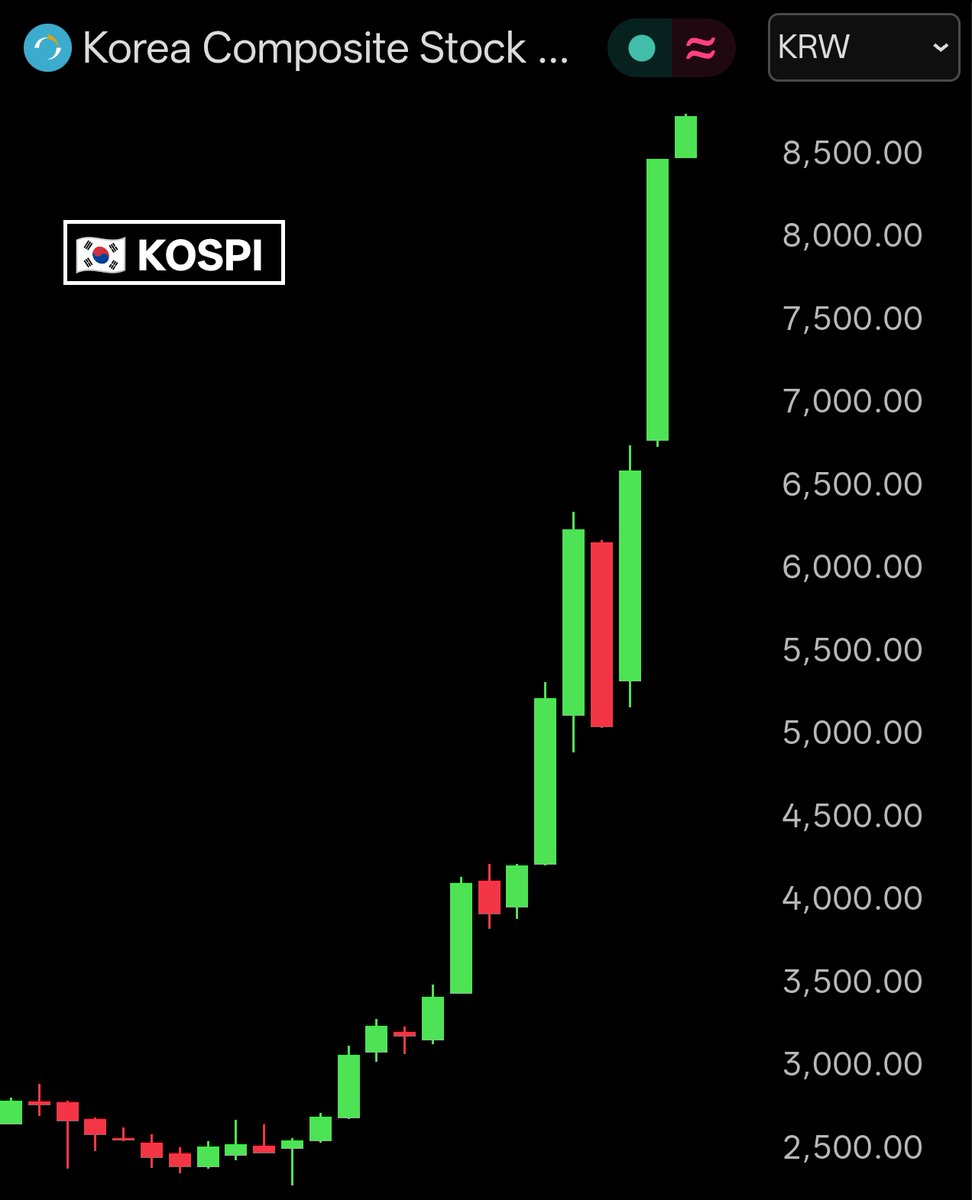
BREAKING: South Korea’s KOSPI hit new all-time high and crossed 8,750 for the first time in HISTORY.
The index is now up +106% in 2026, adding ₩3,150,000,000,000,000 ($2.3 TRILLION) in market value.
🚨 Why Ethereum and BitMine Are Set to EXPLODE in H2 2026
June 26: Russell 1000 Index Inclusion
Global index funds and ETFs will be forced to mechanically buy BitMine shares. The heavy selling pressure that crushed the stock recently will be fully absorbed by Wall Street’s passive buying machine - creating a powerful price floor.
Early July: Clarity Act Final Passage
This marks the real liquidity floodgate. U.S. corporations and major banks can now legally hold crypto assets on their balance sheets.
June - Q3: Glamsterdam Upgrade
Transaction speed doubles, efficiency skyrockets, and Layer-2 fees drop even further.
Late 2026: BitMine Completes 5% Treasury Accumulation
Timed perfectly with Ethereum’s gas fee and volume explosion at the bull market peak.
BitMine will lock the treasury and shift fully into monetization mode via the MAVAN platform - maximizing yield exactly when ETH tips are at their highest.
“On-chain data, U.S. regulatory moves, and corporate filings all confirm it: a massive setup is forming for H2 2026.”
Right now, with the stock trading at $18.88 (down from $161 ATH), we’re in the deepest compression phase - the spring is coiled tightest right before the launch.
Of course, risks remain (Glamsterdam delays, macro shocks).
But the combination of regulatory institutionalization and unstoppable Wall Street passive inflows looks like a tide that cannot be turned.
The second half of 2026 is loaded. 🔥
No, defense demand won’t collapse even if wars end tomorrow.
The global defense sector is undergoing a structural paradigm shift - not a temporary boom.
1/ Europe’s Vacuum
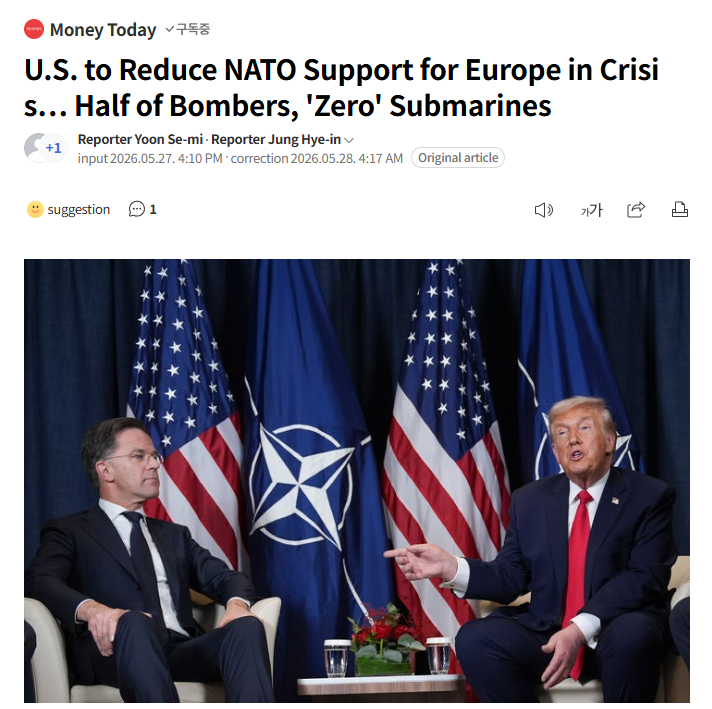
The US is telling NATO allies: “Your security is your responsibility.” This has triggered a massive rearmament wave across Europe. While Europe rushes to build capacity, it lacks immediate production infrastructure.
K-Defense is rapidly filling the gap with fast delivery, proven value, and massive scale. Korea has already risen to the #2 arms supplier to European NATO countries.
2/ Asian Arms Race
Japan is hiking defense spending toward 2% of GDP and has opened the door for lethal weapon exports. This expands the overall global defense market pie.
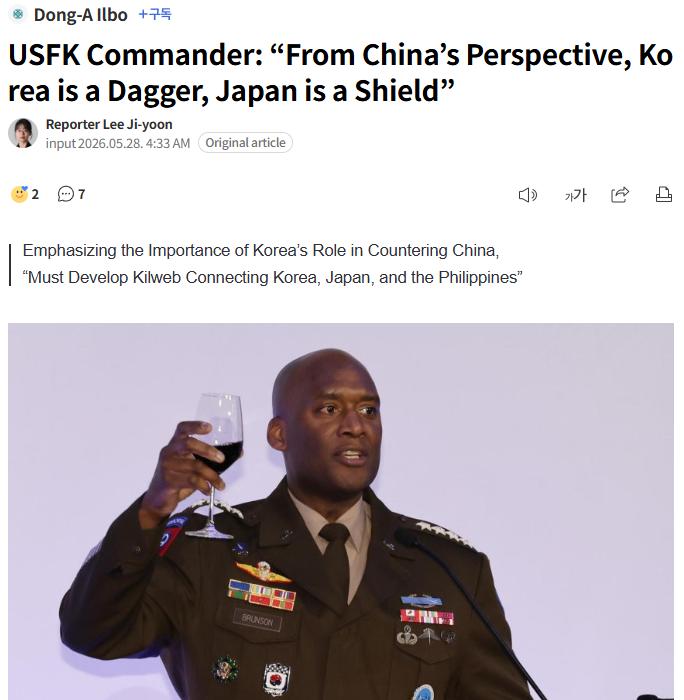
To counter China, the US wants Korea as the “Dagger” and Japan as the “Shield” - a geopolitical alignment that will only deepen technological cooperation with Korean defense firms.
3/ The Naval Wave
The US shipbuilding industry is struggling with severe capacity shortages. The US Navy is actively seeking help from Korea’s world-class shipyards for construction and MRO.
Canada is advancing a massive ~$44 billion submarine program, with Hanwha Ocean in the final running for the July selection. (Notably, Korea’s Dosan Ahn Chang-ho submarine received high praise during its visit to Canada in May 2026.)
💡 Bottom Line
Even if current conflicts pause, the era of “strategic self-reliance” has arrived. Long-term structural demand for K-Defense remains rock-solid.
Short-term peace headlines may shake stock prices - but they should be viewed as an excellent buying opportunity to accumulate these structural growth stocks at a discount.
🚨 Breaking News: South Korea is launching 2x Leveraged ETFs on Samsung Electronics and SK Hynix - tomorrow.
The two products will deliver twice the daily returns of each stock.
(Launch size: $1.58 billion USD — the largest in Korean ETF history)
If you know the Korean retail investor’s “one life-changing trade” DNA…
there’s no way they’re sitting this out. 🔥
The great Korean leverage mania is officially here.
This is fascinating... Microsoft and Samsung Electronics are heading in completely opposite directions.
Microsoft has abruptly canceled its Claude Code licenses, blocking its own engineers from using it.
Meanwhile, Samsung is preparing an internal notice to actively encourage employees to use ChatGPT and Claude for work starting June 12.
Samsung’s decision - coming shortly after the recent union conflict - carries significant implications.
Yet in Silicon Valley, the reality is already hitting hard: AI computing costs are now outstripping human labor costs.
Human salaries vs. skyrocketing AI computing expenses. Who will ultimately win on economic viability?
Microsoft just banned its own engineers from using AI.
The tool was literally costing MORE than the humans it was supposed to replace.
They lied to you about AI adoption and now the whole narrative is blowing up:
Microsoft gave thousands of engineers access to Claude Code six months ago and encouraged them to use it.
Engineers loved it and adoption exploded. But then the invoices arrived.
Token-based pricing means every query, every code review, every debugging session costs money. At scale across 100,000 engineers, the numbers became so large that Microsoft issued an internal order to cancel nearly all Claude Code licenses by end of June and force everyone onto their own cheaper tool instead.
The company that invested $5 billion in Anthropic just told its own people to stop using Anthropic's product because it costs too much.
Uber's story is even worse...
Their CTO Praveen Neppalli Naga told The Information that the budget he planned for the full year was "blown away already" by April.
Uber had rolled out Claude Code in December 2025. By March, 84% of their 5,000 engineers were using it with 70% of all committed code coming from AI systems.
Heavy users were burning $500 to $2,000 per month each. Naga himself spent $1,200 in a single two-hour demo session.
The company had even built internal leaderboards ranking engineers by how much AI they used. They literally gamified the spending and then ran out of money.
Now look at what Nvidia's own VP of applied deep learning Bryan Catanzaro said to Axios last month. Direct quote:
"For my team, the cost of compute is far beyond the costs of the employees."
This is a VP at the company that SELLS the chips saying that using AI is more expensive than paying humans.
Think about what this means for the entire AI narrative.
Every CEO on every earnings call for the past two years has said the same thing:
AI will make us more efficient, reduce headcount, and cut costs.
The stock market rewarded every company that said it.
Fired workers, stock goes up. Announced AI adoption, stock goes up.
But the actual companies deploying AI at scale are discovering the math doesn't work. The MORE employees use AI, the HIGHER the bill.
Goldman Sachs forecasts a 24x increase in token consumption by 2030 as companies adopt AI agents. Gartner just published a report showing that even though individual token prices will drop 90% by 2030, total enterprise AI costs will go UP because agents consume exponentially more tokens per task than basic tools.
Meta built an internal dashboard called "Claudeonomics" to track which employees use the most AI. Amazon started pushing engineers to "tokenmaxx," their internal term for consuming as many AI tokens as possible.
Both companies are spending hundreds of billions on AI infrastructure this year alone.
And Microsoft, the company that bet its entire future on AI, just told 100,000 engineers to stop using the tool they liked best because the per-token bills got out of control.
The companies building AI are telling investors it saves money. The companies using AI are finding out it costs more than the humans it was supposed to replace. And even the company that makes the chips just admitted it through its own VP.
This is the gap nobody on Wall Street is pricing in.
$725 billion in AI infrastructure spending this year across Big Tech. And the first companies to actually deploy these tools at scale are already pulling back because the economics don't work.
What do you think?
Kevin Warsh and Trump just made it clear why rates are going lower:
“AI is going to make almost everything cost less.
We’re at the front end of a productivity boom.
Economic growth won’t be inflationary — we’re in the early innings of a structural decline in prices.”
Elon Musk, Sam Altman, Jeff Bezos, and Stanley Druckenmiller all expect AI to be strongly deflationary.
The next few years are going to be insane.
Global investors are fleeing KOSPI? Bubble about to burst? Nah, not really. 🤫
The real reason isn’t panic selling - it’s a mechanical US tax rule called the RIC 25/50 Rule forcing funds to sell.
The two shackles holding foreign investors back:
🔹 25% Limit: No single stock can exceed 25% of the fund’s total assets. (EWY, ETFs)
🔹 50% Limit: The combined weight of all stocks exceeding 5% each cannot go over 50% of the fund.
Right now, Samsung Electronics and SK Hynix are hard-carrying KOSPI. As their stock prices surge, they’re pushing right up against these regulatory ceilings.
So even if the companies’ outlooks are excellent, funds are forced to mechanically sell (rebalance) to stay compliant.
That’s why the big names are being suppressed, dragging the entire index down with them.
Meanwhile, Korea is showing strong fundamentals - high growth, resilient earnings, and favorable macro conditions.
This is mostly a regulatory illusion, not a real weakness. The rally is far from over. 🚀
🚨 Breaking: The Korean government just launched today a national fund with truly unprecedented perks - they will act as a 20% downside cushion, absorbing the first losses on your investment.
The fund is called “National Growth Fund” (국민성장펀드).
It raises money from the public to create a master fund, then combines it with government capital and private fund managers’ investments.
The capital will be deployed into high-tech strategic sectors such as semiconductors and secondary batteries (EV batteries).
Key perks:
• Lock-up period of 3 years (no early redemption)
• Up to 18 million KRW in income tax deductions depending on your investment amount
• Favorable separate dividend taxation if held for 5+ years
• Most importantly, the government will absorb up to 20% of first-dollar losses
This is one of the most aggressive government-backed investment products Korea has ever offered.
한국증시에 본격 거품이 생기기 시작할듯 하네요
정부가 오는 5월 ‘국민참여형 국민성장펀드’를 출시한다.
이 펀드는 손실의 20%까진 원금을 보장하고 세제 혜택이 큰 게 장점이다. 그러나 한번 투자하면 5년 동안 돈이 묶인단 점을 고려할 필요도 있다.
개인당 투자 한도는 최대 2억원 수준으로 설정될 것으로 보인다. 아울러 펀드 판매 목표액의 20% 이상은 서민에게 우선 배정하는 방안이 논의되고 있다. 여기서 서민은 연 소득 5000만원 이하, 종합소득 3800만원 이하를 기준으로 할 방침이다. 서민형 개인종합자산관리계좌(ISA) 기준을 참고하고 있기 때문이다. 나머지 80%가 일반 국민 몫이다.
당국은 “개별 자펀드는 펀드 결성 금액의 60% 이상을 첨단전략산업기업과 그 관련기업에 투자해야 한다”고 밝혔다. 첨단전략산업기업이란 인공지능(AI), 반도체, 이차전지, 수소, 미래차, 바이오, 방산, 로봇 등 12개 산업을 나타낸다.
나머지 40%는 운용사가 어느 정도 자율성을 갖고 투자할 수 있다. 다만 30% 이상은 코스닥 기술특례 상장사나 비상장기업에 투자해야 한다. 덩치가 큰 유가증권시장(코스피) 투자는 자펀드 결성 금액의 10% 이내로 제한했다.
정부는 손실의 최대 20%까진 방어해 준다는 파격적 혜택을 내놨다. 국민 등 자금 6000억원이 ���이면, 여기에 나랏돈을 함께 투입한다. 정부가 재정 1200억원을 추가 공급해 후순위를 보강하는 구조다. 1200억원이란 금액은 국민 등으로부터 모은 6000억원의 20% 수준이다.
이해를 돕기 위해 펀드에서 손실이 발생했다고 대략 가정해 보자. 이러면 우선 나랏돈 원금 1200억원부터 순차적으로 깎인다. 손실의 20%까진 나랏돈만 빠지는 셈이다. 국민 등으로부터 모은 원금 6000억원은 고스란히 남아있다. 그러나 손실이 20%를 넘어서면 그때부턴 국민들이 낸 원금도 깎이게 된다. 추후 손실분만큼은 돌려받을 수 없다.
이 펀드의 또 다른 장점은 세제 혜택이다. 정부는 3000만원까진 40%를, 3000만원~5000만원 구간은 20%를, 5000만원~7000만원 사이는 10%를 각각 ‘소득공제’ 해줄 계획이다. 펀드 투자자에게 최대 1800만원의 소득 공제를 해주겠단 구상이다. 해당 펀드에 7000만원 넘게 돈을 넣을 순 있지만, 소득공제는 딱 1800만원까지만 가능하단 점을 알아두면 좋다.
Korean news from a few days ago:
Korean power equipment companies, fueled by the 'AI power boom' in the US, are now targeting the Middle East post-war reconstruction market.
Reorganizing Middle East networks: "Securing local networks first is the key advantage."
👉 Am I right or am I right?
🇰🇷🇮🇱 Why is South Korea’s President Lee Jae-myung provoking Israel?
He’s positioning himself for a big slice of Iran’s post-war reconstruction business, betting it won’t affect US-Iran negotiations anyway.
And it worked.
Right after his strong rhetoric, Israel immediately released the detained Korean nationals, clearly wanting to keep relations smooth.
Result?
President Lee gets both the political credit and the real-world gains.
Textbook win.👏
Food is set to become even more expensive:
World fertilizer prices have surged +44% since the start of the Iran War, to the highest since 2022.
This comes as ~33% of globally traded fertilizers pass through the Strait of Hormuz, which remains effectively closed.
This includes 23% of global ammonia, 34% of urea, the world's most widely used nitrogen fertilizer, and nearly 20% of global phosphate supply.
Furthermore, the Bloomberg Agriculture Subindex has increased ~9% since the Iran war.
The index tracks the futures prices of key agricultural commodities, including wheat, corn, soybeans, sugar, coffee, and cotton.
In the past, world fertilizer prices have acted as a leading indicator for agricultural output prices, as rising production costs eventually force farmers to reduce supply, pushing crop prices higher.
A new wave of global food inflation is imminent.
Personal update: I've joined Anthropic. I think the next few years at the frontier of LLMs will be especially formative. I am very excited to join the team here and get back to R&D. I remain deeply passionate about education and plan to resume my work on it in time.
🚨 BREAKING: Samsung Electronics avoids historic shutdown as labor & management reach a dramatic last-minute deal. Union suspends general strike.
The US, viewing semiconductors and AI as critical national security assets, was never going to just sit back and watch a Samsung strike unfold. 🤣