Of the 130,000 https://t.co/G2tSfrdhM5 of land area of Tamil Nadu, 103,000 https://t.co/G2tSfrdhM5 is no forest area. Only we have 26,000 https://t.co/G2tSfrdhM5 of area covered with some forest, concentrated in Western and Eastern ghats. It's time we conserve and develop new 1/n
⭕⭕ Kanchipuram is on track to become the No. 1 merchandise-exporting city in India. ⭕⭕
Given Kanchipuram's growing status as a major export powerhouse, how can one say that an international airport in the district makes no sense? 🤔
Moreover, airports are not meant for passenger traffic alone—they are critical cargo gateways that enable faster, more efficient movement of high-value exports to global markets.
With the upcoming Parandur International Airport, Kanchipuram is poised to become India's leading merchandise export hub, powered by Electronics, Automobiles, Aerospace, Engineering Goods, Pharmaceuticals, and Traditional Silk Exports.
@CMOTamilnadu@TVKVijayHQ@UpdatesChennai@dmuthuk@kanchiupdates
There is a clear prima facie case for DVAC action against IAS officer Jayakanthan based on the complaint filed by @Arappor@JayaramArappor. Another sample from Tirunelveli district: a quarry illegally extracted 5,045 cubic metres of gravel and a whopping 2,71,974 cubic metres of rough stone beyond the permitted quantity. RDO imposed a penalty of Rs 13.65 crore. Jayakanthan illegally reduced it to Rs 1.33 crore and even granted a five-month extension of the quarry lease to continue illegal mining. High Court has now held that these actions were contrary to law. As claimed by Arappor, the state government can recover more than Rs 20,000 crore from illegal miners and add it to the exchequer.
A Life That Served a Purpose
In a world chasing fleeting applause, some souls choose the long, quiet road of service. Today, welfare economist Jean Drèze has been honoured with a global award for his profound research on poverty and inequality in India.
Born in Belgium, he made India his home and its people his purpose. With a scholar’s rigour and a revolutionary’s heart, he stood beside the forgotten—documenting their struggles, amplifying their voices, and shaping policies that reached millions.
His tireless advocacy helped birth two landmark legislations that still stand as lifelines: the National Rural Employment Guarantee Act (NREGA), which offered dignity through work to the rural poor, and the National Food Security Act, which sought to ensure no one sleeps hungry in a land of plenty.
This is not just an award. It is recognition of a life lived in radical empathy. Of choosing dusty villages over ivory towers. Of measuring success not in citations or comfort, but in the quiet lifting of human suffering.
Jean Drèze reminds us that the highest calling is to use one’s intellect, privilege, and time in the service of those who have the least.
In an age of cynicism, his journey is a living ode:
To knowledge that heals. To scholarship that serves. To a life that mattered.
Congratulations and Thank You Professor Drèze.
India is better because you walked among us.
May your example inspire a new generation to stop performing compassion and start practising it—with depth, persistence, and love.
🧡 🙏
#JeanDreze #ServiceAboveSelf #India #SocialJustice
Fifty years of tiger conservation work undone for one private mining project? The backdoor clearance given to mine the Tadoba-Indravati corridor is a national shame.
The authorities must explain why they hid this from the NTCA. Fully backing @AUThackeray s demand for an immediate inquiry and a halt on clearances.
Nature is not for sale!
#SaveTigerCorridors #Maharashtra #EnvironmentFirst #SaveaIndianAnimals
@CMOMaharashtra@byadavbjp@moefcc@ntca_india@MahaForest@LiveLawIndia@PMOIndia@dilthi_gujarati
42,000 followers.. I noticed I recently crossed this.
To me, it represents 42,000 people who chose to listen, encourage, challenge, support, & walk alongside me on this extraordinary journey.
When I started writing here, I had no grand strategy. I was simply a doctor with stories to relate, lessons to share, myths to bust,& a deep desire to make medicine a little more understandable and a little more human. My domain expertise lies in Sexual Health, History, Defence & Geopolitics. Beyond Medicine, I have tried to use this platform to defend Dalit rights, Muslim rights, Medical Students' rights & feminism.
Crossing 42,000 followers on X feels both humbling and overwhelming. The credit belongs not to me, but to every person who paused for a few seconds to read a post, share a thought, ask a question, or trust me with their attention. In this era of Insta reels, YouTube shorts,& plummeting attention spans, that is a great deal.
Behind every tweet is a doctor who has seen joy, fear, courage, suffering, misery, recovery,& hope. Behind every follower is a human being who reminds me that medicine is not merely about diseases and treatments, it is about people.
Many of you have been with me for years. Many arrived recently. Each one of you matters. Behind every comment is a human with self-respect, dignity, convictions & eagerness to be heard. I understand. Every patient who trusted me with their story has, in some way, shaped the words I write here.
Thank you for every like, every repost, every comment, every disagreement, every message, and every word of encouragement.
Most importantly, thank you for allowing me to be part of your timeline and your lives.
The white coat gave me a profession. This platform gave me a voice when I needed one. I don't write for likes & follows, but to speak my mind. Honesty is my USP. The moment I lose credibility, it will be time for me to pack up.
42,000 was never the destination. It is a reminder to learn more, teach better, and continue serving with honesty, compassion, and gratitude.
From the bottom of my heart, thank you for walking this journey with me. ❤
Jason Philip
आपको रियाजुद्दीन मंसूरी साहब याद होंगे जो कुछ दिन पहले मालवीय नगर में लगी आग में फरिश्ता बनकर सामने आए थे। उस दौरान मंसूरी साहब ने लोगों की कीमती जान बचाने के लिए अपने 2 लाख के गद्दे कुर्बान कर दिए थे।
फिर जब ये बात लोगों को पता चली तो सबने मिलकर उनकी मदद की और उनके अकाउंट थोड़े-थोड़े पैसे भेजने शुरू किए।
अब इनका एक वीडियो आया है जिसमें ये कह रहे हैं कि मेरे जो 2 लाख रुपये का नुकसान हुआ था वो पूरा हो गया है 2 लाख रुपये आ गए हैं अब आप लोग पैसे ना भेजें...
इससे पता चलता है मंसूरी साहब ना केबल नेकदिल हैं बल्कि खुद्दार और ईमानदार भी हैं।❣️
Who cares?
Many years ago, I attended a public meeting in Avadi addressed by senior Congress leader P. Chidambaram. One particular point he made that day continues to resonate with me. He observed that a small country like Singapore, with its limited population and land resources, could afford to import food grains. India, with its vast population, could not. The essence of his argument was that a country of India's size cannot afford to be indifferent to food production or to the wetlands and agricultural lands that sustain it.
Today, Tamil Nadu proudly boasts the highest number of Ramsar sites in the country, reflecting the ecological importance of its wetlands. Yet these fragile ecosystems face growing threats from rapid urbanisation and unchecked real-estate development. While the demand for housing plots is real and understandable, the choice of land for such development requires far greater caution.
A State blessed with an extensive transport network and expanding urban centres need not sacrifice its wetlands to meet housing needs. The government should actively encourage real-estate development in areas where ecologically sensitive wetlands will not be affected. In Kanniyakumari district, rules prohibit the conversion of wetlands into housing layouts. However, enforcement remains weak and violations are common. Similar safeguards, backed by strict implementation, are needed across the State.
If the present trend continues, Tamil Nadu risks losing not only its wetlands and water bodies but also the countless fish species, birds, crustaceans, reptiles and other forms of life that depend on them. More importantly, the destruction of wetlands will have serious consequences for groundwater recharge, flood mitigation and long-term water security.
My 4-month-old was crying uncontrollably because, due to some unexpected delays, I didn’t get to nurse him before we boarded the plane.
My 3-year-old, who had been excited earlier, suddenly got scared and started kicking and screaming, saying, “I want to get off the plane! I don’t want to go!” I honestly thought we might get kicked off.
With both kids losing it, I was trying everything to calm them down.
Then, this man reached out and took the baby from me while I quickly buckled Caroline in, gave her a tablet, and started a movie to calm her down. Once she was settled, he helped distract her so I could feed Alexander.
By the time we were taxiing, the screaming stopped, and the back of the plane was quiet. During the flight, he colored with Caroline, watched a movie with her, and showed her all the things outside the window.
By the end of the flight, Caroline had made him her best friend. I’m not sure if he noticed, but she gave him a kiss on the shoulder while they were looking out the window.
The amazing thing is, we had the same connection for our next flight from Charlotte to Wilmington. He frequently flies that route for work and helped us get off the plane and to the next gate with Caroline in hand.
As if that wasn’t enough, he changed his seat on the next flight to sit in our row and continue helping us.
This man, Todd, showed me kindness and compassion like I’ve never known from anyone else. He told me his wife had a similar experience when their boys were young, and a stranger showed her the same kindness.
We could’ve been seated next to anyone, but we ended up next to one of the kindest men I’ve ever met.
Saw this only now and my heart goes out to the men who lost their lives and also the ones injured. The trauma and scars will be permanent.
I have worked in a foundry for nearly 15 years and have melted and poured different copper alloys with my own hands. I have burned shoes, toes, fingers and once almost lost one of my eyes. Working with 1000+ degree celsius metal at 3 to 10 feet from you is not for the faint hearted. And a ladle accident where molten metal turns you into ashes in minutes is unimaginable pain.
My heart goes out to the men who had to helplessly watch their colleagues die like this. Unlike most regular jobs, the melters and forgers share a special bond with each other. On my furnace floor you will see them constantly yelling, screaming and swearing at each other. But once a heat is done and they are cooling off standing 6 inches from an industrial grade fan pumping air into their faces, they stand bonded deeper than brothers without saying a word. And to helplessly see such a brother die in molten metal is a ptsd one will never get over in their lives.
A lot of times these accidents happen because of an overlooked small maintenance issue. Or some miscalculation in loading of the ladle. As i always tell my boys, you can find 100 reasons for death in post mortem, but it should be the responsibility of everyone of us to ensure such a death doesn’t happen, such an accident doesnt happen.
This accident feels personal and i sincerely pray the families of the departed and the injured find strength in them to absorb the pain and keep going. 🙏
Take Hwaseung Enterprise as an example. They wanted to invest in Tamil Nadu, but their demands were unreasonable. The company insisted on prime land in their preferred location.
Our Industries Ministry’s cost benefit analysis determined that casually handing over prime, high value land assets for a low margin, high labor sector like footwear wasn't economically justified. Therefore we rightly said no.
In contrast, Andhra Pradesh gave them 100 acres of land for free in the Chief Minister's constituency of Kuppam. A 30% investment subsidy was also provided. From stamp duty exemptions to a highly subsidized power tariff, everything was laid out on the table for them.
Even after that, Hwaseung came back to Tamil Nadu and asked if we could match Andhra's offer. We firmly said no.
Tamil Nadu and Andhra Pradesh are at completely different stages of industrialization. We have already transitioned into highly advanced manufacturing. Consequently, our decisions must be strictly driven by a rigorous cost benefit analysis.
⚠️ DISASTER AT MADRAS MUSEUM! ⚠️
Priceless ancient artifacts dating back to the 3rd century & earlier are being treated like worthless junk. Rushed renovation work is happening directly on top of & around these irreplaceable treasures, leaving beautiful historical sculptures buried under construction pipes, rubble, and heavy machinery as seen in attached images and videos!
To
The Hon'ble Chief Minister of Tamil Nadu @CMOTamilnadu@TVKVijayHQ@actorvijay,
The Hon'ble Minister for Water Resources @BussyAnand,
The Hon'ble Minister for Disaster Management @KASengottaiyan,
The Hon'ble Minister for Public Works Department @AadhavArjuna,
and The Hon'ble Minister for Artificial Intelligence @R_Kumar_TVK
====================
**Subject: Strengthening Flood Risk Assessment, Forecasting and Resilience Planning for Chennai and Cuddalore**
====================
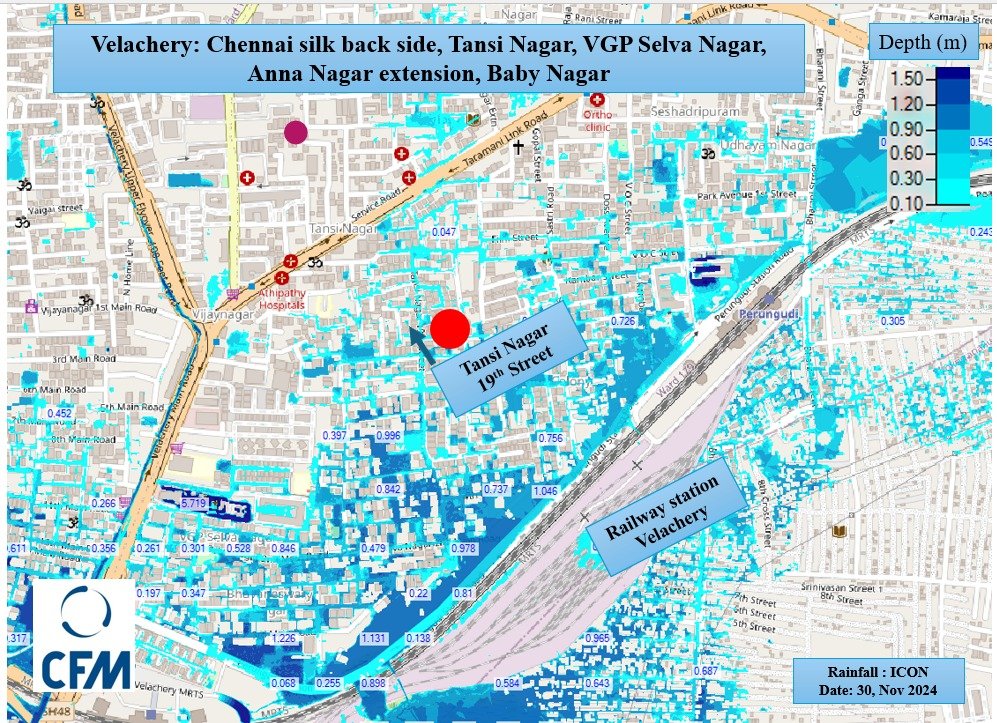
Chennai and Cuddalore are among the most flood-prone regions in Tamil Nadu, facing risks from urban flooding, riverine flooding, coastal flooding, and compound flooding arising from the interaction of multiple drivers.
The increasing frequency of extreme rainfall events, the impacts of climate change, and large-scale climate variability such as El Niño–Southern Oscillation (ENSO) events can significantly influence rainfall patterns and flood risk across Tamil Nadu. Combined with rapid urbanization and changing land-use patterns, these factors may further increase the complexity of flood management and disaster preparedness in the coming years.
In this context, the Government may consider the feasibility of establishing a multidisciplinary Scientific and Technical Advisory Committee to further strengthen flood risk assessment, forecasting capabilities, and long-term resilience planning for Chennai and Cuddalore.
Such a committee could provide valuable support in the following areas:
• Integrated assessment of urban, riverine, coastal, and compound flood risks.
• Preparation of flood hazard, vulnerability, and risk maps for informed decision-making.
• Strengthening real-time flood forecasting, monitoring, and early warning systems.
• Assessment of climate change and ENSO-related influences on future flood risk.
• Evaluation of drainage networks, waterways, river systems, and flood conveyance infrastructure.
• Development of long-term flood resilience and climate adaptation strategies.
A science-based and data-driven approach can further enhance Tamil Nadu's preparedness for future flood events while supporting sustainable and resilient development in vulnerable regions.
We respectfully request that this proposal be considered as a constructive step towards strengthening flood preparedness, risk reduction, and disaster resilience in the State.
Thank you. 🙏🙏🙏
@TNFloodmodeller
Thanks to @Deltarains for initating such apeal.
ஒரு நாள் எங்கள் வீட்டுக்குள் ஒரு புது விருந்தாளியாய் ஒரு பூச்சி வந்துவிட்டது. “அதன் கீழே இருக்கிறது!” என்று வைதேகி அவருடைய பெரிய கண்களால் சுட்டிக்காட்டினார். 👀
நாங்கள் போரிக் ஆஸிட் உள்ளிட்ட ஒரு கலவை மருந்து தயாரித்துப் பயன்படுத்துவதால் வீட்டில் அதிகப் பூச்சி நடமாட்டம் இருக்காது. இது போன்ற அரிதான புது விருந்தாளிகள் வந்தால்தான் உண்டு.
என் கண்களை அவர் காட்டிய முடுக்கிலிருந்து எடுக்காமல், வைதேகியிடம், “லாண்டரி அறையில் ‘பூச்சிக்கொல்லி தெளிப்பான்’ இருக்கும், கொண்டு வா,” என்றேன்.🧺
என்னை விட்டுப் பிரிய முடியாமல் என் கையைப் பிடித்துக்கொண்டு நின்றார். வைதேகி என் கையைப் பிடித்துக்கொண்டு நின்றது நிஜம்தான் என்றாலும், நான் நினைத்த காரணம் தவறு என்று புரியவைக்கும்படி இதைச் சொன்னார்: “பூச்சிக்கொல்லி தெளிப்பான் வாங்கணும்னு சொன்னோம். இன்னும் வாங்கலை.”
வைதேகியைத் திரும்பிப் பார்த்து, “வாங்கிவிட்டோம். அங்கே இருக்கிறது . எடுத்துக்கொண்டு வா” என்று சொன்னேன். என் முகவாய்க்கட்டையைப் பிடித்து பூச்சியின் திசையில் திருப்பிவைத்து, “இல்லை, இன்னும் வாங்கலை. நீ பேசுவதில் கவனம் செலுத்தாமல் அந்தப் பூச்சியை அடிக்கப் பார். துடைப்பக்கட்டை தரட்டுமா?” என்று அடுத்த ஆயுதத் தேர்வுக்கு நகர்ந்தார்.
உரையாடல் நெளிந்து வளைந்து வளர்ந்தது. குரலின் ஏற்ற இறக்கங்கள் அதிகமாயின.🗣️
கடைசியில், “சரி. துடைப்பக்கட்டை கொண்டு வா . அதை எடுக்க லாண்டரி அறைக்குப் போகும்போது பூச்சிக்கொல்லித் தெளிப்பான்’ இருக்கிறதா என்றும் பார்,” என்றேன்.🧹
ஓரக்கண்ணால் வைதேகியைப் பார்த்தாலும் அந்தப் பூச்சி இருந்த முடுக்கிலிருந்து பார்வையை என்னால் விலக்கமுடியவில்லை. பூச்சிக் கொல்லிப் பாவை.
வைதேகி திரும்பி வந்தபோது அவர் குரல் சன்னமாக இருந்தது. என்னவோ சொன்னார். அவர் கையில் நாங்கள் வாங்கிவைத்திருந்த பூச்சிக்கொல்லித் தெளிப்பான். நான் எதுவும் சொல்லவில்லை. அண்ணலும் நோக்காமல் விலகினான்; அவளும் விலகினாள்.🤫
சில நொடிகளில் வேலை முடிந்தது. உயிர் பிரியும்போது அந்தப் பூச்சி ஏதோ முனகியதுமாதிரி இருந்தது. அருகே சென்று காதுகொடுத்துக் கேட்டேன்.
“நீ மருந்து அடிச்சி நான் சாகலை. இப்படி நீங்க ரெண்டு பேரும் வீட்டில் இருக்கும் ஒரு பூச்சி மருந்து விஷயத்துக்கு ஏதோ புதிதா பதவிப்பிரமாணம் எடுத்துக்கிற மாதிரி குரலை ஏற்றிஇறக்கியதைப் பார்த்து மூச்சை நிறுத்திக்கொண்டு தற்கொலை செய்துகொண்டேன்,” என்றது. ☠️
பாவத்த. 😁
#பயணிதரன்
#வாழ்வெனும்பயணம்
A 32-year-old junior doctor in Australia walked into his hospital laboratory on a Tuesday morning in July 1984, picked up a small glass beaker containing one billion live bacteria suspended in beef broth, and drank it. He had told no one in advance. He had not asked his wife. He had not asked his ethics committee. He had not asked his hospital. He had a theory that the entire global medical establishment had been treating millions of patients incorrectly for almost a century, and he had run out of other ways to prove he was right.
Three days later his mother told him his breath smelled like a corpse. Five days later he started vomiting at six in the morning. Ten days later he was endoscoped and found to have severe inflammation across the entire lining of his stomach.
He had given himself the disease he was trying to cure, in order to prove that the cure was a single course of antibiotics.
It took the medical establishment another twenty-one years to admit he was right.
His name is Barry Marshall. He won the Nobel Prize for Medicine in 2005.
I read his actual 1985 paper last night and could not stop thinking about it.
The textbook story of medicine treats stomach ulcers as a story that has always been understood. You have an ulcer, you take a course of antibiotics, you are cured. That story is true. It is also missing the part where, until almost the end of the twentieth century, this disease was considered chronic, incurable, and almost entirely caused by stress, spicy food, and personality flaws. Hundreds of millions of patients suffered with ulcers for years and decades. Tens of thousands died from complications. The entire global pharmaceutical industry built a multi-billion-dollar business selling acid-suppressing drugs that managed the symptoms while never touching the cause.
The cause was a bacterium. The cure was cheap. And one man drank the bacteria himself to prove it.
Here is the story almost nobody tells you.
In 1979, a quiet pathologist named J. Robin Warren was working at the Royal Perth Hospital in Western Australia. He was looking at biopsy slides under a microscope when he noticed something that should not have been there. Spiral-shaped bacteria, alive and active, sitting on the lining of a human stomach.
The medical world at the time was unanimous on this point. Nothing lives in the stomach. The stomach is filled with hydrochloric acid strong enough to dissolve metal. Bacteria could not survive in that environment. Every textbook said so. Every professor said so. Every pathologist who had ever looked at a stomach slide and seen something strange had assumed it was contamination.
Warren kept looking. He kept seeing it. He started photographing it. He began to suspect that what he was looking at was not contamination at all. It was a living organism that had figured out how to survive somewhere life was not supposed to exist.
For three years he could find almost no one in the hospital who would listen to him.
In 1981, a 30-year-old internal medicine trainee named Barry Marshall rotated through Warren's department. He was assigned the routine task of helping investigate twenty difficult gastrointestinal cases. Warren showed him the bacteria. Marshall, unlike everyone else in the department, did not dismiss it. He found it interesting. The two of them began a collaboration that would consume the next four years of their lives.
They biopsied one hundred patients. They cultured the tissue. Every patient with a duodenal ulcer had the bacteria. Every single one.
Marshall was 32 years old when he stood up at the 1983 Royal Australian College of Physicians meeting in Perth and presented the findings. He proposed that the spiral bacteria, now provisionally classified as Campylobacter pyloridis and later renamed Helicobacter pylori, were the actual cause of most peptic ulcers. The disease the medical world had been treating as a stress disorder for decades was an infection. It could be cured with two weeks of antibiotics.
The room laughed at him.
The senior gastroenterologists who had built their careers on the stress theory of ulcers were not interested in being told they had been wrong for thirty years. The pharmaceutical industry had just rolled out a new generation of acid-suppressing drugs called H2 blockers, beginning with Tagamet, which was on its way to becoming the best-selling drug in the world. The combined revenue of acid-suppressant drugs would peak at roughly 6 billion US dollars per year. Telling that industry their products treated the symptoms of an infection that could be cured with thirty dollars of antibiotics was not a popular position.
Marshall spent the next year trying to prove the theory with an animal model. He could not get the bacteria to infect rats. He could not get them to infect pigs. The bacteria was so well adapted to the human stomach that it apparently refused to live anywhere else. Without an animal model, the medical establishment had a perfect reason to keep dismissing him. He had no way to prove cause and effect.
In July 1984, he made a decision he later described in his Nobel lecture in language so understated it almost vanished off the page.
He decided to use himself.
The detail that should disturb every reader is what he did before he drank the bacteria.
He had himself endoscoped first. A camera went down his throat and into his stomach. The biopsy confirmed his stomach was healthy. No bacteria. No inflammation. No ulcers. He was a perfectly normal stomach in a perfectly normal 32-year-old body.
He pretreated with a single 600 milligram dose of cimetidine. This was an acid-suppressing drug intended to give the bacteria a fighting chance against his stomach's natural defenses. He did not want the experiment to fail because his acid killed the bug before it could colonize.
He took a culture from a patient with chronic dyspepsia. The patient's bacteria had been confirmed sensitive to standard antibiotics, so Marshall would be able to cure himself afterward if needed. He mixed the bacteria into about half a cup of warm beef broth. The concentration was roughly one billion live organisms per dose.
On Tuesday morning, July 12, 1984, at 10 AM, in the hospital laboratory at Fremantle Hospital in Western Australia, he drank it.
He told nobody.
He went home that evening and ate dinner with his wife and four young children. He did not tell his wife either.
For three days nothing happened. Then on the fourth day, he started to feel bloated. His appetite collapsed. He noticed that food felt strange in his stomach. His mother visited and recoiled. She told him his breath was so bad it smelled like something had died inside him. He brushed his teeth. The smell did not go away.
On day five he started vomiting. Clear watery liquid, every morning, around six AM, with no acid in it at all. The acid was missing because his stomach acid production had collapsed. The bacteria had colonized so successfully that they had shut down the very acid environment they had supposedly been incapable of surviving in.
He went back to the endoscopy lab on day ten and had another camera sent down his throat.
The footage was unmistakable. His stomach lining was inflamed across its entire surface. The biopsies showed Helicobacter pylori everywhere. Severe active gastritis. The exact pattern he had seen in hundreds of patient samples over the previous three years.
He had given himself, in ten days, the early stage of the disease the entire medical establishment had been telling him for years could not possibly be caused by a bacterium.
He still did not tell his wife.
She found out when he came home and told her over dinner. According to multiple later interviews, her response was something close to "you idiot." She made him take antibiotics immediately.
The paper appeared in the Medical Journal of Australia in 1985. It was three short paragraphs. It is now one of the most cited articles in the journal's history. It described, in dry clinical prose, a single subject who had ingested a known bacterial culture and developed the predicted clinical syndrome within the predicted timeline. The case study was one person. There was no control group. The methodology was strictly speaking against every modern principle of clinical research. The data was undeniable.
The medical world remained skeptical for another decade.
The most uncomfortable line in the entire historical record is what happened during those ten years. Senior gastroenterologists publicly mocked Marshall at conferences. He was passed over for academic positions. His career stalled. Patients across the world continued to be told their ulcers were caused by stress, spicy food, or character flaws. They continued to be prescribed acid-suppressing drugs for indefinite periods. Many of them progressed from ulcers to stomach cancer because no one was treating the underlying infection.
H. pylori is now understood to be one of the most common bacterial infections in human history. It currently colonizes roughly half of the entire global population. In countries with weaker sanitation it colonizes well over 80 percent. It is the leading cause of stomach cancer in the world, which is itself the fifth most common cancer in humans. Every case of stomach cancer that has occurred in the twenty years between Marshall's discovery and the medical establishment's acceptance of it could potentially have been prevented by a two-week course of antibiotics that already existed.
The estimate of how many lives have been saved since the treatment finally became standard is in the hundreds of millions.
By the late 1990s, large clinical trials in the United States, Europe, and Asia had replicated his findings beyond any reasonable dispute. The National Institutes of Health convened a consensus panel in 1994 and officially endorsed H. pylori as the cause of most peptic ulcers. Treatment guidelines began to change. By the early 2000s, eradication therapy with antibiotics had become the global standard of care.
On October 3, 2005, the Nobel Assembly at the Karolinska Institute in Stockholm announced that the Nobel Prize in Physiology or Medicine had been awarded jointly to J. Robin Warren and Barry Marshall.
Marshall was 54 years old. Twenty-one years had passed since the morning he drank the bacteria.
In his Nobel lecture he showed a slide that has since become famous in medical history circles. It was a comic he had drawn of himself standing in the laboratory holding the beaker, with his colleague Neil Noakes saying "Dr. Marshall you're crazy."
He included it because by the time he won the Nobel Prize, he had been called crazy professionally for so long that he had decided to make peace with it.
The most uncomfortable line in the entire historical record is the one Marshall himself has repeated in interviews many times since.
He said the medical establishment did not reject his theory because the evidence was weak. They rejected it because accepting it required admitting that they had been treating a generation of patients incorrectly, and that an entire pharmaceutical industry had been profiting from the management of a curable infection. The financial and reputational cost of being wrong was high enough that they preferred to assume the data was somehow wrong instead.
The Semmelweis reflex applies to the highest levels of modern medicine in exactly the same way it applied to nineteenth-century obstetrics.
Walk into any gastroenterology clinic today. Ask the doctors what causes most peptic ulcers.
All of them will say H. pylori.
Then ask them who proved it.
A surprising number will say his name.
Some of them will tell you the story. The 32-year-old junior doctor in Australia who could not get a senior committee to take him seriously. The Tuesday morning in July 1984. The beaker of beef broth in his hand. The mother who recoiled at his breath. The wife who called him an idiot. The decade of ridicule. The Nobel Prize.
The detail almost nobody hears in those retellings is the part of the story that should be carved into every medical school wall.
Marshall has been asked many times whether he was scared the morning he drank the bacteria. He has always said the same thing. He was not scared of dying. He was scared of being right. He knew, walking into the lab that Tuesday morning, that if his theory was correct, then the medical establishment had spent the previous half century misdiagnosing one of the most common diseases on earth. The implication was so embarrassing that the easier outcome, professionally, was for his experiment to fail.
He was hoping it would fail.
He thought he might survive being wrong.
He was not sure how the world would survive him being right.
He was 32 years old, with a wife and four children at home. He drank a billion bacteria anyway.
The thing he proved is now in every textbook.
The medicine he made obsolete is still on every pharmacy shelf, sold mostly to people who do not need it.
The infection he identified is still inside roughly half the human beings alive.
Most of them have never been tested.
Walk into the kitchen tomorrow morning. Make yourself a cup of coffee. Notice the shelf above your sink. Notice the bottle of antacids your parents kept on it. Notice that nobody ever told them that the symptom they were medicating was almost certainly an infection, and that the infection had a treatment that took two weeks and was almost always permanent.
He drank the bacteria so they would not have to.
Most of them never thanked him.
Most of them still do not know his name.
தென்மேற்கு பருவமழைச் சாரலால், @KAmaippu வெள்ளலூர் பட்டாம்பூச்சி பூங்கா புதுப்பொலிவு பெற்றுள்ளது.
இந்த பூங்கா அமைய நிதியுதவி வழங்கி உறுதுணையாய் நின்ற Mold-Masters DME India Private Limited மற்றும் Milacron India Pvt Ltd நிறுவனங்களுக்hகு எங்களது நெஞ்சார்ந்த நன்றிகள் #Coimbatore
The government of India is blocking my posts on Instagram that criticizes Homeopathy based on a directive from the Homeopathy Council. This is very shameful of the government...protecting pseudoscience and it's practitioners from scientific scrutiny.
This is the post: https://t.co/ZtIKlYF6sK