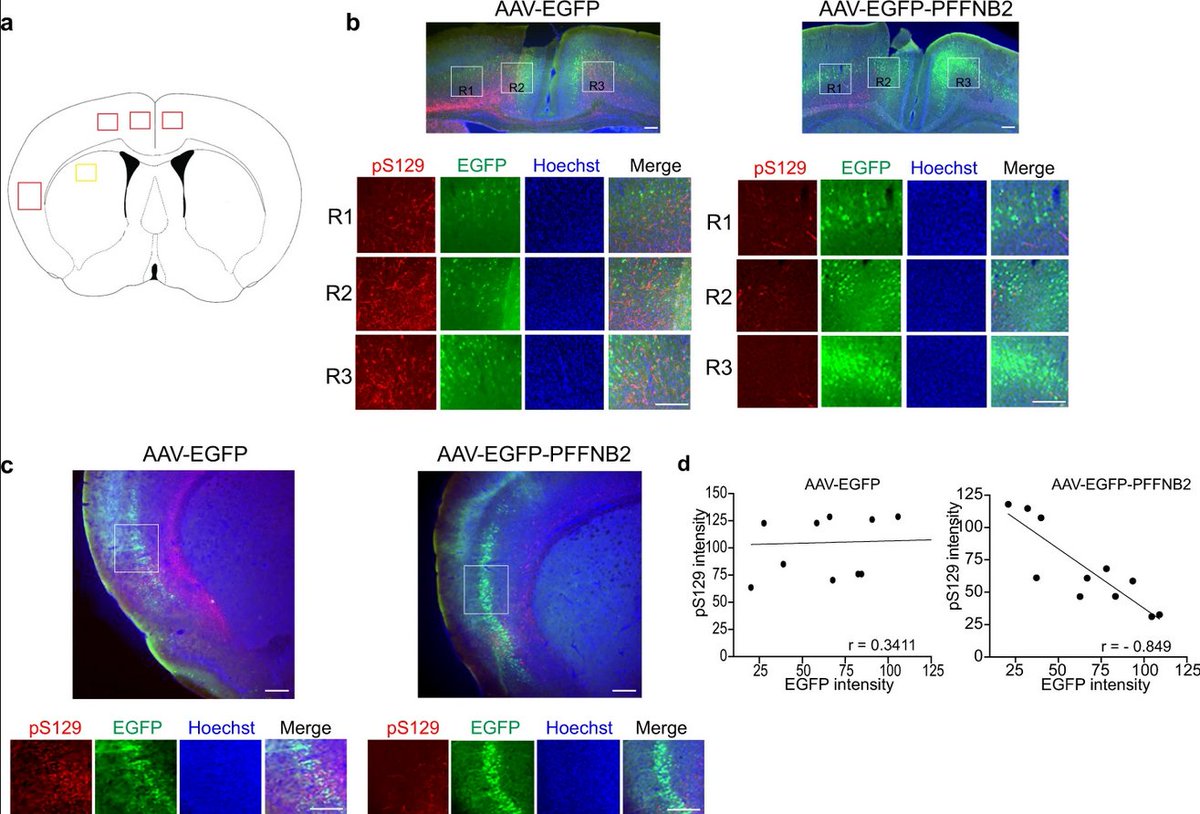
Excited to share my latest review on therapeutic targets in α-synuclein propagation in Parkinson’s disease. As a prion-like protein, α-synuclein drives pathogenesis, making these targets critical for intervention. Check it out here: https://t.co/HZ5JYfnwfX
New data released by the U.S. National Science Foundation underscore concerns that the academic community is facing a postdoc shortage and that early-career scientists are increasingly favoring higher paid positions outside academia. @ScienceCareers https://t.co/Xu9t7BN0f9
Exciting update! Our latest research delves into the connection between SARS-CoV-2 and AD-like tau pathology. We've created a humanized ACE2 mouse model to explore the long-term impacts of COVID-19 infection. Details in our publication:#COVID19 https://t.co/2Er4sCUpev
A mind-blowing paper has come out today in @Nature
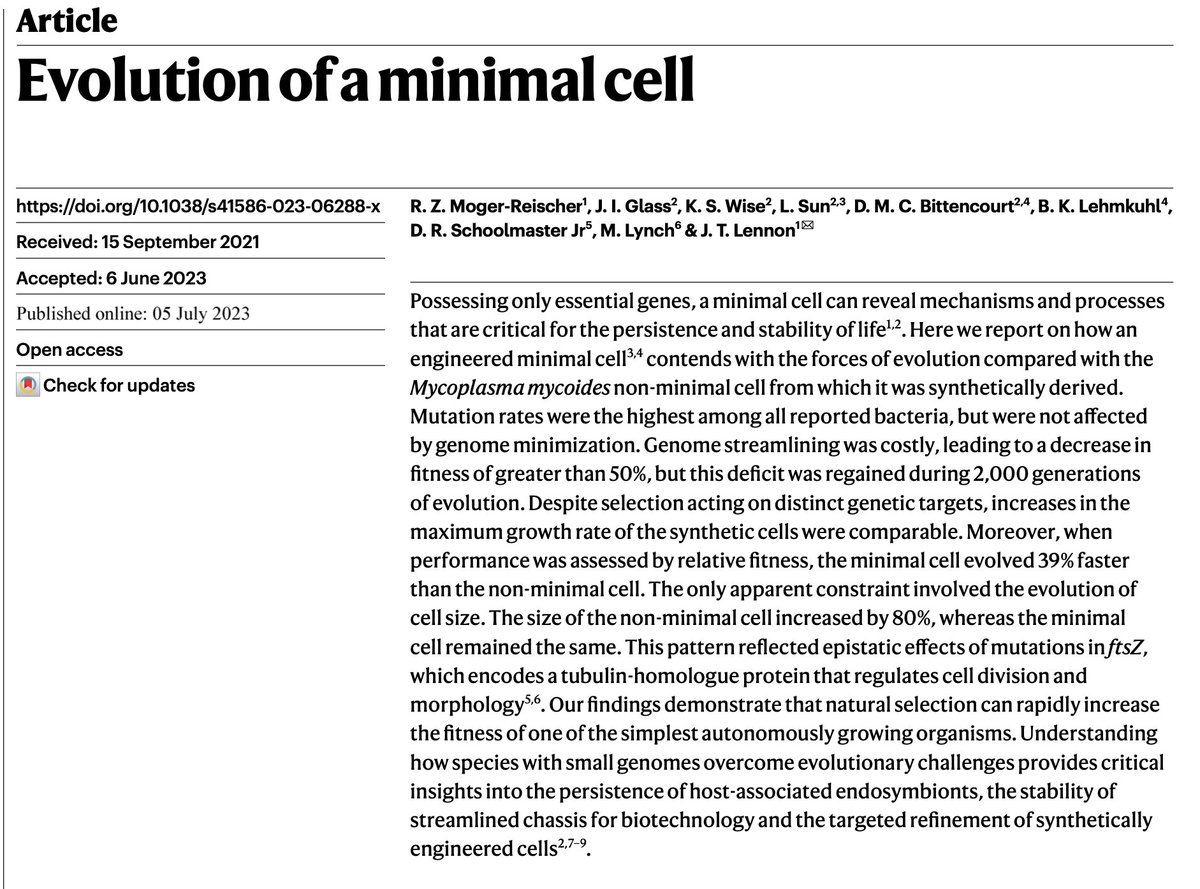
In 2016, JC Venter Institute scientists trimmed a bacterial genome to its barest minimum required for life to synthesize what they called a "minimal genome" (https://t.co/Rk8oZJ0bUj).
Today, a group of scientists from Indiana University reports how that minimal genome evolved over 2000 generations in comparison to the non-minimal genome.
The authors found that even when you reduce a bacterial genome to its absolute minimum where every nucleotide matters, the genome undergoes mutational events generation after generation as much as the non-minimal genome. One simply cannot stop the evolution.
Just over 300 days of evolution (equivalent to 40,000 years in humans) the minimal cell has gained everything it lacked in fitness on day one in comparison to the non-minimal cell.
When comparing the evolved traits between the minimal and non-minimal cells, the scientists found something striking. The evolutionary process increased the cell size of non-minimal cells but not that of the minimal cell. But that is not the striking part.
The scientists were able to identify the key mutation that resulted in cell size evolution. And it turned out that the mutation that helped the non-minimal cells to grow bigger is the same that helped the minimal cells to stay smaller. Growing bigger had a survival advantage for non-minimal cells and not growing bigger had a survival advantage for minimal cells. So, the mutation had a context-dependent effect. This just demonstrates that the evolutionary effects on traits have no absolute direction. All that matter is what is beneficial for the organism's survival.
The conclusion of the paper is metaphorically a quote from the Jurassic Park movie:
“Listen, if there’s one thing the history of evolution has taught us is that life will not be contained. Life breaks free. It expands to new territories, and it crashes through barriers painfully, maybe even dangerously, but . . . life finds a way". (https://t.co/UlxRlb86CT)
https://t.co/zA9OAqSoAu
Our manuscript concerning the role of GNL3 during DNA Replication is available on BioRxiv https://t.co/Ic8l4YC6Ob
Congrats to first author @LebdyRana and thanks to collaborators @DNA_RepPath_lab@BenoitMiotto
Biomolecular Condensates in Neurodegenerative Diseases: From Mechanism to Therapeutic Developments https://t.co/mOtUNHkvvZ #mdpibiomolecules via @Biomol_MDPI
Scientists create nanobody that can punch through tough #brain#cells and potentially treat Parkinson's disease @NatureComms https://t.co/uQqsIQOhU2 https://t.co/SzKGavPJfG
New tool - researchers generate nanobodies that preferentially bind to #Parkinsons-associated α-synuclein fibrils, but not α-synuclein monomers; Potential for "therapeutic development in α-syn-related pathogenesis"?
https://t.co/aOQbAjECuS