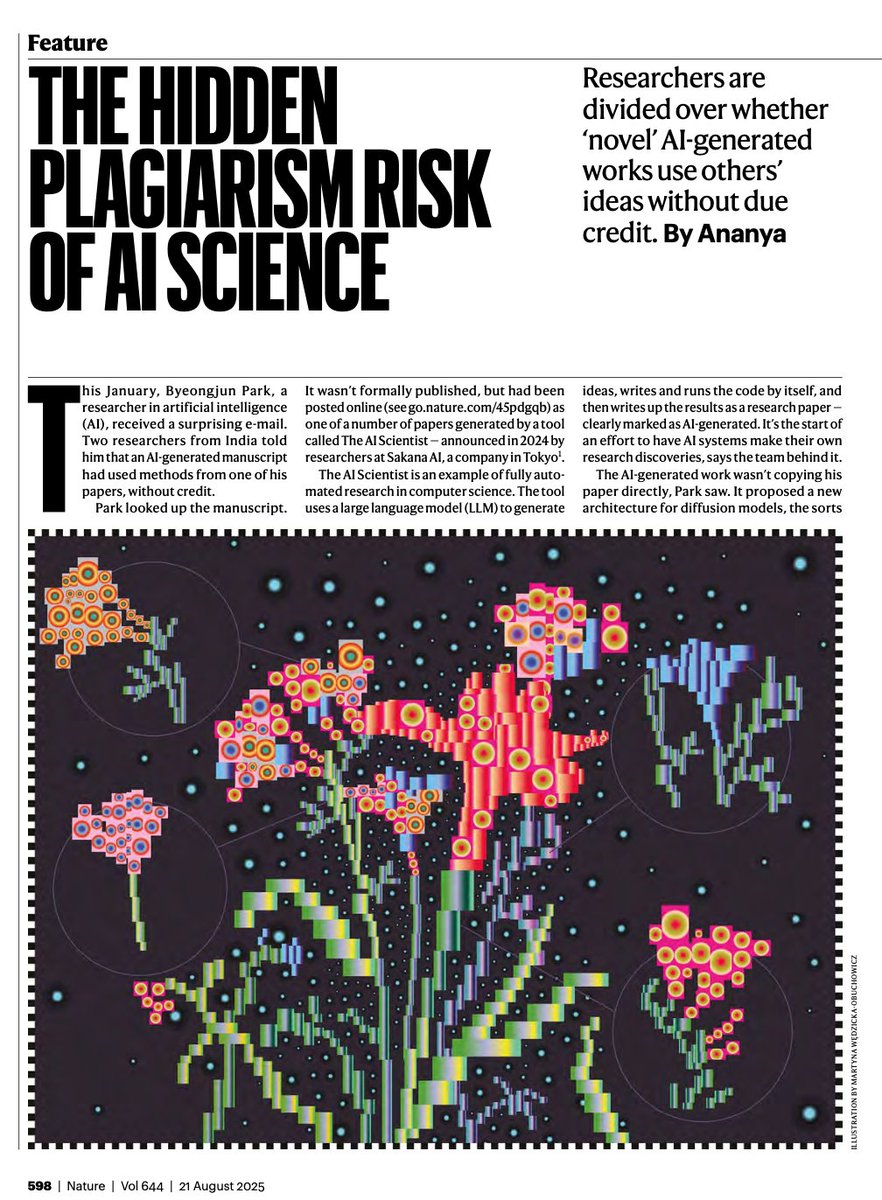
When your research paper can talk to you and interact with other research papers....
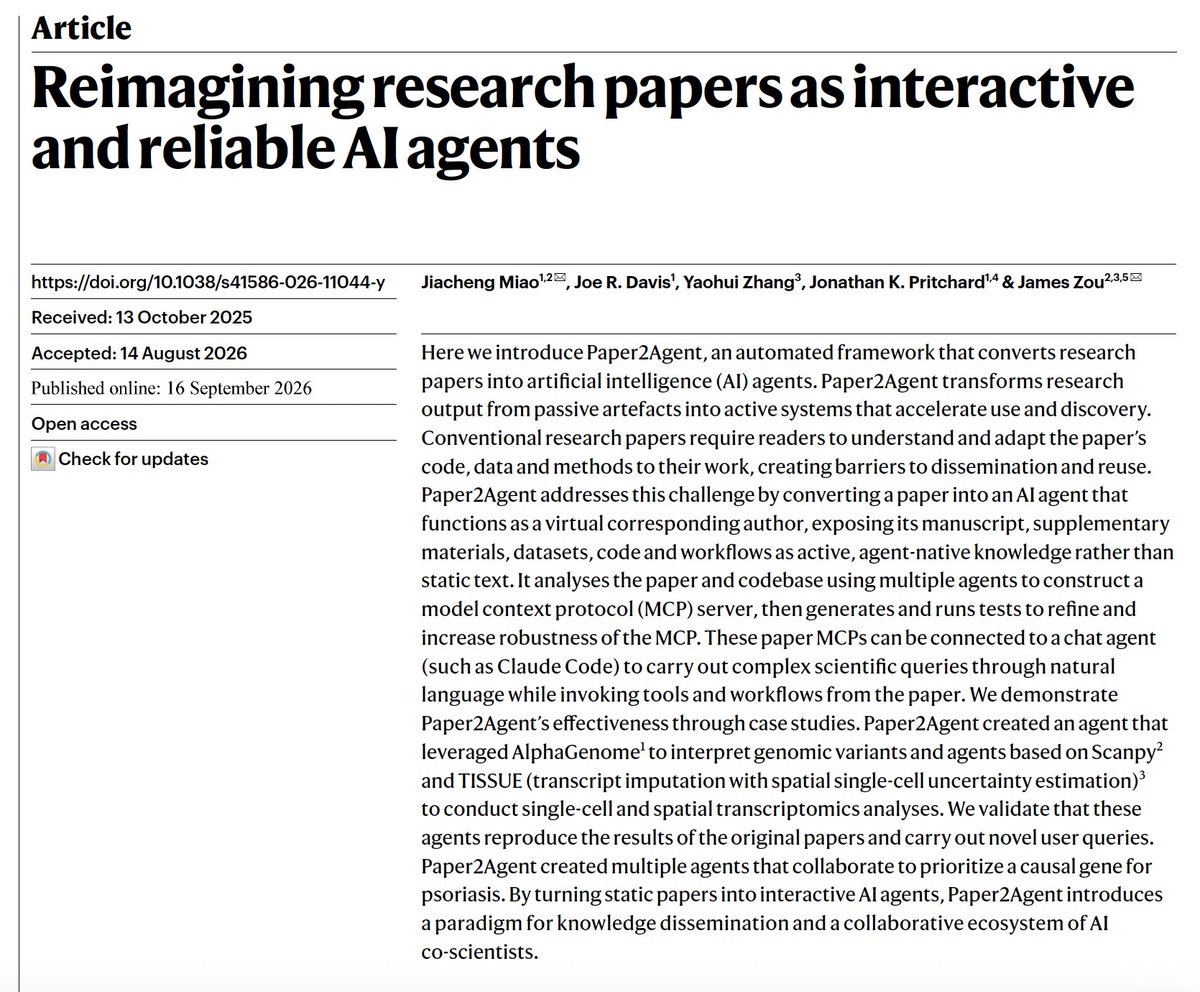
Reimagining science publishing and knowledge dissemination with Paper2Agent
https://t.co/zASfwhrdb6
@nature@james_y_zou@Jiacheng_Miao
How does energy keep us alive?
Our bodies are resistive energetic circuits where electrons flow from food→oxygen in our mitochondria. It's only through energy resistance (éR) - like electrical resistance - that transformation of energy into life is possible.
The Energy Resistance Principle ⎸ ERP explains how this happens. In this paper, we cover the implications of fine-tuning éR for health, disease, aging, and the human experiences make up the mind.
https://t.co/gjVRvA5q9K
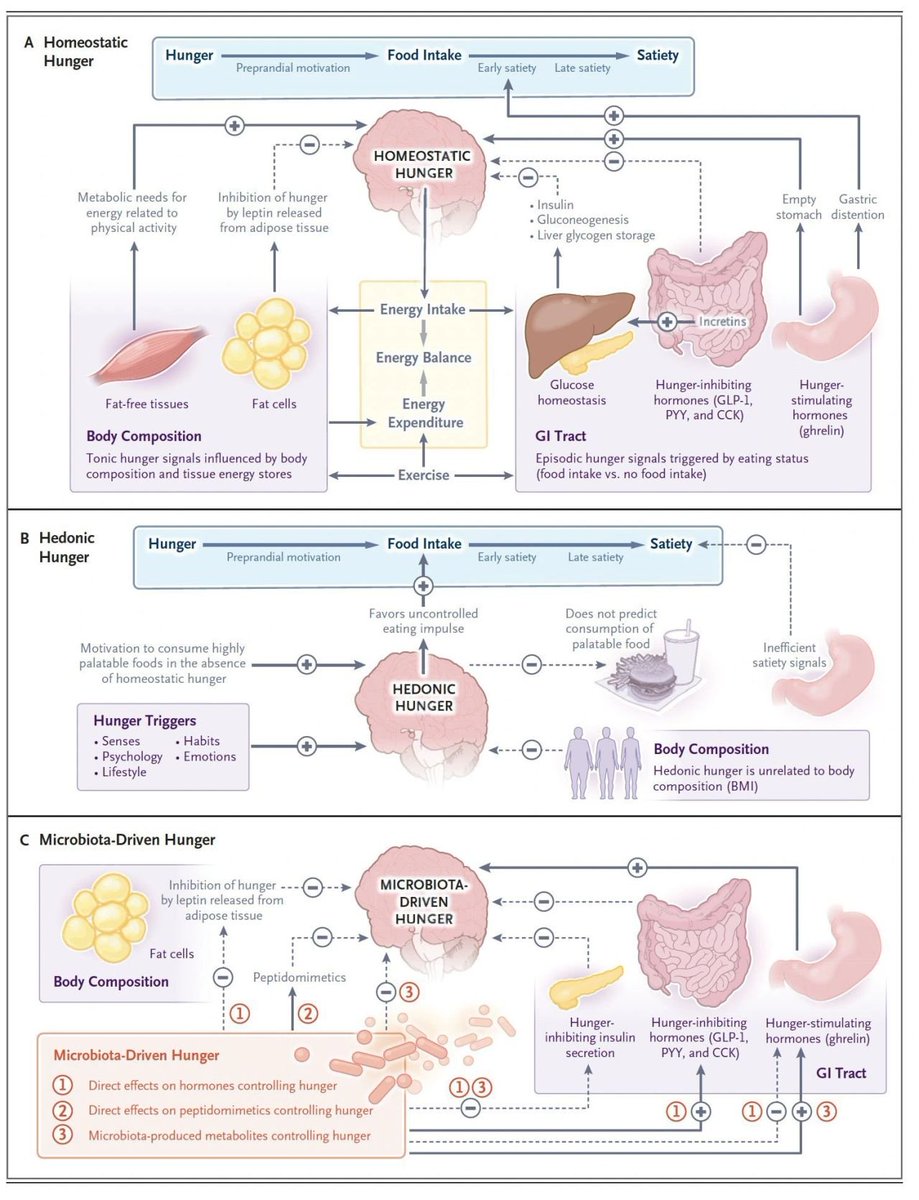
3 types of hunger explained "simply"
Hunger isn’t just about an empty stomach. Your brain receives signals from body composition, hormones, emotions, and even gut microbes. Here’s how the three major types work:
1️⃣ Homeostatic Hunger (Energy Balance Hunger)
This is your body’s “fuel gauge.” It rises and falls based on energy needs and metabolic signals.
What drives it: Ghrelin from the stomach stimulates hunger; leptin from fat cells and incretin hormones (GLP-1, PYY, CCK) reduce it.
What it does: Ensures your intake matches your energy needs for exercise, growth, and tissue repair.
🟢 Example: After a long run, homeostatic hunger pushes you to replace calories and glycogen.
2️⃣ Hedonic Hunger (Reward-Driven Hunger)
This is your “food pleasure” system. It’s triggered by sight, smell, habits, and emotions, not by actual energy needs.
What drives it: Brain reward circuits activated by highly palatable foods (sugar, fat, salt).
What it does: Encourages eating even when you’re not truly hungry. Weak satiety signals make it harder to stop.
🟢 Example: Craving dessert after dinner even though you’re full.
3️⃣ Microbiota-Driven Hunger (Gut Microbe Hunger)
Your gut bacteria also shape hunger signals by producing metabolites that influence hormones and the brain.
What drives it: Microbes generate compounds that mimic hunger or satiety signals, affect insulin, and modulate ghrelin, GLP-1, and PYY.
What it does: Links gut health to appetite regulation and metabolic control.
🟢 Example: Certain bacterial imbalances may increase cravings or weaken satiety, nudging overeating.
Rubisco is (arguably) the most abundant protein on Earth. (LPP surely comes close, right?) It’s an enzyme that fixes CO₂ into sugars during photosynthesis.
Unfortunately, as most people learn in school, Rubisco is inefficient. Sometimes it confuses O₂ for CO₂ and wastes energy. Plants make up for this in raw concentration; up to half the soluble protein in a leaf is Rubisco.
People have been trying to engineer better Rubiscos for many decades, but it's not easy because the proteins are big, do not fold easily (they need chaperone proteins to help out), are made from 16 subunits in land plants.
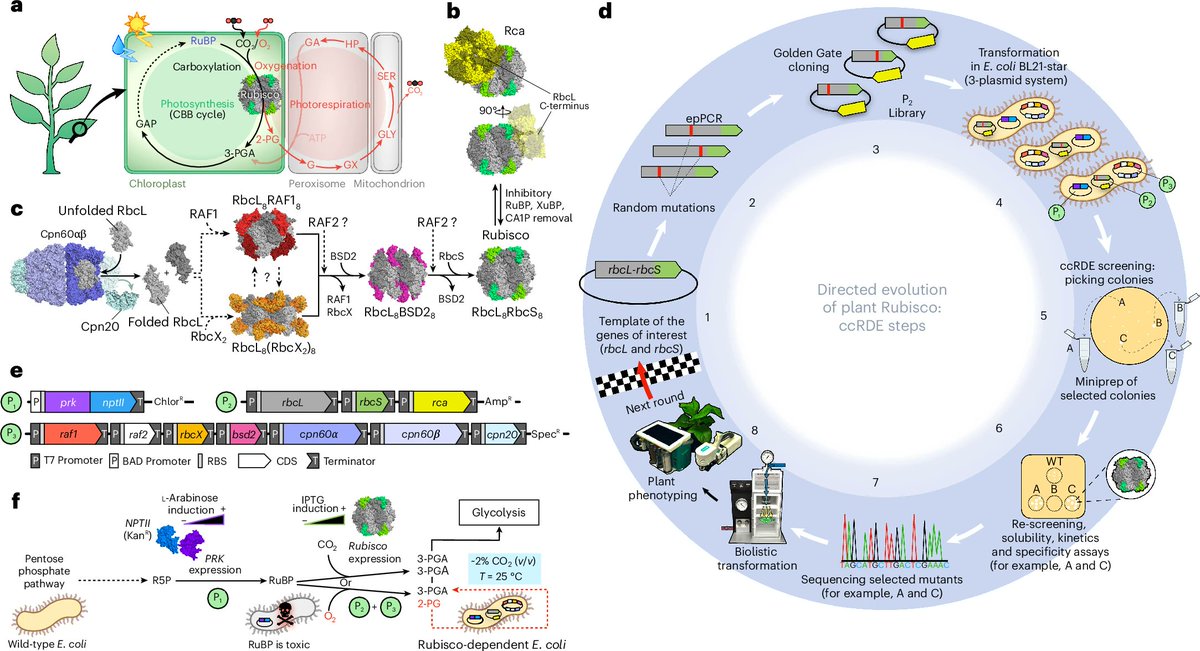
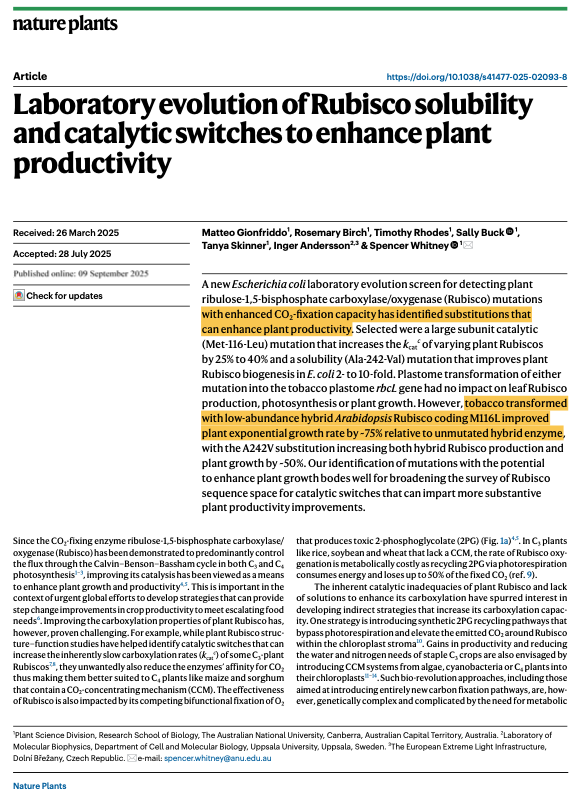
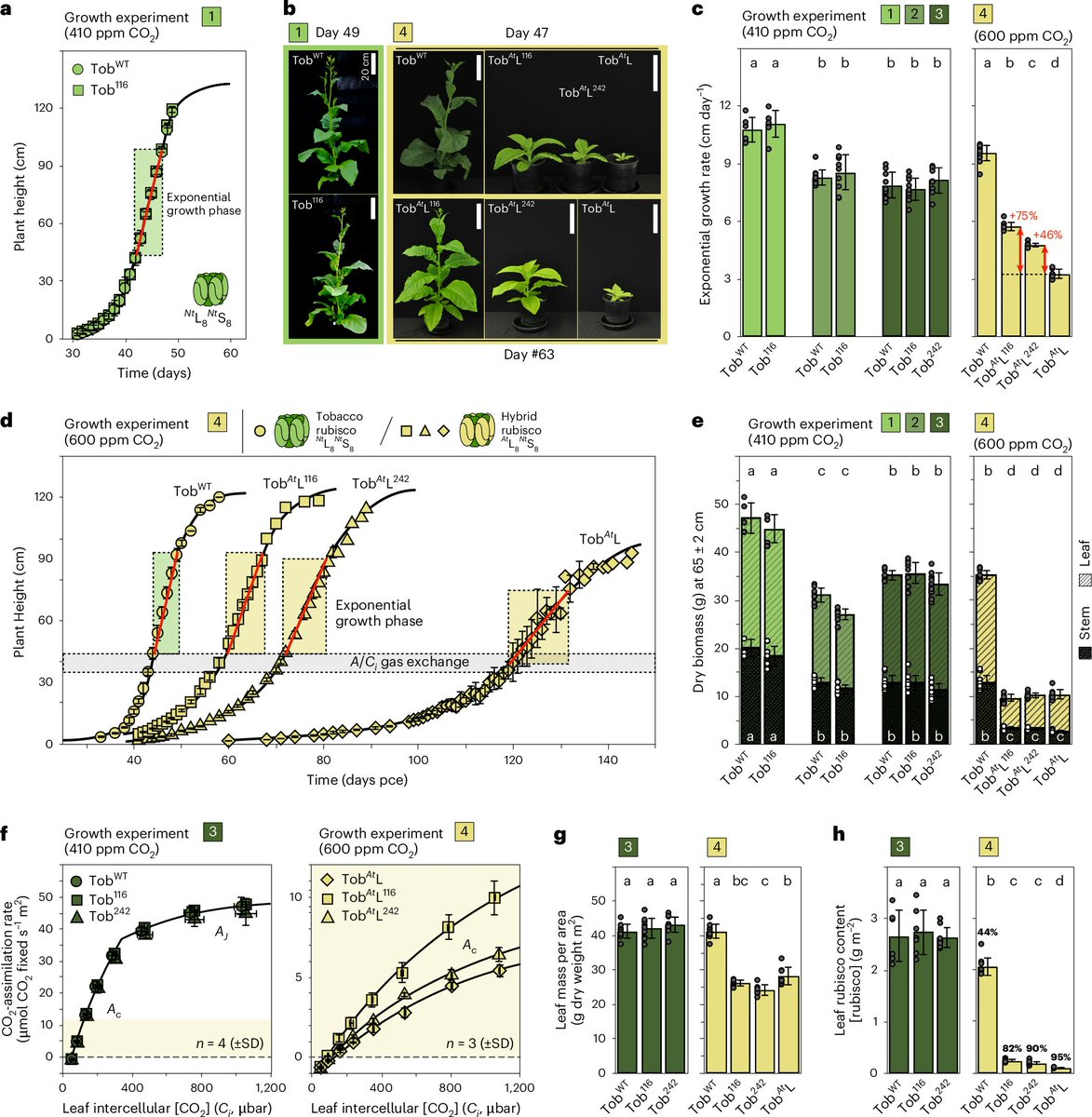
But there's a new paper in Nature Plants that looks really interesting. The TL;DR is that a group in Australia figured out how to express plant Rubiscos (and all SEVEN of their folding chaperones) using a set of 3 plasmids inside of E. coli cells. This enabled them to do "directed evolution" of Rubisco in bacterial cells, and quickly find Rubisco mutants that have higher enzymatic efficiency or that fold better.
In addition to the 3 plasmids, the researchers also coaxed E. coli to make ribulose-1,5-biphosphate, or RuBP, which is the 5-carbon sugar that Rubisco smashes into carbon dioxide to make molecules of 3-PGA for central metabolism.
Now, the clever bit is that you RANDOMLY MUTATE the three plasmids encoding the Rubisco to make millions of variants. Then, you transform those mutated plasmids into E. coli. If the E. coli do NOT make a functional Rubisco, RuBP levels build up and kill the cell; the molecule becomes toxic. But if the E. coli DO make a functional Rubisco, then they keep the RuBP levels in check and live just fine.
Using this "screening assay," the researchers found 46 fast-growing colonies of E. coli. Two of those colonies encoded really useful mutations. One mutation (M116L) makes Rubisco about 25–40% faster. The other (A242V) makes it fold and assemble much more efficiently.
They put this mutation into a "hybrid Arabidopsis–tobacco Rubisco," put that into tobacco plants, and measured growth. The plants with M116L grew 75% faster than wildtype.
No guarantees this will scale to more useful crops, like wheat and corn and soybeans etc. But it seems like a nice in vitro assay for faster prototyping!
The billionaires funding aging reversal.
When they were young they wanted to be rich. When they were rich, they wanted to be young.
@shaneshifflett@AmyDMarcus@AlexLJanin
https://t.co/ul8G0Vq5z5
This is an AMAZING PAPER!!
Shank3 oligomerization governs material properties of the postsynaptic density condensate and synaptic plasticity: Cell https://t.co/AXghootJzV
New preprint: https://t.co/rKxijrTgit
"Open Questions about Time and Self-reference in Living Systems"
by Samson Abramsky, Wolfgang Banzhaf, Leo S. D. Caves, Michael Levin, Penousal Machado, Charles Ofria, Susan Stepney, Roger White
Ribosome density is often used as a surrogate for translation efficiency.
However, this article suggests differences in translation elongation rates across mRNAs:
⬛️ Translation elongation rates vary up to ∼ 20-fold among transcripts.
🧵
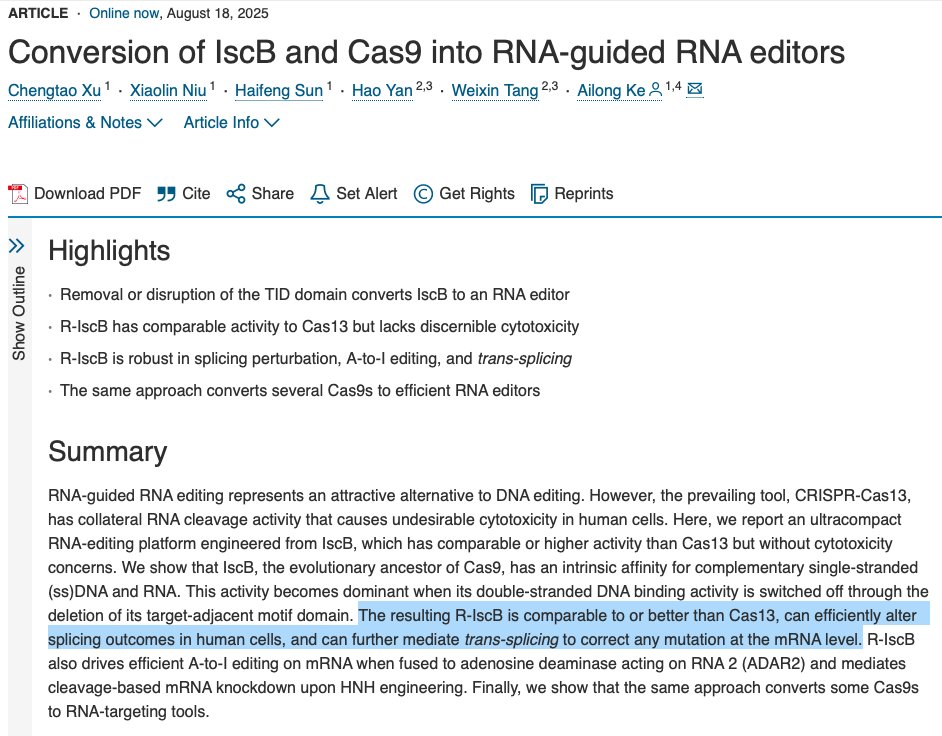
A new paper in Cell shows that it is possible (simple, really) to convert DNA-editing CRISPR proteins, such as Cas9, into RNA editors.
All you have to do is delete a chunk of them.
Deleting 55 amino acids from a DNA editor called IscB (the ancestor of Cas9) turned it into a “robust and versatile” RNA-guided RNA editor in human cells. This modified protein was used to cut mRNAs, knockdown gene expression levels, and even make an A-to-I base editor for RNA.
There are existing RNA-editing proteins, of course, with Cas13 being the most commonly used. Cas13 uses a short snippet of RNA to seek out, and then cut, target RNA molecules. But it also has a major problem: After it cuts its target RNA, Cas13 causes “collateral damage” by also randomly chopping up nearby, bystander mRNAs. This is toxic to bacterial and mammalian cells.
So in this paper, the authors deleted a part of the IscB protein (called the target-adjacent motif interaction domain, stretching from amino acids 433-487), which is normally responsible for its grabbing tightly onto DNA. And that deletion alone converted this protein into an RNA editor. The reason this works is because IscB naturally grabs onto both DNA and RNA, but is heavily biased toward DNA. So this deletion just removes its ability to grab onto DNA, thus biasing it to RNA.
The resulting RNA editor is not only “more active than Cas13,” according to the paper, but it also “has no discernible cytotoxicity in human cells.” The author also show that the same exact approach works for other Cas proteins, including Cas9. Lots of gene editors can be converted into RNA editors, in other words.
Good paper. Gene editors are even more versatile than we appreciated.
Peggy Mason, who helped define the rodent prosocial behavior field with the trapped rat paradigm in 2011, is now changing course and pursuing other scientific interests.
By @sydney_elise44
https://t.co/wTuZC58n6R
MOSAIC oblique illumination mode of cultured HeLa cells for 1000 frames at 1 sec intervals showing membrane ruffling, intracellular trafficking, a blebbing triangular cell switching to a quiescent state, and division of contaminating bacteria.
New preprint + thread 🧵
#Psychedelics induce the formation of new synapses, but where do they connect?
Our rabies tracing study reveals that #psilocybin shifts connectivity across specific cortical networks.
https://t.co/lJgJcaxoxD
1/12
Excited to share our latest paper @NatureMethods
We present a high-throughput framework to map cellular interactions at ultra-high scale – broadly applicable from whole-organism immune response mapping to personalized therapy response prediction (1/4).
https://t.co/283vXf9eCy
The good news is that if C₆H₈N₂O₂ causes the problem in a significant percentage of patients, steps can be taken to prevent it. Researchers have identified the receptor to which the molecule binds and have managed to block it with a drug, reducing the progression of atherosclerosis in mice fed a high-cholesterol diet. “With this inhibitor, we completely prevented the development of the disease. 4/4
https://t.co/Sv6NMjulcH