Sequence Display generates large-scale protein sequence–activity datasets by simultaneously reading out the sequence of interest and a downstream editing efficiency - perfect for data hungry ML methods!
Happy to have played a small part in this with @Han_Xiao2016 and @xiongyih
Excited to be part of this work! We used ColabSaprot to finetune and run inference on an experimental sequence-to-expression dataset for another work — the results aligned well with experimental validation and the process was quite smooth.
Biosynthesis of Unnatural Cyclodipeptides through Genetic Code Expansion and Cyclodipeptide Synthase Evolution | Journal of the American Chemical Society @RiceUniversity@RiceChemistry https://t.co/aznQOzynCk
1/10 Today in @ScienceMagazine in collaboration with @liugroup we report the development of a laboratory-evolved CRISPR-associated transposase (evoCAST) that supports therapeutically relevant levels of RNA-programmable gene insertion in human cells. https://t.co/y2DqXZzY1R
🚨 We discovered a new genetic code, "Genetic Code 34," sporadically distributed in archaea. Select archaea have genome-wide recoding of the TAG stop codon to pyrrolysine; the adoption of this code was likely driven by metabolic processes. (1/2) https://t.co/wzEKFpSPxE
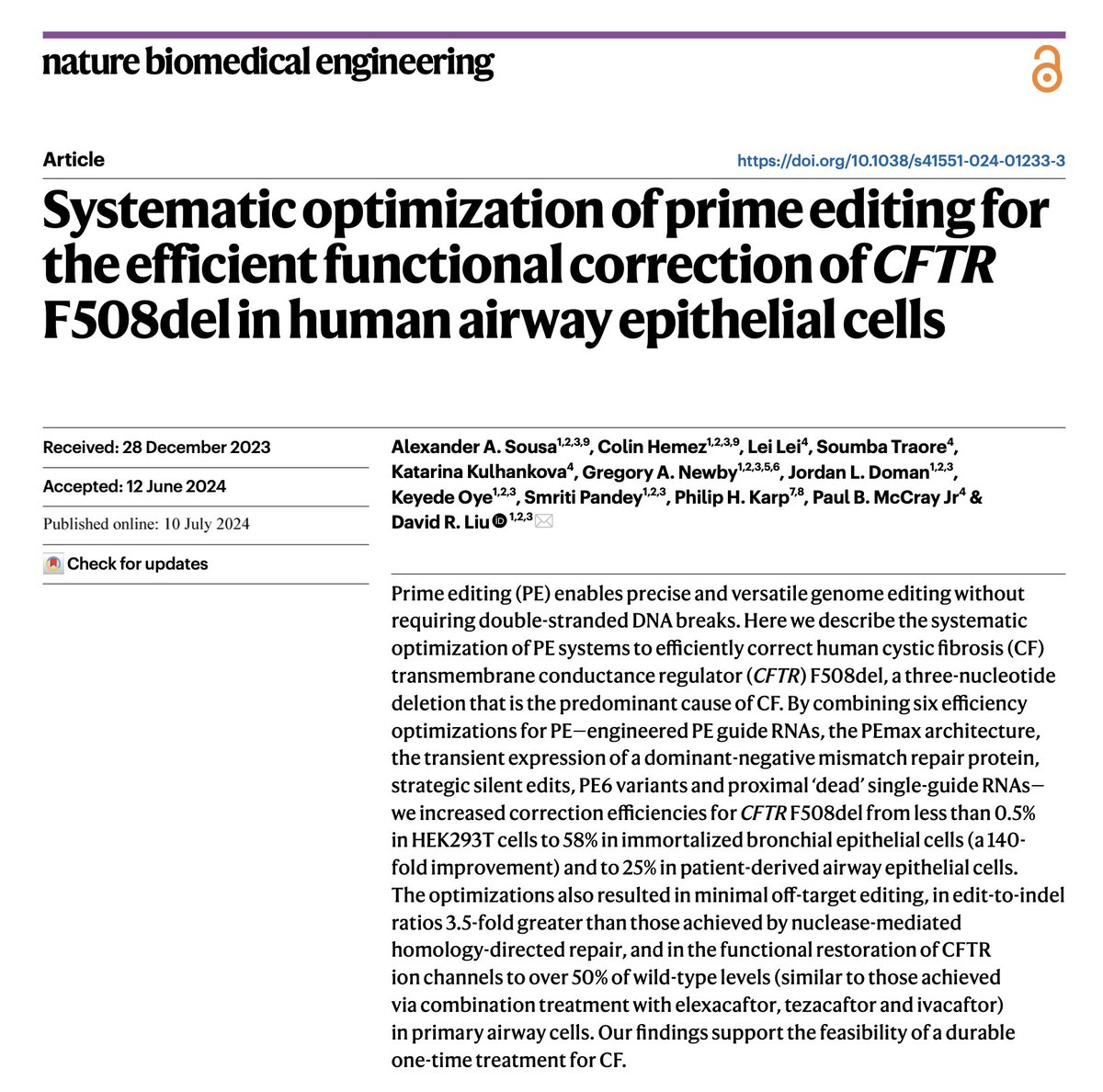
Today we report in @natBME the systematic application of six recent prime editing developments to enable efficient and functional correction of CFTR F508del, the predominant mutation that causes cystic fibrosis (CF), in primary airway cells from CF patients.
https://t.co/Nw2xycAZMS
(1/6)
Today in @ScienceMagazine, we report how a structure-informed language model can guide antibody evolution with unprecedented efficiency. Led by @varunrshanker, we coevolved mAbs to overcome viral escape, laying the groundwork for more evolutionarily resilient therapeutic design.
An anti-CRISPR protein inhibits the type I-F CRISPR–Cas system by pulling apart the fully assembled effector complex in the absence of an external energy source. https://t.co/4DjgyifvGj #NBThighlight
A Translation-Independent Directed Evolution Strategy to Engineer Aminoacyl-tRNA Synthetases
Enables the selection of mutants for charging monomers that are poor substrates for the wild-type ribosome
NEW #ASAP by @AChemSynBio & colleagues
Read it here: https://t.co/deEppvDoEU
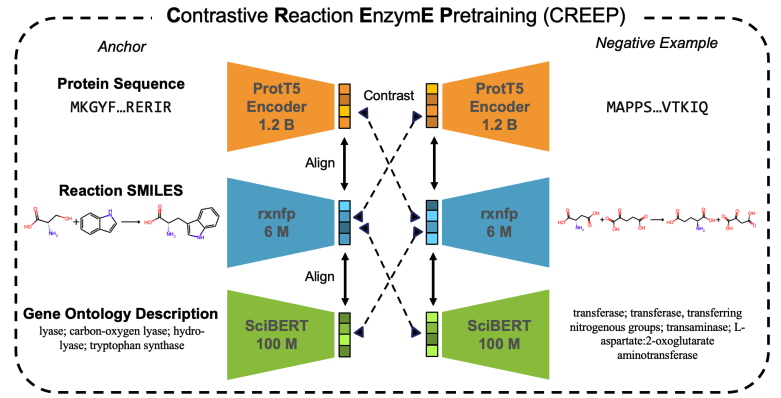
CARE: a benchmark for the Classification And Retrieval of Enzymes and CREEP: Contrastive Reaction-EnzymE Pretraining as a baseline method for retrieving EC class from reaction.
@jsunn_y Ariane Mora @Shengchao_Liu Bruce Wittmann
@AnimaAnandkumar@francesarnold@yisongyue
Happy to share this work by Elise Ficaretta demonstrating that ncAA incorporation in E. coli using an endogenous tyrosyl-tRNA/synthetase pair is remarkably more efficient (up to 10 contiguous ncAAs) than a foreign pair https://t.co/gMGTH15gRG
We have trained ESM3 and we're excited to introduce EvolutionaryScale.
ESM3 is a generative language model for programming biology. In experiments, we found ESM3 can simulate 500M years of evolution to generate new fluorescent proteins.
Read more: https://t.co/iAC3lkj0iV
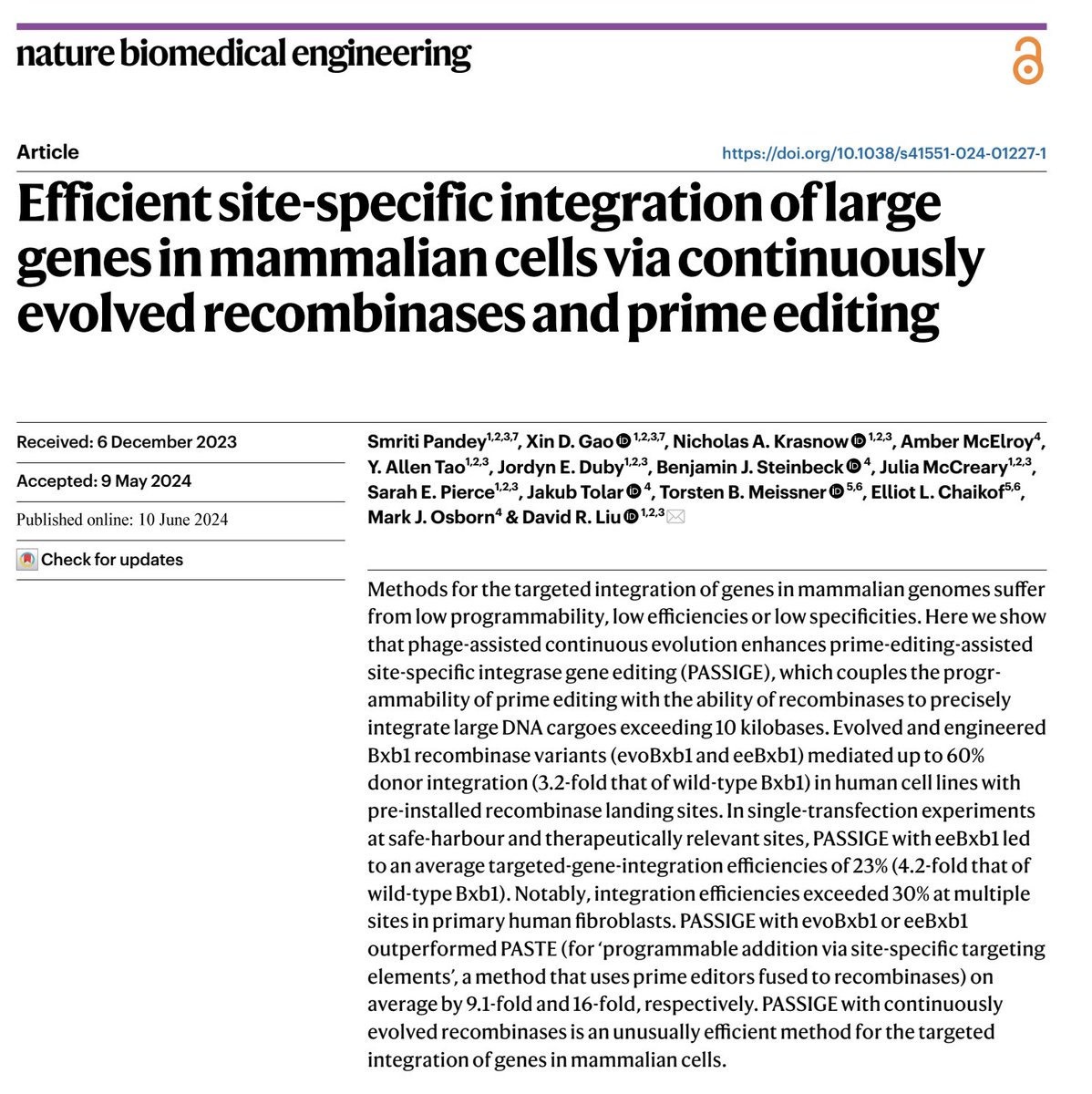
Today we report in @natBME the eePASSIGE system, which uses evolved and engineered recombinases and prime editing to integrate large gene-sized DNA cargoes into the mammalian genome in an efficient, precise, and targeted manner. (1/13)
https://t.co/xvjTwgApde
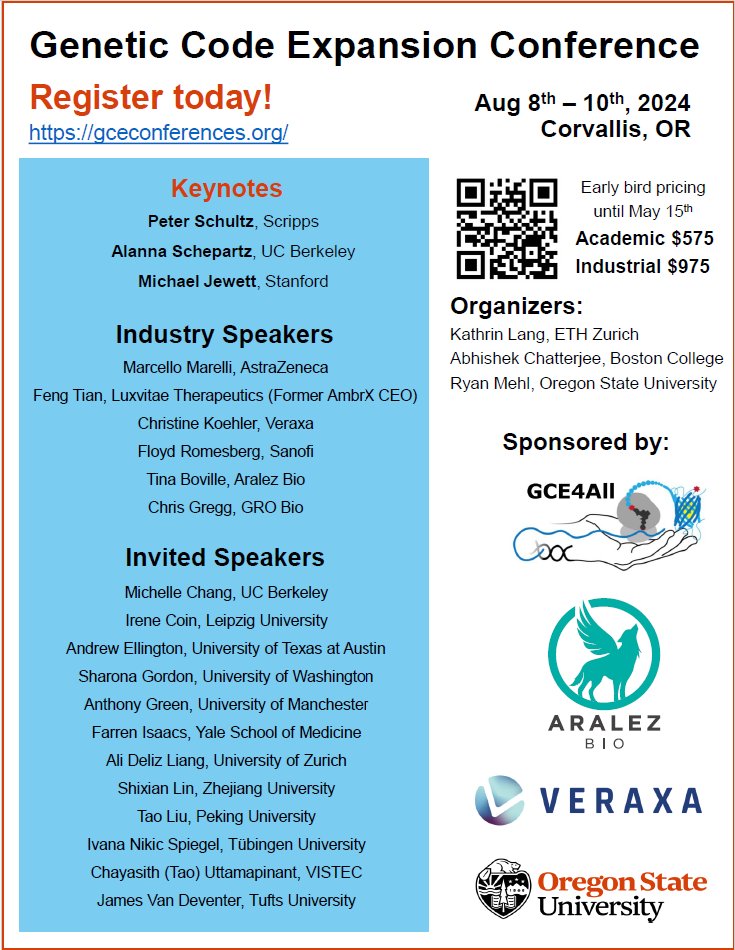
🚨🚨All genetic code expansion enthusiasts, don’t miss the GCE 2024 conference this summer (https://t.co/ItK2dA4Xi4)! Fantastic speakers both from academia and industry. Please retweet! @klanglab@Mehl_lab