Today, @SpaceX (Nasdaq: SPCX) makes its public market debut with a $75Bn offering (pre-greenshoe) at $135 per share, marking the largest IPO in history.
Congratulations to the SpaceX team. We are honored to serve as joint lead bookrunner and sole stabilization agent.
We’re announcing two new partnerships to bring innovative energy generation and storage to our data centers:
1/ 🛰️ Space Solar: Partnering with Overview Energy to beam up to 1 GW of space solar power from orbit to Earth for around the clock power production.
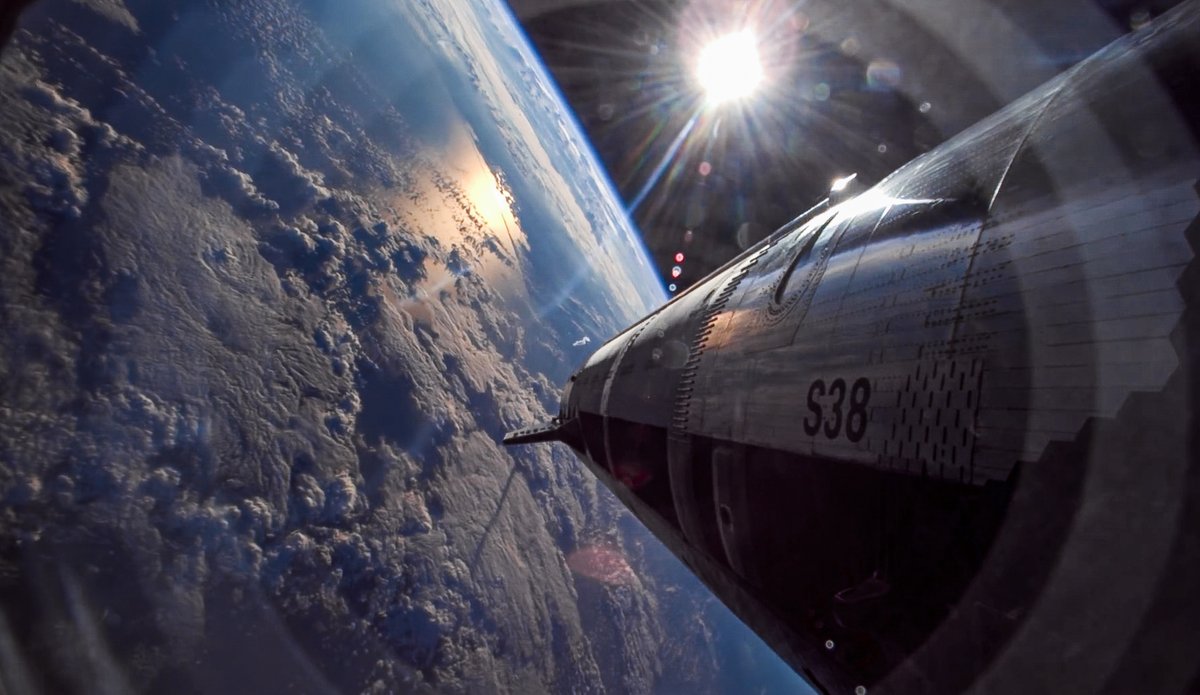
Three years since the first flight of Starship, the next generation is here. New ship. New booster. New engines. New pad and new test site. SpaceX engineers are working to solve one of the most difficult engineering challenges in history: developing a fully, rapidly reusable rocket
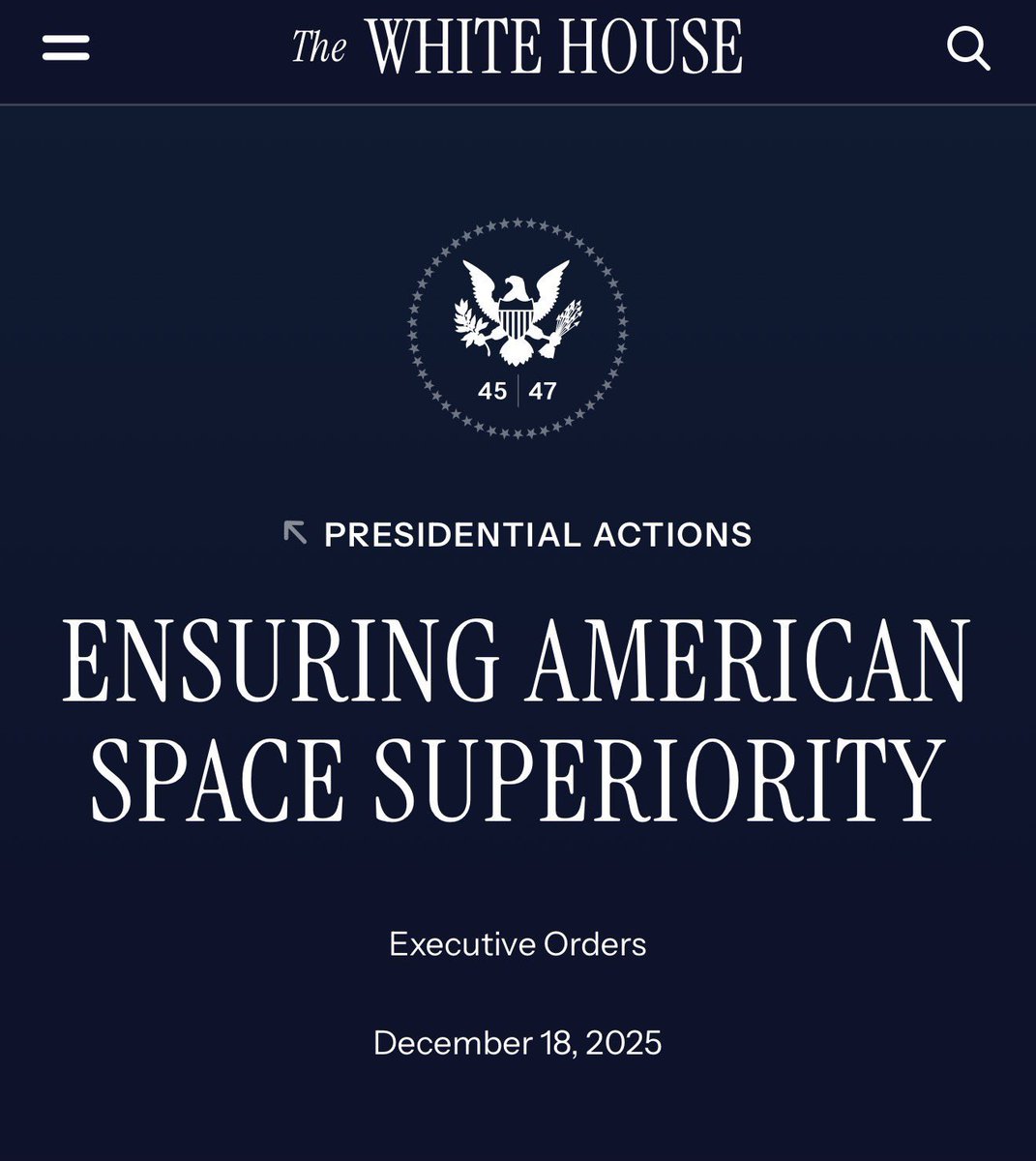
Today, President Trump established the most significant national space policy since the Kennedy era.
@POTUS made a commitment to return to the Moon, establish an enduring presence, invest in the technology of the future and pursue the secrets of the universe.
@NASA, with a relentless focus on the mission, will lead in the peaceful exploration of space and we will NEVER come in second place.
Under this administration, we will continue to lead with the world in space exploration with purpose and ambition.
A recent reflection, based on conversations with economists and policy leaders, is that there are two superficially similar but importantly different perspectives one can hold with respect to US manufacturing:
* Affinity for manufacturing and physical production is an anachronistic fetish, embodied by populists with outdated attraction to hard hats and clanging forges. A great deal of manufacturing has departed the US, which is certainly fine and probably even quite good. It's unpleasant labor, and countries ought to each specialize in their respective comparative advantages.
* Manufacturing is the ultimate network effects and economies-of-scale business. As services are substituted by AI, and as datacenter deployment accelerates, the relative importance of manufacturing is likely to grow. To think that one can pick and choose sectors in which one will excel ("let's win in drones but not in dishwashers") is a fallacy. Manufacturing is hence of paramount strategic importance. However, we don't know how to make the US the world's preeminent manufacturing power (given its cost base and given the current center of gravity in China) -- indeed, we don't know whether it's even possible -- and this is a significant strategic problem for the country.
I have zero direct expertise here, but my outside view is closer to #2 than #1: it seems that the ecosystems and supply chains create strong gravity across the board. I also asked @elonmusk, who has clearly done more over the past decade to advance sophisticated US manufacturing than anyone else, and this appears to be his view. Most economists, on the other hand, are much closer to #1, and I don't think that the economics profession considers the absence of good ideas for reviving US manufacturing to be a problem of particular significance. (There are lots of snide epithets about the efficacy of industrial policy.) It seems to me that there's even some amount of backwards reasoning happening, where, because we don't know how to do #2, #1 is subconsciously a much more comfortable position to hold.
Talking about winning particular manufacturing sectors feels to me a bit like talking about winning individual biological research sectors or winning particular software sectors. That is: it seems that the strong default assumption should be that "the place that is best at biology research sector X will also be best at sector Y", and similarly in software, because the skills and inputs needed are so transferable. As such, my guess is that if the US seeks meaningful sovereignty or preeminence in any of drones, robotics, solar, batteries, pharma, etc., we need to bite the bullet, and win at manufacturing across the board.
Overall, I'd love to read more arguments for and against these perspectives, particularly from those with direct expertise.
Watch Firefly land on the Moon! After identifying surface hazards and selecting a safe landing site, #BlueGhost landed directly over the target in Mare Crisium. A historic moment on March 2 we'll never forget. We have Moon dust on our boots! #BGM1
https://t.co/wO4QyGtcLM “The rumble you feel, the sonic booms of reentry, it's just a visceral feeling that captures so much potential energy, literally and figuratively, the potential in that launch and the potential for humanity to go out and live in space and to explore the frontiers of the unknown.” — my favorite line in today’s movie release by @JaysonJoyRide.
We discuss SpaceX, Planet and a bunch of new New Space startups. Enjoy!
The first Starships to Mars will launch in 2 years when the next Earth-Mars transfer window opens.
These will be uncrewed to test the reliability of landing intact on Mars. If those landings go well, then the first crewed flights to Mars will be in 4 years.
Flight rate will grow exponentially from there, with the goal of building a self-sustaining city in about 20 years. Being multiplanetary will vastly increase the probable lifespan of consciousness, as we will no longer have all our eggs, literally and metabolically, on one planet.