Postdoctoral Fellow studying somatic mutation, CHIP, and leukemogenesis at @BostonChildrens, @broadinstitute, and @harvardmed in the lab of @bloodgenes.
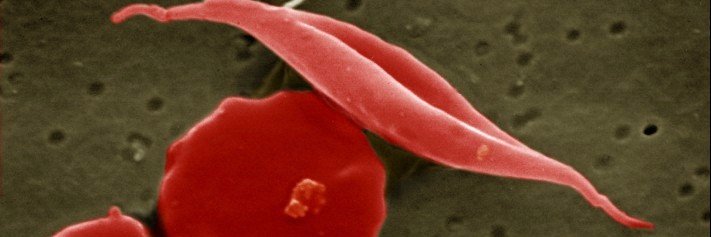
Terrific to have our latest preprint out in @medrxivpreprint led by the amazing team of @la_liggett, Liam Cato, @J__Stock, and @AlexBickMDPhD: "Clonal hematopoiesis in sickle cell disease"
https://t.co/YQMElu2asX (Thread .. 1/n)
A recent commentary in bioRxiv discussed data analysis for our mtDNA-based lineage tracing technology ReDeeM. We welcome the points raised and are happy to address these concerns. We believe this will foster constructive dialogue (1/n) https://t.co/6aWbTRfijx
@RMeyerSchuman and I were honored to have chaired the Gordon Research Seminar (@GordonConf) this weekend. Being elected in 2018 to chair the 2020 GRS, this felt like a long time coming.
Fantastic turnout & amazing science all weekend! It’s amazing to be immersed in #genetics :)
Thrilled to share my PhD work in @CellCellPress! Massively parallel base editing to map variant effects in human hematopoiesis. We developed screens on blood stem cells to understand disease and develop treatments at single-nucleotide resolution.1/n https://t.co/NHch2YBWpL
https://t.co/tbMRoKg8sy
Thanks to an awesome team, our trio-based de novo mutation rates study is now out! We estimated a rate for 68 vertebrate species and explore the male and female contributions and the impact of life-history traits on the evolution of the rate! Read more:
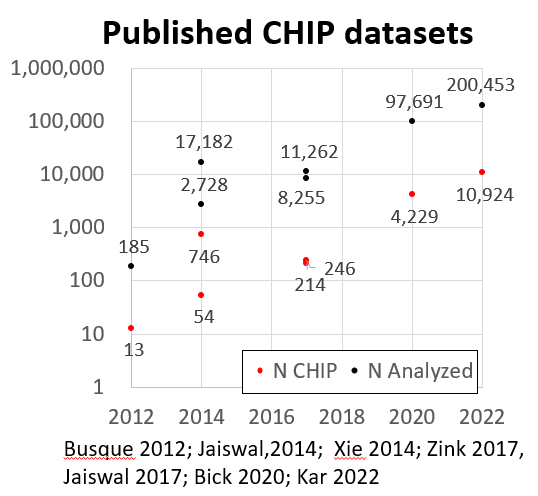
Published #CHIP datasets are growing exponentially! In a new preprint, we share how to reliably identify CHIP in ~550k @AllofUs genomes & @UKBiobank exomes. We find small parameters make a BIG difference in CHIP quality & disease associations.
https://t.co/QnxY1krg0F
Have you ever wondered why tumors rarely -if ever- metastasize to skeletal muscle? Our latest, led by superstar (former) @MCBSeattle graduate student and @WeintraubAward winner Sarah Crist (1/n)
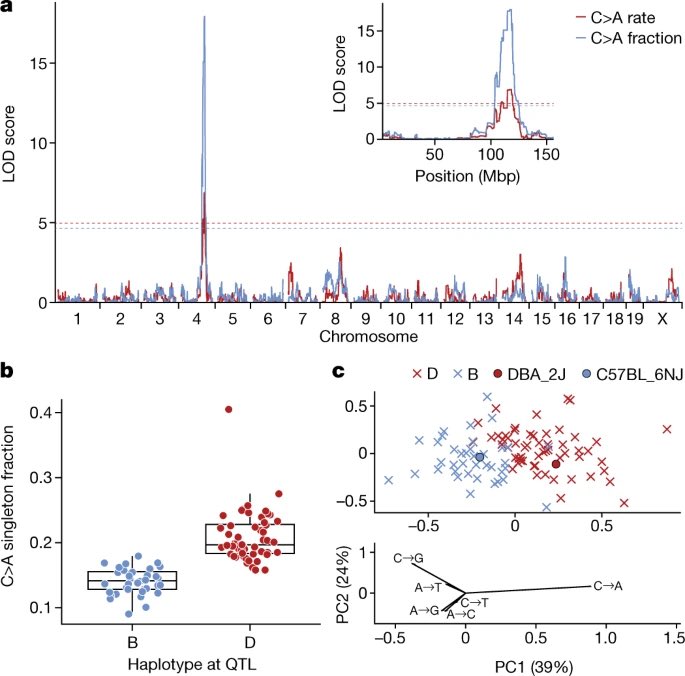
Our paper on a natural mutator allele affecting the mouse germline is out in @Nature! https://t.co/xu6KmlWGcl Congratulations to the fantastic author team that made this project possible! @tomsasani @DavidAshbrook @AnnabelBeichman @AbePalmer@robwilliamsiii@jkpritch
Excited to have this terrific study - #V2F mapping at #SingleCell resolution through network propagation - led by @fulong_yu along with a fantastic team published in @NatureBiotech: https://t.co/FLyGK4JRyK
🙏 Editors/ Reviewers for valuable comments that improved this work
Extremely excited to share our work on #V2F method SCAVENGE for the disease/trait relevant causal cell type/state identification using single-cell epigenomic data https://t.co/rD9vl71LNE out now in @NatureBiotech. The R package can be found https://t.co/snBR3Fqi4o.
To maintain lifelong blood production, hematopoietic stem cells have a number of adaptations. What is the impact? We have studied a rare disease to identify one resultant liability: ferroptosis
Pre-print: Human HSC vulnerability to ferroptosis
https://t.co/y8GPCrVD41
🧵
To coincide with the team's paper release, Signal has been updated to include the more than 50 new mutational signatures across more than 18,000 cancer samples.
Today is erythropoiesis day at @BloodJournal!
Our review on erythropoiesis is out: https://t.co/x5C7Pb8hAT (w/ accompanying excellent reviews from Semenza and Cazzola)
Our new GATA1 mutant paper is also out: https://t.co/UWcJOuHDvX (w/ great preview: https://t.co/DGiV9sbt4P)
Incredibly excited to share our paper ‘Somatic mutation rates scale with lifespan across mammals’ now published @nature.
https://t.co/a68IkkTt33
An illustrated & updated tweetorial… [1/24]
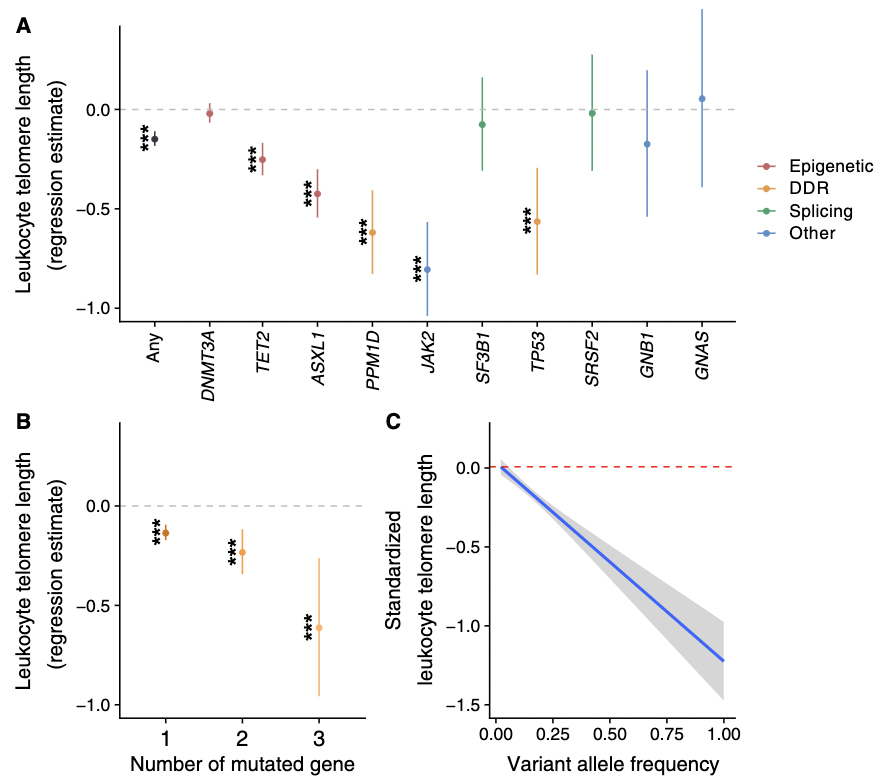
Our study led by @NakaoTetsushi uses human genetics from @nih_nhlbi TOPMed & @uk_biobank to infer that processes promoting telomere lengthening promote CHIP but CHIP in turn hastens telomere shortening https://t.co/KSGOHHJmDz @ScienceAdvances
Great to see our preprint out examining shared and distinct genetic causes of different types of clonal hematopoiesis! Terrific collaboration with @DerekWBrown_1, @liamcato, @ZhaoDylan, @jrbperry, @mitchiela:
https://t.co/lDELAo8Y7t
1/5 Check out SCAVENGE, led by @fulong_yu in the Sankaran Lab (@bloodgenes) - a new method which maps causal variants to their relevant cellular context using single-cell epigenomic data: https://t.co/UP6EHl1Zkd













![ATJCagan's tweet photo. Incredibly excited to share our paper ‘Somatic mutation rates scale with lifespan across mammals’ now published @nature.
https://t.co/a68IkkTt33
An illustrated & updated tweetorial… [1/24] https://t.co/o8BLsIXH7x](https://pbs.twimg.com/media/FQPMMCCWYAIybBt.jpg)


