Excited to share our latest study! 🧠✨ We reveal how non-direction-selective retinal ganglion cells encode motion beyond their receptive field, relaying the unconventional signals to the brain. A new insight into multimodal neurons in visual processing!
https://t.co/ho0zPM1MSG
New preprint from our lab on 3‑photon microscopy with deep, fast, Ca-imaiging on a large field of view. It started with @a_negrean and @tgeiller and was led by an outstanding student, Tiberiu Mihaila, with major collaboration with
@DarcyPeterka.
https://t.co/LKFjvuQPOz
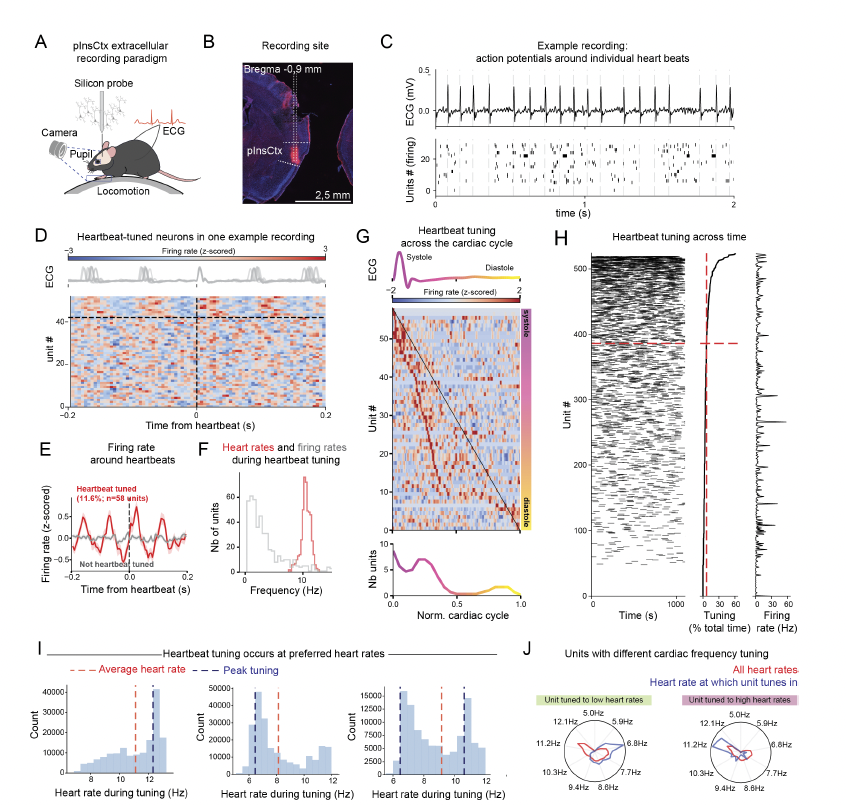
Really cool new paper from @NadineGogolla's lab showing that cardiac signals are transiently and precisely encoded in posterior insula neurons, with tuning strongest around systole and enhanced during emotional states. Beta-1 blockade disrupted this cardio-insular coupling and degraded emotion-state coding. Important implications for how bodily signals help shape emotion, interoceptive inference, and dynamic brain-heart coupling. https://t.co/ixPnjHHDXp
Want to explore connectivity & projection patterns yourself, like we do here? We released brain_street_view to let you pick any injection site in the Allen Connectivity Atlas and visualize where it projects in your favorite region of interest: https://t.co/pj3lo2aZOz
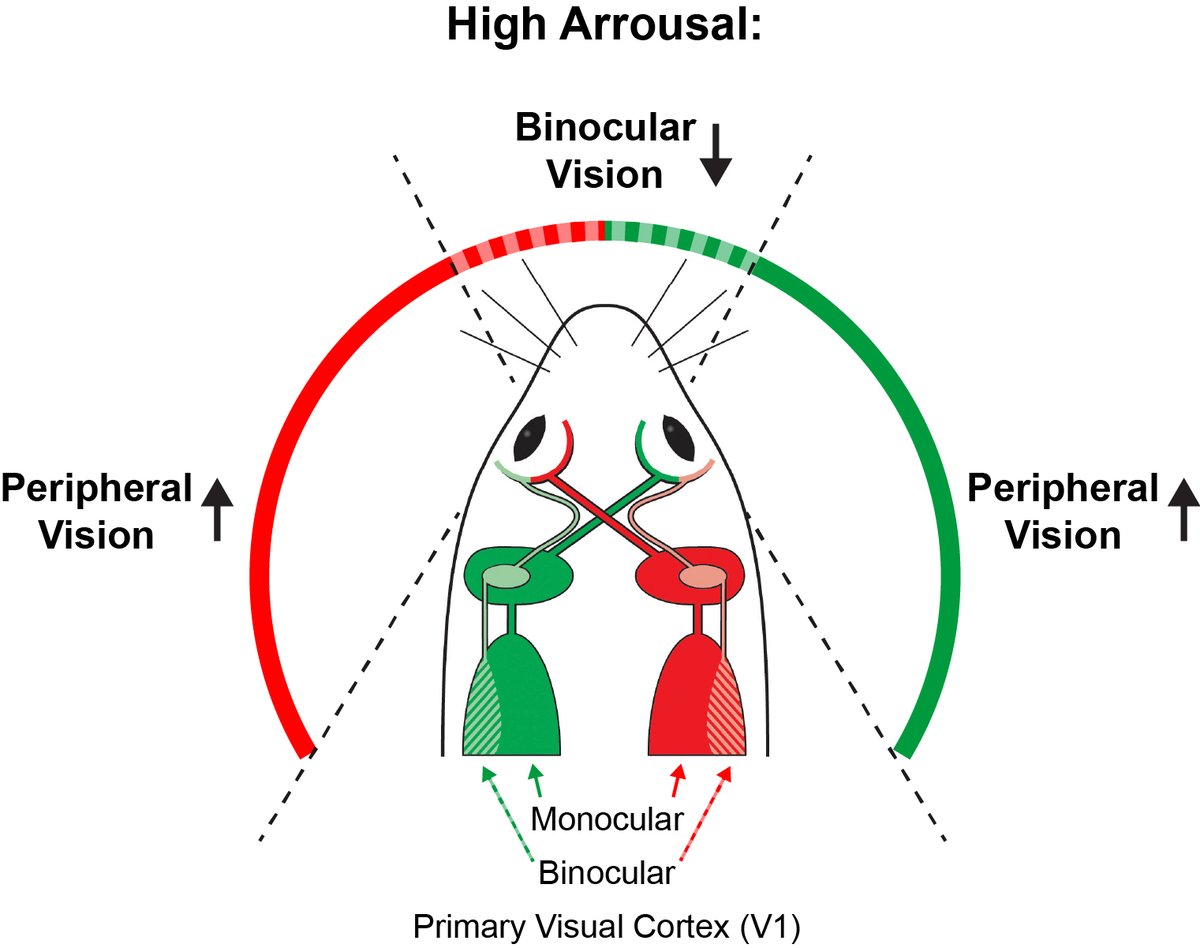
🚨Paper Alert🚨 After 4(!!!) years of revisions, the amazing @KetiCohen & team pushed out this beauty💪 Unlike what the textbooks say, V1 binocularity is not fixed: at high arousal, binocularity decreases while the strength of peripheral vision increases. https://t.co/mK3KEw7jbs
In Nature Electronics, we present BISC with Ken Shepard, @peabody124 & others: an ultrathin brain–computer interface chip with 65,536 electrodes, 1,024 channels, and ~100× higher bandwidth at 100 Mbit/s. A bidirectional platform toward future neocortex–AI 'exocortex' systems. https://t.co/tjRrjI02al
A simple guide to understanding how neurons make neurotransmitters
Your brain has different classes of neurons, each defined by the chemical messenger (neurotransmitter) they release. These transmitters are built from specific precursors using unique enzymes and cofactors.
1️⃣ Cholinergic Neurons (green)
Main transmitter: Acetylcholine (ACh).
Source: Built from acetyl-CoA and choline.
Special enzyme: ChAT (choline acetyltransferase).
🟢 Example: These neurons drive muscle contraction and attention.
2️⃣ GABAergic Neurons (blue)
Main transmitter: GABA (gamma-aminobutyric acid).
Source: Derived from glutamate.
Special enzyme: GAD (glutamate decarboxylase).
🟢 Example: GABA is the brain’s main “calm-down” signal.
3️⃣ Glutamatergic Neurons (orange)
Main transmitter: Glutamate.
Source: Recycled from other cells and stored in vesicles.
🟢 Example: Glutamate is the brain’s main “go” signal for learning and memory.
4️⃣ Serotonergic Neurons (green-teal)
Main transmitter: Serotonin (5-HT).
Source: Made from tryptophan → 5-HTP → serotonin.
Special enzymes: TPH (tryptophan hydroxylase), DDC (decarboxylase).
Cofactor: BH₄ (tetrahydrobiopterin)
🟢 Example: Serotonin regulates mood, sleep, and appetite.
5️⃣ Dopaminergic Neurons (light blue)
Main transmitter: Dopamine.
Source: Made from tyrosine → L-DOPA → dopamine.
Special enzyme: TH (tyrosine hydroxylase), DDC.
Cofactor: BH₄.
🟢 Example: Dopamine drives motivation, reward, and movement.
6️⃣ Noradrenergic / Octopaminergic Neurons (red)
Main transmitter: Norepinephrine (mammals) or Octopamine (in invertebrates).
Source: Derived from tyrosine/tyramine.
Special enzyme: TBH (tyramine β-hydroxylase).
Cofactor: BH₄.
🟢 Example: Linked to arousal and “fight or flight.”
7️⃣ Tyraminergic Neurons (orange-brown)
Main transmitter: Tyramine.
Source: Made from tyrosine → tyramine.
Special enzyme: TDC (tyrosine decarboxylase).
🟢 Example: Acts as a trace amine, modulating dopamine and serotonin systems.
Supporting Pathways (Panels B & C):
Acetyl-CoA production (B): from the citric acid cycle, provides building blocks for acetylcholine.
BH₄ synthesis (C): a critical cofactor for making serotonin, dopamine, and norepinephrine.
Each neurotransmitter system has its own “assembly line”: specific precursors, enzymes, and cofactors. Together, they form the brain’s chemical language — acetylcholine for movement and attention, glutamate and GABA for balance, and monoamines (serotonin, dopamine, norepinephrine) for mood, reward, and arousal.
Our fluorescence lifetime photometry at high temporal resolution (FLIPR) paper is now online at Neuron. FLIPR allows for fast (10Hz-1 kHz) and slow (min-hrs) measurement of absolute neuronal signals in freely moving mice. We highlight the utility by measuring tonic and phasic DA.
A real-time all-optical interface for dynamic perturbation of neural activity during behavior: https://t.co/oGqxempZs3
Real-time interface that integrates CaImAn for online calcium imaging analysis, and a custom hologram program for two-photon optogenetic stimulation.
A pair of papers on using holographic optogenetics and compressed sensing for connectomics
Rapid learning of neural circuitry from holographic ensemble stimulation enabled by model-based compressed sensing
https://t.co/amA4i1BoGV
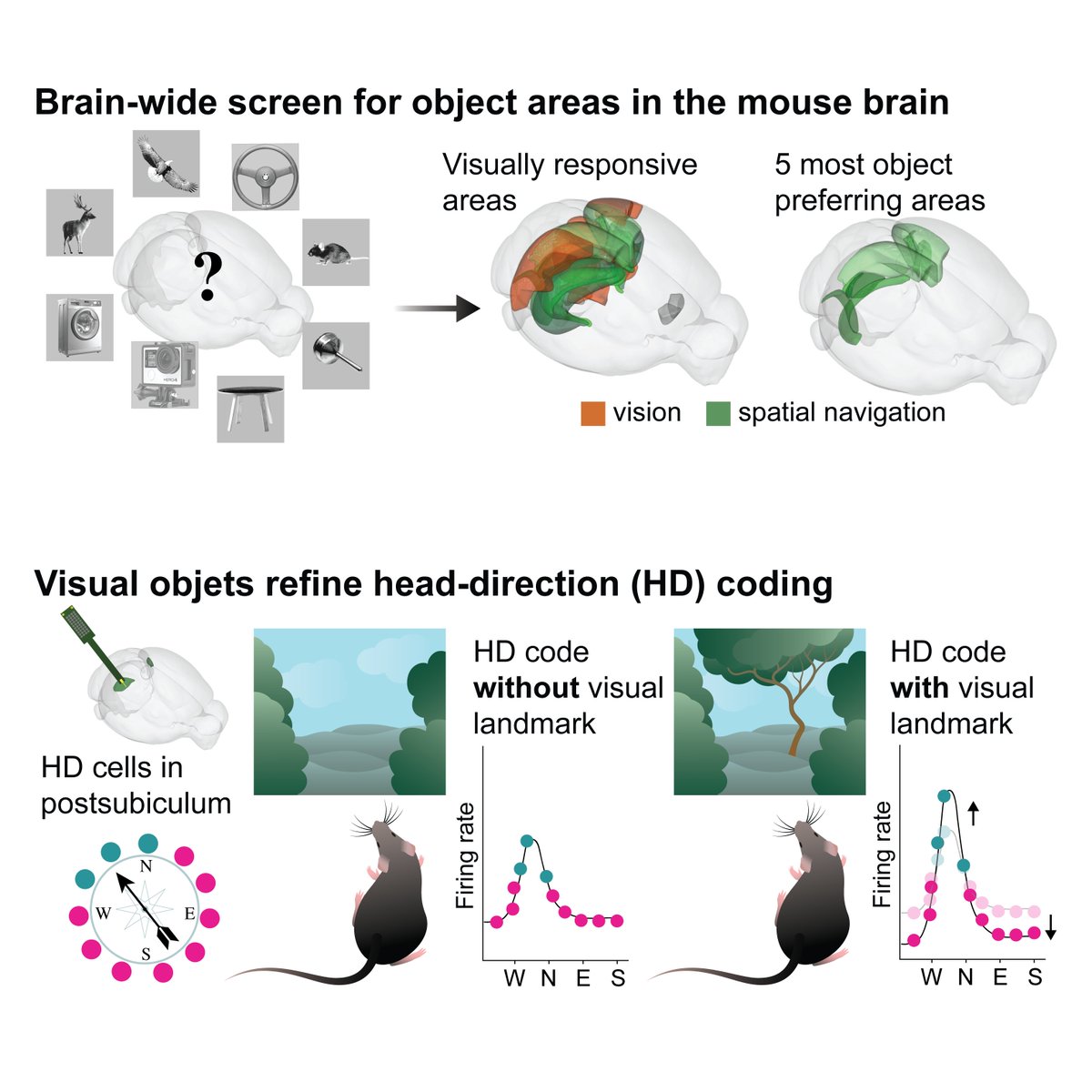
Thrilled to share that our work is now published in @ScienceMagazine!✨
We found a preference for visual objects in the mouse spatial navigation system where they dynamically refine head-direction coding. In short, objects boost our inner compass!🧭
https://t.co/PEo1i9BQfB
🧵1/
The human brain synchronizes visual signals by adjusting axonal conduction speed in the retina—revealing a previously unknown mechanism for precise perceptual timing
@Annalis43262927@FelixFranke7@IOB_ch
https://t.co/4LWoABokPJ
Vision shapes representations of space in the hippocampus, whether you are a bird or a primate. It is sensory ecology doing its job...
https://t.co/8aKgkfnKte
Our latest work is out today in @NeuroCellPress
. Using voltage imaging, we clarified how serotonergic neurons compute action effectiveness during learning behavior. With Ravid Haruvi, @zq_wei and @MishaAhrens
https://t.co/D1pl5LFfHW
Now out in NatComms: Mice and monkeys spontaneously shift through comparable cognitive states - and it's written all over their faces! (1/7)
https://t.co/NYeMSriq6m
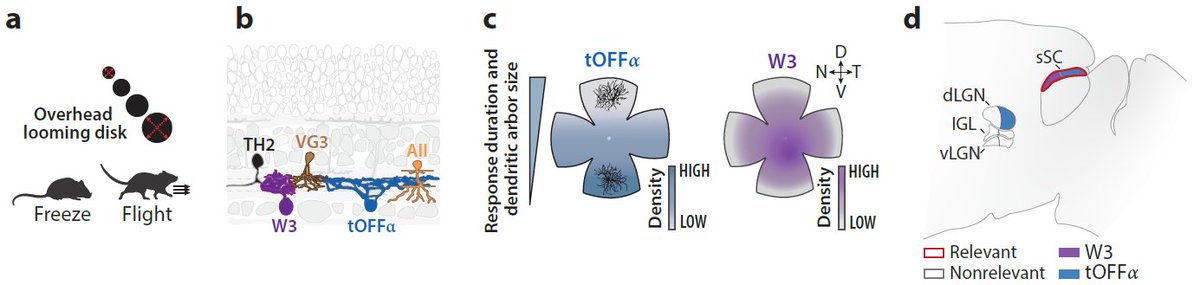
65 years after Lettvin’s bug detector neurons in the frog retina, we revisit how the retina drives behavior—from reflexes to prey capture to brain-state modulation
New review with @AnnaIntegrated & Serena Riccitelli in Annual Review of Vision Science 👇
https://t.co/xfwUGtpXkF