The next strategic operating systems will not be built only for land, air or cloud.
They will be built for the sea.
Proud to see Mirai featured by @TheInnovator as a startup highlight — a recognition that reinforces something we strongly believe: maritime autonomy is beginning to be understood for what it is, not as a niche opportunity, but as a broader industrial transition.
As our CEO and Co-Founder @lbelviso comments: “We see maritime autonomy today like aviation and the automobile industry at the beginning of the 20th century: a foundational technological transition that will create an entirely new industrial ecosystem.”
An important recognition — and a clear signal that this category is beginning to come into focus.
➡️Read more here: https://t.co/IQETnFFssQ
#Maritime #OceanTech #Autonomy #AI
We still talk about the sea as if it were background. It isn’t.
More than 80% of global trade moves by sea.
Yet the maritime domain still tends to become visible only through disruption: when a corridor comes under pressure, an asset fails, or a supply chain takes the hit.
But its strategic importance exists long before the crisis does.
The sea carries trade, underpins energy systems, and hosts critical infrastructure that remains largely out of sight — from coastlines to subsea cables and pipelines. At the same time, it remains one of the hardest environments in which to sustain persistent visibility, monitoring, and coordinated operations.
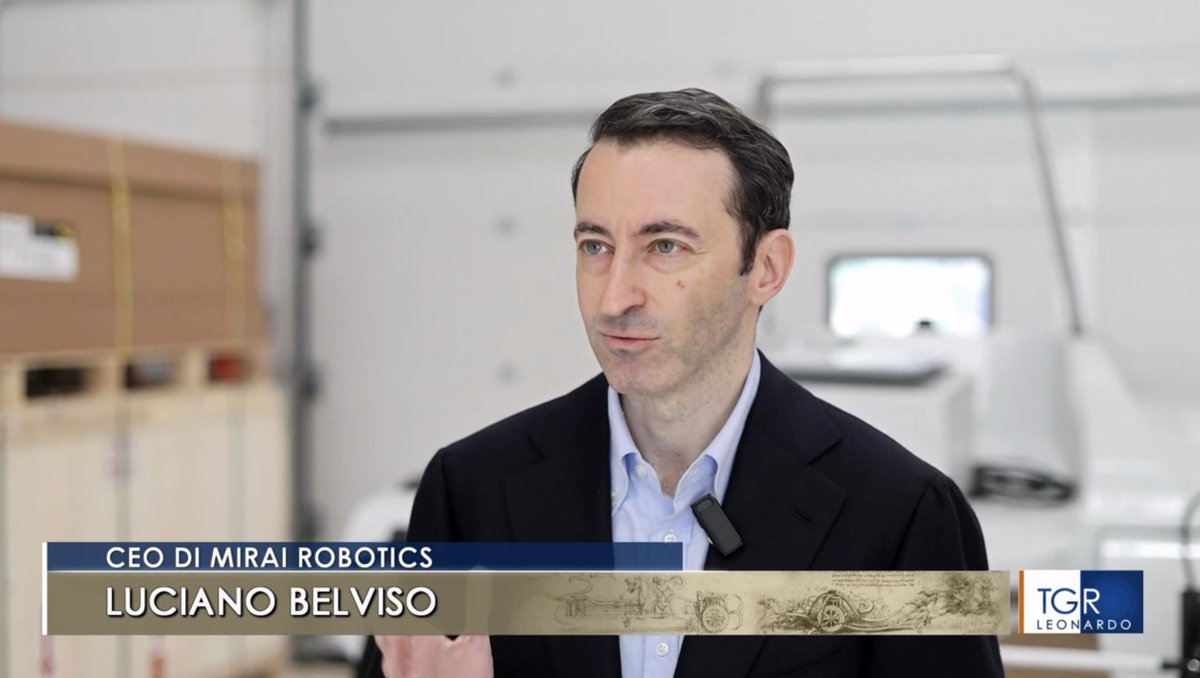
As our CEO @lbelviso observes in this @RaiNews.it feature: “The oceans are rarely talked about, yet they underpin the global economy.”
The point is simple — and increasingly hard to ignore.
The real challenge is not only scale. It is persistence.
Visibility is partial. Presence is costly. Coordination is hard to sustain.
That is what makes the maritime domain both strategically essential and operationally exposed.
The question is no longer whether this domain matters. It is whether our operating models are evolving fast enough to match its strategic weight.
https://t.co/WVRyAGD3a9
#Maritime #OceanTech #Autonomy #CriticalInfrastructure
Humans aren’t enough.
Not because they lack capability— but because maritime operations still rely too heavily on continuous human presence in environments that are dangerous, unstable, and difficult to sustain.
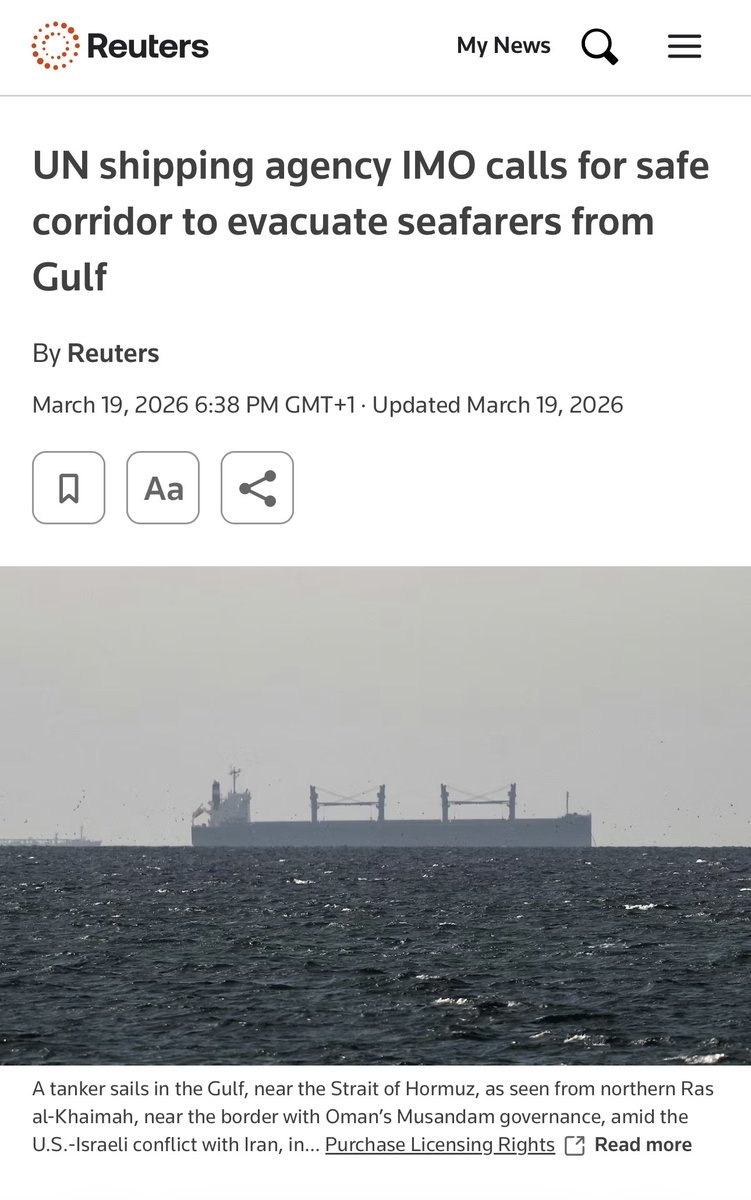
Last week, @Reuters reported that the IMO is seeking a safe corridor to evacuate around 20,000 seafarers stranded in the Gulf after repeated vessel incidents and confirmed deaths.
This is not just a humanitarian problem.
It is an operational one.
When an operating model relies on people remaining continuously exposed in degraded environments, it becomes fragile under pressure.
And the strain was already visible. Industry projections had pointed to a potential shortfall of nearly 90,000 trained officers by 2026.
This is where autonomy becomes necessary — not as hype, but as operating logic.
In harsh environments, resilience comes from systems that can sustain presence, maintain awareness, and keep working when human endurance becomes the limiting factor.
Autonomy is not the full story. Control is.
https://t.co/5Qa665TB4s
#Maritime #OceanTech #Autonomy
We’ve launched. Now we scale.
Most companies are using AI to build software. We are applying it to one of the hardest operational environments there is: the sea.
Maritime operations still depend heavily on human presence, fragmented systems, and slow decision cycles.
Infrastructure is monitored intermittently.
That is why autonomy matters here.
When vessels operate continuously, without crews, and coordinate through intelligent systems, the sea becomes something you can actually operate at scale.
At Mirai, we are building autonomous maritime systems — and we have already tested them at sea.
Now we are looking for people who want to help push that work forward.
✔️ Robotic Hardware Engineer, Rapid Integration & Test — for engineers who like moving fast from build to validation, integrating hardware under real constraints, and learning from the field rather than from theory alone.
✔️ Software Engineer, Mission & Real-Time Systems — for people who want to write software that does not just support operations, but becomes part of the operational system itself.
✔️ HMI Designer, Mission Interface & Autonomous Systems — for designers who understand that autonomy only works when humans can direct, understand and trust it clearly.
✔️ Brand Communication Creative — for marketers who know how to make frontier technology legible, distinctive and culturally resonant while the category is still being built.
Across all roles, we value people with high agency, technical depth, speed of execution, and the drive to help shape what comes next at sea.
If this sounds like you, explore our open roles.
Work with us. Build with us. Operate with us.
https://t.co/0L1bYOAmhh
#Maritime #OceanTech #Autonomy #AI #AIroles
The Strait of Hormuz is a strategic lesson.
What is happening in Hormuz is a clear signal of a reality that is still too often underestimated: actors with far inferior military capabilities can still generate disproportionate global systemic effects.
Air power remains the primary reference point of modern conflict, and the US is undeniably superior in this domain. But the Strait is showing something equally important: targeted actions with relatively few assets can still place a vital node of the global economy under severe pressure.
Absolute superiority is no longer needed to produce strategic instability. For instance, a minelaying operation doesn’t require a naval engagement, but just a window of unobserved time in a stretch of water. The same logic applies to attacks on commercial vessels: the threat doesn’t need to materialize everywhere; it needs to make every operator question whether they’re being watched, tracked, or targeted.
Asymmetry is becoming a key lever of disruption, and this is exactly why security needs to be rethought as a problem of system resilience rather than just force projection.
Once a crisis enters its acute phase, the answer cannot be purely muscular or reactive. Effective responses depend on distributed capabilities to monitor, anticipate, deter, react across domains – continuously, not only in moments of escalation.
This is where autonomy becomes a real game changer.
For the villain. And for the hero as well.
For a broader context on how these dynamics are evolving: https://t.co/sE6d7biVWC
#Autonomy #Maritime #Defense #OceanTech @BBCWorld
Iran, as it fights the US and Israel, has flooded the skies with its cheap Shahed drones to overwhelm air defences and strike high-value targets.
John Reed explains why this unassuming weapon may just be the future of warfare. https://t.co/VufhHWiTkH?
Mirai at NVIDIA GTC 2026.
This week, we’re in San Jose for @NVIDIAGTC — joining one of the most important global conversations around #AI, #autonomy and next-generation intelligent systems.
As physical AI moves from concept to deployment, the challenge is no longer just intelligence. It is making that intelligence operational in the environments that matter.
That is exactly the space Mirai is building in.
If you’re at #GTC and interested in physical AI, intelligent systems or maritime applications, let’s talk.
#NVIDIAGTC #Nvidia #Maritime #PhysicalAI #MaritimeAutonomy #Robotics #DefenceTech #OceanTech
Qiushi (March 15, 2026): "The 21st century is the century of the ocean; whoever wins the ocean wins the future. China is one of the earliest nations in the world to develop and utilize the ocean ... We must deeply implement Xi Jinping’s vision to build a maritime power."
I Bell Labs erano anche una "fabbrica delle idee", le aziende come Anthropic nell'epoca dell'intelligenza artificiale vogliono affrontare sempre più i temi del dibattito economico e sociale, con un investimento culturale destinato a crescere ancora.
The sea is the last great frontier of power without control.
We are building the robotic infrastructure that will make it more governable, safe, and observable. We’re setting a new operating standard for maritime operations, powered by AI platforms fully integrated into autonomous navigation and monitoring solutions.
Our systems are designed to operate where humans cannot and to persist where humans should not. After five months in deep build mode, we are stepping out into the public domain with platforms already tested in real maritime conditions, ready to move from development to deployment.
Our CEO @lbelviso comments “The sea is one of the last major physical infrastructures not yet governed by software. Autonomy is the key to finally making the oceans safe and usable, unlocking immense resources and addressing critical security challenges. But it must be implemented through systems capable of operating continuously and safely in extreme environments. This is a technological and industrial challenge that requires a true robotics-lab approach”.
Read the full story on @Forbes : https://t.co/P5B9nUVOgZ
#Maritime #PhysicalAI #MaritimeAutonomy #Robotics #DefenceTech #OceanTech #Forbes
It's almost four weeks since the horrific terrorist attack on #Israel. A lot has happened, the public debate has become heated and confused. Find thoughts from Vice-Chancellor Robert #Habeck in the video, putting the events in context. 📣With English, Hebrew and Arabic subtitles.
Dalla provincia di Bari ai cieli di tutto il mondo. 🚁
Al prossimo TECH FOR LUNCH condivideremo il viaggio di un imprenditore fuori dagli schemi: @lbelviso, fondatore degli aerei biposto @blackshapeair: https://t.co/x9y4dM0IQ8
Con @NicoloAndreula di @hfarmcollege.
#HFARMevents
Non è punibile chi ha commesso il fatto per esservi stato costretto dalla necessità di salvare sé od altri dal pericolo attuale di un danno grave alla persona. Art 54 codice penale che la capitana Carola - quella che ha battuto Salvini - potrà invocare per essere prosciolta.
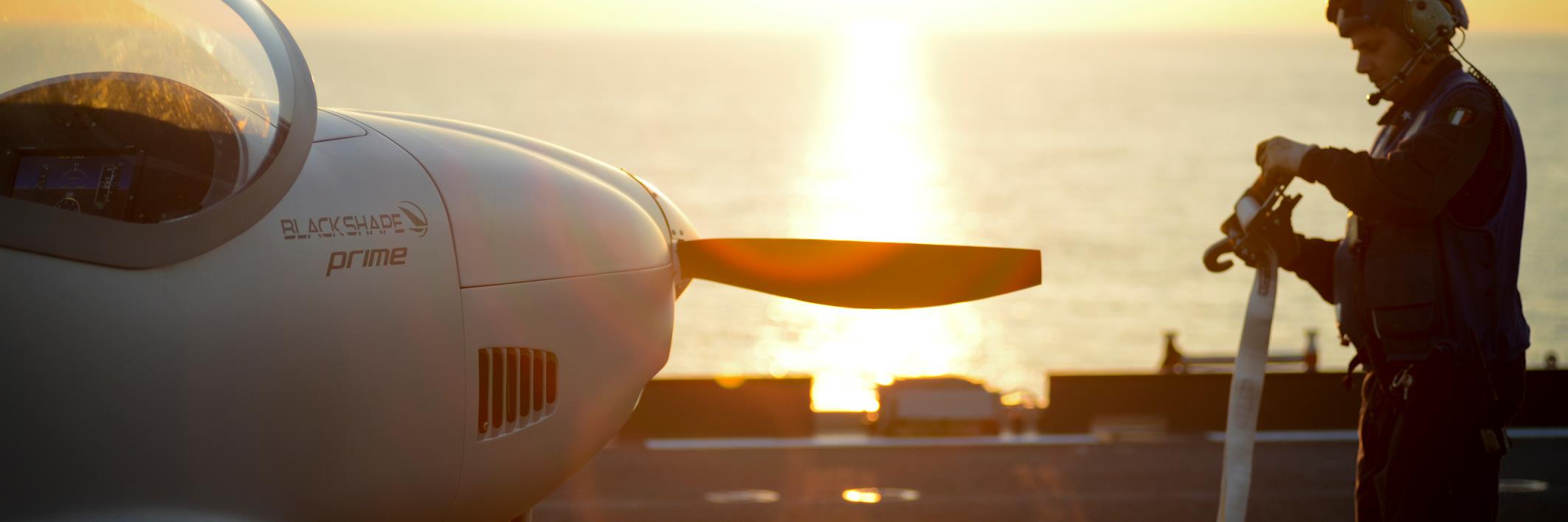
“Nec aspera nec ardua coela timeo” Today with the Italian Prime Minister giuseppeconte_ufficiale for the laying of the first stone of our new blackshapeaircraft manufacturing site at Bari… https://t.co/WCUvjlega8