🚨 CITADEL FOUNDER KEN GRIFFIN ON THE EXCUSE EVERY LOSING TRADER USES:
"Everyone's favorite go-to answer when they're losing money is hedge funds are de-leveraging... I've seen the entire industry de-leverage to zero at least 10,000 times"
Why it's dangerous:
"The reason that people love that answer is it actually washes your hands of accountability... the minute I start to use an excuse, I actually stop learning"
What he asks instead:
"What prices are changing and why? What don't we understand?... What dots have they connected that we don't see?"
His rule:
"That's like option 10 on the list, not option 1" 👀
Use of the word “delve” spiked in human language after ChatGPT’s release, according to researchers in Germany who studied more than 800,000 podcast episodes. It then fell below the pre-ChatGPT baseline as people began to associate the word with LLMs.
🎁: https://t.co/TeAobvdryq
Everyone wants to sell outcomes. But can vendors prove them, price them, and get customers to pay? CRTV 141 tackles outcome-based pricing, #AI’s shift from measuring experiences to predicting them, and what Workday’s platform strategy signals next.
@CR_MSchneider@holgermu@ldignan
Watch here: https://t.co/xMxusU5dix
Total Hyperscaler off balance sheet debt as of Oct 21: $3.6 trillion (with META and SPCX reporting). Expect this to cross $4 trillion when the rest report.
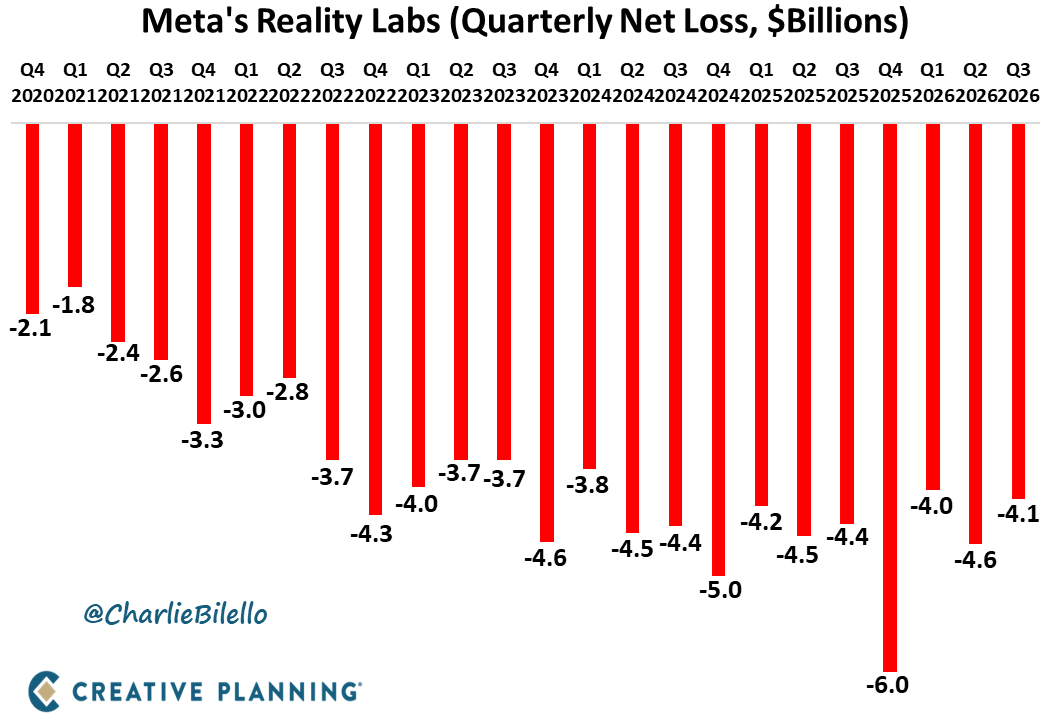
Meta's Reality Labs unit lost another $4.1 billion in Q3, bringing its cumulative losses since 2020 up to $92 billion. We've never seen a public company light money on fire to this extent. $META
And @AneelB sees @Workday in it's forth phase of enterprise evolution - it's is a refounding moment.
The pillars are
· Startup mindset
· Organize for success
· Clear ownership and accountability
· Partnering with customers
· New talent
#WDayRising
@ifs launched its IFS Intelligence and Industrial AI Harness for industrial operations. Mark Moffat said: "Anyone can generate ChatGPT type answers. The really hard part is putting that into the hands of the people." https://t.co/zF6uPlJDWp
Eli Lilly: Lessons from running an AI factory https://t.co/pVPQn0plV3 Eli Lilly's AI factory is seeing strong usage running experiments at scale and the company has been able to save on token expenditures with control over its models and data. @ldignan#AIWars
The great enterprise AI rewrite is starting https://t.co/A2wH539bK3 “Enterprises are starting to rewrite themselves to become AI native. The efforts are just starting, but you can see the signs as a wide range of industries and companies start to rethink their technology stack as well as organization.” @ldignan
The great enterprise AI rewrite is starting https://t.co/6lsEQzSsXV “Enterprises are rewriting themselves to become AI native. Efforts are starting, and signs are visible as wide range of industries and companies start to rethink their technology stack as well as orgs.” @ldignan
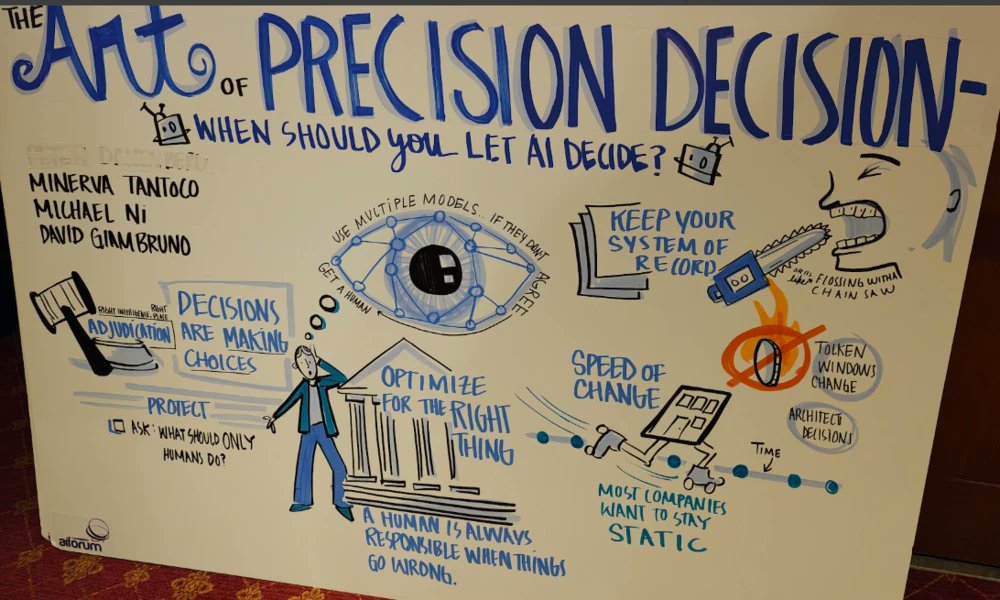
"If you've got your systems of record, don't screw with them. Keep them and put your agentic around that. If you rewrite a system of record, good luck with an audit. It is like a root canal with a chainsaw," said @dgiambruno at #AIF2026.
https://t.co/duYzqTXOng
@ldignan@mikeni #AI
ROI matters, but it can't measure the full value of transformation. #AI investments often build capabilities that pay off across multiple technology cycles. A broader Business Value framework helps leaders track adaptability, growth, and sustainable value without abandoning financial accountability.
Get the scoop from Esteban Kolsky: https://t.co/yi4awKwWSY
MyPOV - I asked one of the CRM legends, @DavidSchmaier about his original charter @Salesforce - to build the next generation CRM. David sees a future past agents with autonomous enterprises showing up soon, mentioned hospital etc. In the meantime Salesforce wants to be the trusted platform for the transformatkom. #DF26
Last month I wrote about how we can build a positive and safe future for everyone: https://t.co/eoLGVY8yad
Every lab has the responsibility and incentive to move at the pace required to train its models safely, and the ability to take its own actions to ensure that happens.
The reality is:
- People won't want to use agents that are misaligned with them and that don't do what they ask, so labs have a strong natural incentive to make their models more aligned.
There is a lot of debate about slowing progress on capabilities until alignment catches up. My view is that trust and alignment are quickly becoming the most important capabilities that will differentiate agents and models. Any lab that doesn't focus on alignment will fall behind.
- Labs face significant liability if their models cause harm, so they have a strong incentive to prevent this as well.
Meta delayed shipping Muse for several months to focus on safety and security. We didn't call for everyone else to do this before we would. We just did it as part of our day-to-day work because it was clearly the right thing for people and for us. I'm proud of the security foundations we've built.
- Engaging independent evaluators and advisors is industry best practice. MSL already does this today in several areas because it helps produce better work. Other labs can just do this too. In general, it would be helpful for there to be a larger and more diverse ecosystem of evaluators.
- Committing the significant majority of compute towards serving people rather than racing towards recursive self-improvement is one of the best ways to ensure we develop this technology safely. Meta has made this commitment and other labs can do this as well.
I believe the key to building a positive future for everyone is maintaining the right balance of power. This is within our power to do.
.@Salesforce still has pricing work to do https://t.co/XzfkRoCyPe Salesforce's #Dreamforce26 conference kicks off this week in San Francisco and rest assured there will be plenty of innovations ranging from Agentforce, Slack and Headless 360 and a broad platform narrative.