Copernicus Atmosphere Monitoring Service (CAMS) global aerosol optical depth (AOD) forecasts since 1 July highlight intense Saharan dust & wildfire smoke being transported in both directions over the North Atlantic Ocean.
@ECMWF
⬇️
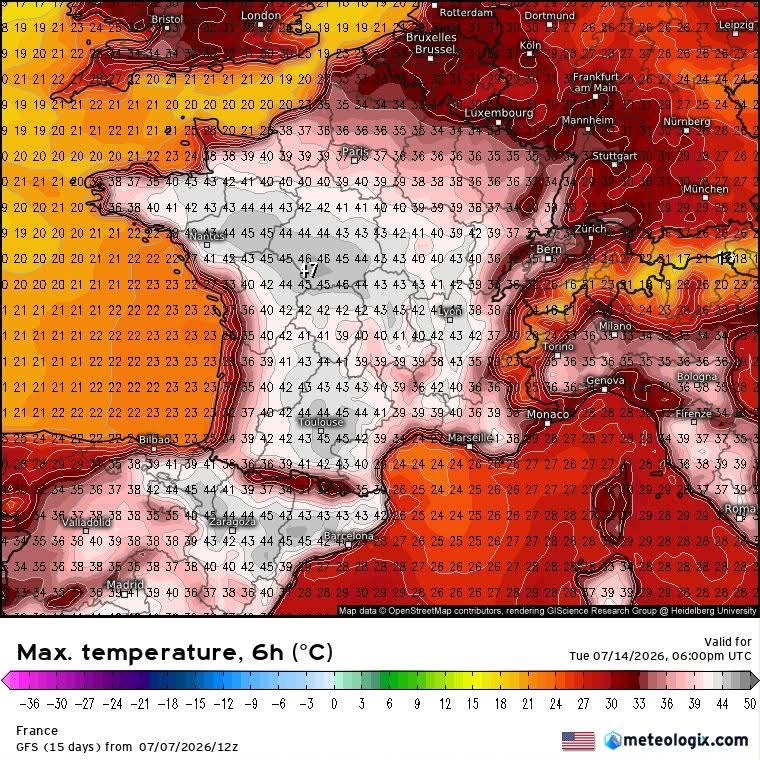
Ce soir, GFS s’affole littéralement pour le début de la semaine prochaine. Les valeurs envisagées dépassent l’entendement. Espérons vivement que le modèle se trompe. D'autres sont moins catastrophistes, mais le scénario de GFS est possible >>> https://t.co/irafqc1RKu
🇫🇷🌡️ Canicule: cette infographie montre l'augmentation de fréquence des vagues de chaleur en France depuis le début des statistiques de Météo-France, en 1947 ⤵️
🌡️ Record historique : avec une température minimale de 26,4°C à la station du parc Montsouris, #Paris vient de connaître sa nuit la plus chaude depuis le début des mesures en 1872 ! Le précédent record datait des 10 et 11 août 2003 avec 25,5°C.
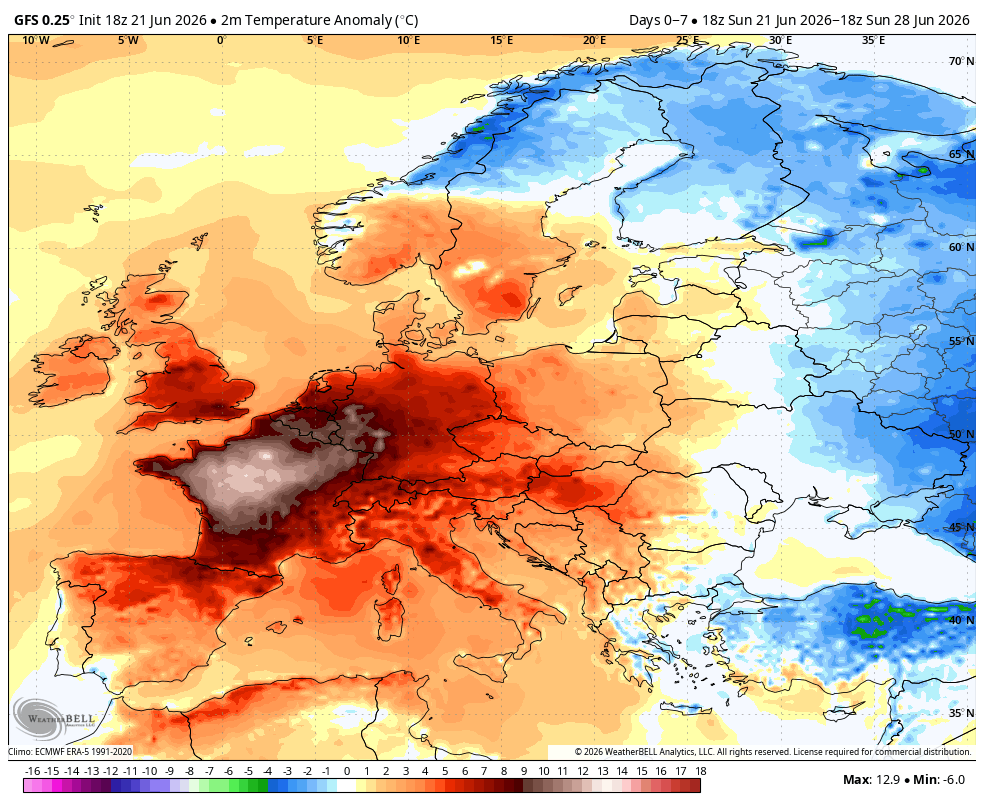
An intense "Omega Block", a high-pressure pattern shaped like the Greek letter Ω, is locking hot Saharan air over Western Europe, fueling record-shattering temperatures.
With France hitting 45°C, Spain exceeding 40°C, and the UK bracing for near-40°C, this slow-moving dome of heat is delivering clear skies, minimal wind, and dangerous conditions.
🔴Fini août 2003. Fini juillet 2019. Les anciennes canicules sont ridiculisées alors qu'on est en juin !
➡️La France vient de vivre de très loin la journée la plus chaude jamais mesurée depuis 1900 au moins avec autour de 30°C de moyenne nationale.
➡️Avec des températures spectaculaires de 44 à 45°C sur plusieurs départements français.
➡️131 records absolus battus.
➡️44 millions de personnes sont accablés par une vigilance rouge "canicule".
➡️Demain, avec la levée du vent, un épisode de "sèche-cheveux" ou dit de "sécheresse éclair" est envisagé sur le Centre-Ouest avec un indice de feux "extrême" à "très extrême".
On vient de réécrire l'Histoire. Avant demain, où il pourrait faire encore plus chaud.
The number of locations recording 40°C+ (104°F) across France today is simply extraordinary.
This comes after the hottest night in France's history, where many locations did not get below 25°C (77°F).
Today ranks among the hottest days ever recorded nationwide in France, with a peak temperature of 44.3°C (112°F). 128 locations set new all-time records.
Tomorrow and Wednesday could challenge for France’s hottest day in history on a nationwide scale, with highs near 45°C.
Venus is now appearing on the celestial stage as Earth's brilliant evening star, performing with the Moon, other wandering planets, and bright stars in western skies.
For evening sky gazers on June 17, the celestial beacon rose after sunset close by a young, slender, crescent Moon.
But from some locations the Moon could be seen to occult or pass in front of Venus. And from a backyard observatory in southern British Columbia, Canada, the lunar occultation was played out in daylight.
This stunning telescopic snapshot captured a scene in dramatically cloudy skies, following Venus' hour long disappearance, as the evening star emerged beyond the bright lunar limb.
Image Credit & Copyright: Debra Ceravolo
The Massive shift caused by the 7.8 magnitude earthquake in the Philippines has literally changed the coastline.
In parts of Sarangani and Davao Occidental in the southern Philippines, the ground rose dramatically, lifting the seabed by up to 2 metres. The ocean then pulled back around 200 metres, exposing huge stretches of coral reefs and seagrass that are normally hidden underwater.
Marine life including fish, eels, clams and other sea creatures have been left stranded and are now dying, creating a major environmental problem and raising fears that contaminated seafood could make its way into markets.
Authorities have brought in police patrols, coastal monitoring and inspections to stop people collecting or selling affected marine life.
For communities already dealing with the destruction from a powerful earthquake, this has become another serious threat.
You might have heard of interstellar comet 3I/ATLAS.
We don't get the opportunity to study objects like this often. Webb took a look at the comet's composition. It's showing us how unusual our own solar system might be.
Here's what we've learned 👇
45°C (113°F) is possible Monday/Tuesday in parts of western France. That’s hotter than the current forecast for Phoenix, Arizona.
France is enduring one of the country’s worst heatwaves ever, due to its unprecedented duration, intensity, and extreme temperature anomalies.
🌡️Plusieurs dizaines de records absolus de #chaleur sont battus à travers la #France ce lundi, notamment dans l'ouest. C'est par exemple le cas à #Bordeaux où on a pu relever 41.8°C cet après-midi !
👩🚀🇫🇷 Un sublime portrait de Sophie Adenot en combinaison EMU, réalisé par le photographe David DeHoyos le 29 mars 2024 au Johnson Space Center, à Houston.
Cette photo a notamment remporté la 1ère place dans la catégorie « Portrait » des « NASA Photographer of the Year 2025 ». 🫶
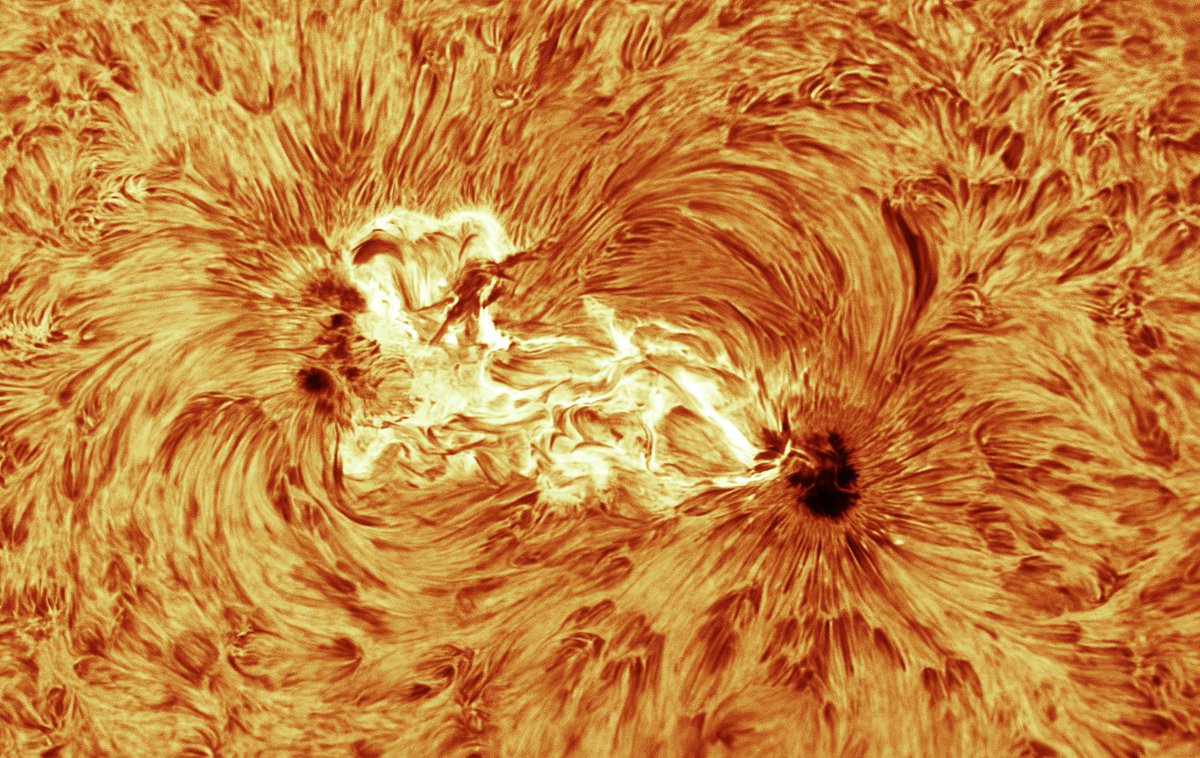
Here's a photo of the sun captured just moments ago from my backyard, using a specially modified telescope.
You're looking at a large active region that has already flared repeatedly. I'm going to keep an eye on it today and let you know what it does!
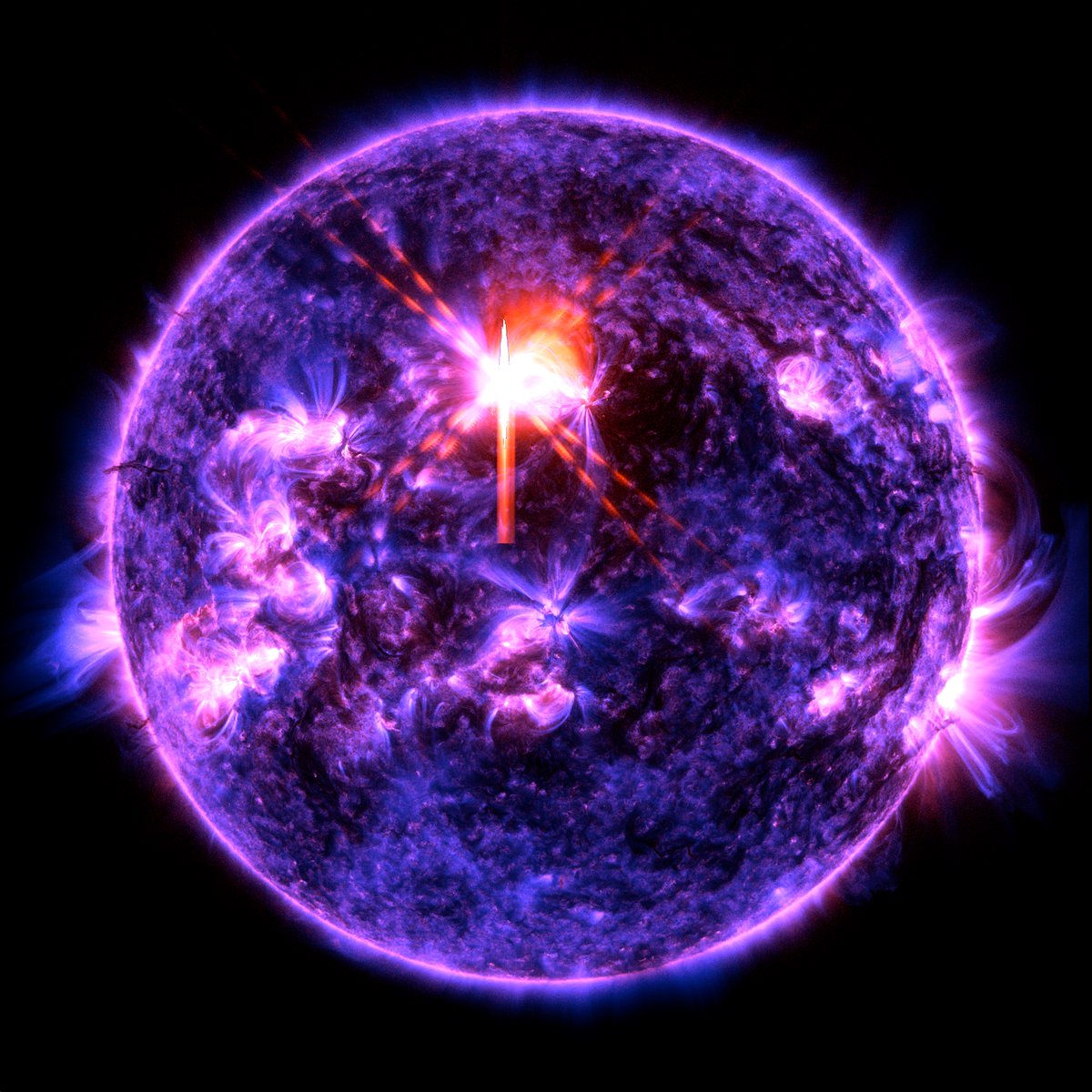
The Sun emitted a strong solar flare on Feb. 4, peaking at 7:13 a.m. ET. NASA’s Solar Dynamics Observatory captured an image of the event, which was classified as X4.2: https://t.co/qI38AfWaYr
Galactic upcycling ♻️
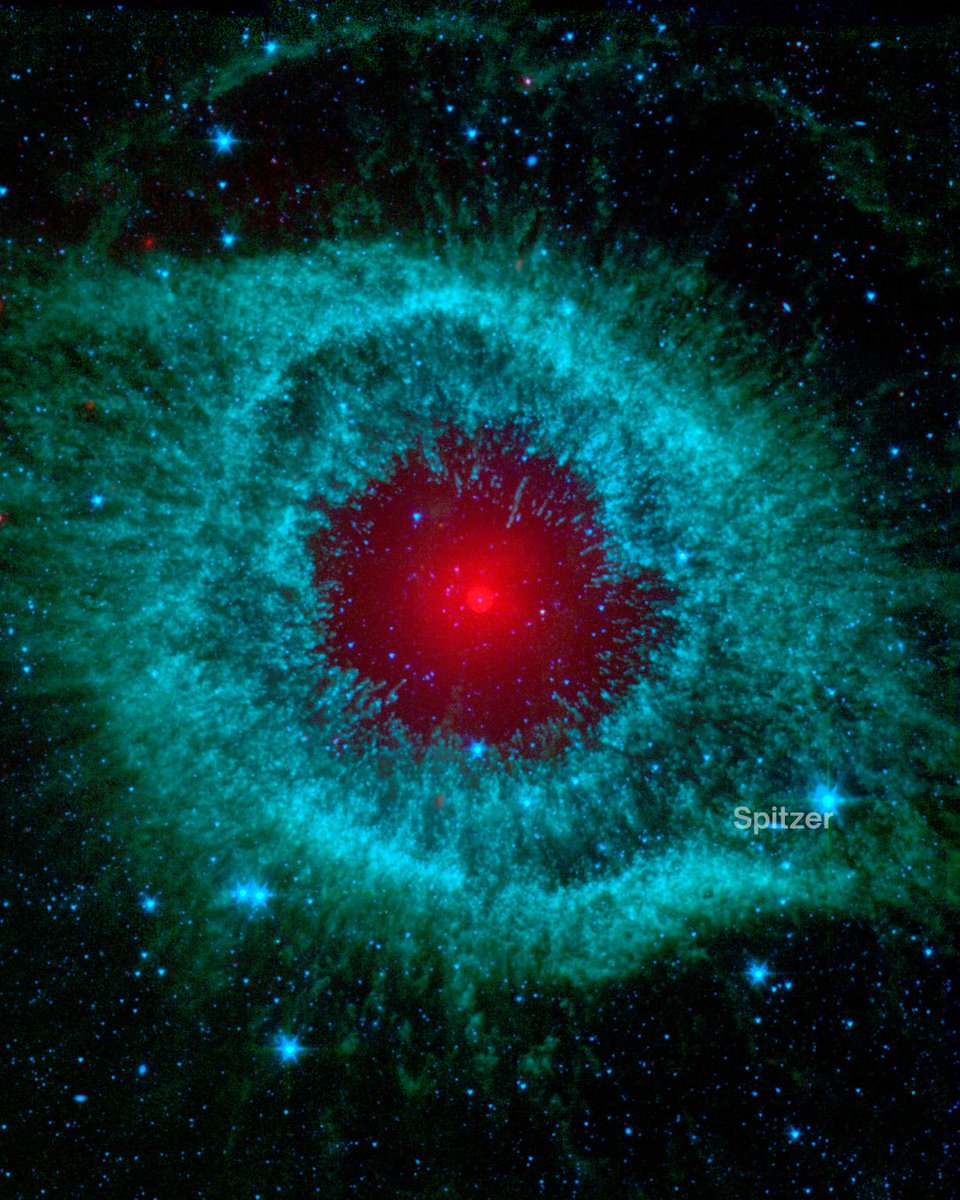
Webb captured a new close-up of an old favorite, the Helix Nebula. We’ve seen this region before with telescopes like @NASAHubble and the retired Spitzer Space Telescope, but Webb zooms into this dying star with a deeper, more detailed view.
https://t.co/gRfeLwZ5Og
Oh, the lights are shining so brightly everywhere ✨
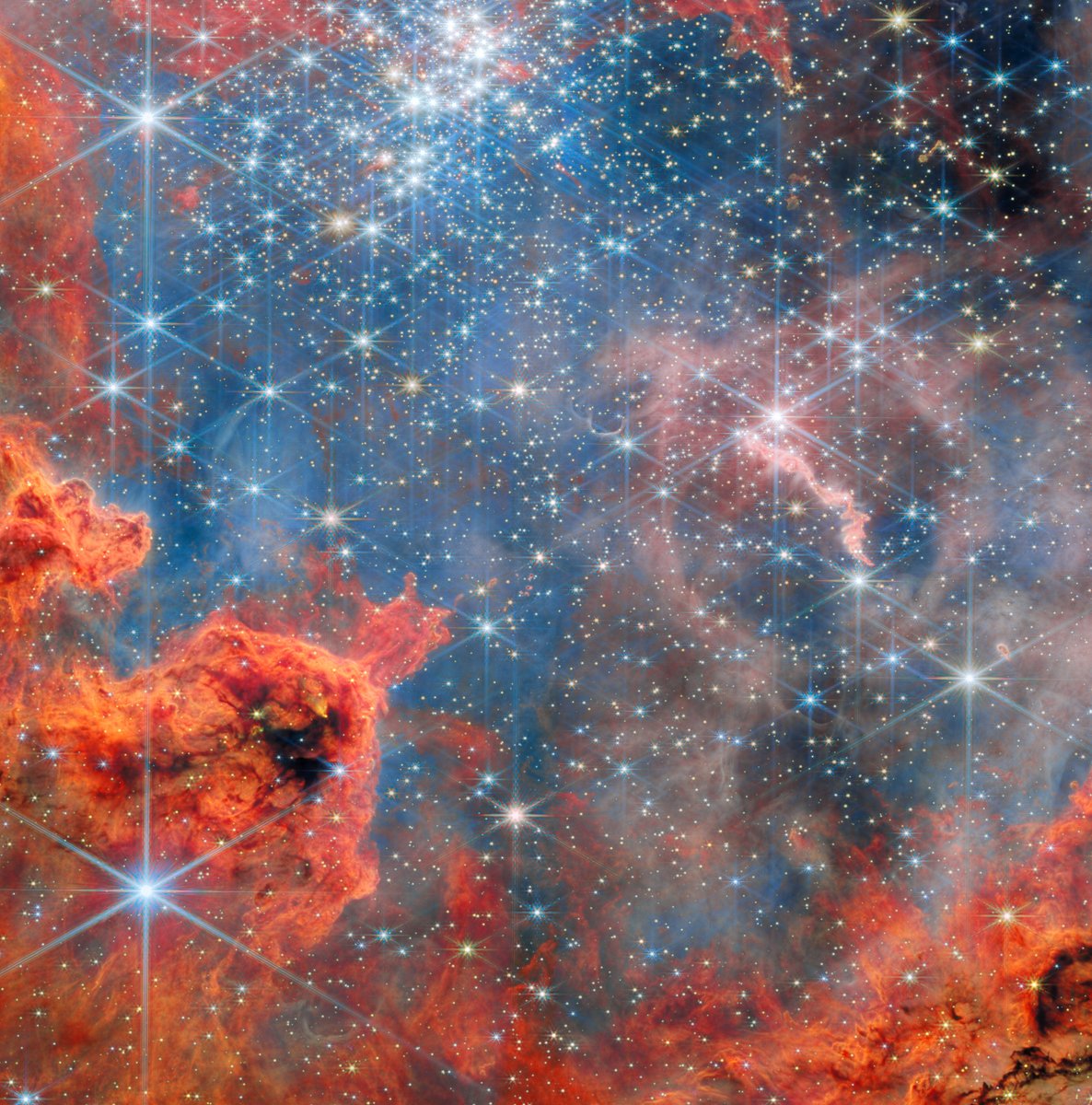
As we wrap up 2025, Webb captured a star-studded glimpse into Westerlund 2, a cosmic nursery that reminds us to look forward to the beauty of new beginnings.
https://t.co/VtYQvsCGc1