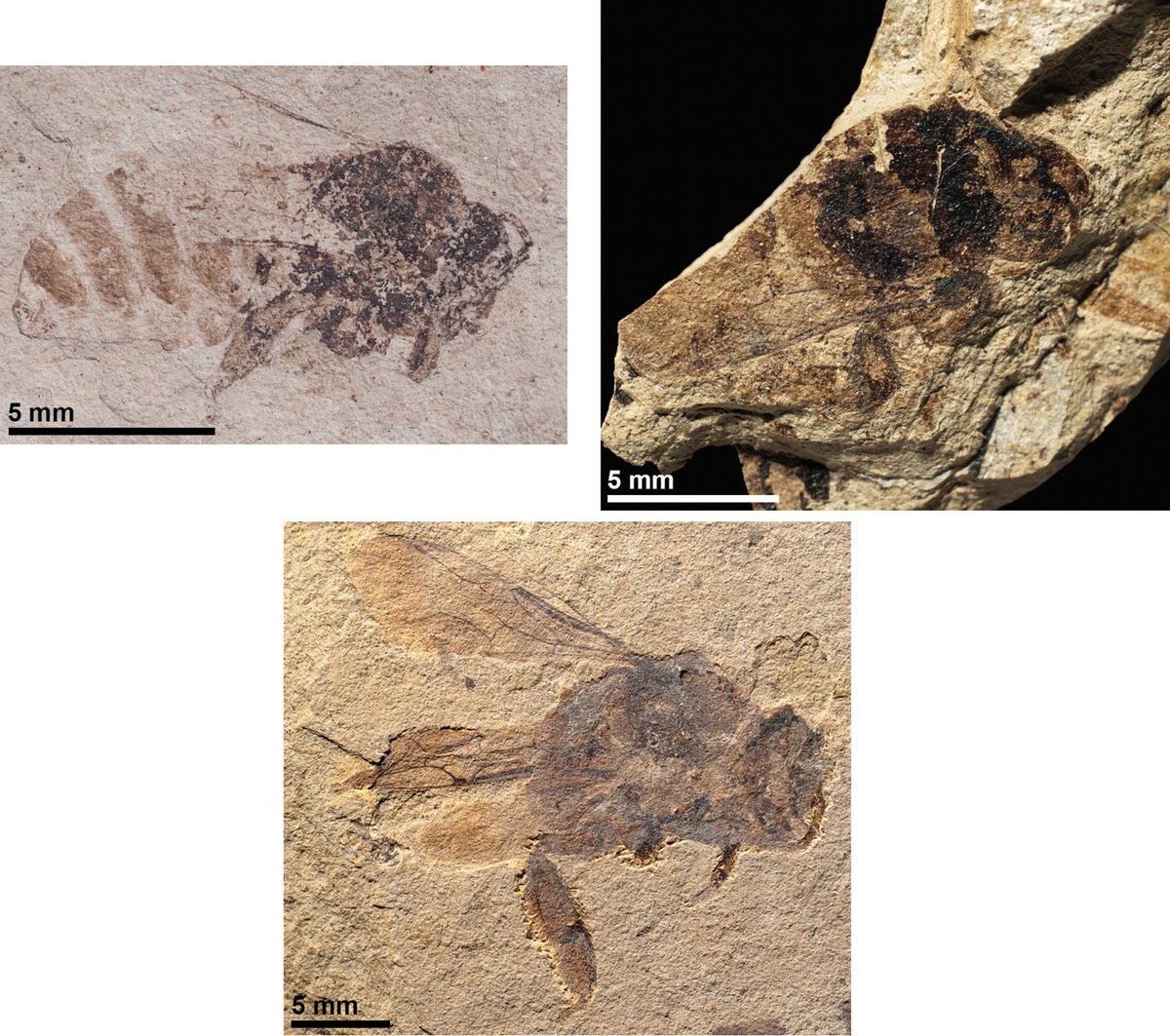
"Nature’s ultimate weapon repurposed! We discovered that certain mantises wield their hunting legs not just to catch prey—but to shield themselves from predators! Read the full study in Proc. R. Soc. B:
https://t.co/SrmK50oGHP
@Hines_Lab Starting from this year, we have beeing going back to the same spots on a monthly basis from mid-March to estimate how long the inclubation lull can last for some species in subtropical China, inlcuding B.breviceps and B.trifasciatus
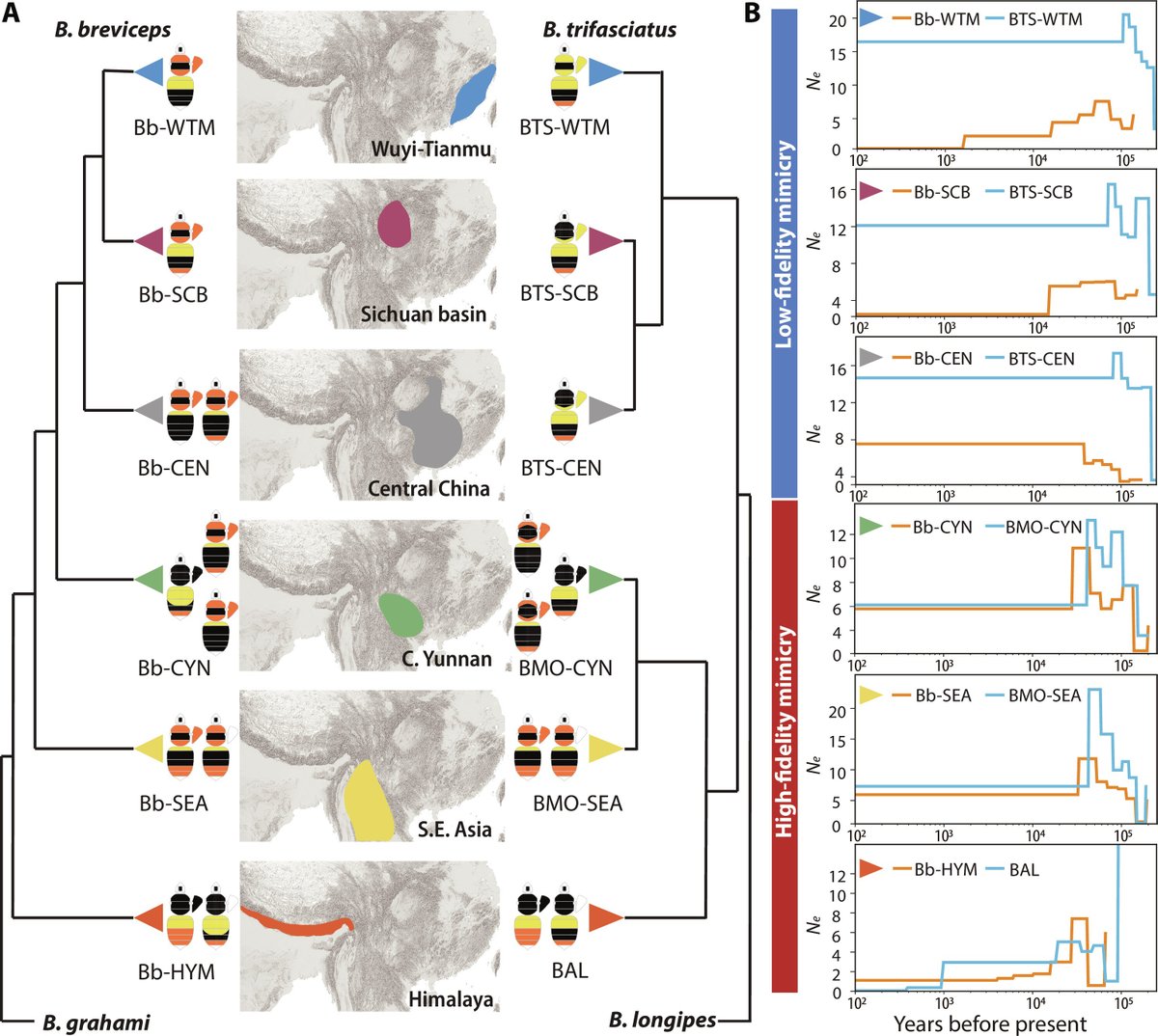
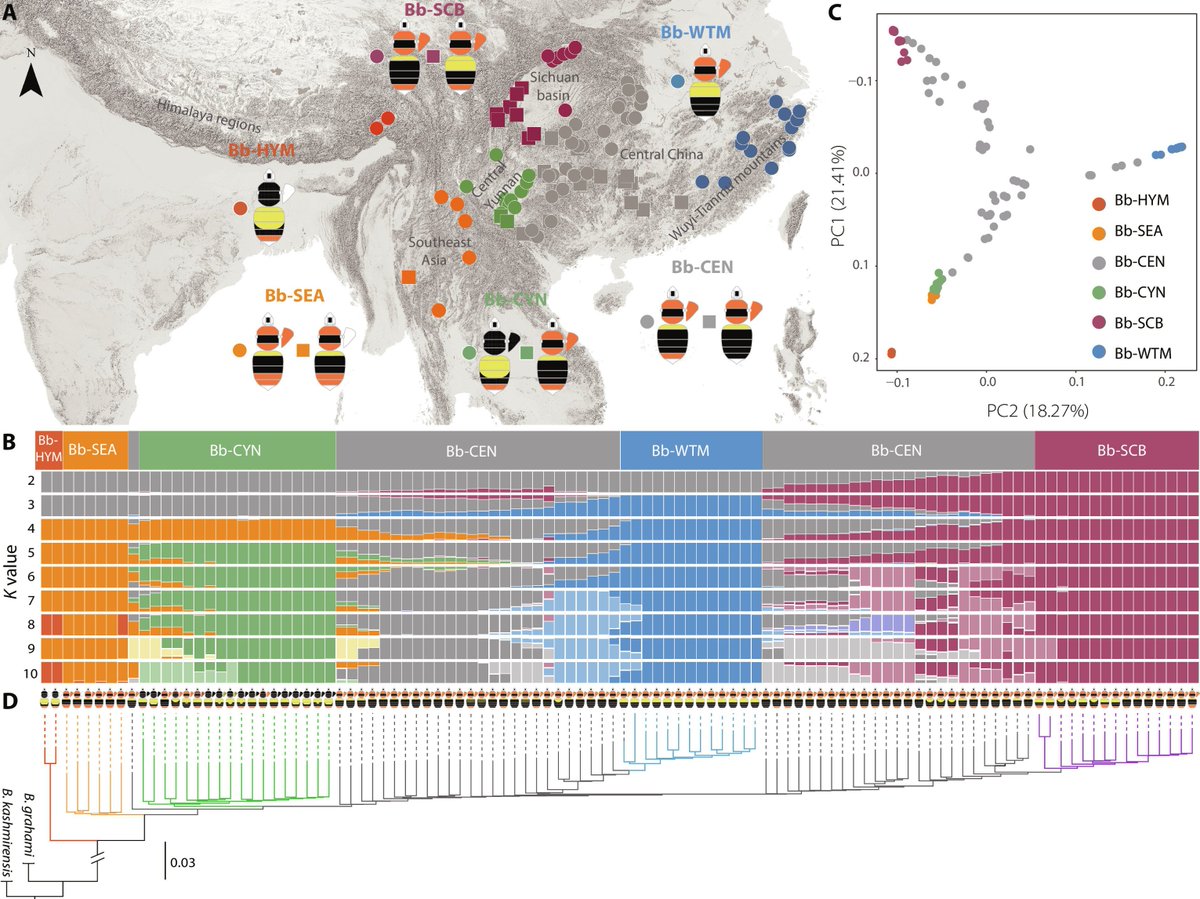
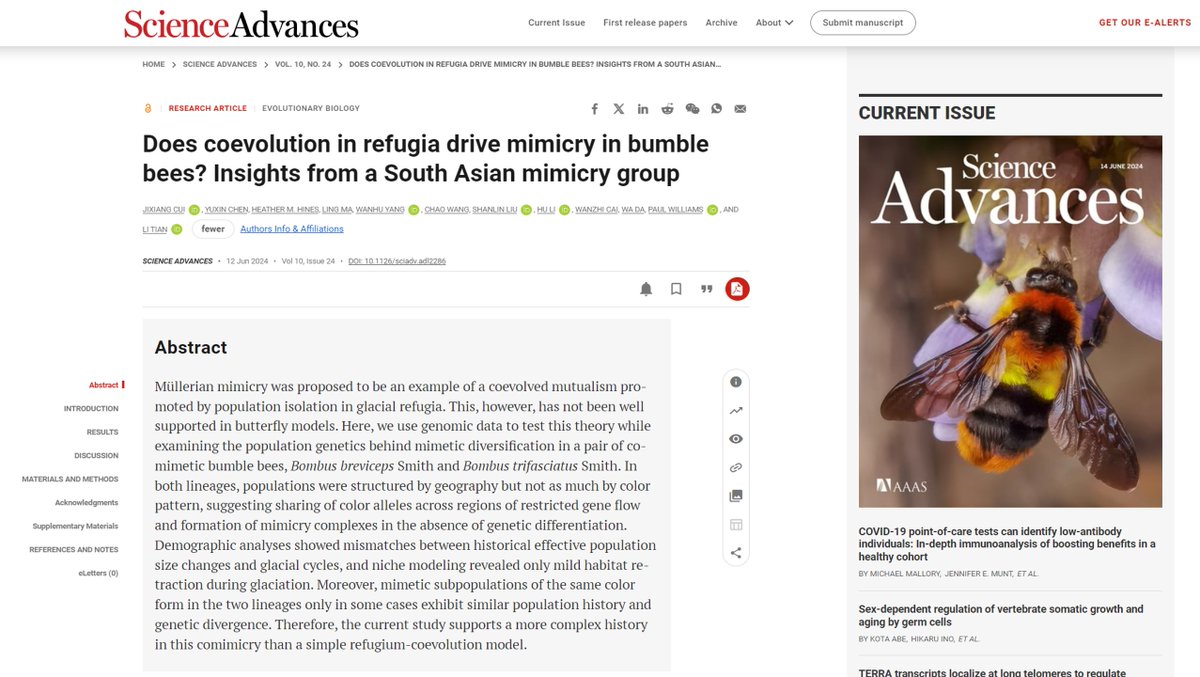
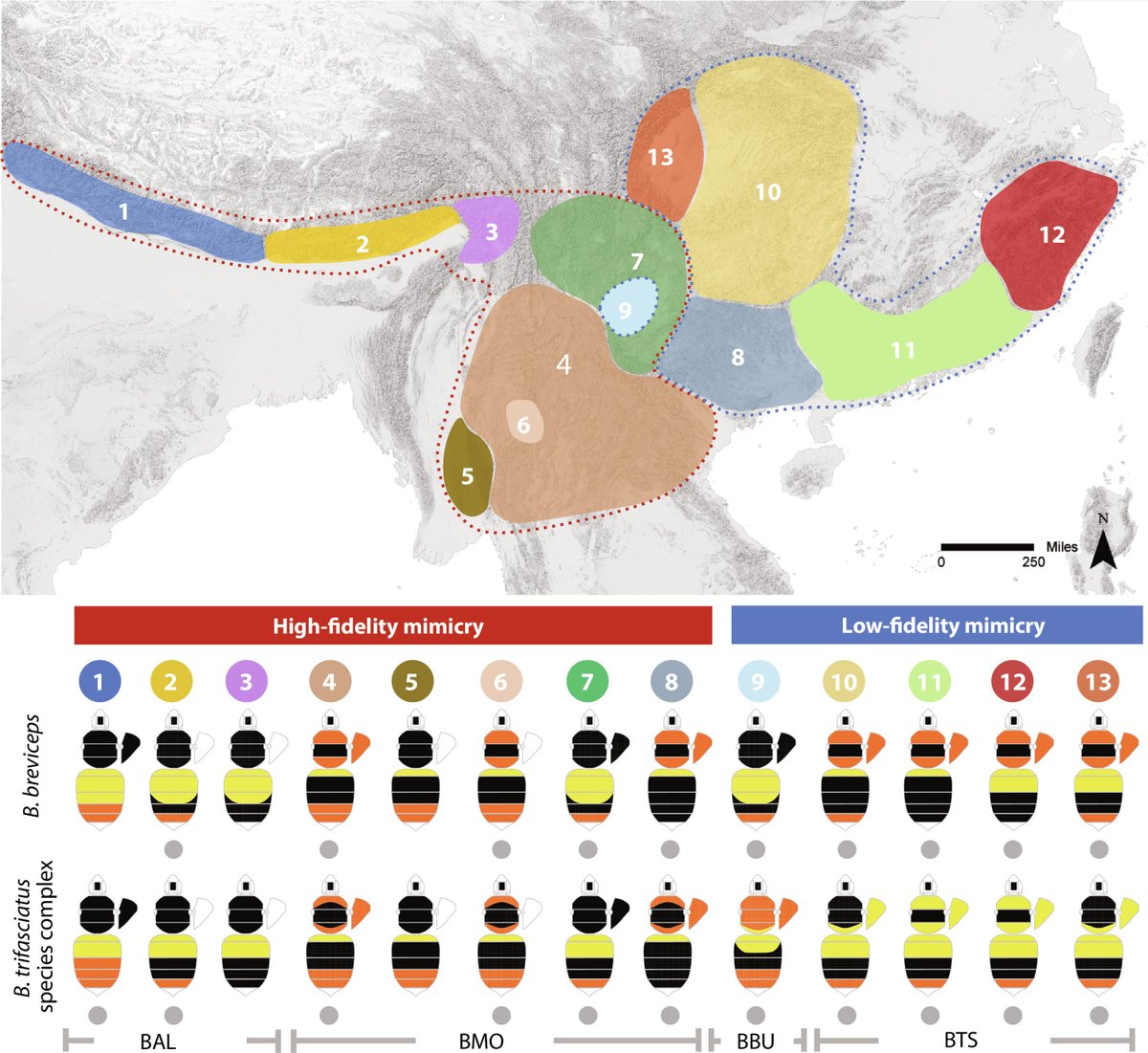
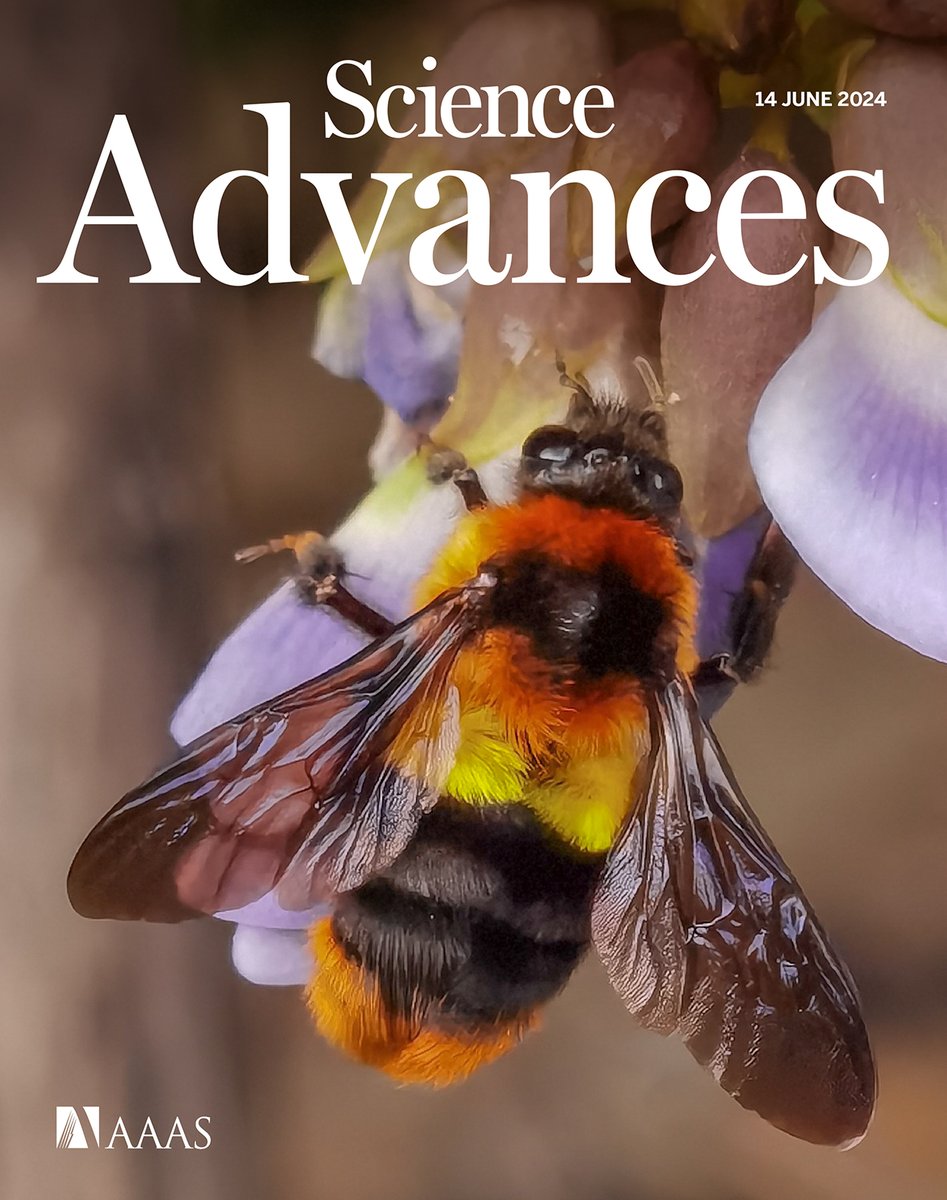
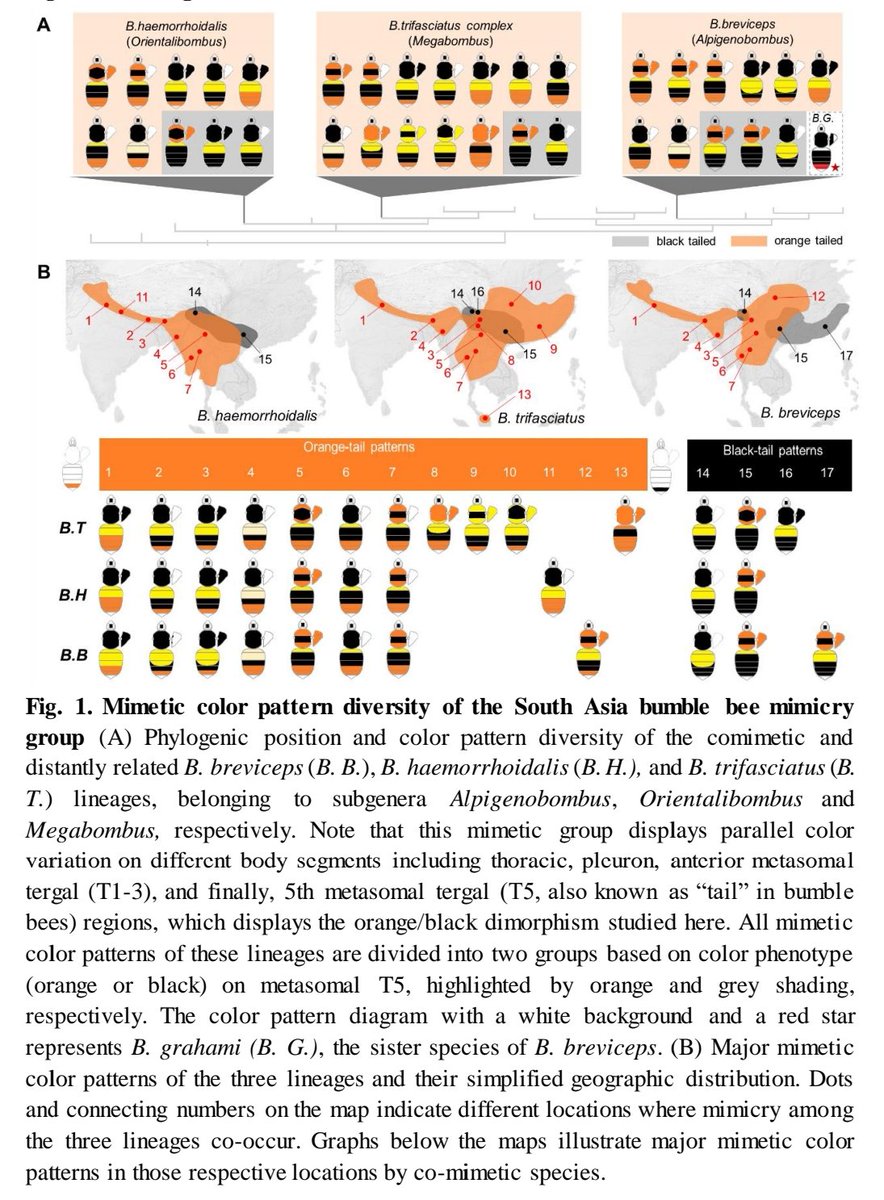
By collaborating with the @Hines_Lab and @PaulWilliamsNHM, we deciphered the evolutionary history of the most colorful bumblebee mimicry complex in southeast Asia. Our study is just published on Science Advances, and more excitingly, our bee is on the COVER! @ScienceAdvances
While much of the research on Müllerian mimicry has focused on neotropical butterflies, scientists now use high-resolution genome-wide SNP markers to untangle the evolutionary history of two mimetic species of bumblebees.
Learn more in this week’s issue: https://t.co/0eKlZ6aAEi
While much of the research on Müllerian mimicry has focused on neotropical butterflies, scientists now use high-resolution genome-wide SNP markers to untangle the evolutionary history of two mimetic species of bumblebees.
Learn more in this week’s issue: https://t.co/0eKlZ6aAEi
The genetics of color pattern diversity of a SE Asian bumblebee is uncovered by our work on MBE! HOX loci is AGAIN implicated! Together with our previous work on a north American species, we show that hox loci are genomic hotspots for color radiation in Bombus!
@Hines_Lab .
@hin The genetics of color pattern diversity of a SE Asian bumblebee is uncovered by our work on MBE! HOX loci is AGAIN implicated! Together with our previous work on a north American species, we show that hox loci are genomic hotspots for color radiation in Bombus!
In SE China, early blooming rhododendrons are important source of pollen and nectar for spring bombus queens. In late April at Fu'e Mountain near Shaoxing, hundreds of big, fat but stunning B. bicoloratus queens can be spotted visiting Rhododendron pulchrum, starting from 6:30am.
China has the richest bumblebee diversity in the world, here is just a small portion of our 2020 collections. In contrast to their stunning coloration, their biology and threat status have yet to be studied.
MY PAPER ON PREDICTING CLIMATE CHANGE RELATED EXTINCTION RISK IS OUT TODAY *IN SCIENCE*!!!!
I'm unbelievably excited for this &can't wait to tell yall what we found!!
Before I begin, huge shoutout to my incredible coauthors @jetkerr and @tnewbold31 1/n https://t.co/MoChdOEr74
Attention: NEW bumble bee species in town, here we recognize B. vancouverensis! First publication in 2020! Please RT to let others know!
@leebeeeeeee@Hines_Lab@bezray2@rufocinctus https://t.co/aDm2s347j9
B. hypocrita long thought to be also widespread in N China, but turns out from genes that the N China bee ("ganjsuensis") is a convergent colour pattern of B. patagiatus: https://t.co/qGenHSfSXt
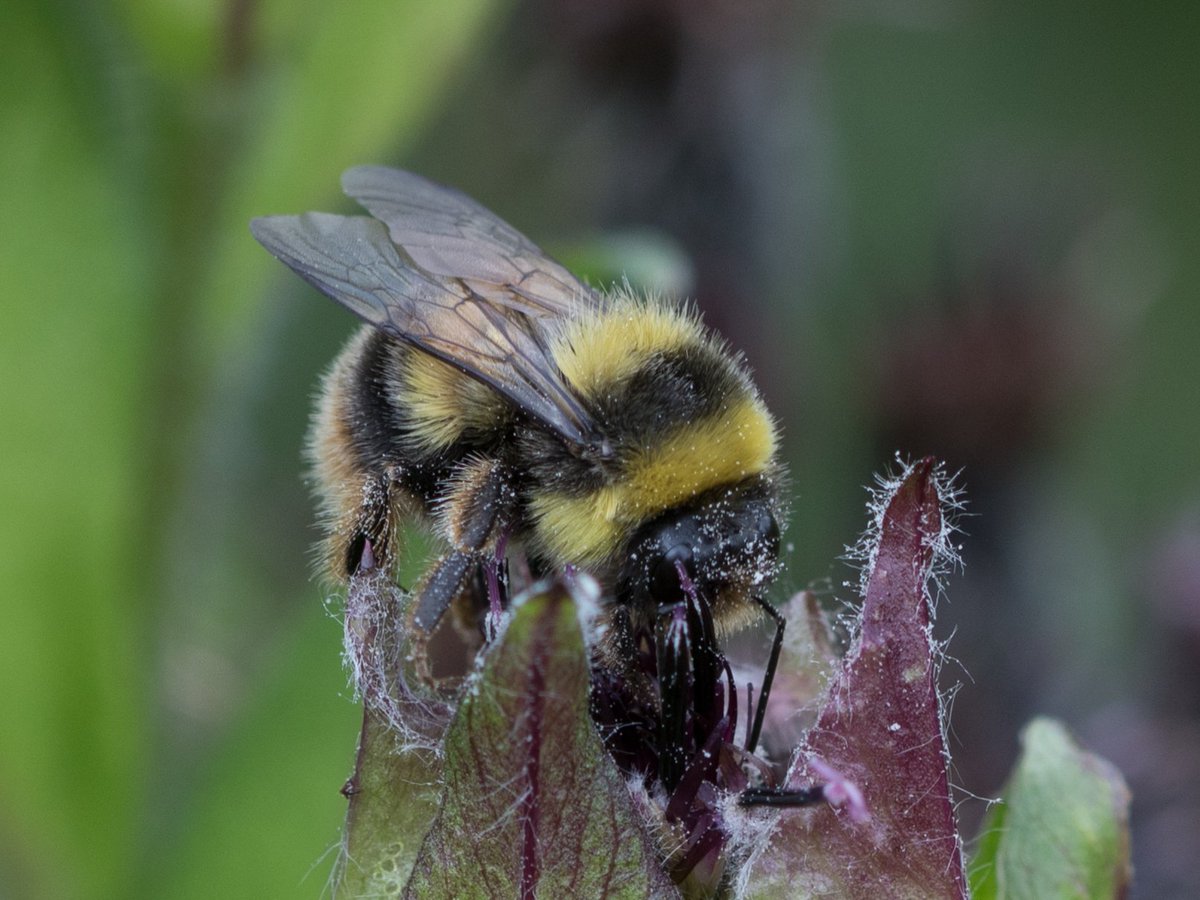
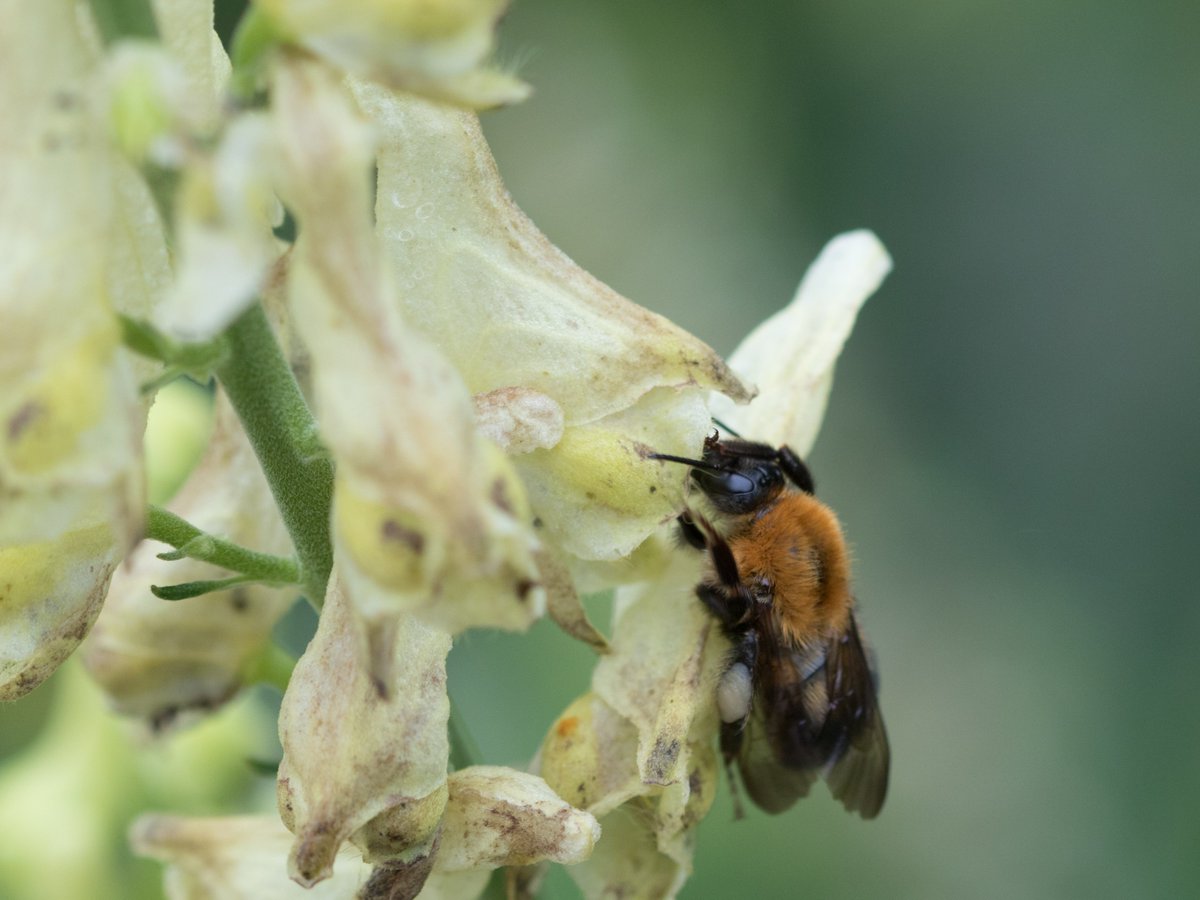
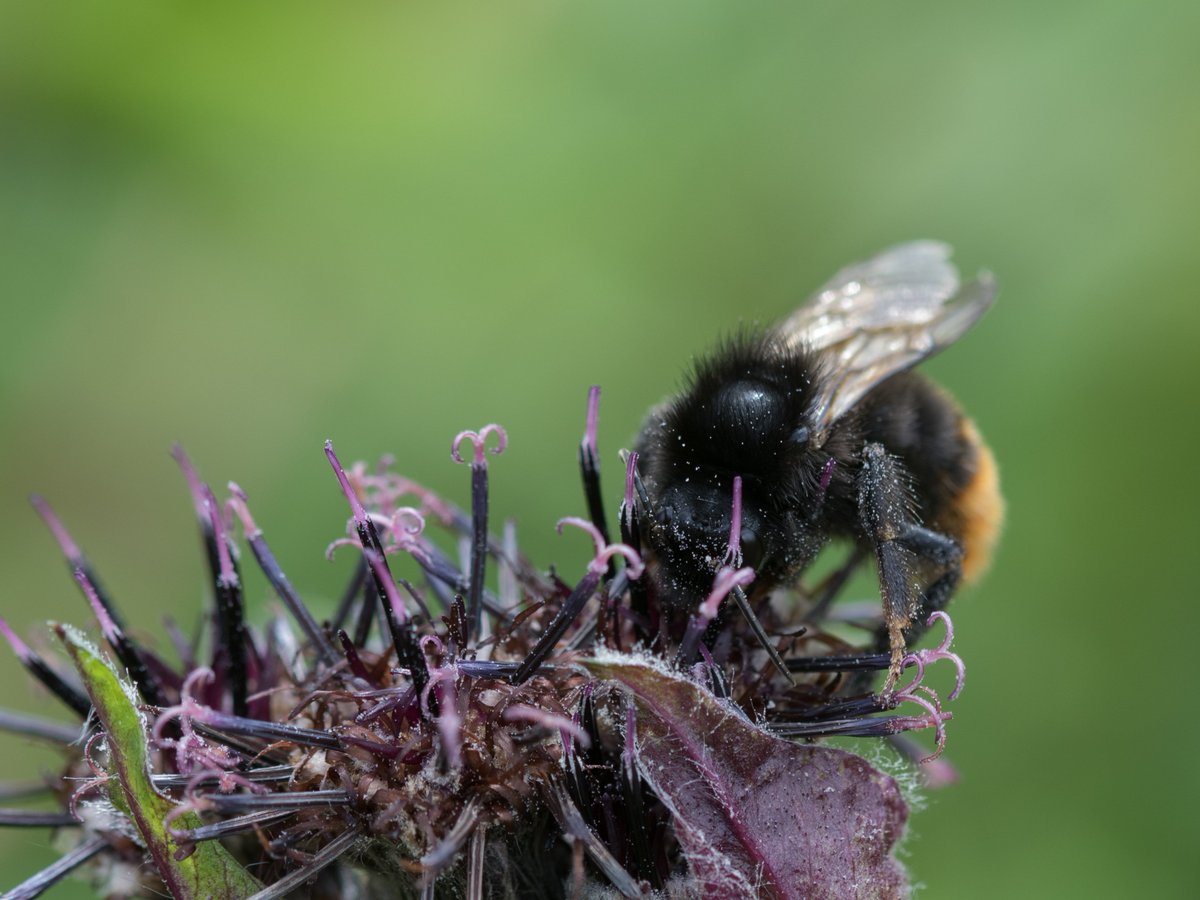
Back to China for almost two months. Finally had my first collection trip around Beijing. Here are some common species in sub-alpine meadow of Baihua Mountain. Glad to meet them.