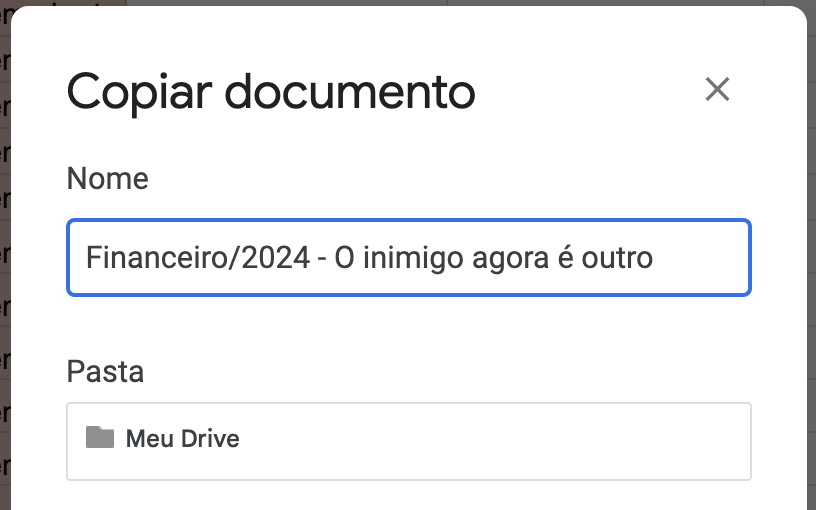
Não ironicamente, eu postei no LinkedIn o meu post sobre "Guia de Sobrevivência para uma Internet Censurada" e eles censuraram o post e tiraram do ar com essa notificação. Postar cursos fraudulentos, serviços fraudulentos, pode, mas postar informação de verdade pra prestar um serviço público, não pode.
Esse é o LinkedIn 🤷
Eis o post de novo, compartilhem: https://t.co/efQTNjKHtg
I am absolutely more productive using agents. I don't know the factor but it's large. However much of that productivity is spent tuning the agents and hardening the product. I'm guessing 30%-40%.
Some might consider that a waste; but I don't. The software I'm creating nowadays is vastly more robust than I'd ever been able to create manually.
I don't mean that the code is better. I mean the surrounding tests are vastly better. I have a higher degree of confidence than I ever had manually -- even when I used very disciplined TDD and Acceptance testing.
And then there's the ability to quickly reorganize the modules and the architecture while keeping those robust tests running. That is a tremendous boon.
This works really well btw, at the end of your query ask your LLM to "structure your response as HTML", then view the generated file in your browser. I've also had some success asking the LLM to present its output as slideshows, etc.
More generally, imo audio is the human-preferred input to AIs but vision (images/animations/video) is the preferred output from them. Around a ~third of our brains are a massively parallel processor dedicated to vision, it is the 10-lane superhighway of information into brain. As AI improves, I think we'll see a progression that takes advantage:
1) raw text (hard/effortful to read)
2) markdown (bold, italic, headings, tables, a bit easier on the eyes) <-- current default
3) HTML (still procedural with underlying code, but a lot more flexibility on the graphics, layout, even interactivity) <-- early but forming new good default
...4,5,6,...
n) interactive neural videos/simulations
Imo the extrapolation (though the technology doesn't exist just yet) ends in some kind of interactive videos generated directly by a diffusion neural net. Many open questions as to how exact/procedural "Software 1.0" artifacts (e.g. interactive simulations) may be woven together with neural artifacts (diffusion grids), but generally something in the direction of the recently viral https://t.co/z21CP5iQfu
There are also improvements necessary and pending at the input. Audio nor text nor video alone are not enough, e.g. I feel a need to point/gesture to things on the screen, similar to all the things you would do with a person physically next to you and your computer screen.
TLDR The input/output mind meld between humans and AIs is ongoing and there is a lot of work to do and significant progress to be made, way before jumping all the way into neuralink-esque BCIs and all that. For what's worth exploring at the current stage, hot tip try ask for HTML.
🎉 PRAGMATA has sold over 2 million copies worldwide! 🎉
Thank you to everyone for your support!
Here's a special drawing from Diana to celebrate!✨
#PRAGMATA
LeetCode is dead.
Developers don't write code line-by-line anymore. They orchestrate AI agents working in parallel, review AI-generated code, and make architectural decisions.
That's the job now.
But most interview processes haven't caught up. They still test algorithm memorization instead of AI fluency, code review, and judgment.
We're building assessments for next-gen hiring that mirror how developers actually work. Here's how we think about it:
The #1 mistake I see when working with LLMs?
Breaking the feedback loop.
So I coined a term for it: Falafel 🧆
(F.A.L.A.F.E.L — Fuck Around, Lose All Feedback Efficiency Loop)
Fast iteration = fast learning. Slow feedback = dead project.
Don’t Falafel the system.
Given the terrible flooding in Rio Grande do Sul, @Starlink will donate 1000 terminals to emergency responders and make usage for all terminals in the region free until the region has recovered.
I hope the best for the people of Brazil.
As cidades de Araraquara e Rio de Janeiro criaram seus próprios aplicativos, que estão dando certo para a população e para os trabalhadores. Não seria o caso do Governo Federal incentivar que todas as prefeituras façam o mesmo? Acabaria com o monopólio da Uber no país.
LACAN FOI CONFIRMADO PELO CHAT-GPT?
thread sobre a publicação da inteligência artificial que está intrigando psicanalistas
(simplificando muito tudo mas n quero passar horas escrevendo isso aqui)
The untold history of web development:
1990: HTML invented
1994: CSS invented to fix HTML
1995: JS invented to fix HTML/CSS
2006: jQuery invented to fix JS
2010: AngularJS invented to fix jQuery
2013: React invented to fix AngularJS
2014: Vue invented to fix React & Angular
2016: Angular 2 invented to fix AngularJS & React
2019: Svelte 3 invented to fix React, Angular, Vue
2019: React hooks invented to fix React
2020: Vue 3 invented to fix React hooks
2020: Solid invented to fix React, Angular, Svelte, Vue
2020: HTMX 1.0 invented to fix React, Angular, Svelte, Vue, Solid
2021: React suspense invented to fix React, again
2023: Svelte Runes invented to fix Svelte
2024: jQuery still used on 75% of websites
To be fair, it's the AWS OpenSearch bill going to zero. The price to run the equivalent elastic search cluster ourselves is about $5,000/month. That includes power/space/networking across two data centers + amortizing the hardware over 5 years. So about 1/9th the cost!!
Faz 30 dias que eu parei de publicar no YouTube para testar uma técnica de preparo de comida que tá aumentando MUITO a minha produtividade, muito mesmo. Nunca pensei que eu falaria sobre *alimentação* no meu canal, mas vai valer a pena. Amanhã de manhã publico o vídeo 🤝
Early in my career I broke Facebook Chat (pre Messenger) for all IE users. Couldn't sleep all night afterwards.
However, one of the most interesting issues I caused was when I removed about 300,000 duplicated files in Facebook's monorepo and pointed everything to the remaining copies. I went to sleep and woke up the next day with angry messages on my phone: I made https://t.co/Yj0AscnHTG 1.2 seconds slower to load!
How? Facebook's bundler used machine learning to optimize JS bundles. That bundler was relying on paths for JS files, and it didn't track changes like mine. So when I pushed my change, the bundler was under the impression that all those files were new and basically unbundled them and sent them to users as individual files instead of JS bundles!
Given the scale Facebook was operating at, and some issues in the Python based Mercurial client (which have since been replaced), it took about an hour to merge my PR into main. The revert to make https://t.co/Yj0AscnHTG fast took a three people team 12 hours to complete. Afterwards an intern and I redid the initial work by also patching the bundler's paths correctly.
I caused other large issues, but this one is my best bad one. It worked while testing, could not have been noticed in development since the bundling infrastructure was different, and basically only one person at the company would have known this issue could have been caused.