Excited to share our latest research exploring the connection between the microbiome, #Obesity, and Ischemic Heart Disease (#IHD). 🫀🦠
Our findings suggest that targeting microbial dysbiosis could be a key strategy for personalized treatment.
https://t.co/gEITRclRyc
Our paper is out today in Cell, "Trans-regulatory gene mapping prioritizes disease drivers in asthma", https://t.co/EcuxU2XIO3 🎉 GWAS hands us thousands of disease-linked variants, but the genes that actually drive the disease often aren't the ones sitting at those variants.
Findings from a 2025 Science deepen our understanding of the role of membrane contact sites in cell biology and reactive oxygen species regulation.
Learn more in this #SciencePerspective: https://t.co/TAUqqqcoNk #ScienceMagArchives
Sarcopenia: An overview of emerging therapies and pathophysiological insights in age-related skeletal muscle decline
💪"This consolidated body of knowledge is expected to enhance the formulation of more effective therapeutic strategies aimed at maintaining muscle mass..."
https://t.co/MgtFoVtU9F
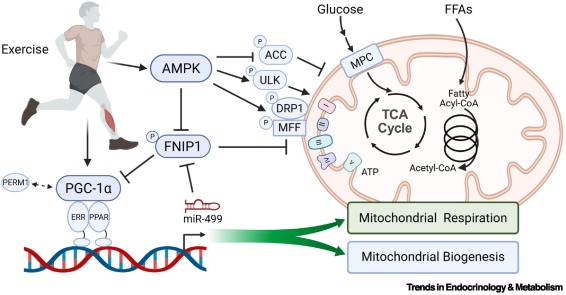
Mitochondrial quality in aging and neurodegeneration: The emerging role of mitochondria-derived vesicles
🔎 Mitochondrial quality control contributes to preserve neuronal health… a focus on MDVs, their dysregulation during aging and neurodegeneration, and implications for biomarkers and therapeutic strategies. 🧠
https://t.co/8Hj3Rk2Q4Z
Double-Pronged NAD Preservation: Delaying Cellular Senescence and Initiating Musculoskeletal Regeneration
https://t.co/bnkkn0xblj
Scheme 1: A novel synergistic drug combination (N + A) consisting of an NAD+ precursor (NMN) and an NAD+ consumption (CD38) inhibitor (API) promotes musculoskeletal regeneration in aging.
1st author paper in Nature Aging🥳
Unbiased CALERIE participants' exoproteome analysis and a reverse translational study found inhibition of C3a, a complement component, is an inflammaging checkpoint. 1/
Kudos to @MishraManish29@VishwaDeepDixi1 and team!
https://t.co/UjWUIetnr1
Aging clocks may be shaped by neurosyndemics, multiple interacting physical and social real-world environments jointly influencing brain health. Out in Nature Medicine (https://t.co/h6kbJntHRV), we assessed 18,701 participants from 34 countries, showing that the combined aggregate-level exposome (73 physical, social, and political factors measured at country-level) predicts multimodal brain aging far better than isolated exposures (up to 15-fold more variance). Moving beyond single risks, we provide evidence that synergistic, nonlinear exposome burden accelerates brain clocks across health and disease, with physical exposures linking more strongly to structural brain aging and social exposures to functional brain aging. Exposome burden increased the risk of accelerated brain aging by 3.3–9.1-fold, in some cases exceeding the effects associated with dementia, and these findings held in out-of-sample, longitudinal, individual-level variation, and sensitivity analyses. Thus, the pace at which the brain ages may be shaped by syndemic environmental and societal conditions, calling for much more intersectoral policies. Congrats @AgustinaLegaz Sebastian Moguilner @HernHdezL & all coauthors. 1/5👇 @GBHI_Fellows
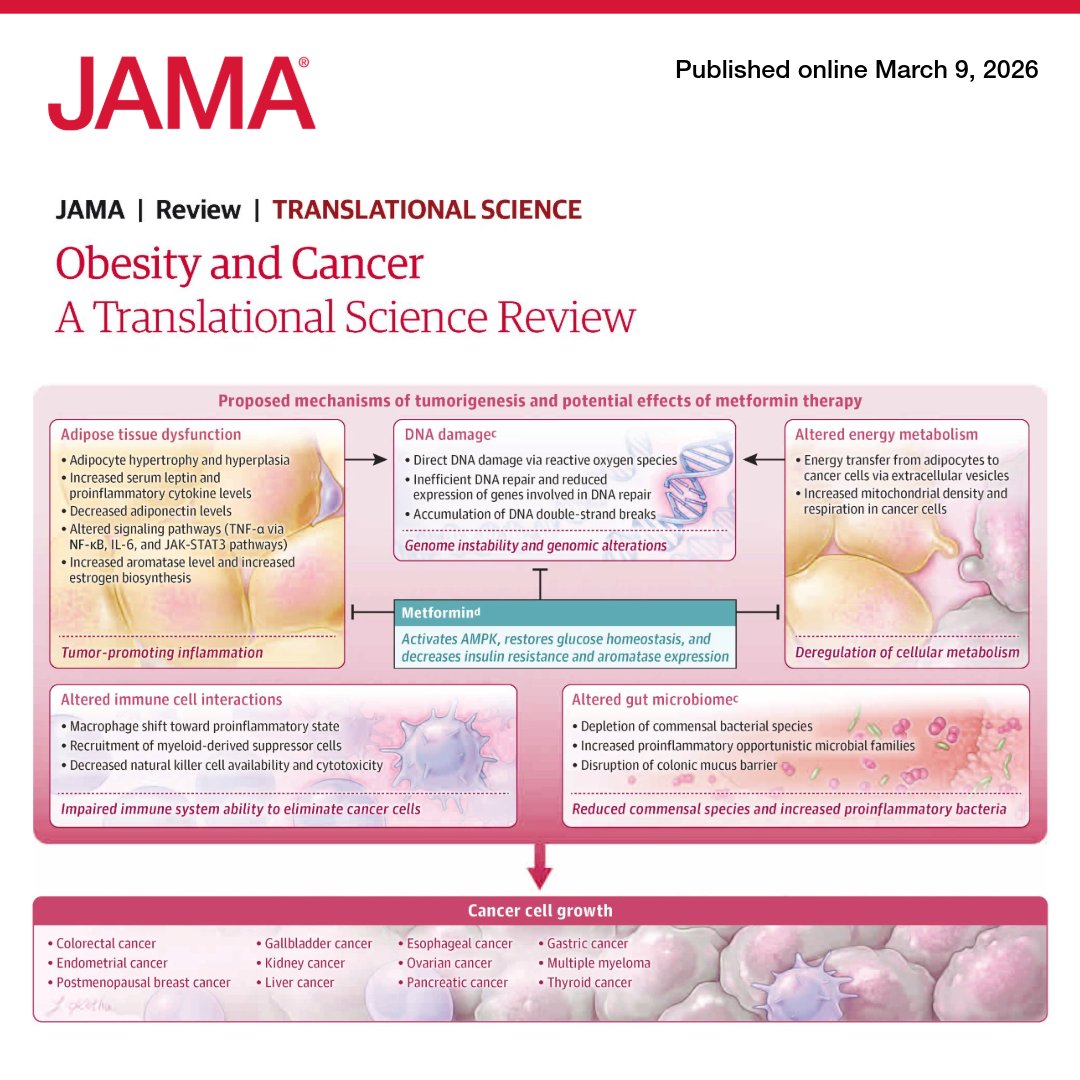
#Obesity is associated with higher risk for 12 #cancer types and accounts for approximately 10% of annual new cancer cases in the US.
📄 This Review summarizes the primary biological pathways connecting obesity and cancer development. https://t.co/L6mWf5nPUQ
Fermented foods increased gut microbiome diversity in ways fiber alone didn't.
In a 10-week study, fermented foods (e.g., yogurt, kimchi, kefir) increased microbiome diversity and lowered inflammation.
High fiber increased microbial enzymes but not diversity.
More metabolite signatures for predicting #T2D including 67 associations not previously reported across bile acid, lipid, carnitine, urea cycle and arginine/proline, glycine and histidine pathways #precisionmedicine https://t.co/MLwEJObTmB
Tumors aren't sterile environments. 🦠 The bacteria living inside them play a huge role in shaping the immune response and can even determine how well cancer treatments work. Check out this review on the impact of the intratumoral microbiome.
https://t.co/EMzsmpI78i