‼️ Ubuntu still has no fix for NoisyTCP, a Linux kernel flaw that can be hit over the network, nine days after its details went public.
Security researcher Hanno Böck says other Linux distributions had fixes ready the day the details came out.
Ubuntu's own security tracker backs him up. It rates the flaw, CVE-2026-99288, High priority and lists every release from 16.04 to 26.10 as vulnerable, with fixes in progress.
Böck calls it remote memory corruption. Ubuntu's page describes a test exploit that crashed the kernel.
He says a fix for a bug like this should take hours, not days or weeks.
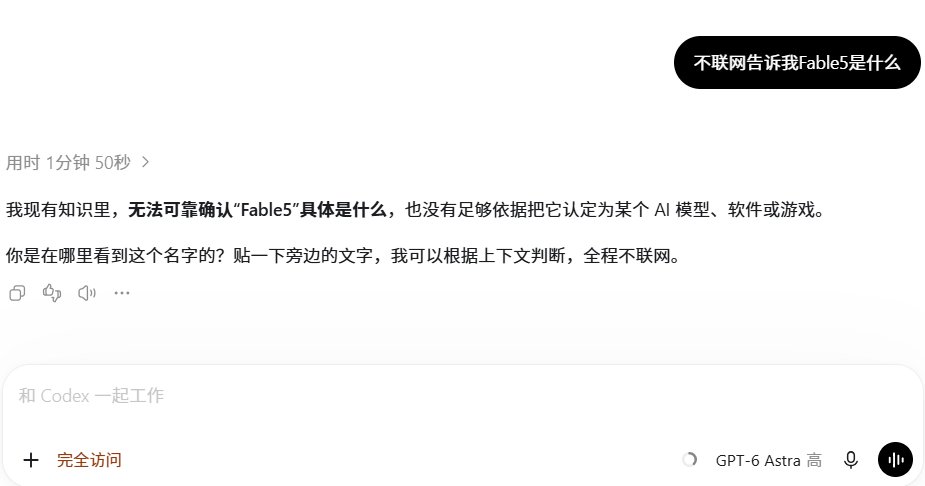
After working with GPT-6.2 Astra more closely, I'm now 100% sure what's wrong with it
It stops at every tiny step. No matter how many times you ask it to see the task through to the end and check everything thoroughly from every angle, it will still stop and wait for you to tell it to keep going
Because of this quirk, Astra has lost the diligence it used to have, and its reports have become unpleasant to read, because it really has nothing to say: it worked for a few seconds and did maybe 5% of the task you gave it
The model itself may well be smart, but this trait wrecks the workflow so badly that you just don't want to come back to it
If I ever need a GPT model, I'll use GPT-6 Astra. Maybe they did this on purpose to save compute, or maybe something broke during RL and the model stopped correctly reading the user's intent and goal
@yituihi Damn, it kind of explains why this model was so f dumb. On my project it was incredibly lazy during coding and very thorough at reviews which created endless churn cycle.
@HolographicMD Back then we were also younger and it all felt sacred and magical,
I still very fondly remember countless nights spent in Lineage II
This feeling been long gone since then, now it doesnt hit quiet like this anymore 🕊
wait what
the 17 MILLION-line formal proof of the riemann hypothesis just got compressed to around 76,000 lines.
it comes in two versions:
>around 300,000 lines in a more readable format.
>around 76,000 lines in a compact format.
both contain the same five main theorems.
the shorter version builds in just 1-2 hours on a 12-core machine with 24GB RAM.
so 17.4 MILLION LINES TO 76,000 IN JUST FIVE DAYS
the repo says "No mathematician has read it through, and no paper comes with it."
Sony built an AI that predicts scientific discoveries before scientists make them.
Then they took its predictions into a real lab.
The system is called Hakken (Japanese for "discovery"), and it goes after a problem every scientist has: there's far more research than any human could ever read.
So the AI reads it for them.
It pulled 249 million relationships out of the biomedical literature and cleaned them into one giant map: 7.1 million links between 254,806 concepts. Genes, diseases, chemicals.
Then it learned how that map grows over time. Which connections tend to show up next. Where the gaps are.
To prove it works, they made it time travel.
They froze its knowledge in 1990. Then 2000. Then 2010. Then 2020.
Each time, it had to predict what science would find next. Then they checked its guesses against what actually got published in the years after.
It was still calling real discoveries up to 10 years ahead.
Then they pointed it at aging.
It produced 1.5 million high-confidence predictions about how genes connect.
Biologists picked 3 and sent them to a wet lab.
2 were confirmed.
And the craziest part is which genes they were.
One linked TP53 to a gene called BAMBI. TP53 is the most studied gene of all time, with more than 10,000 papers since 1979.
The other linked RAF1, a core cancer-signaling gene, to TNF, another of the most studied genes ever.
Over 16,000 papers between TP53 and TNF.
Nobody had documented either connection.
It also shows its work. Every prediction comes with a confidence score and the chain of known findings that led to it, so a scientist can check the reasoning instead of trusting a black box.
And it isn't built only for biology. It's designed to work on any field with a body of research. Biology was just the first test.
This isn't AI summarizing what we already know.
It's a map of what we don't know yet.
One of the authors, Hiroaki Kitano, challenged the world in 2016 to build an AI that makes a Nobel-worthy discovery by 2050.
His team now has 1.5 million hypotheses in the queue.
They've tested three.
Five days ago Levent Alpöge announced a proof of the Riemann Hypothesis and of GRH for Dirichlet L-functions, written with Claude: a Lean archive of 17.4 million lines, far beyond anything a person could read.
Yesterday Luke Sernau, with colleagues at Anthropic, released the same five theorems in 112,827 lines, 154 times shorter. The argument itself is 24,850 lines of code. The background that Mathlib lacks is separated out and labelled with the literature it follows.
I think this is a turning point in how mathematics is done. A proof written with an AI was rewritten by an AI, under human direction, 150 times smaller, in days. The scarce resource is no longer the formal proof. It is the human reading of it.
Almost every argument against AI compares it to a perfect human.
A doctor with unlimited time. A teacher with one student. A lawyer you can afford. An expert who is never wrong.
Swap in the human you'd actually get and most of those arguments are over.
We've basically entered singularity, and normies (markets) are panicking about AI 🤦🏼♂️
Mark my words: the unification of GR and QM will happen by the end of the year.
@kimmonismus Generalized Riemann Hypothesis is different from Riemann Hypothesis?
I thought the initial proof(~17mil lines) was for non generalized version
In June 2021, my friend invested $50,000 in #FIL at $270. Today, it’s worth just $99 — a 99.8% loss
He is now facing severe financial distress.
Behind every collapsing crypto chart are real people, shattered dreams and suffering families. Where is the accountability
@Filecoin